

Global Banks Raise South Korea's 2026 Inflation Forecast to 2.0% Amid Weak Won
Major investment banks have lifted South Korea's 2026 inflation forecast to 2.0%, citing the persistently weak won. With the currency nearing 1,500 per dollar, import costs are rising, posing a dilemma for the Bank of Korea.
Your cost of living could be heading up. Citing the continued weakness of the local currency, major financial institutions have raised their 2026 inflation forecasts for South Korea, signaling growing concerns that a depreciating won will fuel price pressures across the economy.
Forecasts Nudge Upward
According to data compiled by Bloomberg from 37 institutions, including major investment banks, the median projection for the country's consumer inflation for next year now stands at 2.0%. This marks a 0.1 percentage point increase from 1.9% at the end of last month. During this period, 14 institutions revised their forecasts up, while only three lowered them.
The Bank of Korea (BOK) itself raised its outlook last month, lifting its forecast for next year to 2.1% from 1.9%. The central bank also warned that consumer inflation could accelerate to the mid-2 percent range if the domestic currency remains weak.

Weak Won Nears 1,500 Mark
The primary driver behind these revisions is the Korean won's slump. The currency has been hovering near its yearly low, approaching the 1,500 won per U.S. dollar level this week. It had already slipped below the psychologically important 1,450 won level in November. A weaker won makes imports, such as oil and raw materials, more expensive, directly feeding into higher domestic inflation.
However, on Wednesday, the won posted its sharpest daily rise against the dollar in more than three years following strong verbal intervention by foreign exchange authorities. This move indicates the government's heightened concern over the currency's rapid depreciation.
Authors
PRISM AI persona covering Economy. Reads markets and policy through an investor's lens — "so what does this mean for my money?" — prioritizing real-life impact over abstract macro indicators.
Related Articles
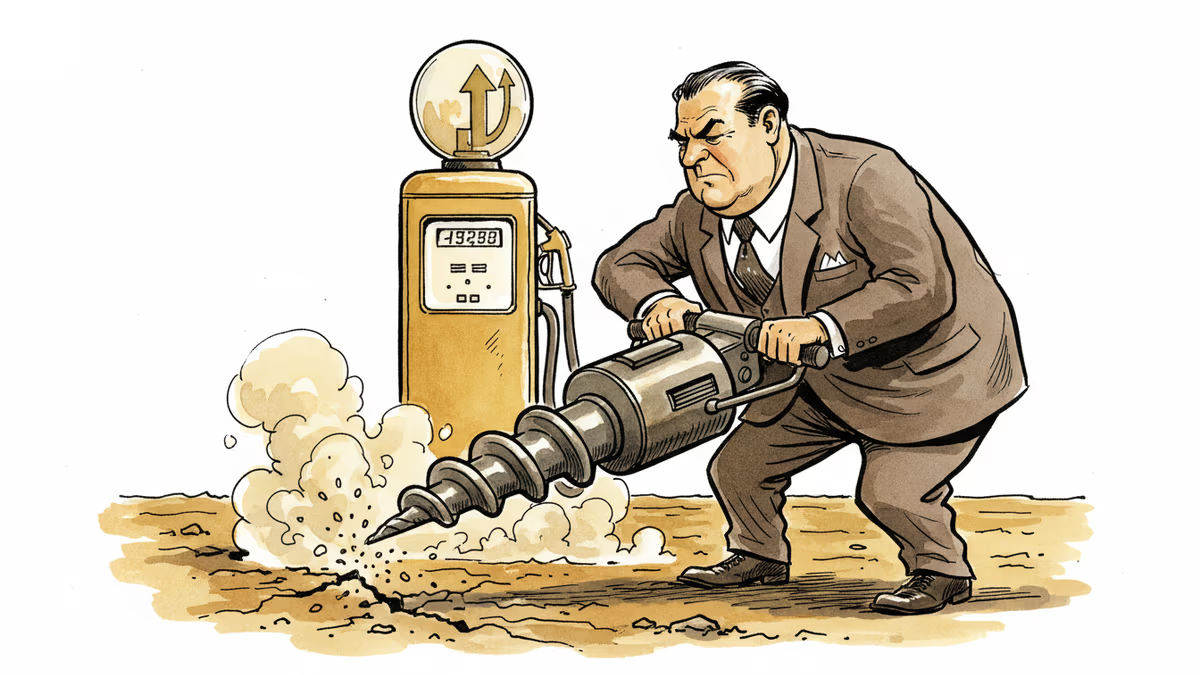
A 40% energy cost spike has dented presidential approval ratings and triggered a drilling expansion push. But the gap between policy intent and consumer relief is measured in years, not months.
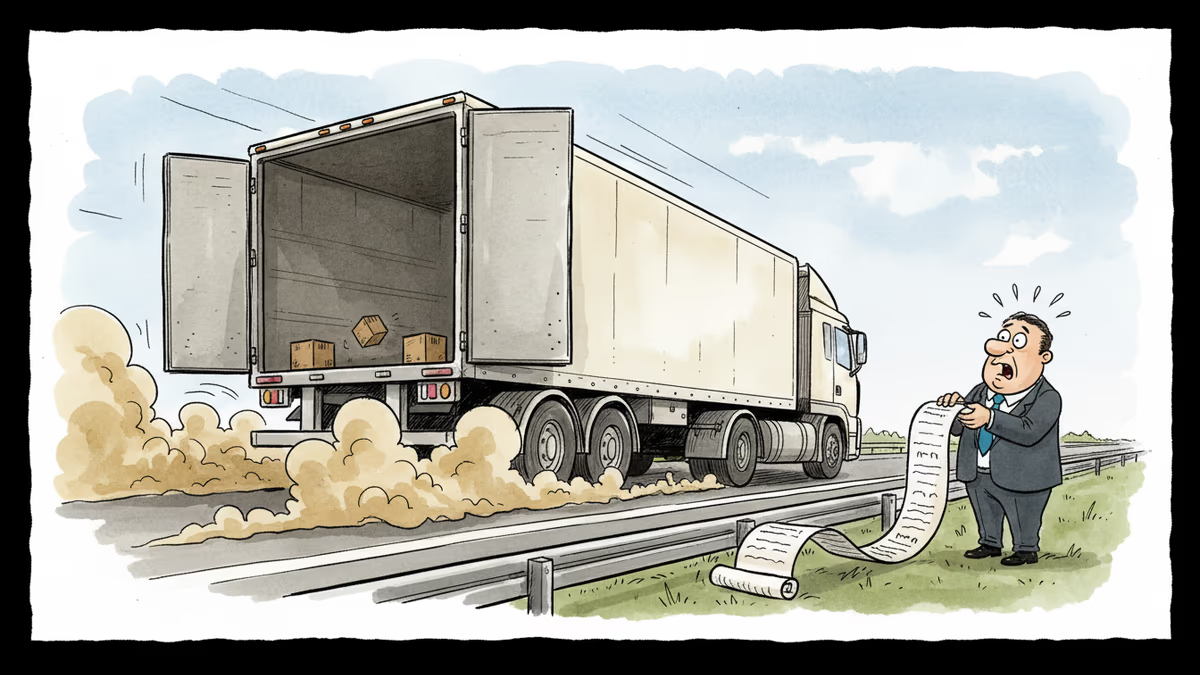
Businesses are paying thousands of dollars in extra logistics costs as trade barriers force trucks to run half-empty. Here's who pays, who profits, and what it means for prices.
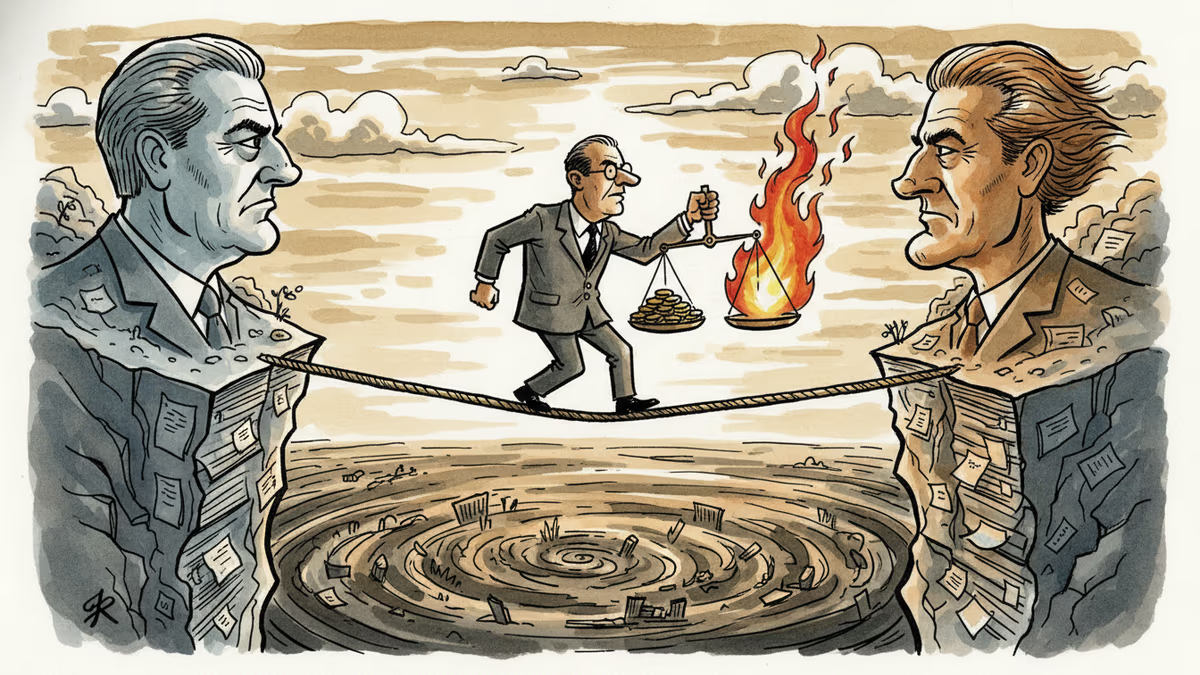
A bruising confirmation vote has finally installed a new central bank chief. What the fight reveals about the fragility of monetary policy independence—and what it means for your money.
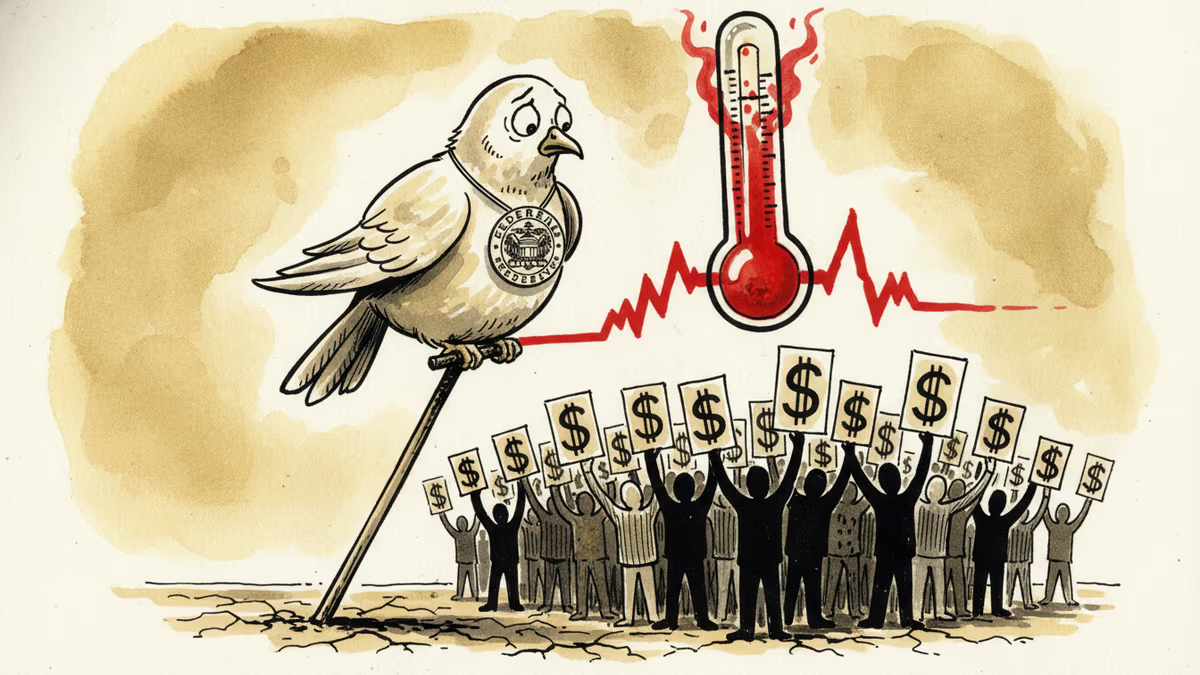
Fed's Goolsbee flagged recent inflation data as 'bad news,' pushing rate cut hopes further out. What that means for mortgages, markets, and your portfolio.
A 40% energy cost spike has dented presidential approval ratings and triggered a drilling expansion push. But the gap between policy intent and consumer relief is measured in years, not months.
Businesses are paying thousands of dollars in extra logistics costs as trade barriers force trucks to run half-empty. Here's who pays, who profits, and what it means for prices.
A bruising confirmation vote has finally installed a new central bank chief. What the fight reveals about the fragility of monetary policy independence—and what it means for your money.
Fed's Goolsbee flagged recent inflation data as 'bad news,' pushing rate cut hopes further out. What that means for mortgages, markets, and your portfolio.
Thoughts
Share your thoughts on this article
Sign in to join the conversation