
#South Korea Economy
Total 15 articles
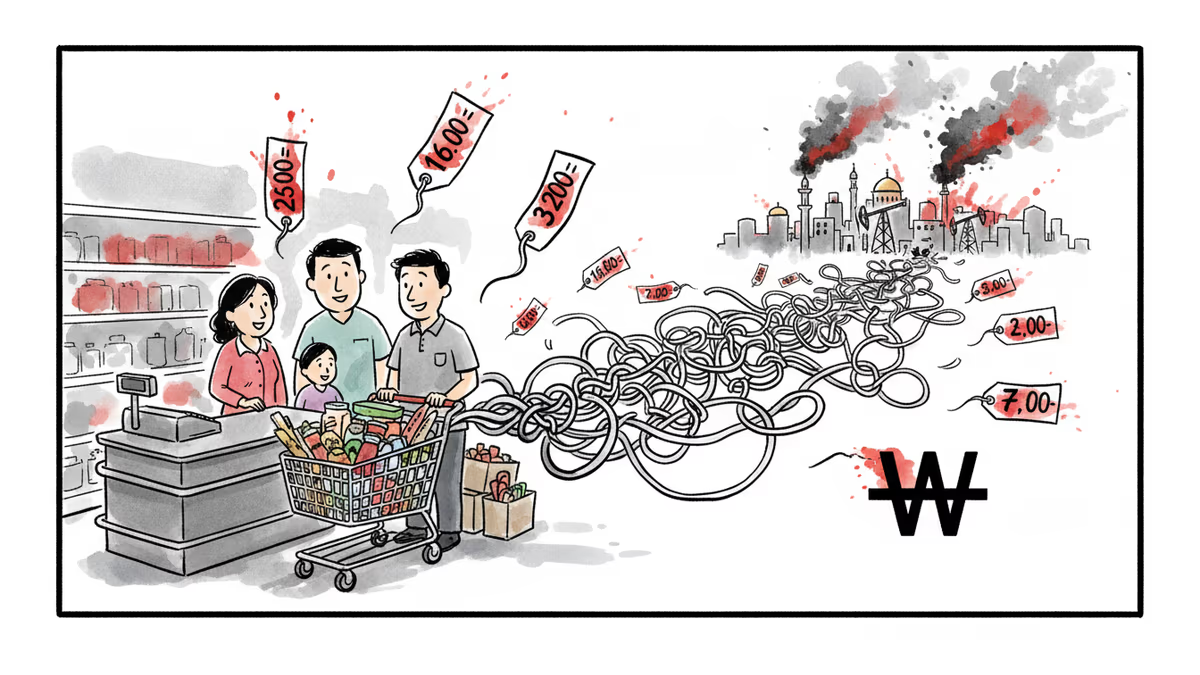
Iran's prolonged conflict is squeezing South Korea's supply chains—from naphtha shortages hitting plastics to helium fears rattling chipmakers. Here's what it means beyond the fuel pump.

Analyze the impact of foreign real estate investment regulation 2026 in Korea and Australia. Learn about tripled fees and the reciprocity principle.

South Korea's daily FX turnover hit a record $80.71 billion in 2025, driven by a massive increase in cross-border stock investments by both residents and foreigners.

PRISM by Liabooks
Place your ad in this space
[email protected]
The KOSPI reached a new record high of 4,525.48 on January 6, 2026, breaking the 4,500-point threshold. The rally was driven by retail buying in semiconductors, shipbuilding, and defense stocks.

Samsung Heavy Industries starts 2026 with a $499M LNG ship order from Oceania. Learn how their $28.6B backlog and 2025 performance impact future growth.

The South Korean FTC has fined 48 furniture firms $17.4M for a decade-long bid-rigging scheme. Enex and Hanssem face significant penalties for colluding on 240 bids.

South Korea's BSI for January 2026 remains pessimistic at 95.4, marking the 46th month of negative outlooks. Construction and steel sectors continue to drag the market down.
PRISM by Liabooks
Place your ad in this space
[email protected]
South Korea's R&D spending reached a record $90 billion in 2024, exceeding 5% of its GDP for the first time. The surge, led by the private sector, signals a major push for technological leadership.

The Bank of Korea (BOK) has outlined its 2026 monetary policy, stating that any further interest rate cuts will depend on a careful assessment of inflation, growth, and financial stability.

A new study found that manufacturing wages in South Korea are now 27.8% higher than in Japan, fueling concerns that soaring labor costs unmatched by productivity are eroding its global competitiveness.

Major investment banks have lifted South Korea's 2026 inflation forecast to 2.0%, citing the persistently weak won. With the currency nearing 1,500 per dollar, import costs are rising, posing a dilemma for the Bank of Korea.
PRISM by Liabooks
Place your ad in this space
[email protected]
South Korea's franchise sales hit $81 billion in 2024, but growth slowed to 6.8%, the lowest since the pandemic, signaling economic headwinds and sluggish job creation.
