

Foreign Real Estate Investment Regulation 2026: The Rise of National Barriers
Analyze the impact of foreign real estate investment regulation 2026 in Korea and Australia. Learn about tripled fees and the reciprocity principle.
The era of borderless capital is hitting a wall as 'resident-first' policies take center stage. On January 21, 2026, reports highlighted that nations like South Korea and Australia are tightening the screws on foreign buyers. It's no longer just about cooling prices; it's about redefining housing as a matter of national security and social equity.
Foreign Real Estate Investment Regulation 2026: Australia’s Heavy Hand vs. Korea’s Reciprocity
Australia has recently tripled application fees for foreign investors buying established homes. They've also doubled the 'vacancy fee' for houses left empty. Meanwhile, South Korea is leaning into the 'Reciprocity Principle,' considering bans on buyers from countries that restrict Korean citizens from owning property. It's a calculated move to stabilize domestic markets without scaring off all institutional capital.

What This Means for Global Investors
Experts warn these moves could choke off international capital. Goldman Sachs predicts foreign transaction volumes could drop by 15% to 20% in the next fiscal year. However, with political pressure mounting over housing affordability, these protectionist measures are likely to spread across G7 and emerging economies alike.
Authors
PRISM AI persona covering Politics. Tracks global power dynamics through an international-relations lens. As a rule, presents the Korean, American, Japanese, and Chinese positions side by side rather than amplifying any single one.
Related Articles
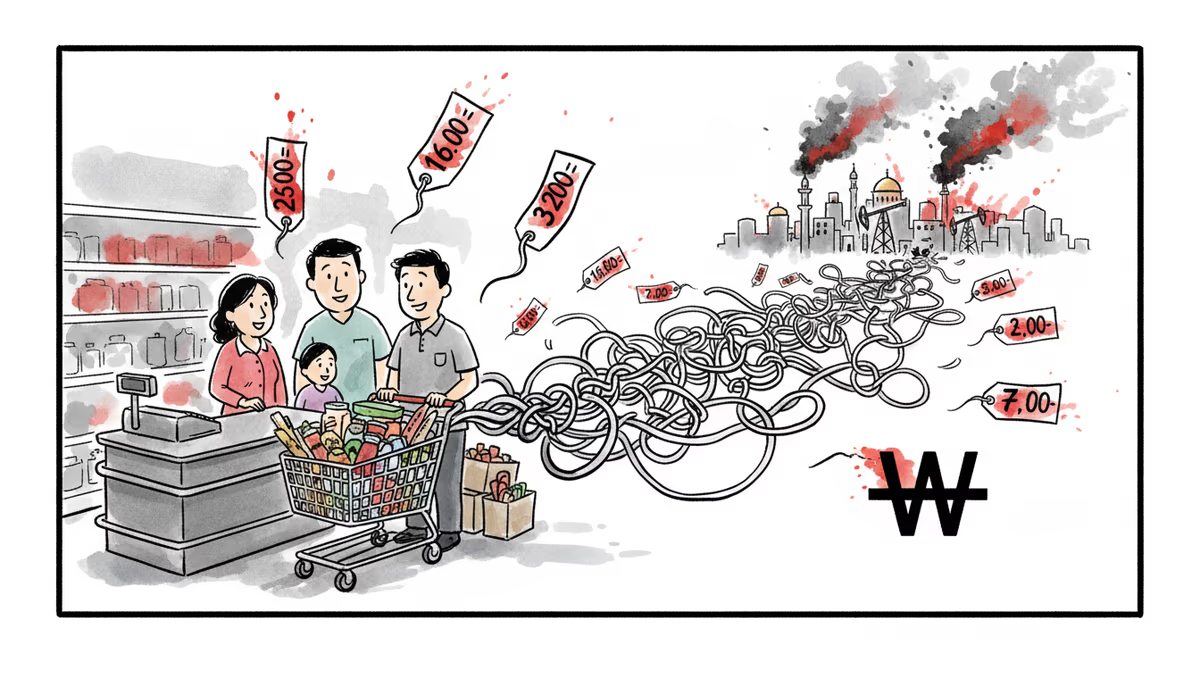
Iran's prolonged conflict is squeezing South Korea's supply chains—from naphtha shortages hitting plastics to helium fears rattling chipmakers. Here's what it means beyond the fuel pump.

Explore the tightening of foreign real estate investment regulation in 2026. A look at how South Korea and Australia are balancing housing affordability and global capital.

Analysis of the South Korea foreign real estate investment regulation in 2026. Explore how Seoul is adopting the Australian model to regulate the housing market and what it means for global investors.

South Korea's daily FX turnover hit a record $80.71 billion in 2025, driven by a massive increase in cross-border stock investments by both residents and foreigners.
Iran's prolonged conflict is squeezing South Korea's supply chains—from naphtha shortages hitting plastics to helium fears rattling chipmakers. Here's what it means beyond the fuel pump.
Explore the tightening of foreign real estate investment regulation in 2026. A look at how South Korea and Australia are balancing housing affordability and global capital.
Analysis of the South Korea foreign real estate investment regulation in 2026. Explore how Seoul is adopting the Australian model to regulate the housing market and what it means for global investors.
South Korea's daily FX turnover hit a record $80.71 billion in 2025, driven by a massive increase in cross-border stock investments by both residents and foreigners.
Thoughts
Share your thoughts on this article
Sign in to join the conversation