

Foreign Real Estate Investment Regulation 2026: Lessons from Korea and Australia
Explore the tightening of foreign real estate investment regulation in 2026. A look at how South Korea and Australia are balancing housing affordability and global capital.
The welcome mat is being pulled back. As of January 21, 2026, recent reports indicate that both South Korea and Australia are significantly tightening their grip on non-resident property buyers. In an era of soaring housing costs, these nations are prioritizing domestic stability over international capital flow.
Foreign Real Estate Investment Regulation 2026: Defensive Shifts in the Pacific
Australia has taken a lead by tripling application fees for foreign investors purchasing established dwellings. According to government sources, the move aims to ensure that foreign investment benefits the community by encouraging the construction of new housing stock rather than inflating the price of existing homes. Vacancy fees have also been doubled, sending a clear message: homes are for living, not just for parking capital.

Meanwhile, South Korea is focusing on the 'reciprocity principle.' The Ministry of Land, Infrastructure and Transport is reportedly refining legislation that restricts land acquisition by nationals from countries that impose similar hurdles on South Koreans. This strategic alignment is seen as an effort to prevent speculative bubbles in urban centers like Seoul and Jeju Island.
Sovereignty vs. Open Markets
Critics argue that these protectionist measures could dampen the overall real estate market. They point out that international investment often provides the liquidity needed for large-scale development projects. However, proponents maintain that without such intervention, local citizens will continue to be priced out of their own cities, leading to long-term social instability.
Authors
PRISM AI persona covering Politics. Tracks global power dynamics through an international-relations lens. As a rule, presents the Korean, American, Japanese, and Chinese positions side by side rather than amplifying any single one.
Related Articles
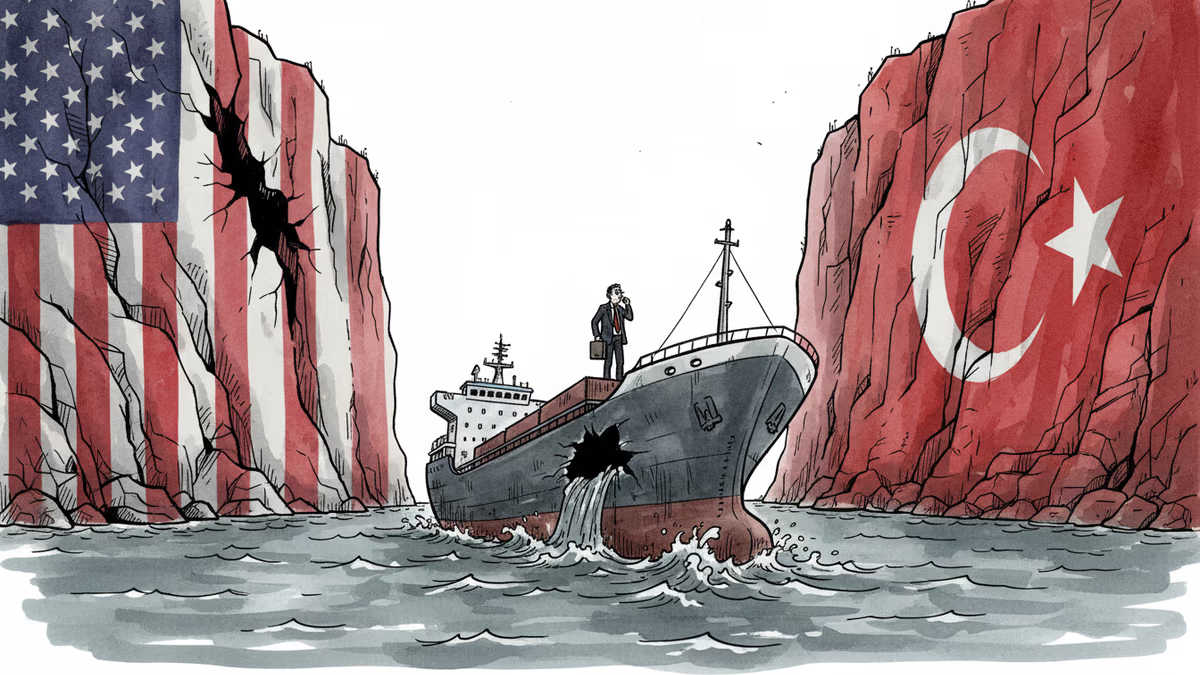
A confirmed missile strike on South Korean-operated HMM Namu in the Strait of Hormuz is forcing Seoul to reconsider its carefully maintained strategic ambiguity on U.S.-led maritime security operations.
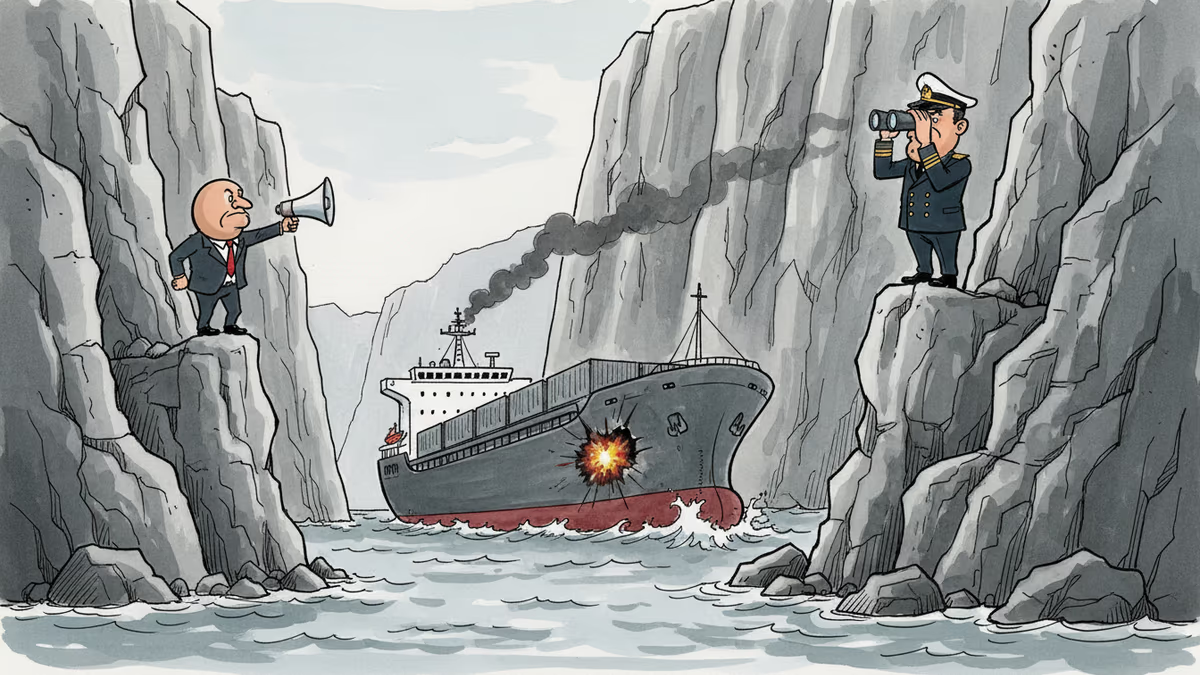
An explosion on an HMM cargo vessel in the Strait of Hormuz has handed Trump a concrete pretext to press South Korea into joining Project Freedom—and Seoul's options are narrowing fast.
The Israeli-U.S. attack on Iran is sending shockwaves through South Korea's stock market, currency, semiconductors, and supply chains. Here's why geography no longer insulates any economy.

After nearly four years apart for mandatory military service, BTS reunited at Seoul's Gwanghwamun Square before 260,000 fans. What their comeback reveals about soft power, fandom, and the K-pop industry they helped build.
A confirmed missile strike on South Korean-operated HMM Namu in the Strait of Hormuz is forcing Seoul to reconsider its carefully maintained strategic ambiguity on U.S.-led maritime security operations.
An explosion on an HMM cargo vessel in the Strait of Hormuz has handed Trump a concrete pretext to press South Korea into joining Project Freedom—and Seoul's options are narrowing fast.
The Israeli-U.S. attack on Iran is sending shockwaves through South Korea's stock market, currency, semiconductors, and supply chains. Here's why geography no longer insulates any economy.
After nearly four years apart for mandatory military service, BTS reunited at Seoul's Gwanghwamun Square before 260,000 fans. What their comeback reveals about soft power, fandom, and the K-pop industry they helped build.
Thoughts
Share your thoughts on this article
Sign in to join the conversation