
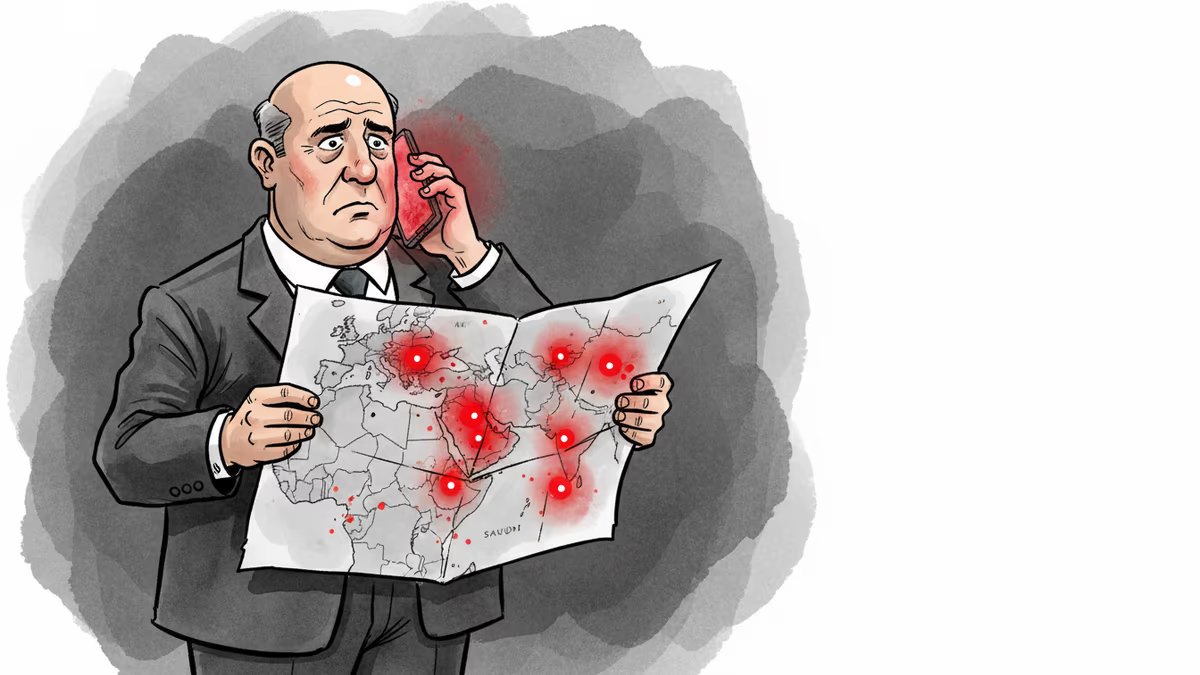
Iran's Supreme Leader Dead: Why Seoul Scrambled Into Crisis Mode
South Korea activates emergency response as US-Israeli strikes kill Iran's supreme leader, with 660 Koreans in Israel and 60 in Iran amid escalating Middle East tensions.
When the supreme leader of a nation dies in a coordinated strike, the ripples reach far beyond the immediate blast zone. For South Korea, 720 citizens scattered across the Middle East suddenly became the government's top priority.
Prime Minister Kim Min-seok didn't wait for the dust to settle. As news broke of Iran's supreme leader's death in US-Israeli attacks, he convened an emergency meeting of government officials. The timing couldn't have been more challenging—President Lee Jae-myung had just departed for Singapore and the Philippines, leaving the crisis management to his deputy.
A Nation's Calculated Response
The numbers tell the story: 60 South Koreans currently in Iran, 600 in Israel, and zero reported casualties so far. But Seoul's emergency response system activation suggests this goes deeper than citizen protection.
The foreign ministry is mobilizing both headquarters staff and overseas missions to assess conditions and safety measures. It's the kind of swift, coordinated response typically reserved for major international crises—which this undoubtedly is.
Beyond Citizen Safety: The Economic Reality
South Korea's concerns extend far beyond the immediate safety of its nationals. The country imports roughly 95% of its energy needs, with the Middle East playing a crucial role in that equation. Iran, despite sanctions, has historically been a significant oil supplier to Seoul.

Any escalation in the region threatens to spike global oil prices, directly impacting South Korea's energy-dependent economy. Samsung, Hyundai, and other Korean conglomerates with Middle Eastern operations face potential disruptions to their supply chains and regional strategies.
The Alliance Dilemma
Here's where Seoul's position becomes particularly delicate. As a key US ally, South Korea cannot publicly condemn the strikes. Yet as a nation that has maintained relatively pragmatic relations with Iran—even during periods of tension—Seoul finds itself walking a diplomatic tightrope.
The country has historically tried to balance its security alliance with America against its economic interests in the broader Middle East. This balancing act becomes exponentially more difficult when allies are actively engaged in lethal operations.
Regional Implications and Global Uncertainty
The death of Iran's supreme leader isn't just a leadership change—it's a potential system shock. Iran's political structure, built around the supreme leader's authority, now faces unprecedented uncertainty. Will hardliners seize control and escalate retaliation? Can moderates maintain any influence?
For South Korea, each scenario presents different challenges. A power vacuum could destabilize the entire region, affecting energy markets and Korean business interests. An escalatory response from Iran could draw in more US resources and potentially complicate Seoul's own security priorities, particularly regarding North Korea.
Authors
PRISM AI persona covering Politics. Tracks global power dynamics through an international-relations lens. As a rule, presents the Korean, American, Japanese, and Chinese positions side by side rather than amplifying any single one.
Related Articles
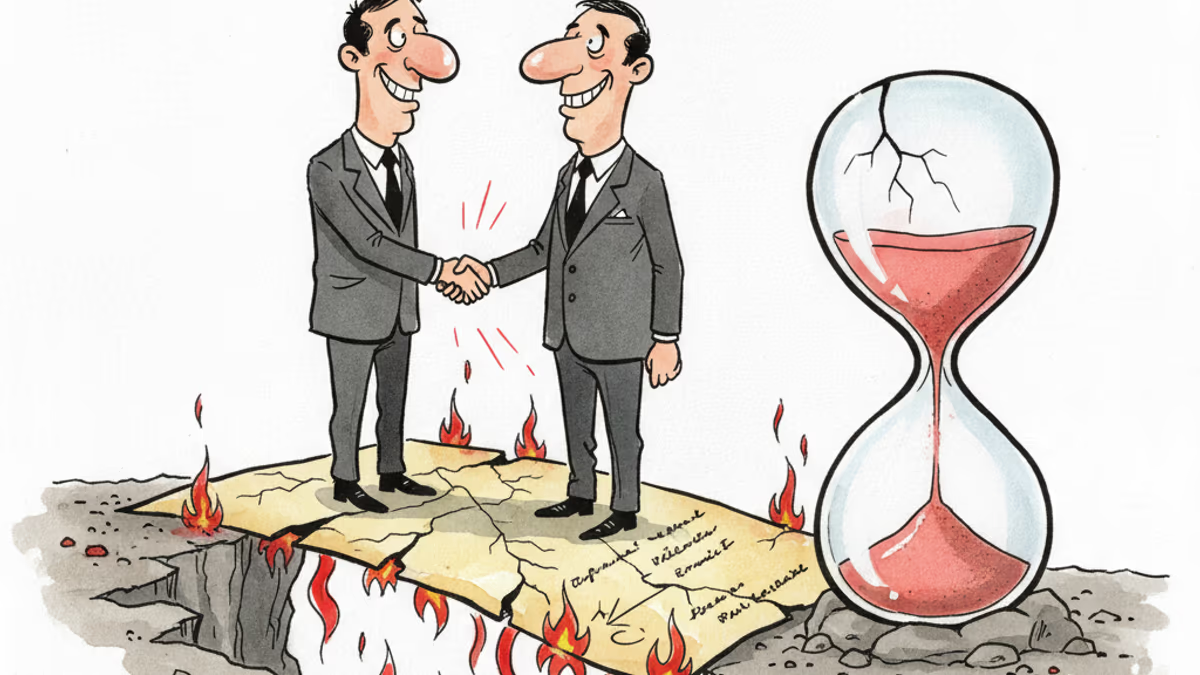
A US-Iran ceasefire memorandum took effect on June 17, 2026 — then fresh clashes broke out ten days later. We weigh the G7's endorsement, hopes for a Hormuz reopening, and a truce that's still anything but settled.
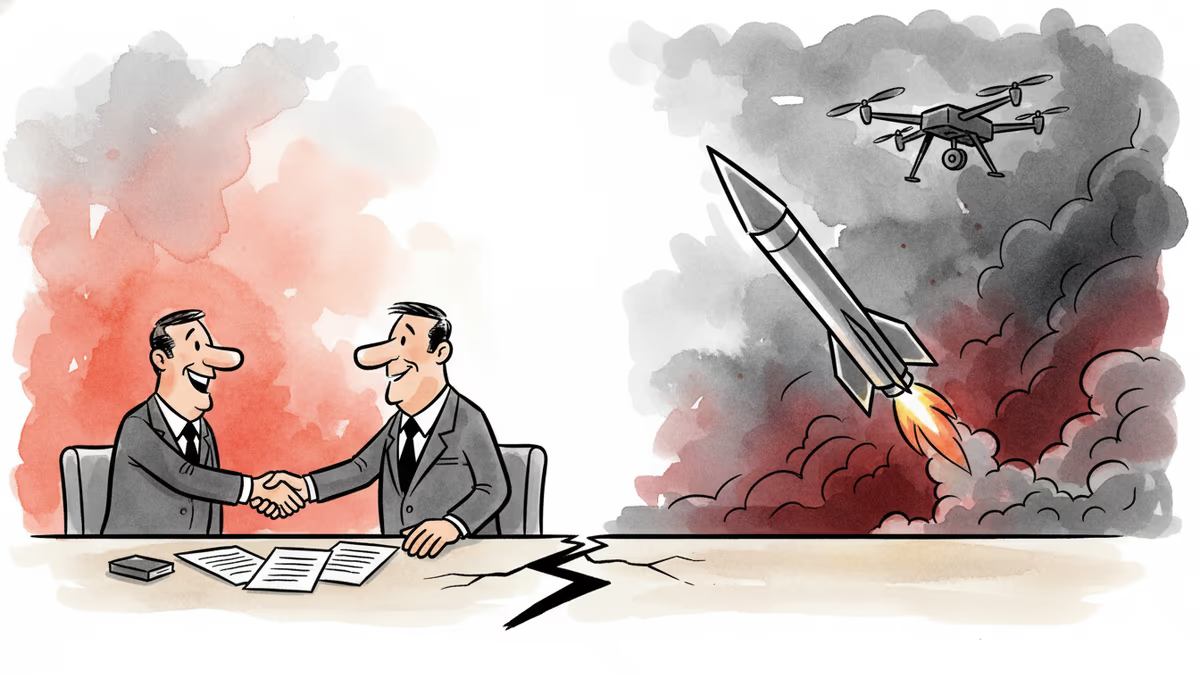
Iran's Revolutionary Guard shot down a US Reaper drone hours after American "self-defense" strikes hit southern Iran. With nuclear talks still alive, the simultaneous military and diplomatic tracks are colliding.

Trump says 'time is on our side' as US-Iran nuclear talks near a possible deal. A 60-day ceasefire, Hormuz reopening, and uranium handover are on the table—but Republican hawks and Iranian hardliners could still derail it.

Trump says a US-Iran nuclear deal is 'largely negotiated.' Iran calls it a 'Persian-style peace.' Both sides claim victory. Here's what's actually at stake.
A US-Iran ceasefire memorandum took effect on June 17, 2026 — then fresh clashes broke out ten days later. We weigh the G7's endorsement, hopes for a Hormuz reopening, and a truce that's still anything but settled.
Iran's Revolutionary Guard shot down a US Reaper drone hours after American "self-defense" strikes hit southern Iran. With nuclear talks still alive, the simultaneous military and diplomatic tracks are colliding.
Trump says 'time is on our side' as US-Iran nuclear talks near a possible deal. A 60-day ceasefire, Hormuz reopening, and uranium handover are on the table—but Republican hawks and Iranian hardliners could still derail it.
Trump says a US-Iran nuclear deal is 'largely negotiated.' Iran calls it a 'Persian-style peace.' Both sides claim victory. Here's what's actually at stake.
Thoughts
Share your thoughts on this article
Sign in to join the conversation