
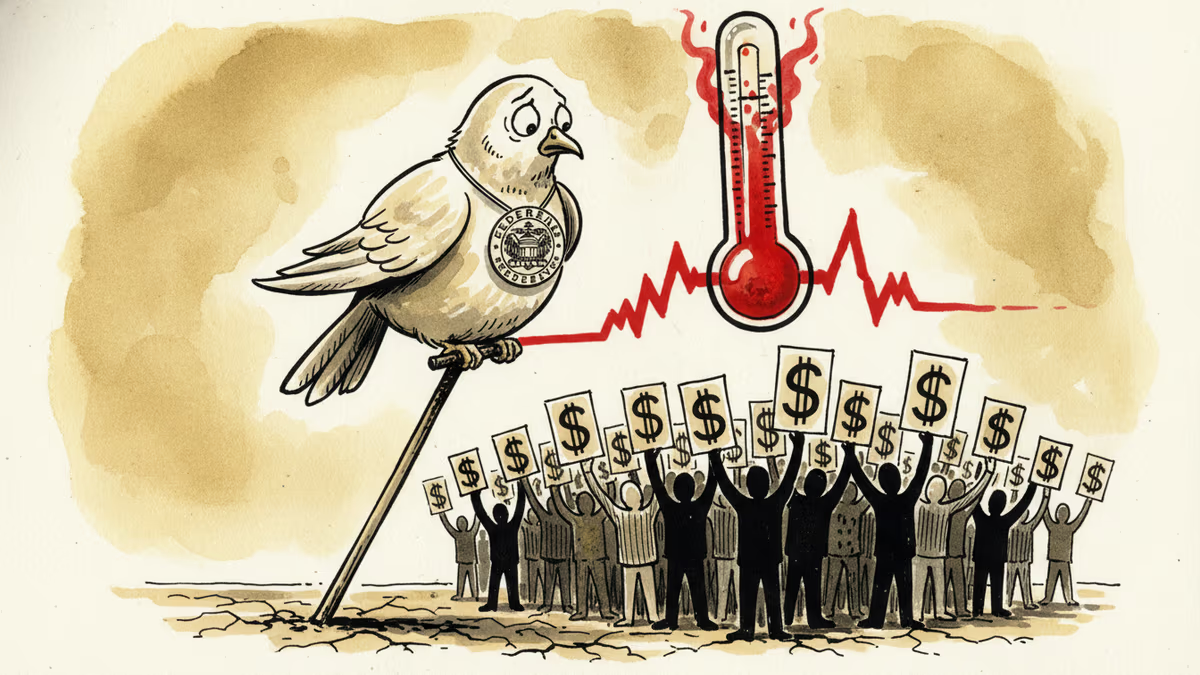
The Fed Called It 'Bad News.' Here's What That Costs You.
Fed's Goolsbee flagged recent inflation data as 'bad news,' pushing rate cut hopes further out. What that means for mortgages, markets, and your portfolio.
The Fed's most optimistic voice just called the latest inflation data "bad news." That's worth paying attention to.
Austan Goolsbee, president of the Chicago Federal Reserve, is widely regarded as one of the more dovish members of the Fed — someone generally inclined toward lower rates and looser policy. When someone like him uses the phrase "bad news" to describe fresh inflation figures, it's not a throwaway comment. It's a signal that the path to rate cuts just got longer.
What Happened — and Why It Matters
The Federal Reserve has been holding its benchmark interest rate in the 4.25–4.50% range since late 2024, after a series of cuts that followed the aggressive tightening cycle that began in 2022. Markets had been pricing in at least one or two additional cuts in 2026, betting that inflation would continue its gradual descent toward the Fed's 2% target.
That bet is looking shakier. Recent Consumer Price Index (CPI) data showed inflation proving stickier than expected — still running above the 2% goal, with services prices in particular refusing to cool. The so-called "last mile" problem, getting inflation from around 3% down to 2%, has consistently been the hardest stretch of the journey. Goolsbee's candid assessment reflects what the data is telling the Fed: they're not there yet.
Layered on top of this is the tariff variable. The Trump administration's sweeping import duties are feeding through into consumer prices, creating a structural inflation pressure that monetary policy alone can't easily offset. The Fed can raise or lower rates; it can't undo a trade policy.
The Concrete Cost of Waiting

Abstract Fed-speak translates into real dollars fast. Every quarter-point delay in rate cuts carries a price tag.
For a homeowner with a $400,000 adjustable-rate mortgage, a 0.25 percentage point cut would reduce annual interest costs by roughly $1,000. Each month that cut gets pushed back is money that stays in the bank's pocket, not yours. For businesses carrying floating-rate debt, the math scales up quickly — a mid-sized company with $10 million in variable-rate loans pays roughly $25,000 more per year for every quarter-point delay.
Savers and bond investors, on the other hand, are in the unusual position of benefiting from the Fed's hesitation. Short-term Treasuries are still yielding around 4.3–4.5% — returns that look attractive against a backdrop of equity market volatility. Money market funds have seen sustained inflows precisely because higher-for-longer rates make cash competitive again.
Equity markets are caught in the middle. Rate-cut delays tend to compress valuations for high-growth tech stocks, which are priced on distant future earnings. Financials and dividend-paying stocks tend to hold up better. The S&P 500's reaction to Fed signals has become almost reflexive — any hint of "higher for longer" triggers a rotation away from growth.
Two Camps, One Uncomfortable Question
The Fed's current predicament exposes a genuine tension in economic thinking that doesn't have a clean resolution.
One camp argues the Fed should hold firm: cutting rates before inflation is fully tamed risks a repeat of the 1970s, when premature easing allowed inflation to reignite and ultimately forced far more painful rate hikes later. Paul Volcker's brutal but effective tightening in the early 1980s is the cautionary tale that still haunts Fed deliberations.
The other camp worries about the opposite error: keeping rates too high for too long risks tipping an already slowing economy into recession. Labor market data has shown some softening. Consumer spending, while resilient, is showing cracks at the lower end of the income distribution. A Fed that waits too long could find itself cutting rates into a downturn rather than ahead of one.
Goolsbee's "bad news" comment doesn't resolve this tension — it just confirms that the Fed is still navigating it without a clear off-ramp.
This content is AI-generated based on source articles. While we strive for accuracy, errors may occur. We recommend verifying with the original source.
Related Articles
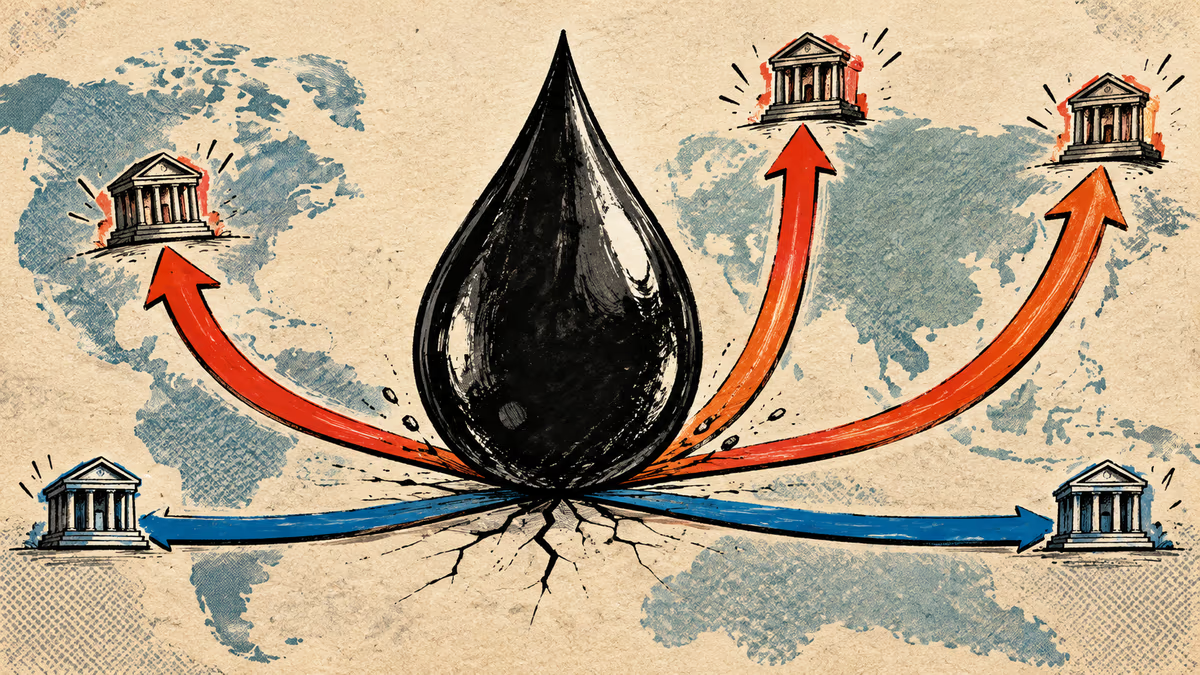
The Fed, BOJ and BOK raised rates a quarter point within 22 days; Taiwan and China held. What each said, plus the impact on Korean borrowers and the won.
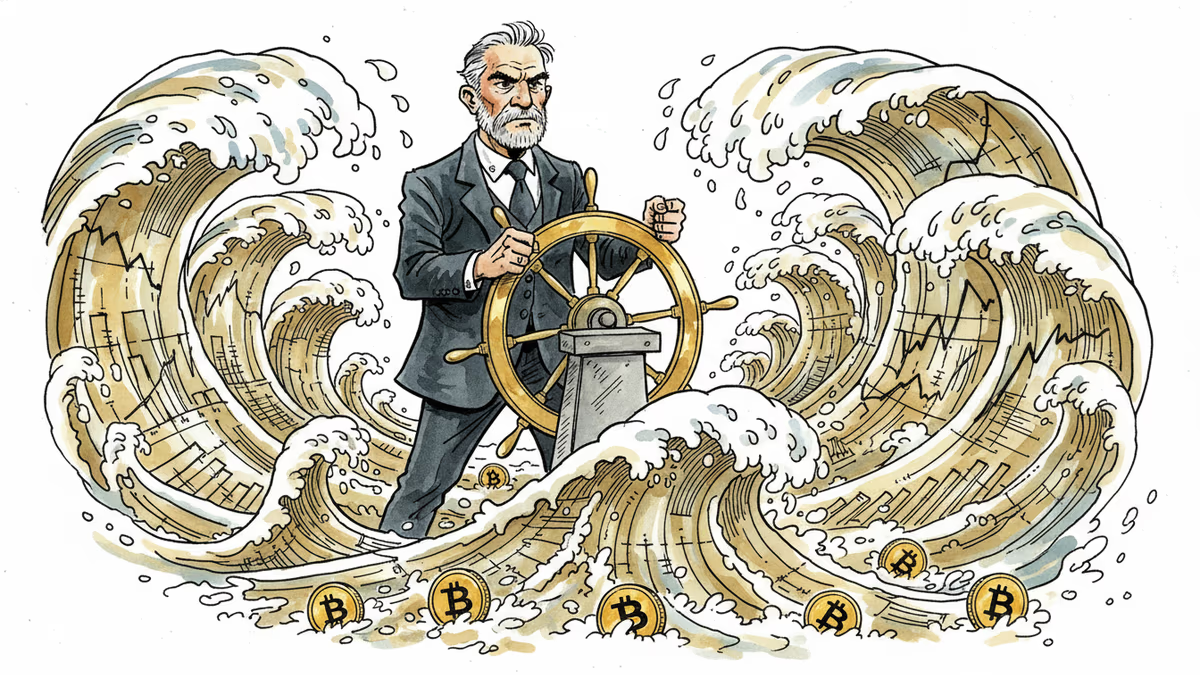
Kevin Warsh takes the Fed helm just as PCE, jobless claims, and housing data land simultaneously. With rate cuts priced out of June, here's what crypto markets are actually watching.
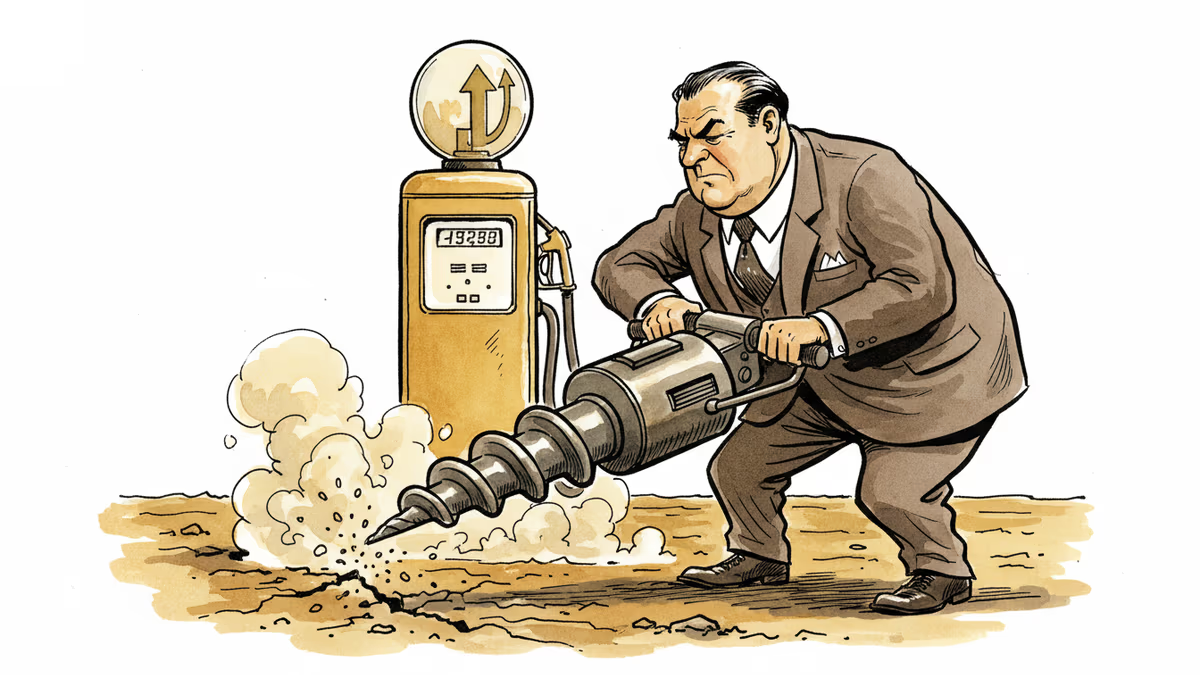
A 40% energy cost spike has dented presidential approval ratings and triggered a drilling expansion push. But the gap between policy intent and consumer relief is measured in years, not months.
Passive funds now control over $15 trillion in assets. Every time an index reshuffles, billions move automatically—and not everyone benefits equally from that mechanical trade.
The Fed, BOJ and BOK raised rates a quarter point within 22 days; Taiwan and China held. What each said, plus the impact on Korean borrowers and the won.
Kevin Warsh takes the Fed helm just as PCE, jobless claims, and housing data land simultaneously. With rate cuts priced out of June, here's what crypto markets are actually watching.
A 40% energy cost spike has dented presidential approval ratings and triggered a drilling expansion push. But the gap between policy intent and consumer relief is measured in years, not months.
Passive funds now control over $15 trillion in assets. Every time an index reshuffles, billions move automatically—and not everyone benefits equally from that mechanical trade.
Thoughts
Share your thoughts on this article
Sign in to join the conversation