
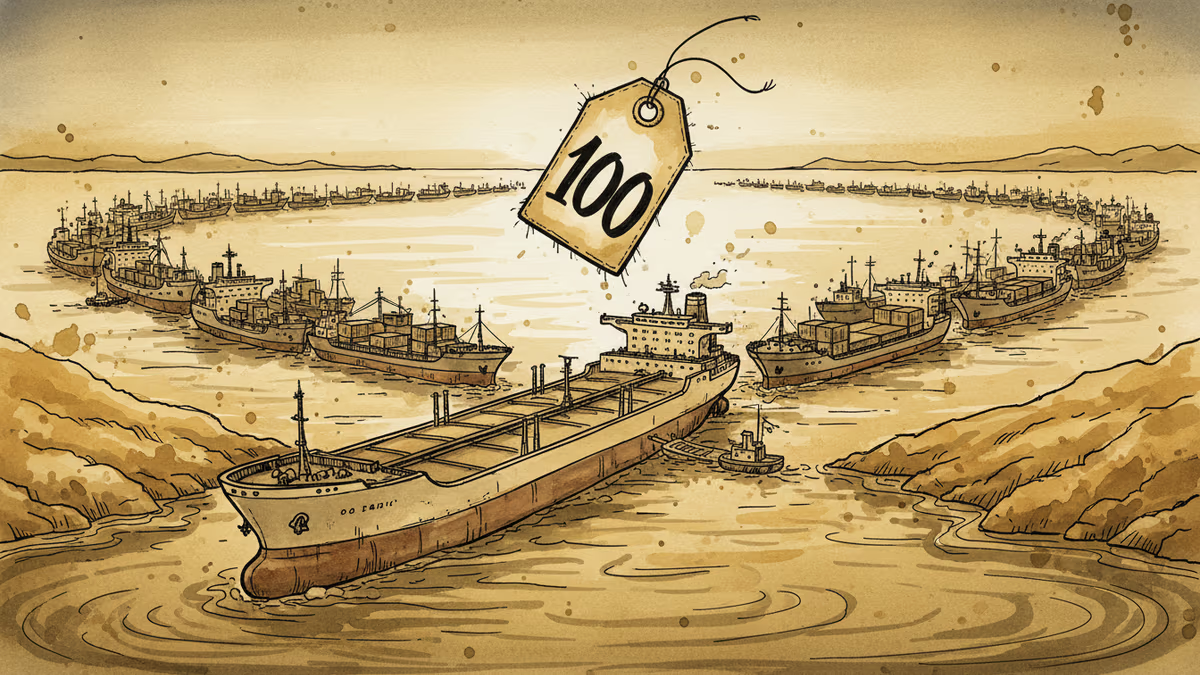
One Strait, One Forecast: Why Barclays Sees $100 Oil
Barclays raised its 2026 Brent crude forecast to $100/barrel, citing prolonged Hormuz disruption. Here's what that means for energy markets, inflation, and your energy bill.
About 20% of the world's seaborne oil passes through a waterway roughly 33 miles wide at its narrowest point. Barclays just bet that chokepoint will stay troubled long enough to push Brent crude to $100 a barrel by 2026.
What Barclays Actually Said—and Why It Matters
The bank revised its 2026 Brent forecast upward to $100/barrel, a significant departure from the prevailing market consensus of $70–$80. The driver isn't a demand surge or OPEC discipline—it's the Strait of Hormuz.
Heightened tensions between the U.S. and Iran have revived fears of partial or full closure of the strait. Iran has periodically threatened to shut the waterway as leverage in nuclear negotiations and sanctions disputes. Even without a complete blockade, the threat alone is reshaping shipping routes, inflating war-risk insurance premiums, and pushing Asian refiners to scramble for alternative crude sources.
Barclays analysts argue this isn't a short-term spike risk. If disruptions persist or recur through 2025 and into 2026, the cumulative effect on global supply buffers could be severe enough to sustain triple-digit prices. The $100 call is less a prediction of a single event and more a pricing-in of prolonged structural uncertainty.
Winners, Losers, and the Uncomfortable Middle
High oil prices don't hurt everyone equally—and that asymmetry is worth examining.

The clear winners are producers. U.S. shale operators, who need roughly $55–$65/barrel to break even on new wells, would see margins balloon. Gulf state sovereign wealth funds, already flush, would have even more capital to deploy globally. Saudi Aramco's dividend commitments become easier to sustain. ExxonMobil, Chevron, Shell—their earnings projections look very different at $100 versus $75.
The losers are energy-importing economies. Japan, South Korea, India, and much of Europe import the majority of their oil, much of it routed through Hormuz. For these countries, a $25/barrel price increase translates directly into wider trade deficits, currency pressure, and renewed inflation. India, which has been carefully managing its energy import bill by buying discounted Russian crude, faces particular exposure if Hormuz disruption tightens the entire global supply picture.
For ordinary consumers in the U.S. and Europe, the transmission mechanism is familiar: gasoline prices, heating bills, airfares, and the embedded energy costs in nearly every manufactured good. The Federal Reserve and European Central Bank, both navigating a delicate pivot toward rate cuts, would face a renewed inflation headache they didn't budget for.
The Policy Trap Nobody Wants to Talk About
Here's the uncomfortable irony at the center of this story. The U.S. maximum-pressure campaign on Iran—designed to curb nuclear proliferation—has a side effect: it keeps Hormuz tension elevated, which keeps oil prices high, which complicates the Fed's inflation fight, which delays rate relief for American households.
At the same time, the West's accelerated push toward energy transition was supposed to reduce dependence on Middle Eastern oil. But the transition is uneven. Renewables are growing fast, but the global economy still runs on hydrocarbons for industrial heat, shipping, aviation, and petrochemicals. The gap between the energy system we have and the one we're building is exactly the window in which Hormuz retains its outsized leverage.
For investors, the Barclays forecast raises real questions about portfolio positioning. Energy equities have underperformed broader markets in recent years as ESG mandates and transition narratives weighed on sentiment. A sustained $100 oil environment could force a reassessment—not because the energy transition thesis is wrong, but because timing matters enormously.
This content is AI-generated based on source articles. While we strive for accuracy, errors may occur. We recommend verifying with the original source.
Related Articles
A 40% energy cost spike has dented presidential approval ratings and triggered a drilling expansion push. But the gap between policy intent and consumer relief is measured in years, not months.
Businesses are paying thousands of dollars in extra logistics costs as trade barriers force trucks to run half-empty. Here's who pays, who profits, and what it means for prices.
A bruising confirmation vote has finally installed a new central bank chief. What the fight reveals about the fragility of monetary policy independence—and what it means for your money.
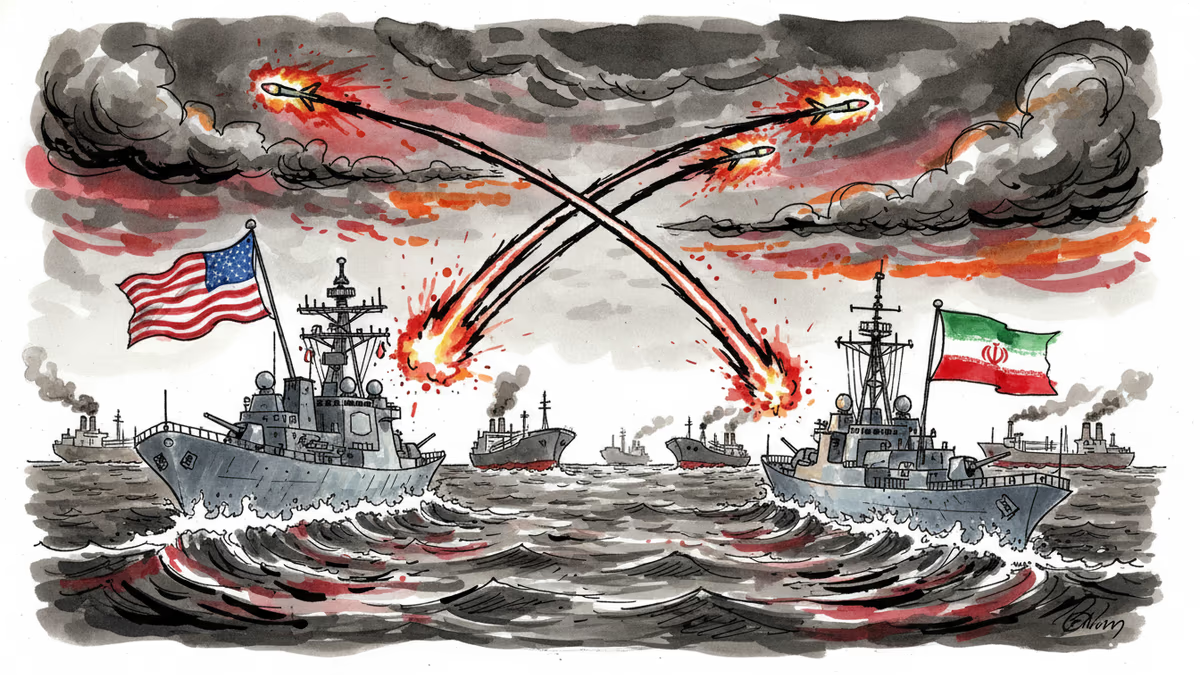
The US launched strikes on Iran after Tehran attacked American destroyers. What triggered the escalation, who stands to lose, and where does this go from here?
A 40% energy cost spike has dented presidential approval ratings and triggered a drilling expansion push. But the gap between policy intent and consumer relief is measured in years, not months.
Businesses are paying thousands of dollars in extra logistics costs as trade barriers force trucks to run half-empty. Here's who pays, who profits, and what it means for prices.
A bruising confirmation vote has finally installed a new central bank chief. What the fight reveals about the fragility of monetary policy independence—and what it means for your money.
The US launched strikes on Iran after Tehran attacked American destroyers. What triggered the escalation, who stands to lose, and where does this go from here?
Thoughts
Share your thoughts on this article
Sign in to join the conversation