
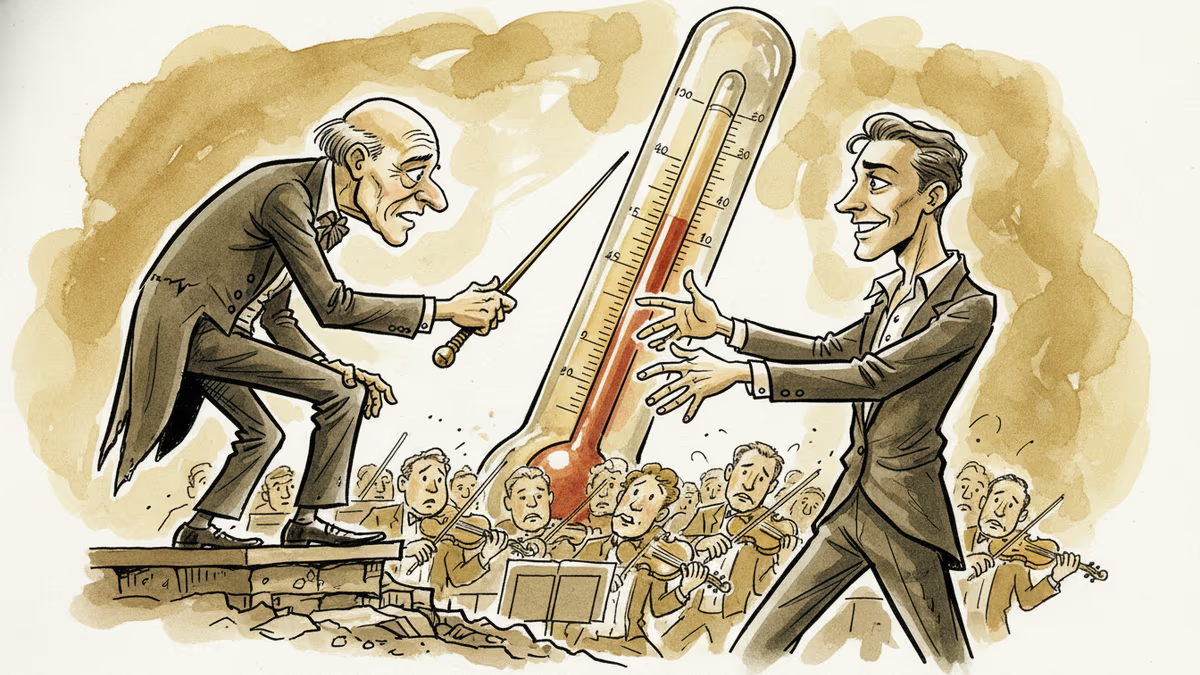
Powell's Final Meeting: Rates Hold, But the Real Question Is Who's Next
The Fed held rates at 3.50-3.75% for a fourth straight meeting. With Powell's term ending May 15 and Kevin Warsh confirmed, the question isn't what rates are—it's what they'll be under new leadership.
The number didn't move. The power did.
The U.S. Federal Reserve held its benchmark fed funds rate at 3.50%–3.75% on Wednesday—the fourth consecutive meeting without a change. Markets had priced this in almost perfectly. But the real story of April 29, 2026 wasn't the rate decision. It was the man walking out the door, and the one walking in.
The End of the Powell Era
Jerome Powell chaired what is almost certainly his final Federal Open Market Committee meeting. His term expires May 15. Hours before the decision, his designated successor, Kevin Warsh, cleared a Senate Banking Committee vote, putting him on a clear path to take the chair when Powell steps down.
Powell's post-meeting press conference carried unusual weight. Traders weren't just parsing his words for clues about June—they were listening for how he frames the dilemma he's handing off. Because what Warsh inherits is not a clean slate.
Oil at $105, and a Fed Caught in the Middle

WTI crude rebounded to just under $105 per barrel on Wednesday after President Trump reportedly rejected Iran's offer to lift the U.S. blockade and reopen the Strait of Hormuz. Oil had pulled back sharply earlier this month on hopes of a deal. That hope evaporated fast—prices surged 6% in a single session.
For the Fed, this is the worst kind of problem. Rising energy costs push headline inflation higher, which argues for keeping rates elevated—or even raising them. But the same energy shock slows consumer spending and business activity, which argues for cuts to support growth. The Fed's dual mandate—price stability and maximum employment—is pulling in opposite directions.
This is the textbook setup for stagflation risk: inflation that won't die, growth that won't accelerate. It's a scenario the Fed spent 2022 and 2023 fighting aggressively with rate hikes. Now, just as that battle seemed won, an external shock is reopening the wound.
What Changes Under Warsh
Kevin Warsh served as a Fed governor from 2006 to 2011 and has a reputation as more hawkish than Powell—more willing to prioritize inflation control over growth support, and more skeptical of prolonged low-rate environments. If that reputation holds, markets betting on rate cuts in the second half of 2026 may need to recalibrate.
The reaction in risk assets was swift. Bitcoin slipped below $76,000. Coinbase and Robinhood shares fell sharply—compounded by Robinhood missing earnings forecasts the previous night. The crypto and fintech sectors, which had rallied on expectations of an easier Fed, got a reminder that those expectations aren't guaranteed.
There's also a subtler dimension to watch. Powell maintained a careful posture of Fed independence, resisting political pressure—including from the Trump administration—to cut rates faster. Whether Warsh navigates that relationship differently will matter beyond any single rate decision.
This content is AI-generated based on source articles. While we strive for accuracy, errors may occur. We recommend verifying with the original source.
Related Articles
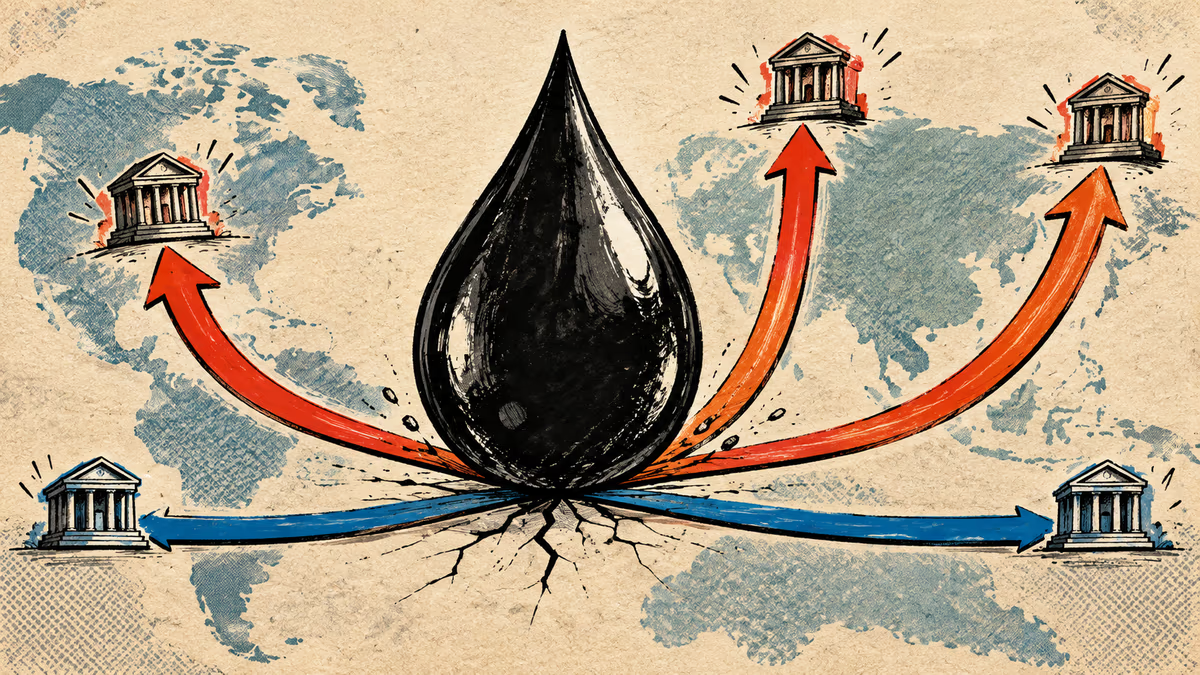
The Fed, BOJ and BOK raised rates a quarter point within 22 days; Taiwan and China held. What each said, plus the impact on Korean borrowers and the won.
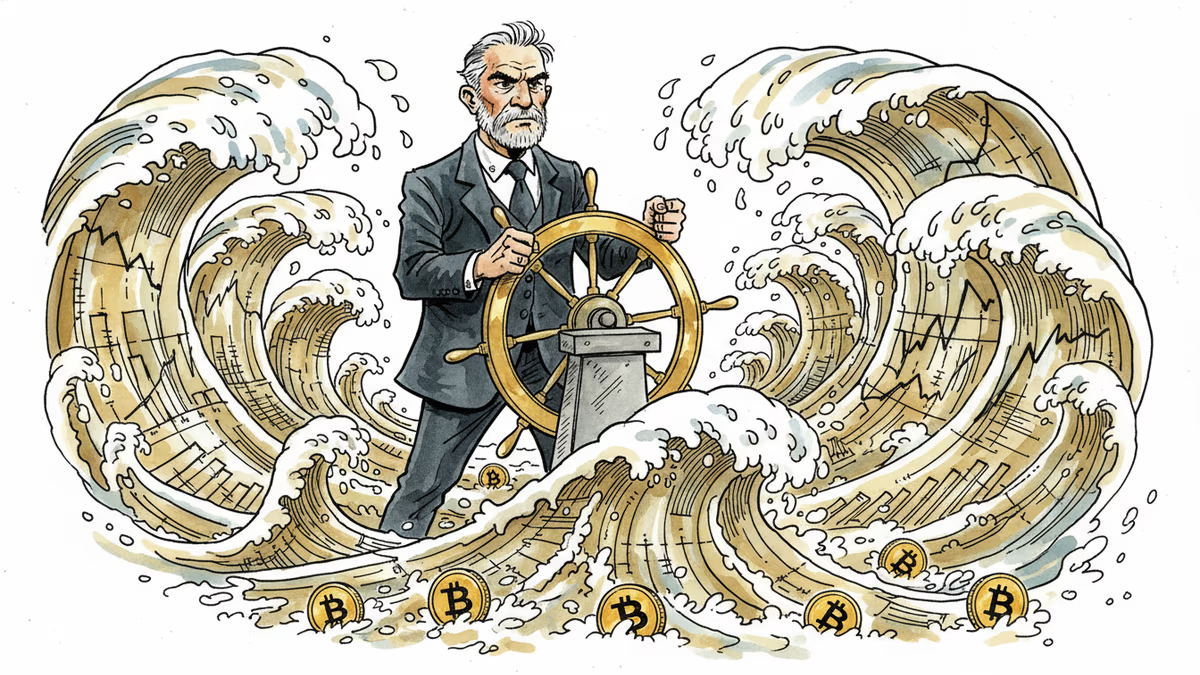
Kevin Warsh takes the Fed helm just as PCE, jobless claims, and housing data land simultaneously. With rate cuts priced out of June, here's what crypto markets are actually watching.
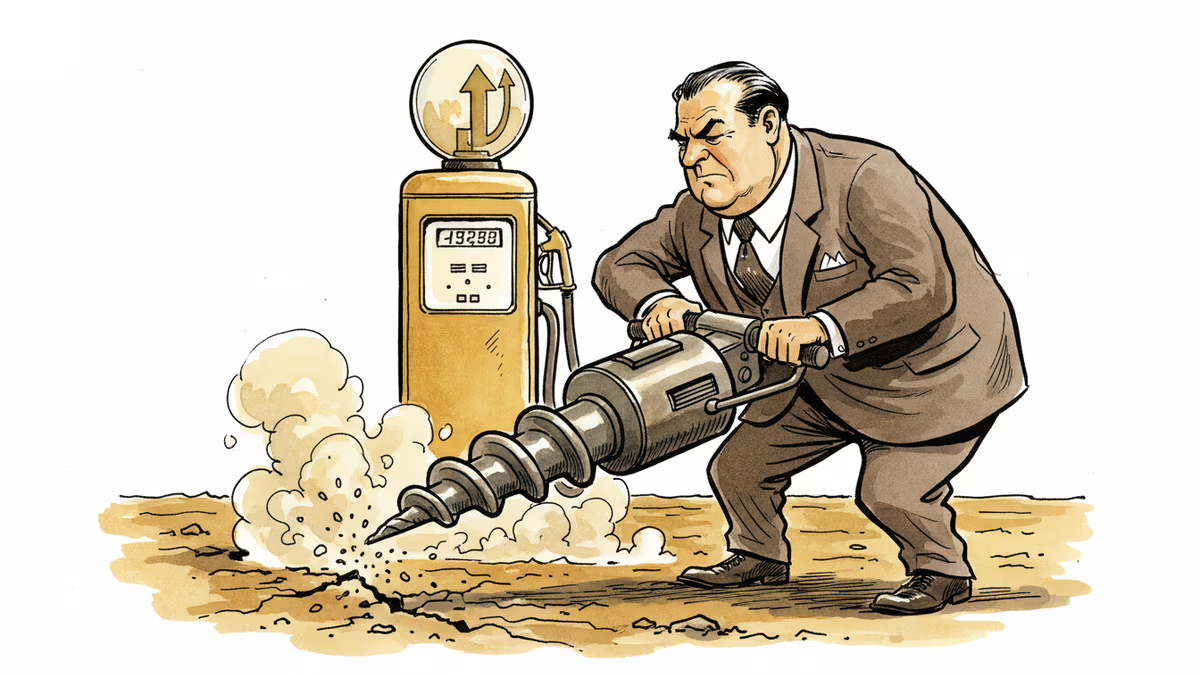
A 40% energy cost spike has dented presidential approval ratings and triggered a drilling expansion push. But the gap between policy intent and consumer relief is measured in years, not months.

Nvidia posted 85% revenue growth and a $80B buyback. Its stock still dropped — for the fourth straight post-earnings quarter. Here's what that tells us about where AI investing stands right now.
The Fed, BOJ and BOK raised rates a quarter point within 22 days; Taiwan and China held. What each said, plus the impact on Korean borrowers and the won.
Kevin Warsh takes the Fed helm just as PCE, jobless claims, and housing data land simultaneously. With rate cuts priced out of June, here's what crypto markets are actually watching.
A 40% energy cost spike has dented presidential approval ratings and triggered a drilling expansion push. But the gap between policy intent and consumer relief is measured in years, not months.
Nvidia posted 85% revenue growth and a $80B buyback. Its stock still dropped — for the fourth straight post-earnings quarter. Here's what that tells us about where AI investing stands right now.
Thoughts
Share your thoughts on this article
Sign in to join the conversation