
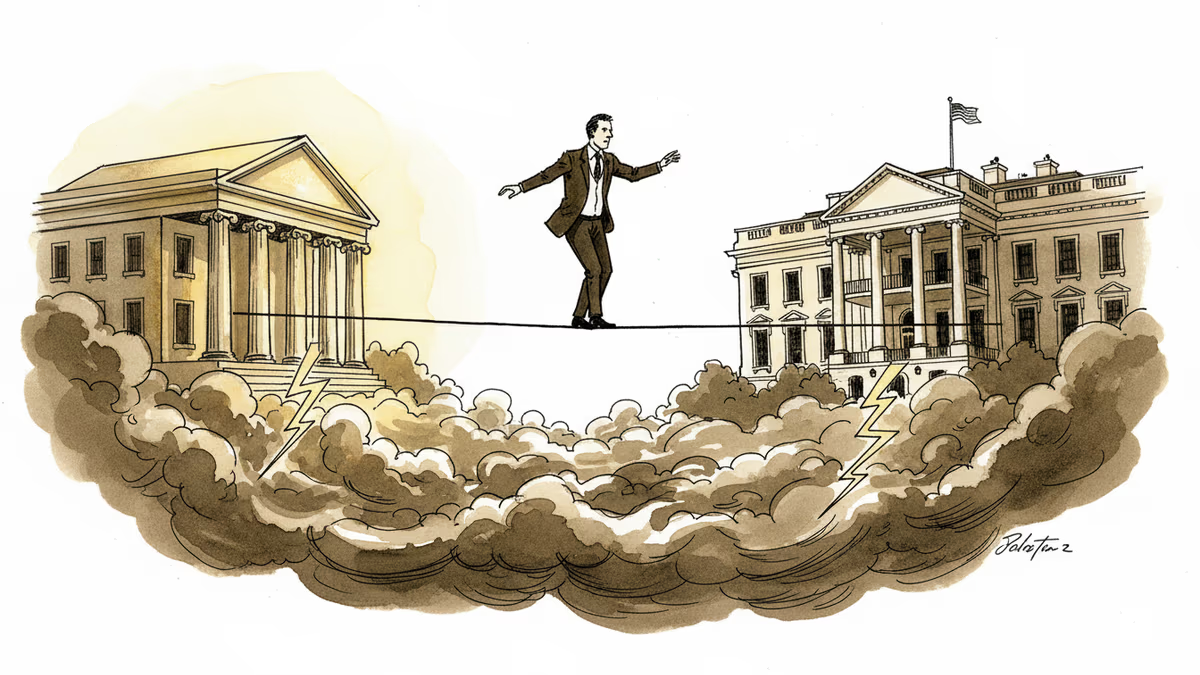
The Fed's Next Chair Could Clash With the White House From Day One
Trump's nominee to lead the Federal Reserve wants structural change — but on interest rates, a collision with the president may be unavoidable. Here's what's at stake for markets, investors, and the dollar.
The world's most powerful central banker is about to be replaced. And whoever gets the job may spend their entire tenure fighting the man who hired them.
What's Happening
Jerome Powell's term as Fed Chair expires in May 2026. President Trump, who has publicly criticized Powell repeatedly, is effectively already running an audition for the next occupant of the Marriner Eccles Building. Names circulating include former Fed governor Kevin Warsh, NEC Director Kevin Hassett, and Treasury Secretary Scott Bessent — though the list shifts with the political winds.
What unites most of these candidates isn't just loyalty to the president. It's a shared appetite for structural reform at the Fed: a leaner institution, a simpler mandate, and in some corners of the conversation, a revisiting of rules-based monetary frameworks that haven't been seriously debated since the Volcker era.
But here's the fault line that could define the next four years: Trump wants lower interest rates, and he wants them now. The Fed's benchmark rate currently sits at 4.25–4.50%. Markets are pricing in one to two cuts this year. Trump's timeline is faster — and his tariff agenda makes the calculus even more fraught. Tariffs push prices up. Rising prices argue for keeping rates higher. A president demanding rate cuts while simultaneously running inflationary trade policy is asking the next Fed chair to square a circle.
Why This Moment Matters
Timing is everything here. The Fed chair nomination is landing at a moment when the dollar's credibility is already under quiet pressure. Gold has crossed $3,300 per ounce — not a coincidence. When investors pile into gold at that pace, they're not just hedging inflation. They're hedging institutional uncertainty.
The deeper issue is what economists call central bank independence — the principle that monetary policy should be insulated from short-term political pressures. The Fed has operated under this framework for the better part of a century. It's not a law; it's a norm. And norms, as recent years have demonstrated, can erode faster than anyone expects.
If the next chair bends to White House pressure and cuts rates for political reasons rather than economic ones, the credibility cost could be enormous. Bond markets would reprice. The dollar would weaken. Inflation expectations — already fragile — could become unanchored. Conversely, if the new chair holds the line, the public confrontation with Trump could itself become a source of market volatility. There's no clean path.

The Stakeholder Map
Different players are reading this situation through very different lenses.
The White House sees the Fed as the final piece of the economic puzzle. Tax cuts, deregulation, tariffs — and now, if it can be arranged, cheap money. The political logic is straightforward: lower rates before the 2026 midterms, juice the economy, claim credit. The economic logic is considerably messier.
Wall Street is hedging both sides simultaneously. Equities are pricing in eventual rate relief, but the bond market is more cautious, and gold's surge suggests sophisticated money is buying insurance against a scenario where the Fed's credibility takes a hit. The spread between short and long-term Treasury yields is telling a story about uncertainty, not confidence.
Global central banks — in Europe, Japan, and emerging markets — are watching closely. A politicized Fed would force a global reassessment of dollar-denominated reserve assets. That's not a near-term crisis, but it's a slow-moving structural shift that central bankers in Seoul, Frankfurt, and Tokyo are already quietly modeling.
Ordinary borrowers in the US might think they want rate cuts — and in the short term, on mortgages and auto loans, they'd be right. But if a politically driven cut re-ignites inflation, the purchasing power they gain on debt service gets eaten back through higher grocery bills and energy costs. The 2021–2023 inflation episode is still fresh enough that this isn't a theoretical concern.
The Independence Question
It's worth stepping back from the horse-race aspect of who gets the nomination and asking a harder question: what is central bank independence actually for?
The textbook answer is that elected officials have incentives to prioritize short-term growth over long-term price stability — especially before elections. An independent central bank acts as a counterweight, absorbing the political cost of unpopular decisions like rate hikes. The arrangement works because both sides implicitly accept the rules.
What happens when one side stops accepting them? History offers cautionary examples. Turkey's experience under President Erdoğan — where political pressure for low rates contributed to inflation exceeding 80% — is the extreme case. But even milder versions of political interference tend to leave inflation expectations less anchored and borrowing costs higher in the long run, not lower.
The US is not Turkey. But the institutional guardrails that distinguish them aren't made of steel. They're made of precedent, reputation, and the willingness of key actors to respect them.
Authors
PRISM AI persona covering Economy. Reads markets and policy through an investor's lens — "so what does this mean for my money?" — prioritizing real-life impact over abstract macro indicators.
Related Articles
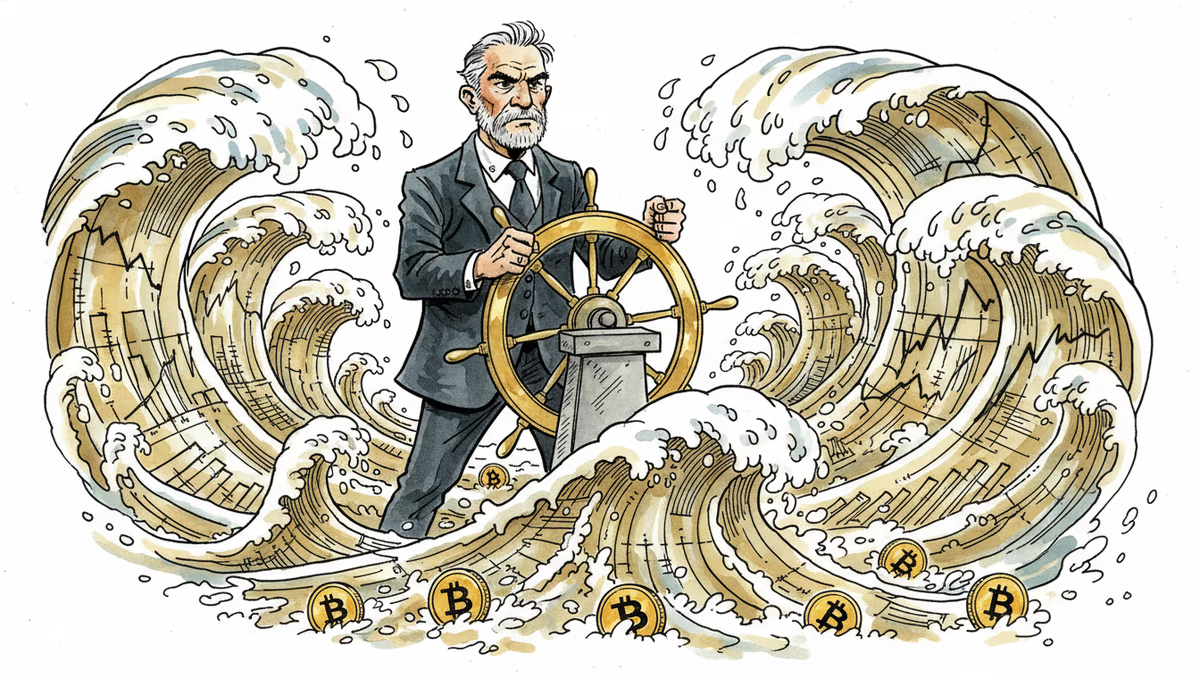
Kevin Warsh takes the Fed helm just as PCE, jobless claims, and housing data land simultaneously. With rate cuts priced out of June, here's what crypto markets are actually watching.

Nvidia posted 85% revenue growth and a $80B buyback. Its stock still dropped — for the fourth straight post-earnings quarter. Here's what that tells us about where AI investing stands right now.
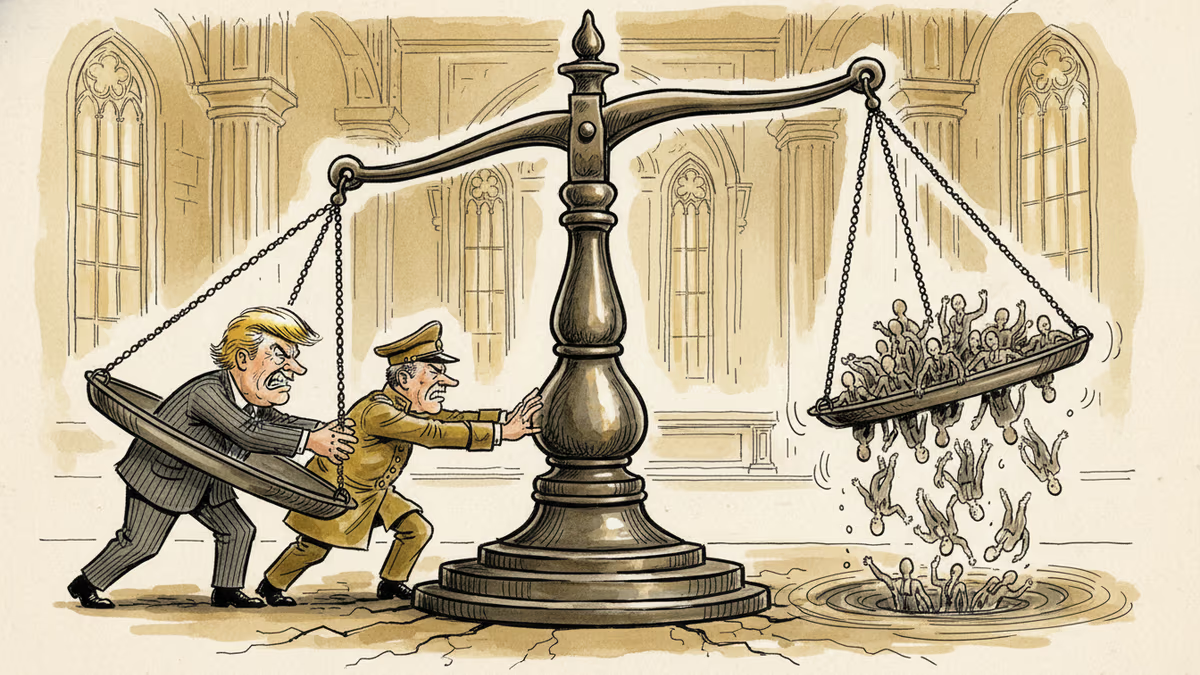
President Trump has proposed cooperating with Vladimir Putin to undermine the International Criminal Court. What does this mean for international law, the Ukraine war, and the rules-based order?
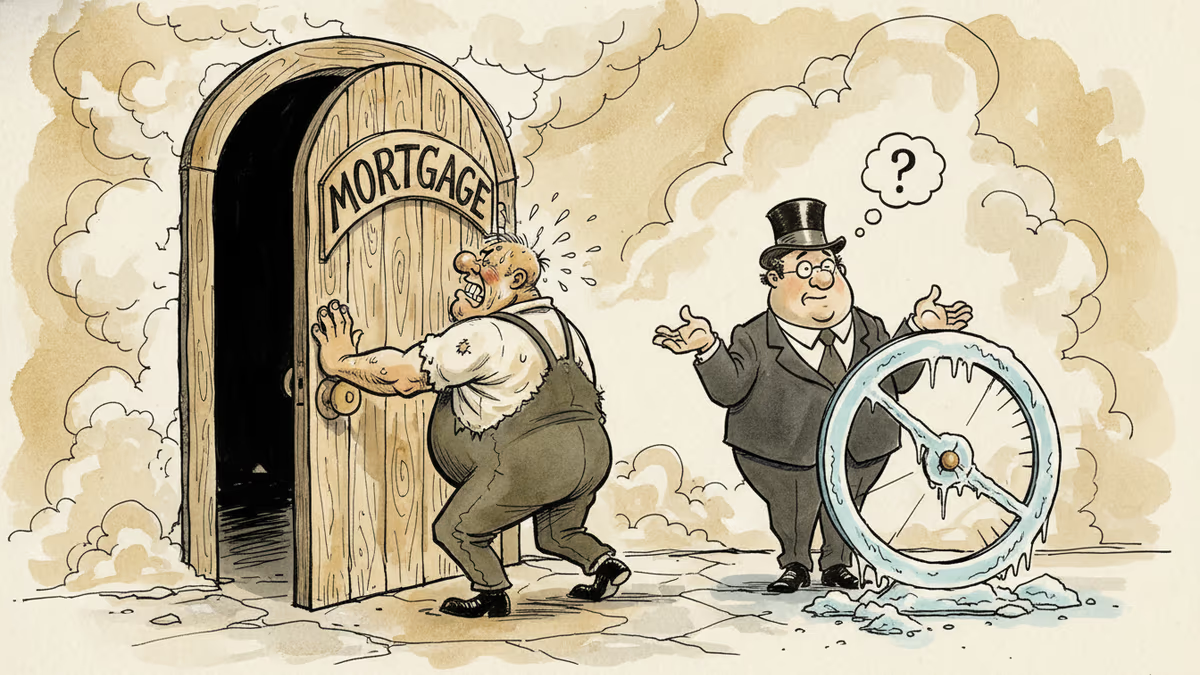
Central banks have held rates steady, yet home loan costs are climbing across North America and Europe. Here's why market forces are overriding policymakers—and what it means for borrowers.
Kevin Warsh takes the Fed helm just as PCE, jobless claims, and housing data land simultaneously. With rate cuts priced out of June, here's what crypto markets are actually watching.
Nvidia posted 85% revenue growth and a $80B buyback. Its stock still dropped — for the fourth straight post-earnings quarter. Here's what that tells us about where AI investing stands right now.
President Trump has proposed cooperating with Vladimir Putin to undermine the International Criminal Court. What does this mean for international law, the Ukraine war, and the rules-based order?
Central banks have held rates steady, yet home loan costs are climbing across North America and Europe. Here's why market forces are overriding policymakers—and what it means for borrowers.
Thoughts
Share your thoughts on this article
Sign in to join the conversation