
Rates Frozen, Mortgages Rising: Who's Really in Control?
Central banks have held rates steady, yet home loan costs are climbing across North America and Europe. Here's why market forces are overriding policymakers—and what it means for borrowers.
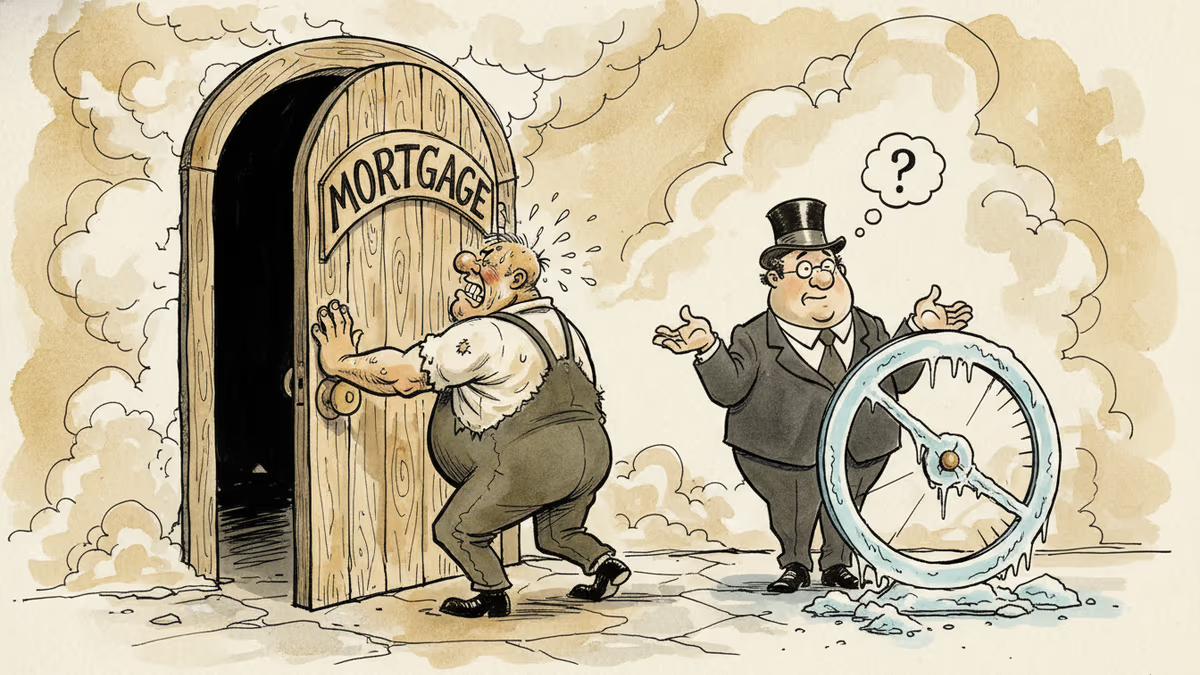
The central bank didn't move. Your mortgage payment did anyway.
Across North America and Europe, home loan costs have quietly crept higher even as central banks have kept their benchmark rates on hold. The Federal Reserve has held its target range at 4.25–4.50%. The European Central Bank paused its cutting cycle. By conventional logic, borrowing costs should have stabilized. Instead, they climbed.
The Gap Between What Central Banks Do and What Markets Charge
Here's the mechanism most headlines skip: residential mortgage rates don't track central bank policy rates as directly as people assume. They follow long-term government bond yields—particularly the 10-year Treasury in the US and equivalent benchmarks in Europe. And those yields have been rising on their own terms.
Three forces are driving this divergence. First, government deficits in the US, UK, France, and elsewhere have ballooned, requiring record volumes of bond issuance. More supply means lower prices—and higher yields. Second, inflation hasn't fully surrendered. US core inflation remained stubbornly above 3% into early 2026, keeping bond investors skeptical that price stability is truly restored. Third, traditional large buyers of US Treasuries—notably China and Japan—have been trimming their holdings, reducing the demand cushion that once kept yields in check.
The result: the average 30-year fixed mortgage rate in the US has climbed back toward 7.5%. The UK's 2-year fixed mortgage rate has held above 5.75%. Eurozone borrowers in countries like Germany and the Netherlands are seeing similar upward drift on longer-term products.
Winners, Losers, and the Locked-In Divide

The distributional effects are stark.
First-time buyers bear the heaviest load. On a $400,000 home with 20% down, a 30-year mortgage at 7.5% carries a monthly payment of roughly $2,240. At the 3% rates available in 2021, that same loan cost around $1,350 a month—a difference of $890 every single month, or more than $10,000 a year. The house hasn't changed. The cost of owning it has.
Existing homeowners who locked in low fixed rates are largely insulated—and in some ways benefit, as higher borrowing costs suppress new supply and protect their asset values. Banks, meanwhile, are quietly expanding net interest margins as the spread between deposit rates and mortgage rates widens.
Governments face a structural bind. Cutting rates risks reigniting inflation. Reining in deficits risks tipping fragile economies into recession. Politicians who campaigned on housing affordability are watching market forces undercut their pledges without a single central bank vote being cast.
The Policy Tool That's Losing Its Grip
What's unfolding isn't just a housing story. It's a stress test for the transmission mechanism of monetary policy itself.
For decades, the operating assumption has been that central banks set short-term rates, and the rest of the yield curve follows in a reasonably predictable direction. That assumption is fraying. When fiscal policy and market structure diverge from monetary intent, the central bank's lever becomes less effective—not broken, but weakened.
This dynamic has historical precedent. In the early 1980s, Fed Chair Paul Volcker had to push rates to 20% partly because bond markets had stopped trusting that inflation would be controlled. The current situation is less extreme, but the underlying logic is similar: when credibility erodes, markets price in their own risk premium regardless of what the policy rate says.
For borrowers, the practical implication is uncomfortable. Even if central banks begin cutting rates later in 2026, long-term mortgage rates may not follow proportionally—or may not follow at all—if bond markets remain unconvinced about fiscal trajectories.
This content is AI-generated based on source articles. While we strive for accuracy, errors may occur. We recommend verifying with the original source.
Related Articles
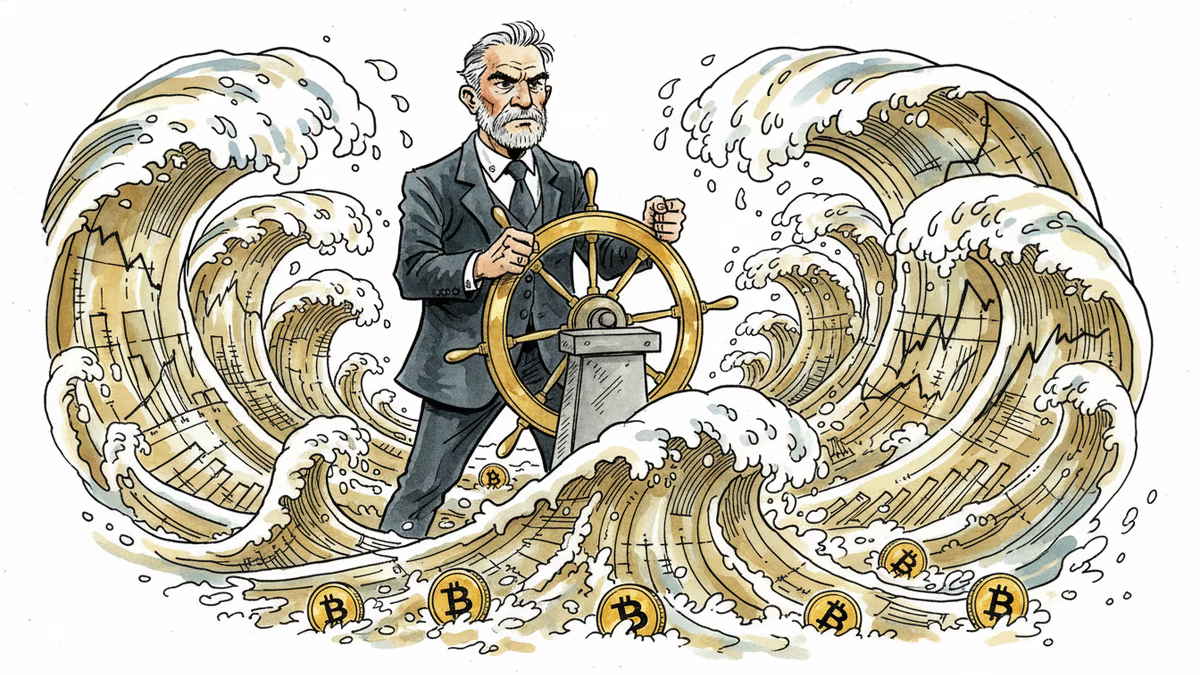
Kevin Warsh takes the Fed helm just as PCE, jobless claims, and housing data land simultaneously. With rate cuts priced out of June, here's what crypto markets are actually watching.
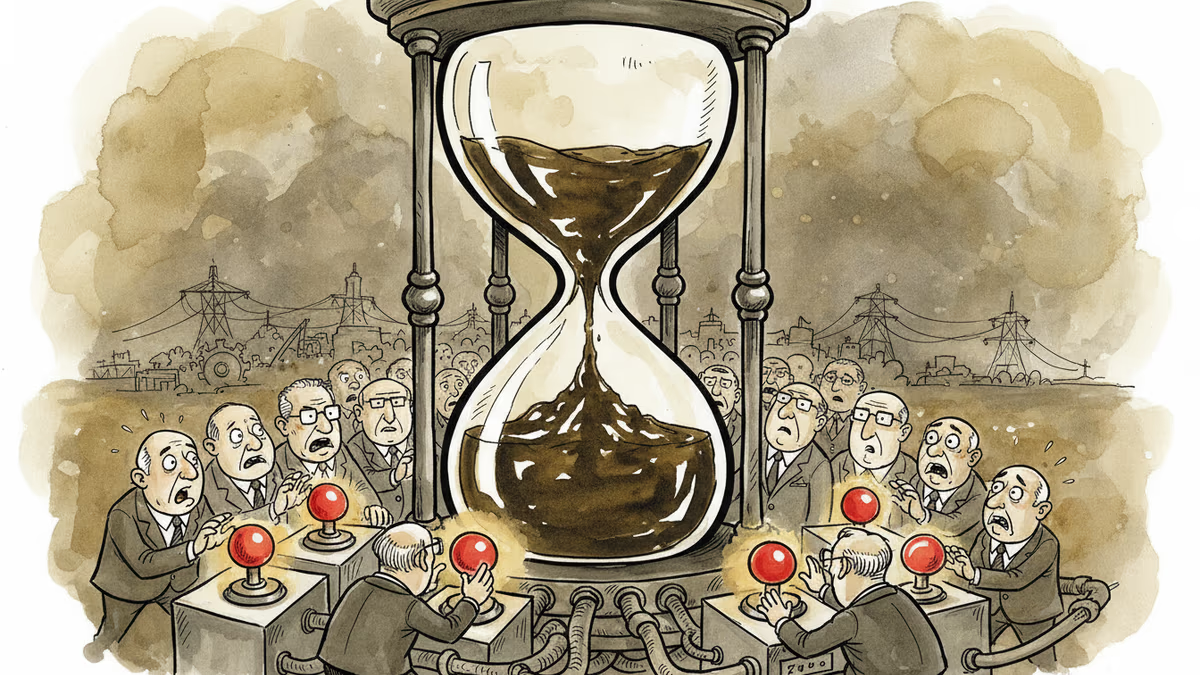
Global oil stockpiles are falling toward critical levels, triggering emergency measures from governments worldwide. What this means for energy prices, inflation, and your bottom line.
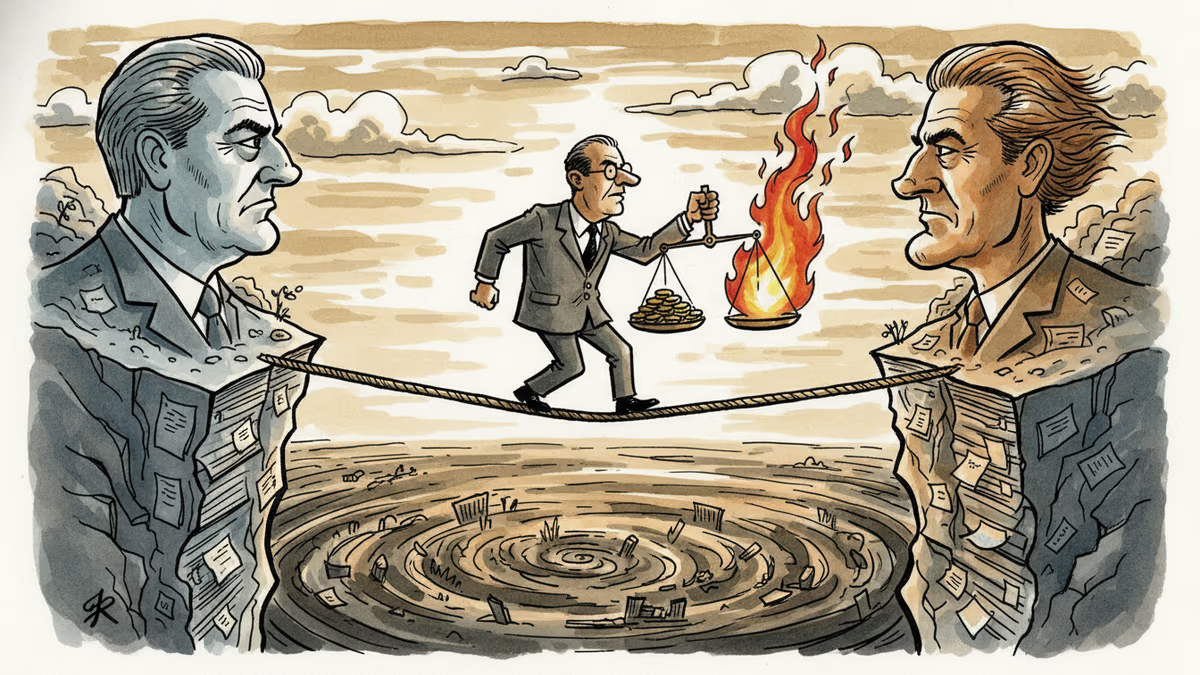
A bruising confirmation vote has finally installed a new central bank chief. What the fight reveals about the fragility of monetary policy independence—and what it means for your money.

The US president lands in Beijing for a two-day summit. Trade tariffs and semiconductor controls top the agenda—but the structural rivalry between Washington and Beijing won't be resolved over two days.
Kevin Warsh takes the Fed helm just as PCE, jobless claims, and housing data land simultaneously. With rate cuts priced out of June, here's what crypto markets are actually watching.
Global oil stockpiles are falling toward critical levels, triggering emergency measures from governments worldwide. What this means for energy prices, inflation, and your bottom line.
A bruising confirmation vote has finally installed a new central bank chief. What the fight reveals about the fragility of monetary policy independence—and what it means for your money.
The US president lands in Beijing for a two-day summit. Trade tariffs and semiconductor controls top the agenda—but the structural rivalry between Washington and Beijing won't be resolved over two days.
Thoughts
Share your thoughts on this article
Sign in to join the conversation