
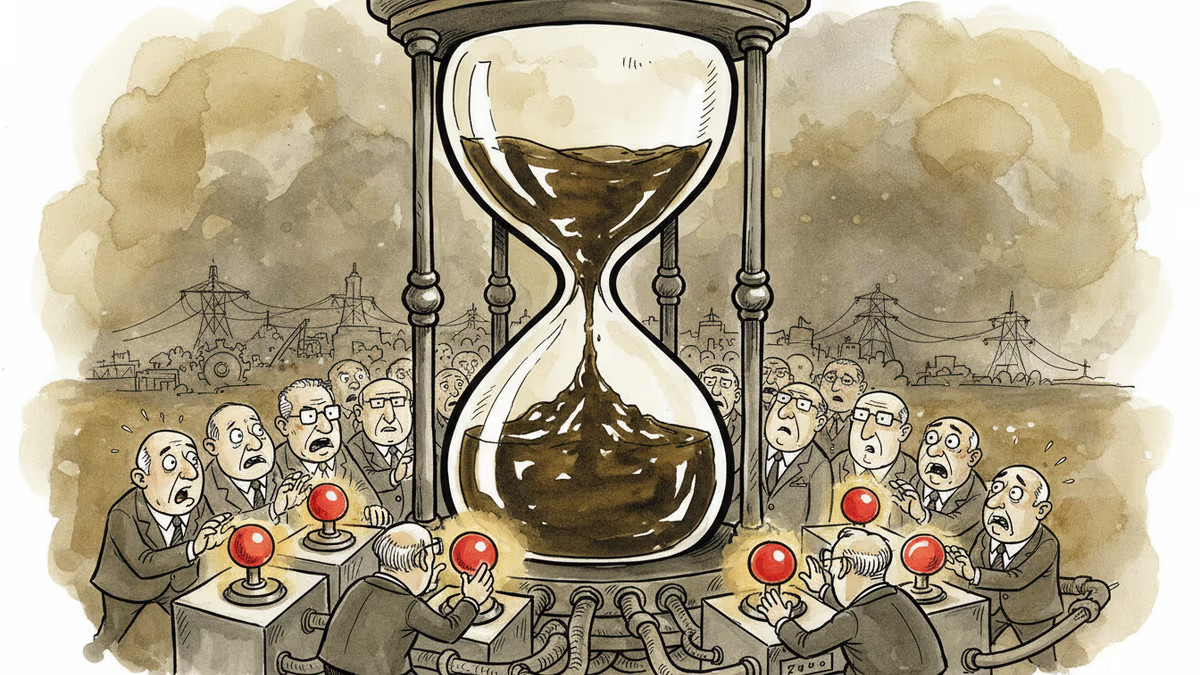
The World's Oil Cushion Is Thinning Fast
Global oil stockpiles are falling toward critical levels, triggering emergency measures from governments worldwide. What this means for energy prices, inflation, and your bottom line.
When governments start raiding their emergency oil reserves, it's worth asking: what exactly are they so worried about?
Across multiple countries, that question is no longer hypothetical. Oil stockpiles are falling toward levels that have historically preceded price spikes, supply disruptions, and the kind of inflation that erodes household budgets faster than any wage increase can compensate.
How Low Is Low?
Commercial oil inventories among OECD nations have been declining steadily through 2026, now sitting roughly 10–15% below the five-year average, according to IEA tracking data. That gap matters because inventories are the buffer — the margin of safety between a smooth-functioning energy market and one that panics at any unexpected shock.
The forces driving the drawdown are well-documented but compounding in uncomfortable ways. OPEC+ has extended production cuts repeatedly, keeping a tight ceiling on supply. Geopolitical friction in the Middle East has added a persistent risk premium to shipping routes. And as the Northern Hemisphere heads into its summer demand peak — aviation, road transport, air conditioning — consumption is climbing precisely when the cushion is thinnest.
The response has been predictable: governments are reaching for their Strategic Petroleum Reserves (SPR). The United States, which released a record 180 million barrels after Russia's invasion of Ukraine in 2022 — driving reserves to their lowest point in four decades — is once again in discussions about further releases before those levels have been meaningfully replenished.
Who Wins, Who Pays

Oil markets, like most markets, have clear winners and losers when prices rise.
Saudi Arabia, Russia, and U.S. shale producers are on the winning side. Every dollar added to the barrel price flows directly into their revenue streams. For oil-importing economies — most of Europe, Japan, South Korea, India — the math runs the other way. Higher crude costs translate into higher fuel prices, higher transport costs, higher manufacturing input costs, and eventually higher prices for almost everything else.
For the average American household, a sustained move above $90 per barrel typically adds roughly $30–40 per month to fuel and energy costs. That's before the second-order effects ripple through airline tickets, grocery delivery fees, and utility bills. For businesses with thin margins and long supply chains, the pressure is more acute.
The irony is that SPR releases — the primary emergency tool — are a short-term fix with a built-in complication. When governments eventually buy oil back to replenish reserves, they become buyers in the same market they were trying to cool. The 2022 U.S. release demonstrated this clearly: prices dipped, then recovered, and the replenishment process itself has contributed to demand.
The Structural Problem Behind the Emergency
There's a deeper pattern worth examining. The cycle of tightening inventories, emergency releases, and partial recoveries has repeated across multiple commodity cycles. Each time, the stated cause is different — a pandemic demand surge, a war, a cartel decision — but the underlying vulnerability is the same: consuming economies remain structurally dependent on a supply chain they do not control.
OPEC+ has demonstrated repeatedly that it can respond to SPR releases with coordinated production cuts, effectively neutralizing the price impact. This is less a market and more a managed negotiation between blocs with opposing interests — and consuming nations have consistently found themselves with fewer levers than they expected.
The counterargument, increasingly heard in energy policy circles, is that the transition to renewables is already shortening the timeline on this dependency. Solar and wind costs have fallen to levels competitive with fossil fuels in many markets. But the transition operates on a decade-long horizon, while inventory crises operate on a quarterly one. The gap between those two timelines is where emergency measures live.
This content is AI-generated based on source articles. While we strive for accuracy, errors may occur. We recommend verifying with the original source.
Related Articles
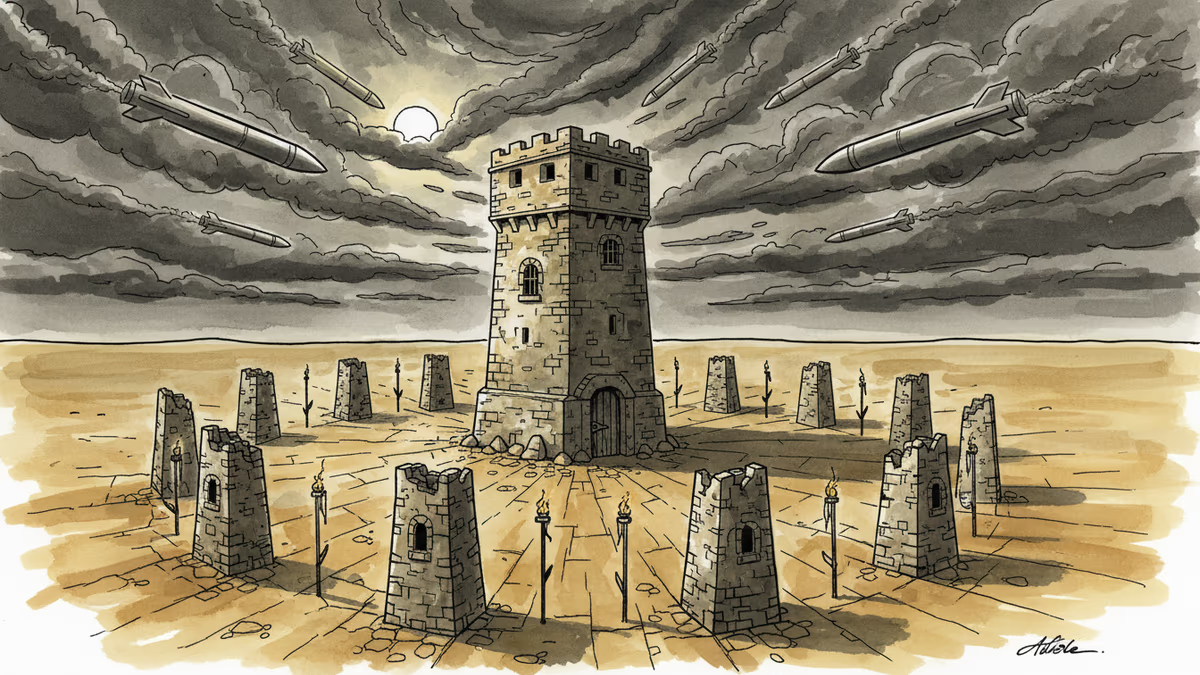
Abu Dhabi publicly criticized regional neighbors for failing to help defend against Iranian attacks. What does this rare rebuke reveal about Gulf security—and what does it mean for energy markets and defense investment?
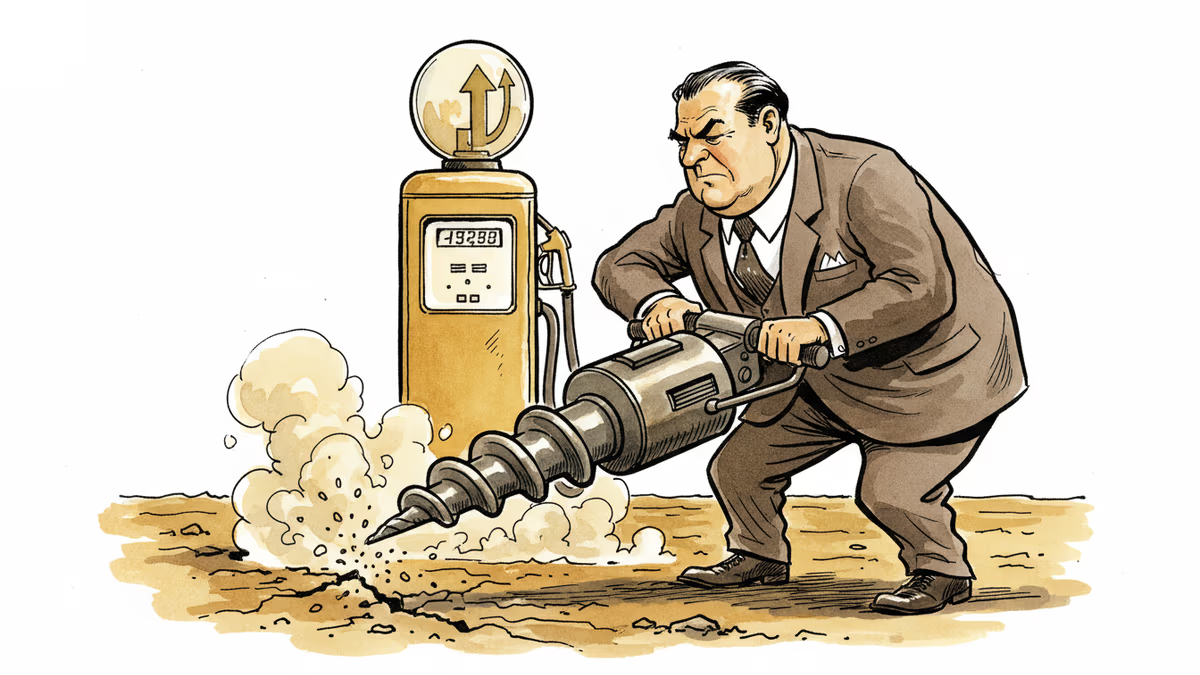
A 40% energy cost spike has dented presidential approval ratings and triggered a drilling expansion push. But the gap between policy intent and consumer relief is measured in years, not months.
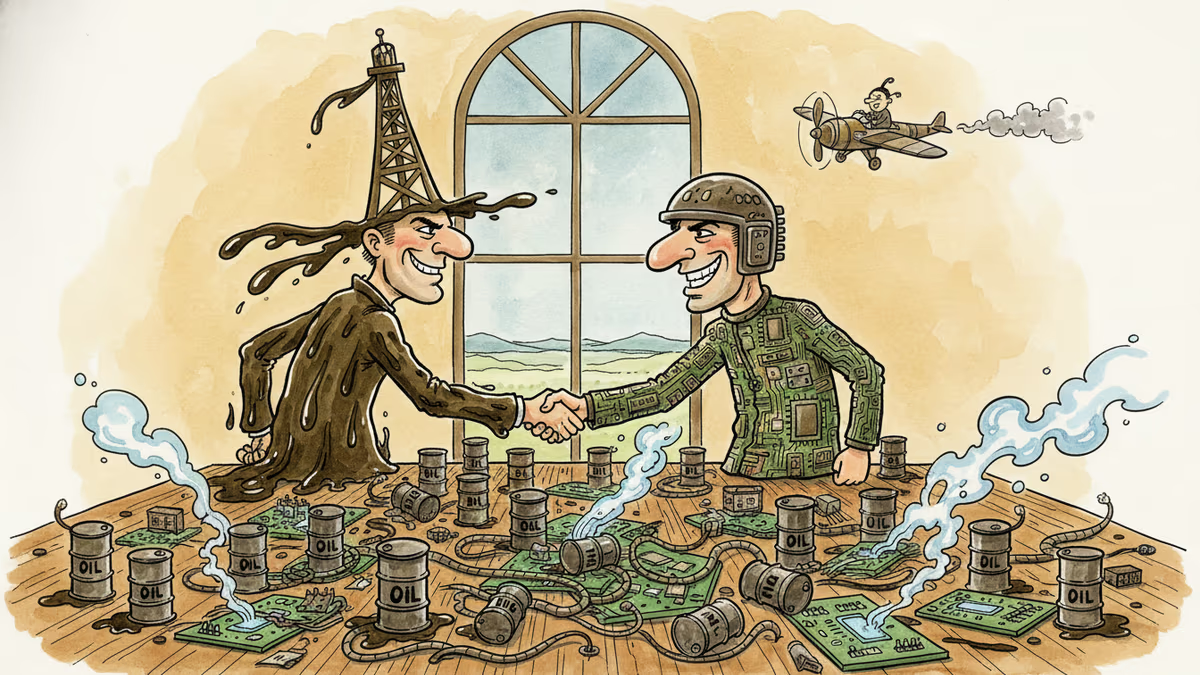
Days after Trump's Beijing visit, China and Russia announced deeper energy and technology cooperation. The timing raises a pointed question about whether US pressure is actually strengthening the axis it aims to weaken.
Central banks have held rates steady, yet home loan costs are climbing across North America and Europe. Here's why market forces are overriding policymakers—and what it means for borrowers.
Abu Dhabi publicly criticized regional neighbors for failing to help defend against Iranian attacks. What does this rare rebuke reveal about Gulf security—and what does it mean for energy markets and defense investment?
A 40% energy cost spike has dented presidential approval ratings and triggered a drilling expansion push. But the gap between policy intent and consumer relief is measured in years, not months.
Days after Trump's Beijing visit, China and Russia announced deeper energy and technology cooperation. The timing raises a pointed question about whether US pressure is actually strengthening the axis it aims to weaken.
Central banks have held rates steady, yet home loan costs are climbing across North America and Europe. Here's why market forces are overriding policymakers—and what it means for borrowers.
Thoughts
Share your thoughts on this article
Sign in to join the conversation