
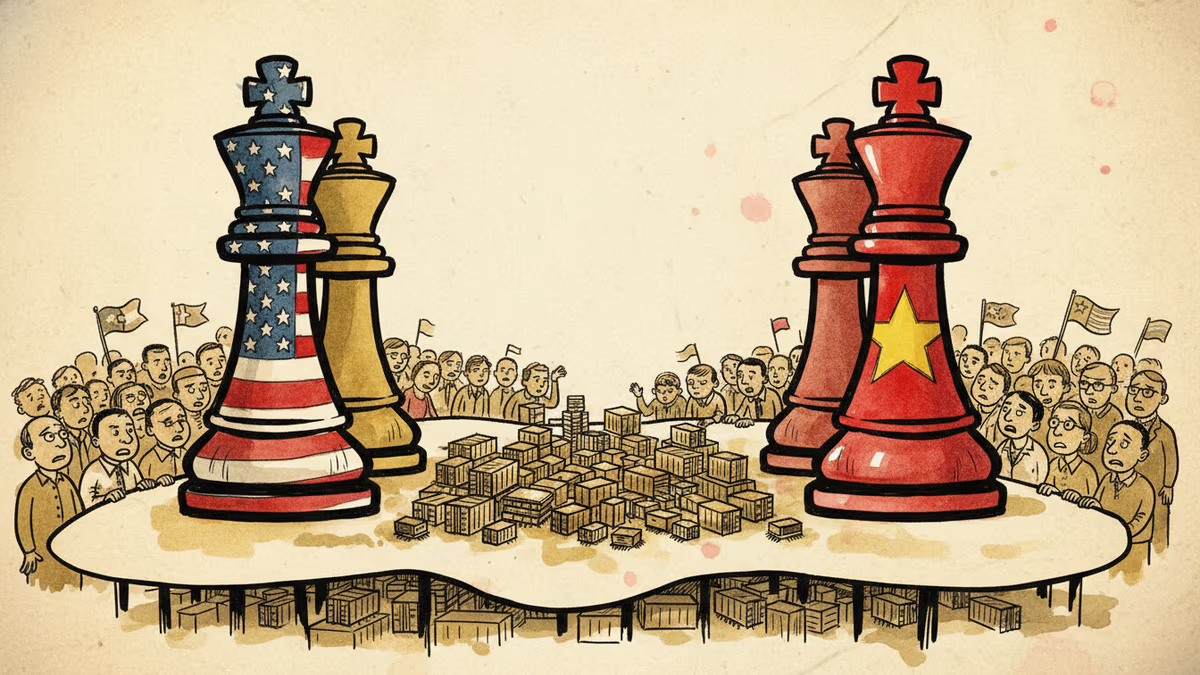
Beijing Summit: Two Leaders, One Table, No Easy Answers
The US president lands in Beijing for a two-day summit. Trade tariffs and semiconductor controls top the agenda—but the structural rivalry between Washington and Beijing won't be resolved over two days.
The flight path from Washington to Beijing is roughly 11,000 kilometers. The diplomatic distance between the two capitals, right now, is considerably harder to measure.
The US president has arrived in Beijing for a two-day summit with Chinese leadership—the kind of meeting that would have seemed unremarkable a decade ago, but now carries the weight of tariff walls, semiconductor blacklists, and a rivalry that has restructured global supply chains. The fact that both sides agreed to sit down at all is, by current standards, progress.
But progress toward what, exactly?
What's Actually on the Table
Two fault lines dominate the agenda. The first is trade. The US has maintained sweeping tariffs on Chinese goods, and Beijing has responded in kind. Bilateral trade still runs into the hundreds of billions of dollars annually, but the architecture of that trade is quietly shifting—American companies have been diversifying production to Vietnam, India, and Mexico, while China has been deepening ties with the Global South and pushing domestic consumption as a buffer.
The second fault line is technology, and it's the sharper of the two. Washington has imposed export controls on advanced semiconductors and chip-making equipment, blocking companies like Nvidia from selling high-performance GPUs to Chinese customers, and restricting ASML's extreme ultraviolet lithography machines from reaching Chinese fabs. Beijing frames this as technological containment. Washington calls it national security. Both descriptions are, in their own way, accurate.
Why This Moment
The timing matters. Neither side is negotiating from a position of uncomplicated strength.
The US faces persistent questions about inflation, with tariff-driven import costs quietly biting American consumers—particularly in electronics and manufacturing inputs. Domestically, the political calculus around China is complex: hawkish sentiment runs across party lines, which limits how much flexibility any administration can demonstrate publicly.
China, meanwhile, is navigating a prolonged property sector slump and sluggish domestic demand. The export-led growth model that powered decades of expansion is under strain, and the structural pivot toward consumption has moved slower than Beijing's planners hoped.

Both governments, in short, have reasons to want a degree of stabilization—without the optics of backing down.
What a Deal Could Look Like—and What It Can't Fix
The most plausible outcome of a summit like this isn't resolution. It's de-escalation at the margins. Think: modest tariff adjustments on specific categories, renewed working groups on fentanyl precursors or climate, perhaps some language on financial stability coordination.
What it almost certainly won't resolve: the fundamental contest over semiconductor supply chains, the status of Taiwan, military posturing in the South China Sea, or the broader question of whose technological standards govern the next generation of global infrastructure—5G, AI chips, undersea cables.
Some analysts describe the current US-China dynamic as managed competition: both sides accept the rivalry as structural, and the goal becomes preventing it from tipping into direct conflict. If that framing holds, this Beijing summit is less a turning point than a maintenance appointment.
The Stakeholders Watching From the Sidelines
For investors, the immediate read-through runs through semiconductors. Any softening of export controls—even a carve-out for legacy chips—would move markets in Nvidia, Qualcomm, and Applied Materials. Conversely, any escalation in tech restrictions would accelerate the bifurcation of global chip supply chains, with long-term implications for where fabs get built and who controls the underlying IP.
For US allies in Asia and Europe, the stakes are different but no less real. South Korea's Samsung and SK Hynix operate major production facilities inside China. Japan's equipment makers and the Netherlands' ASML are already caught between Washington's export control regime and their own commercial interests in the Chinese market. These countries don't have seats at the Beijing table, but they'll live with whatever gets decided there.
For emerging markets, the summit is a signal about which version of globalization survives: one where the US and China compete but maintain shared rules, or one where the world economy fractures into parallel systems with incompatible standards.
The Limits of Two Days
History suggests caution about reading too much into summit optics. US-China joint statements have a long tradition of meaning different things to different audiences—carefully worded paragraphs that Washington reads as commitments and Beijing reads as aspirations, or vice versa.
The structural drivers of this rivalry—technological competition, military posture, ideological divergence—don't yield to two days of meetings, however cordial. What summits can do is buy time, reduce miscalculation risk, and occasionally unlock specific agreements that bureaucracies couldn't reach on their own.
On that narrower measure, this one might still matter.
This content is AI-generated based on source articles. While we strive for accuracy, errors may occur. We recommend verifying with the original source.
Related Articles
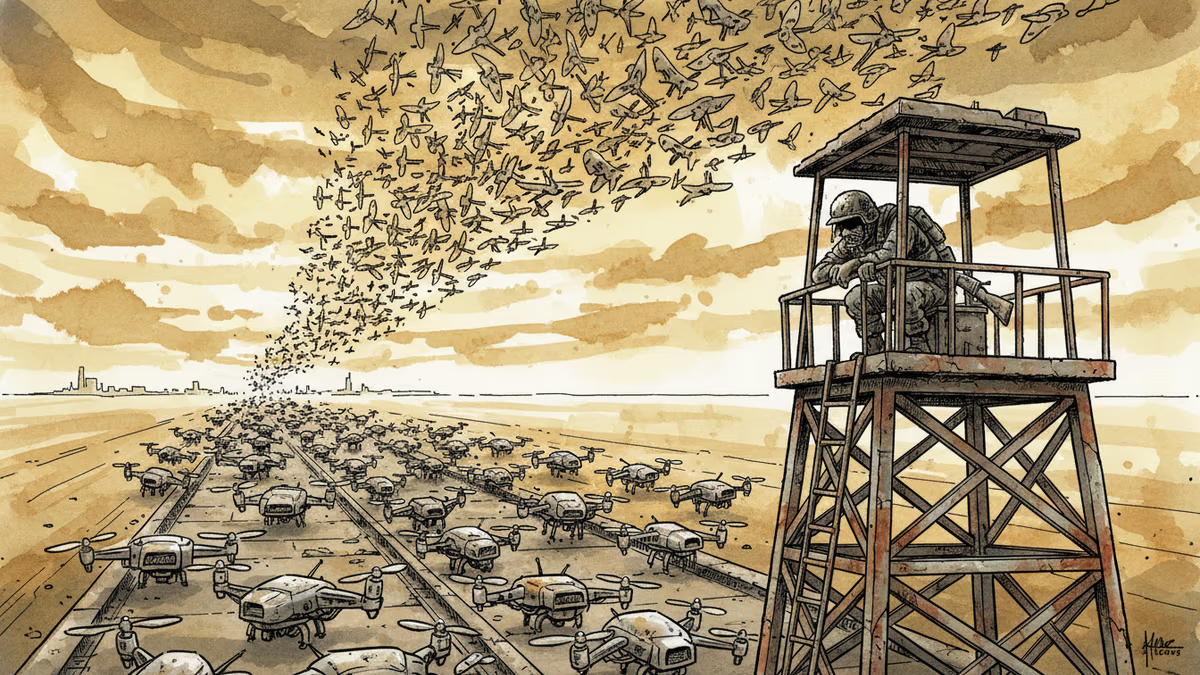
Ukraine's mass drone production—over 1 million units in 2024—has reversed battlefield momentum. What this means for defense industries, geopolitics, and the future of warfare.
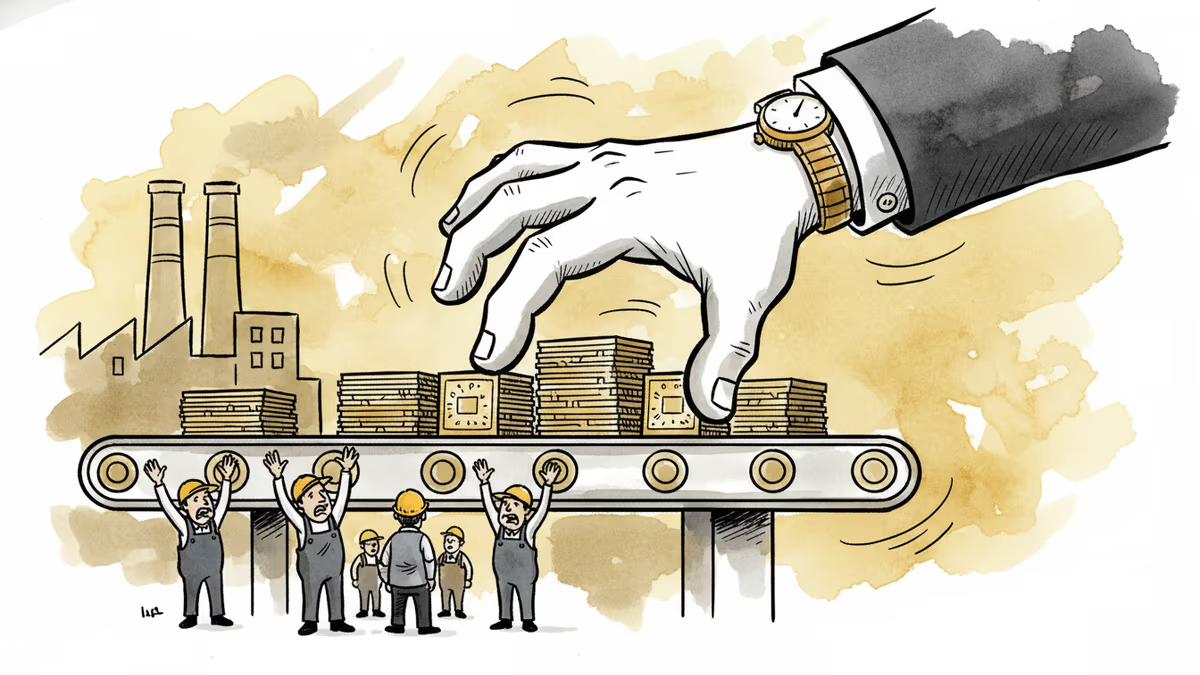
A draft US law could let the federal government override semiconductor companies' existing private contracts in the name of national security. Here's what's at stake for the industry.

Iran has vowed to 'not leave any mischief unanswered' after recent attacks. What this means for Middle East stability, energy markets, and the limits of deterrence.

Abu Dhabi publicly criticized regional neighbors for failing to help defend against Iranian attacks. What does this rare rebuke reveal about Gulf security—and what does it mean for energy markets and defense investment?
Ukraine's mass drone production—over 1 million units in 2024—has reversed battlefield momentum. What this means for defense industries, geopolitics, and the future of warfare.
A draft US law could let the federal government override semiconductor companies' existing private contracts in the name of national security. Here's what's at stake for the industry.
Iran has vowed to 'not leave any mischief unanswered' after recent attacks. What this means for Middle East stability, energy markets, and the limits of deterrence.
Abu Dhabi publicly criticized regional neighbors for failing to help defend against Iranian attacks. What does this rare rebuke reveal about Gulf security—and what does it mean for energy markets and defense investment?
Thoughts
Share your thoughts on this article
Sign in to join the conversation