

Nvidia Crushed Earnings. The Stock Fell Anyway.
Nvidia posted 85% revenue growth and a $80B buyback. Its stock still dropped — for the fourth straight post-earnings quarter. Here's what that tells us about where AI investing stands right now.
The company beat expectations — again. Revenue surged 85%. The data center business nearly doubled. The CEO called it "extraordinary." And the stock dropped anyway.
For Nvidia, this is now four quarters in a row.
When "Extraordinary" Becomes the Floor
Nvidia reported first-quarter results Wednesday that, on paper, should have sent investors cheering. Data center revenue hit $75.2 billion — nearly double from a year ago. The company announced an $80 billion share buyback and bumped its quarterly dividend to $0.25 per share. CEO Jensen Huang told analysts that demand has "gone parabolic" thanks to the rise of agentic AI.
And yet, shares were ticking lower before Thursday's open.
The dynamic here isn't complicated, but it's worth naming clearly: the market has already priced in perfection. When 85% revenue growth is the baseline expectation, the only question investors are really asking is whether the next quarter can top it. That's an increasingly difficult bar to clear — and it creates a strange situation where blowout results feel, somehow, insufficient.
There are real headwinds emerging too. Nvidia disclosed in a filing that the Iran war hasn't yet caused significant business impacts, but warned that escalation "could create business uncertainty." More concretely, Huang told CNBC's Sara Eisen that Nvidia has "largely conceded" China's AI chip market to Huawei following U.S. export restrictions. China was once a substantial slice of Nvidia's revenue. That slice is now someone else's.
Two IPOs and a Fed Warning Walk Into the Same Week

If Nvidia's results weren't enough to keep traders busy, the rest of Wednesday delivered.
SpaceX filed its IPO prospectus with regulators, targeting a Nasdaq listing under the ticker SPCX. The filing pegged the company's total addressable market at $28.5 trillion — most of it outside SpaceX's current business lines. Elon Musk retains 85% of voting power. And notably, most of the company's capital expenditures in Q1 went toward AI, not rockets. The line between launch company and AI infrastructure play is blurring fast.
Meanwhile, a source told CNBC that OpenAI could confidentially file its own IPO paperwork as early as Friday. Two of the most anticipated public offerings in years, potentially hitting the market within days of each other.
The Federal Reserve, for its part, offered a colder read on the environment. Minutes from the central bank's last meeting showed most officials believe higher rates may be necessary if the Iran conflict keeps inflation elevated. The April meeting saw the highest level of internal dissent since 1992. The 30-year Treasury yield remains near a 19-year high — a level that makes risk assets like tech stocks look comparatively less attractive, regardless of how good the earnings are.
The Consumer Is Already Sending a Signal
While Wall Street parsed Fed minutes and IPO filings, Main Street offered its own commentary.
Walmart shares fell 2% in premarket trading after the retailer issued a weaker-than-expected annual outlook. CFO John David Rainey told CNBC that consumers will likely feel more pressure as the boost from high tax refunds fades and gas prices stay elevated. Separately, Intuit announced it's cutting 17% of its workforce, taking $300–$340 million in restructuring charges. Its stock fell 15% before the open.
The one bright spot in retail: e.l.f. Beauty beat Q4 expectations and jumped 9% in extended trading — partly because the cosmetics company said it plans to roll back some tariff-related price hikes. When consumers are stretched, the companies willing to absorb margin pressure to hold volume may be the ones that survive the squeeze.
Three data points — Walmart's warning, Intuit's cuts, e.l.f.'s price retreat — landing on the same day isn't coincidence. It's a pattern.
This content is AI-generated based on source articles. While we strive for accuracy, errors may occur. We recommend verifying with the original source.
Related Articles
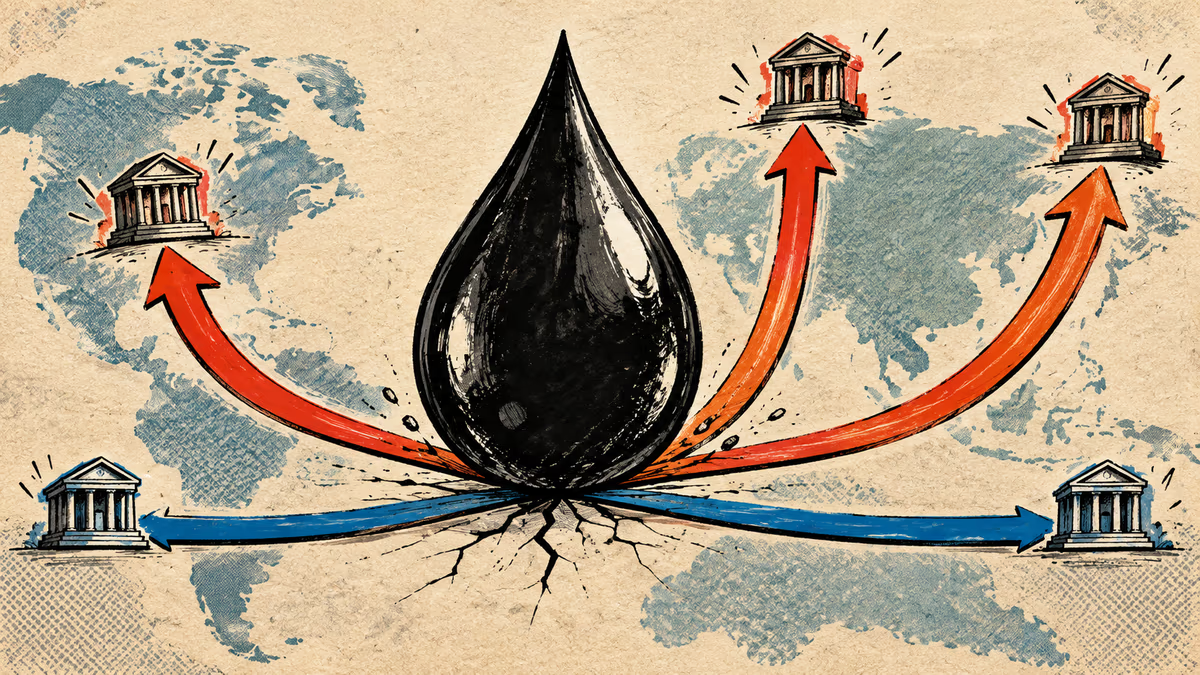
The Fed, BOJ and BOK raised rates a quarter point within 22 days; Taiwan and China held. What each said, plus the impact on Korean borrowers and the won.
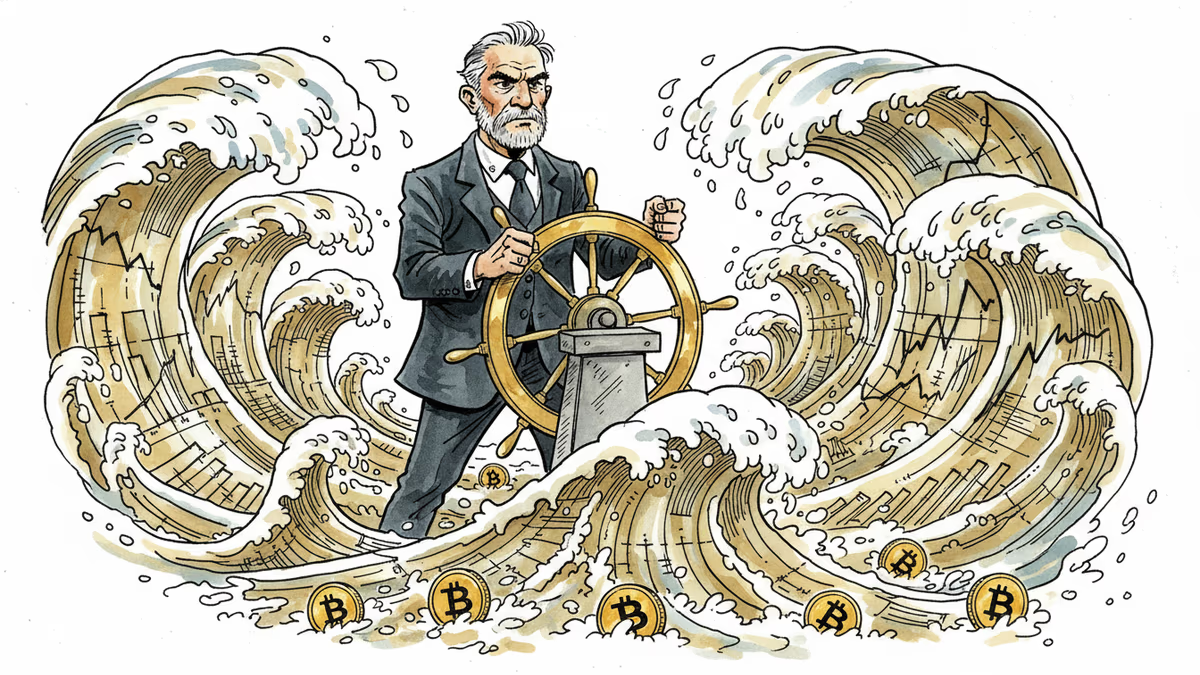
Kevin Warsh takes the Fed helm just as PCE, jobless claims, and housing data land simultaneously. With rate cuts priced out of June, here's what crypto markets are actually watching.
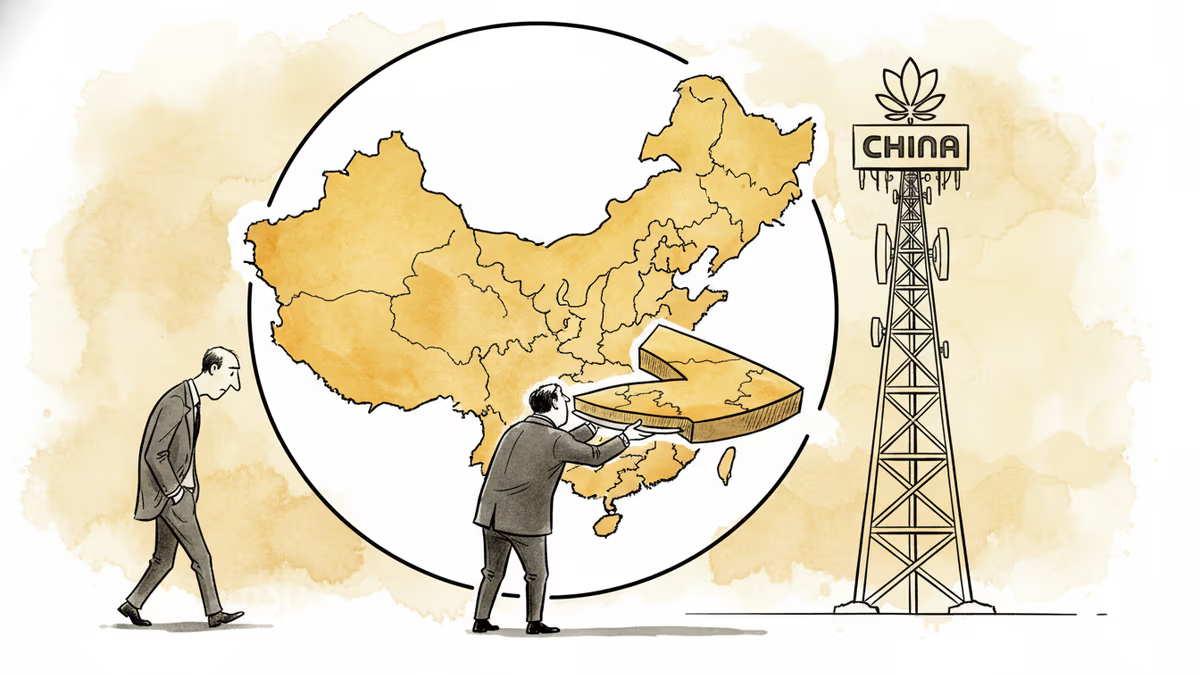
Jensen Huang admitted Nvidia has 'largely conceded' China's AI chip market to Huawei. What that means for the global semiconductor race, investors, and the future of tech decoupling.
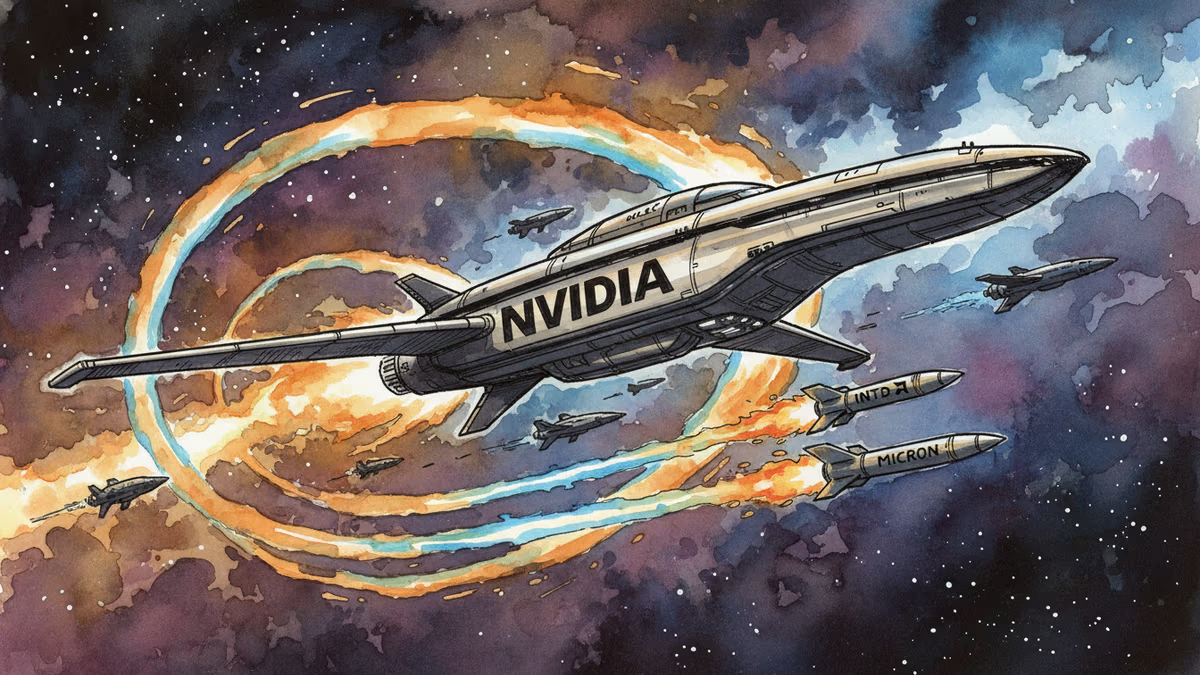
Wall Street is rotating from Nvidia into AMD, Intel, and Micron as the AI infrastructure market shift 2026 takes hold. Discover why CPUs and memory are the new gold.
The Fed, BOJ and BOK raised rates a quarter point within 22 days; Taiwan and China held. What each said, plus the impact on Korean borrowers and the won.
Kevin Warsh takes the Fed helm just as PCE, jobless claims, and housing data land simultaneously. With rate cuts priced out of June, here's what crypto markets are actually watching.
Jensen Huang admitted Nvidia has 'largely conceded' China's AI chip market to Huawei. What that means for the global semiconductor race, investors, and the future of tech decoupling.
Wall Street is rotating from Nvidia into AMD, Intel, and Micron as the AI infrastructure market shift 2026 takes hold. Discover why CPUs and memory are the new gold.
Thoughts
Share your thoughts on this article
Sign in to join the conversation