
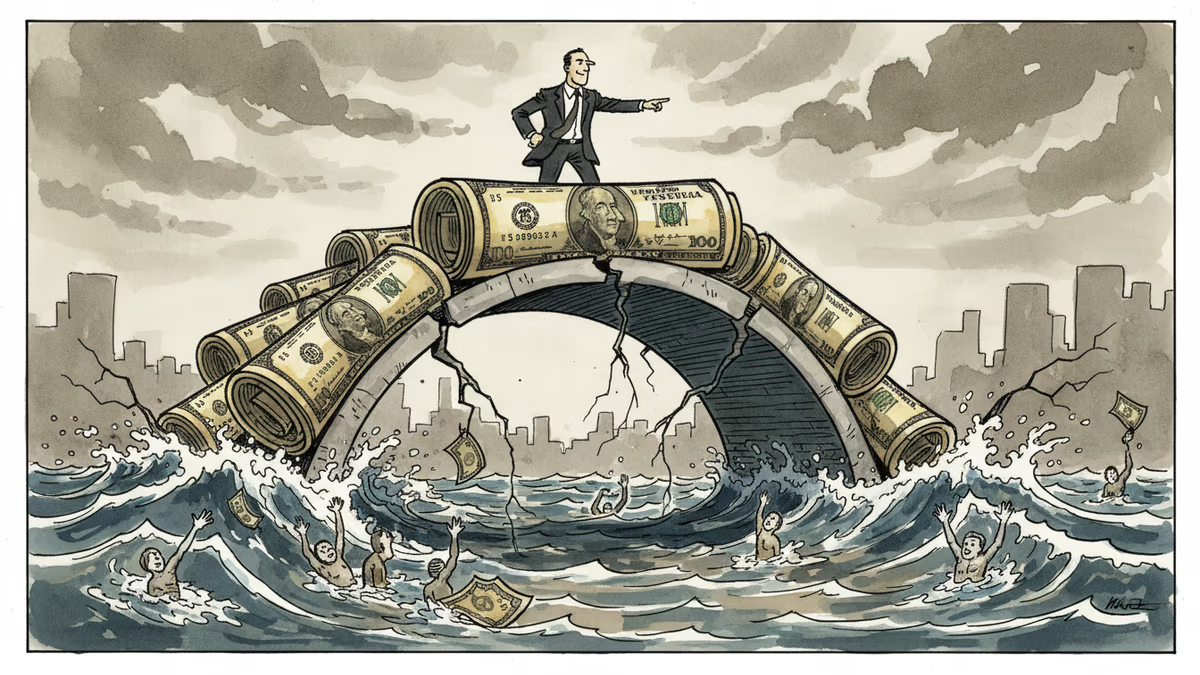
When Powell Says 'Resilient,' Who Exactly Is He Talking About?
Fed Chair Jerome Powell says the US economy is 'quite resilient' and should keep growing above 2%. But whose resilience? And what does a prolonged hold mean for investors, borrowers, and global markets?
The word 'resilient' is doing a lot of heavy lifting right now — and not everyone is sharing the load equally.
What Powell Actually Said
Federal Reserve Chair Jerome Powell recently described the US economy as 'quite resilient,' projecting that growth should remain above 2%. On its face, that sounds reassuring. But in central bank language, reassurance and inaction are often the same sentence.
The Fed funds rate currently sits at 4.25–4.50%. Markets had been pricing in at least two cuts before year-end. Powell's upbeat assessment of economic durability effectively pushes that timeline further out. If the economy doesn't need rescuing, the Fed has no urgency to act.
At the same time, Powell acknowledged — carefully — that Trump administration tariff policies carry inflation risk. The message, stripped of diplomatic hedging: the economy is fine, but new price pressures are building, and the Fed isn't ready to move in either direction. That's a holding pattern, not a green light.
Winners, Losers, and What It Means for Your Portfolio
A prolonged high-rate environment reshapes the financial landscape in predictable ways — and some less predictable ones.
Dollar-denominated assets benefit. Investors holding US Treasuries, money market funds, or high-yield savings accounts continue to collect returns that were unthinkable three years ago. A 4%+ risk-free rate remains one of the most competitive in the developed world, drawing capital away from equities and emerging markets alike.

Borrowers face the opposite reality. US credit card delinquency rates have climbed to multi-year highs. Mortgage affordability remains near its worst level in decades. The 2%+ GDP growth figure is an aggregate — it tells you the economy as a whole is expanding, not that the median household is thriving. Pandemic-era savings buffers have largely been depleted, and lower-income consumers are absorbing the brunt of sustained high borrowing costs.
For corporate America, the picture is mixed. Large-cap companies with strong balance sheets and dollar revenues are insulated. Smaller businesses dependent on variable-rate debt or consumer discretionary spending are under real pressure. The S&P 500's relative strength masks significant divergence beneath the surface.
The Gap Between the Dashboard and the Road
The Fed's dual mandate — price stability and maximum employment — is technically being met. Inflation has cooled from its 9.1% peak in mid-2022, though it remains above the 2% target. Unemployment is low by historical standards. On paper, this is a soft landing.
But the lived experience of the US economy is more complicated. Shelter costs remain stubbornly elevated. Grocery prices have not meaningfully reversed their post-pandemic surge. And the tariff uncertainty that Powell flagged isn't hypothetical — supply chains are already recalibrating, and businesses are making investment decisions under conditions that no economic model fully captures.
There's also a political dimension that monetary policy can't ignore indefinitely. The White House has been openly critical of the Fed's pace, and while the central bank's independence remains formally intact, the pressure to act — in some direction — will intensify as the 2026 midterm cycle approaches.
Comparing the Signals: What Markets Are Pricing vs. What Powell Is Saying
| Dimension | Market Expectation | Fed's Current Signal |
|---|---|---|
| Rate cuts in 2026 | 2+ cuts priced in | No urgency; data-dependent |
| Inflation trajectory | Gradual decline | Tariff risk adds upside uncertainty |
| Growth outlook | Mild slowdown | Above 2%, resilient |
| Labor market | Softening at edges | Still solid overall |
| Dollar direction | Modest weakening | Supported by rate differential |
The divergence between market hope and Fed communication is itself a risk. When expectations and reality collide, volatility follows.
This content is AI-generated based on source articles. While we strive for accuracy, errors may occur. We recommend verifying with the original source.
Related Articles
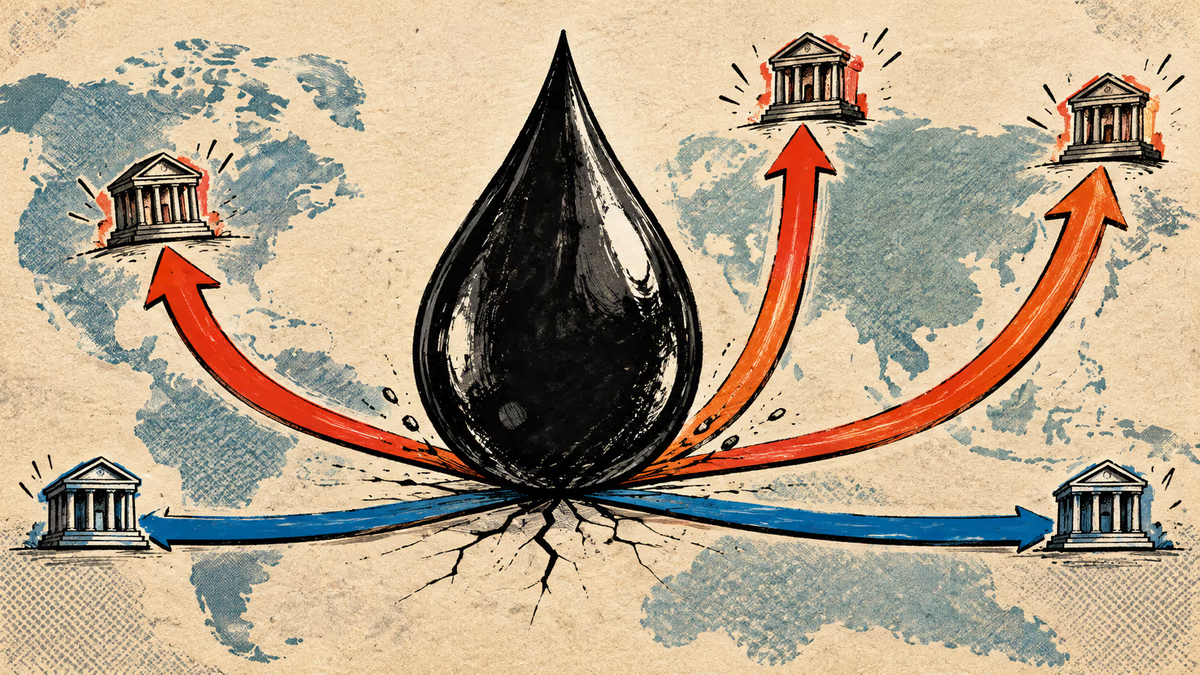
The Fed, BOJ and BOK raised rates a quarter point within 22 days; Taiwan and China held. What each said, plus the impact on Korean borrowers and the won.
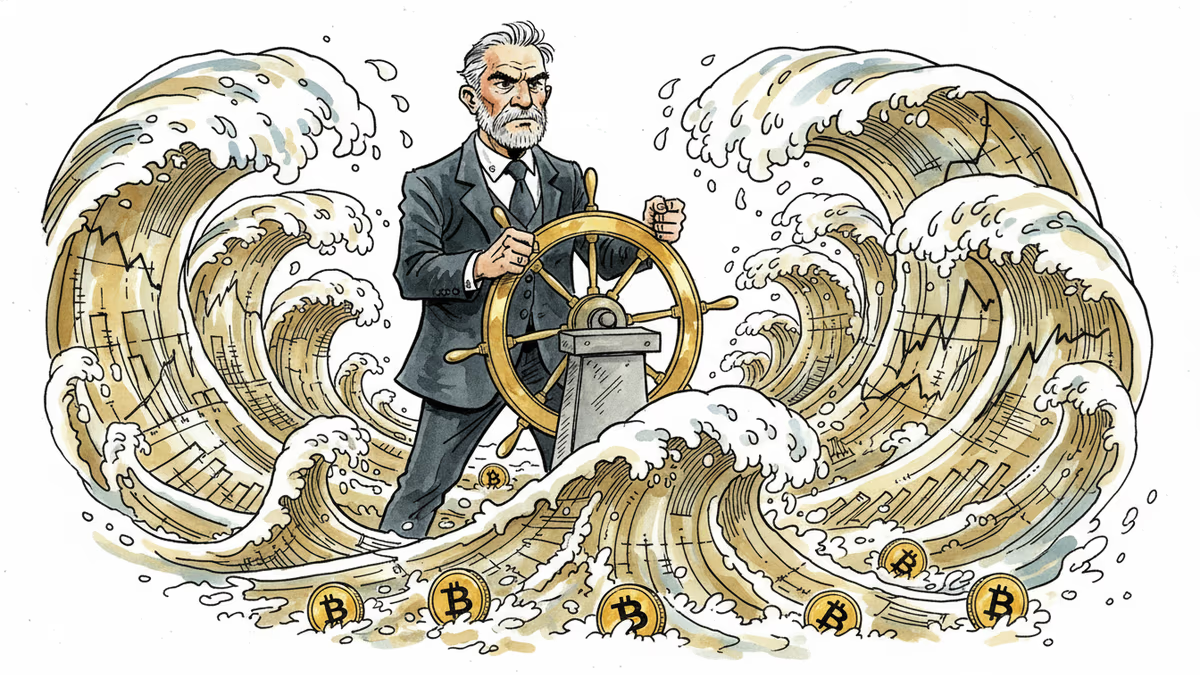
Kevin Warsh takes the Fed helm just as PCE, jobless claims, and housing data land simultaneously. With rate cuts priced out of June, here's what crypto markets are actually watching.
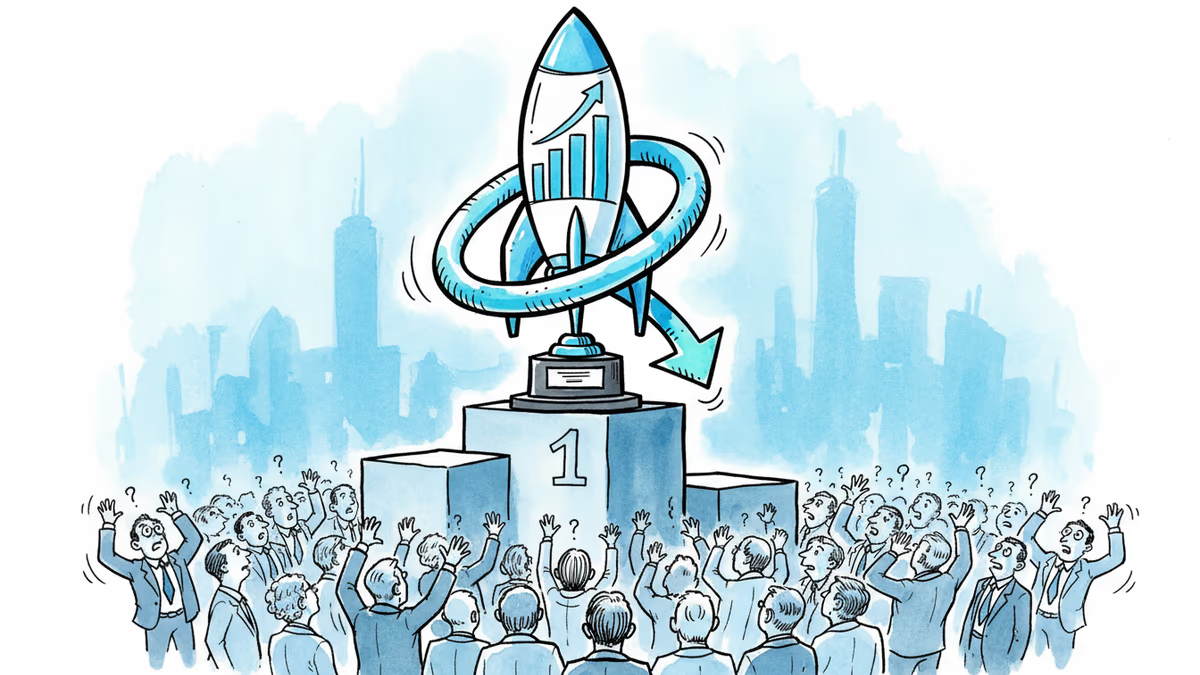
Nvidia posted 85% revenue growth and a $80B buyback. Its stock still dropped — for the fourth straight post-earnings quarter. Here's what that tells us about where AI investing stands right now.
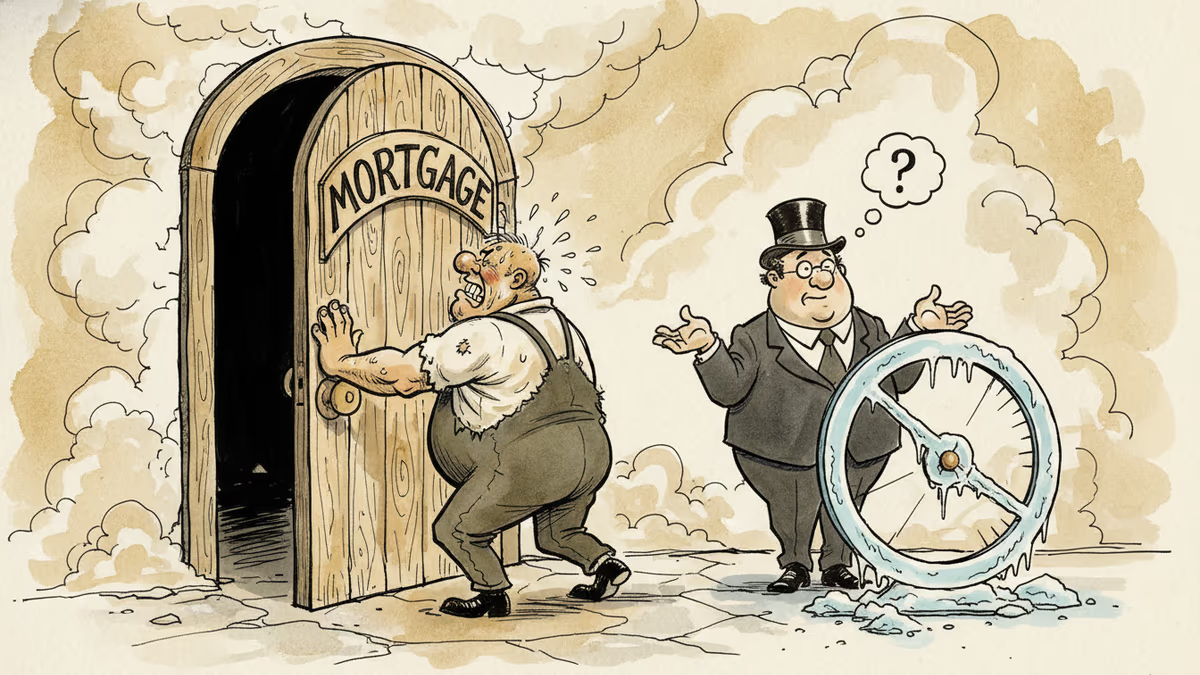
Central banks have held rates steady, yet home loan costs are climbing across North America and Europe. Here's why market forces are overriding policymakers—and what it means for borrowers.
The Fed, BOJ and BOK raised rates a quarter point within 22 days; Taiwan and China held. What each said, plus the impact on Korean borrowers and the won.
Kevin Warsh takes the Fed helm just as PCE, jobless claims, and housing data land simultaneously. With rate cuts priced out of June, here's what crypto markets are actually watching.
Nvidia posted 85% revenue growth and a $80B buyback. Its stock still dropped — for the fourth straight post-earnings quarter. Here's what that tells us about where AI investing stands right now.
Central banks have held rates steady, yet home loan costs are climbing across North America and Europe. Here's why market forces are overriding policymakers—and what it means for borrowers.
Thoughts
Share your thoughts on this article
Sign in to join the conversation