
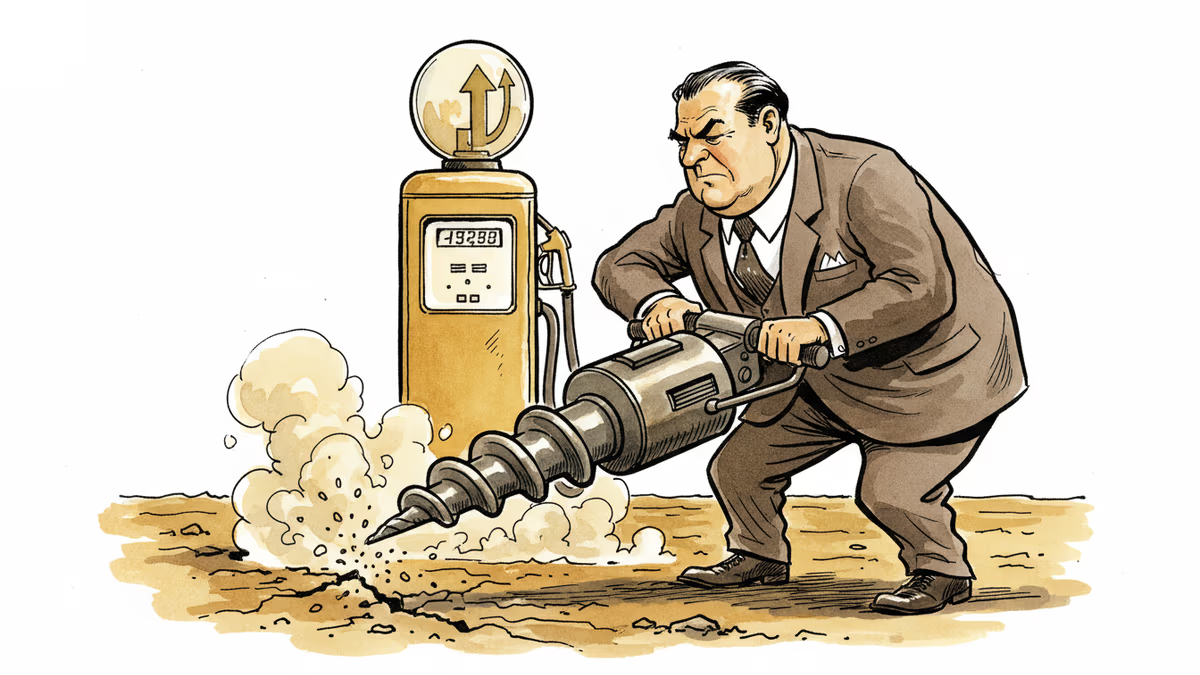
Gas Prices Up 40%. Now They're Drilling.
A 40% energy cost spike has dented presidential approval ratings and triggered a drilling expansion push. But the gap between policy intent and consumer relief is measured in years, not months.
The price spike came first. The drilling decision came after. That sequence matters more than the policy itself.
A global supply crunch has pushed energy costs up 40%, squeezing household budgets and — perhaps more consequentially for those in power — dragging presidential approval ratings down with them. The response: expand drilling. More supply, lower prices, problem solved. It's a clean political narrative. The energy market, unfortunately, doesn't read political narratives.
What Actually Happened
The 40% jump in energy costs wasn't a single event — it was the accumulated weight of supply chain disruptions, geopolitical friction, and underinvestment in production capacity that had been building for years. For a household spending $300 a month on fuel and heating, that's roughly $120 more every month. Multiply that across millions of households, and you get the kind of diffuse, persistent economic pain that erodes political capital faster than almost any other issue.
Facing that pressure, the administration moved toward drilling expansion — accelerating permits and production targets for domestic oil and gas. The logic is straightforward supply-side economics: more barrels in the market, lower price per barrel.
Winners, Losers, and the Timeline Problem
The energy industry wins first and fastest. Expanded drilling permits translate directly into project pipelines, equipment orders, and stock valuations for exploration and production companies. That part of the equation moves quickly.

Consumers? The timeline is a different story. From drilling approval to a gallon of gas actually getting cheaper at the pump, the lag is measured in years, not months. Wells need to be drilled, production needs to ramp up, refining capacity needs to absorb the new supply — and all of that assumes no offsetting moves from OPEC+, which has demonstrated a consistent willingness to cut production when non-member supply increases.
The renewable energy sector faces a subtler challenge. If fossil fuel prices stabilize through supply expansion, the economic urgency driving the shift to solar and wind softens. Investment timelines stretch. The energy transition doesn't stop — but it slows.
The Gap Between Intent and Effect
There are three structural tensions this policy doesn't resolve.
First, the OPEC+ counterplay. The cartel's entire purpose is to manage global supply to maintain prices. A unilateral drilling expansion by one country is precisely the kind of move that triggers a coordinated response. The net effect on global prices may be smaller than the political announcement suggests.
Second, the climate commitment problem. Accelerating fossil fuel production runs directly against the emissions targets most governments have publicly committed to. This isn't an abstract tension — it affects treaty obligations, ESG investment flows, and the credibility of long-term energy policy. The administration is, in effect, borrowing against its future climate commitments to pay for today's approval ratings.
Third, and most structurally significant: the timing risk. The wells being approved today will reach full production in a market that looks meaningfully different from today's. Electric vehicle adoption is accelerating. Renewable energy costs continue to fall. The demand curve for fossil fuels is not what it was five years ago, and it will be less so five years from now. Assets drilled today could become stranded assets tomorrow.
This content is AI-generated based on source articles. While we strive for accuracy, errors may occur. We recommend verifying with the original source.
Related Articles
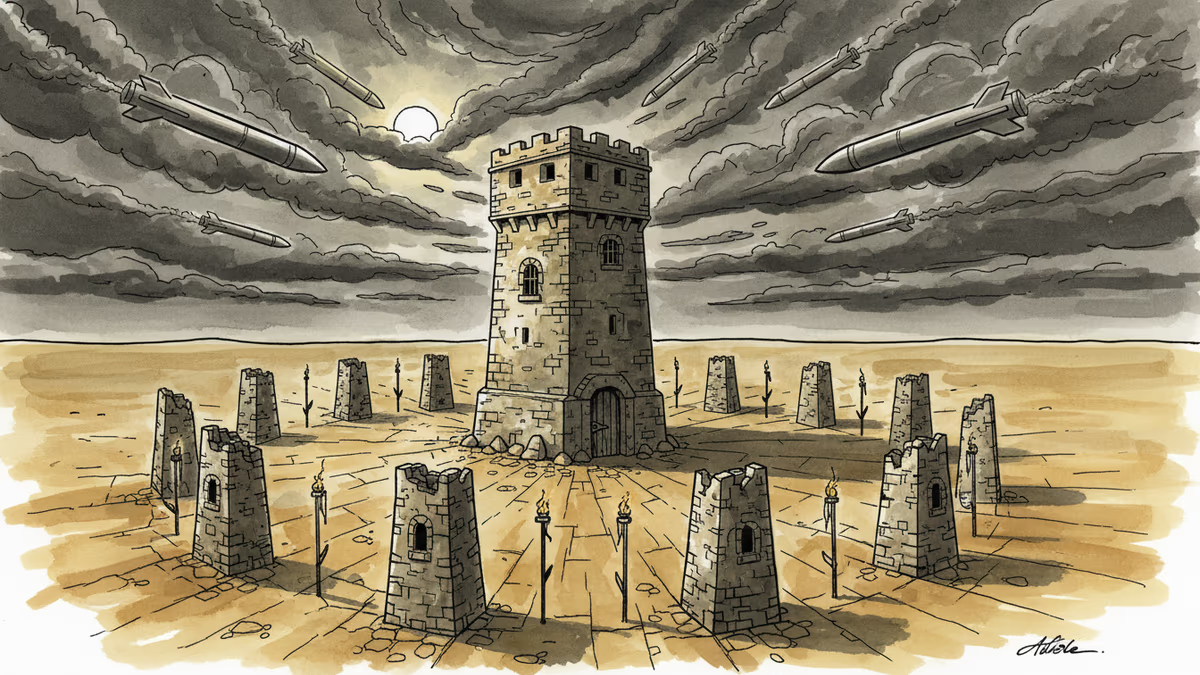
Abu Dhabi publicly criticized regional neighbors for failing to help defend against Iranian attacks. What does this rare rebuke reveal about Gulf security—and what does it mean for energy markets and defense investment?
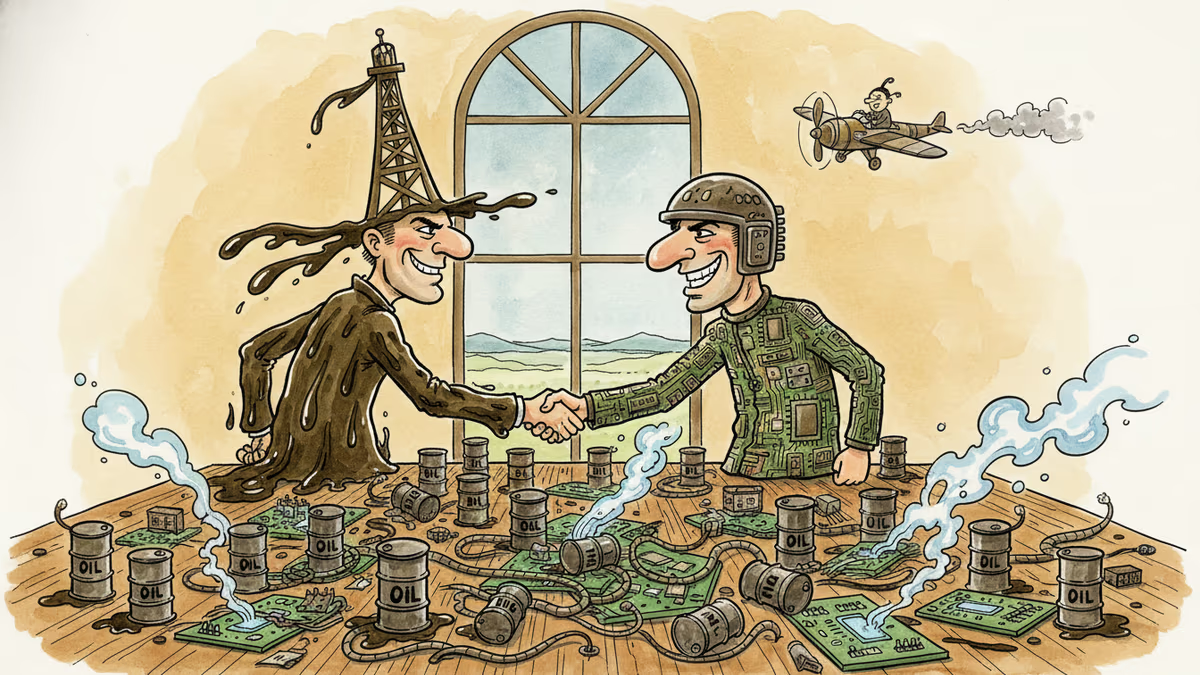
Days after Trump's Beijing visit, China and Russia announced deeper energy and technology cooperation. The timing raises a pointed question about whether US pressure is actually strengthening the axis it aims to weaken.
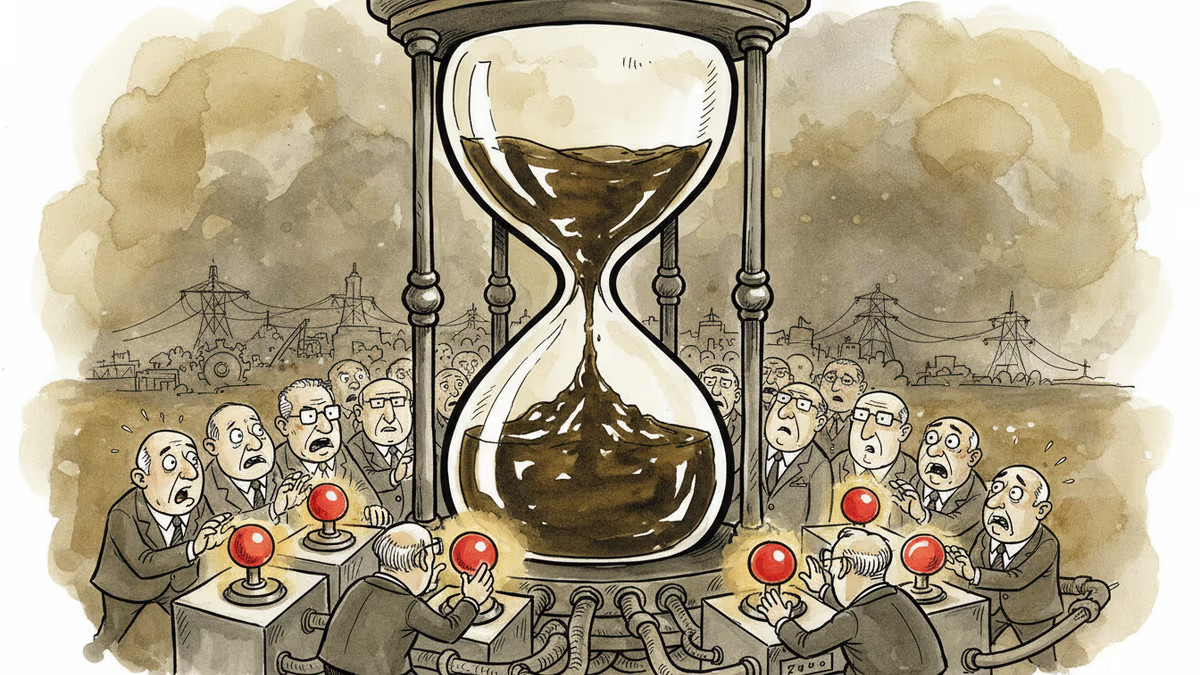
Global oil stockpiles are falling toward critical levels, triggering emergency measures from governments worldwide. What this means for energy prices, inflation, and your bottom line.
Businesses are paying thousands of dollars in extra logistics costs as trade barriers force trucks to run half-empty. Here's who pays, who profits, and what it means for prices.
Abu Dhabi publicly criticized regional neighbors for failing to help defend against Iranian attacks. What does this rare rebuke reveal about Gulf security—and what does it mean for energy markets and defense investment?
Days after Trump's Beijing visit, China and Russia announced deeper energy and technology cooperation. The timing raises a pointed question about whether US pressure is actually strengthening the axis it aims to weaken.
Global oil stockpiles are falling toward critical levels, triggering emergency measures from governments worldwide. What this means for energy prices, inflation, and your bottom line.
Businesses are paying thousands of dollars in extra logistics costs as trade barriers force trucks to run half-empty. Here's who pays, who profits, and what it means for prices.
Thoughts
Share your thoughts on this article
Sign in to join the conversation