
Half-Empty Trucks and the Hidden Tax of Trade Barriers
Businesses are paying thousands of dollars in extra logistics costs as trade barriers force trucks to run half-empty. Here's who pays, who profits, and what it means for prices.
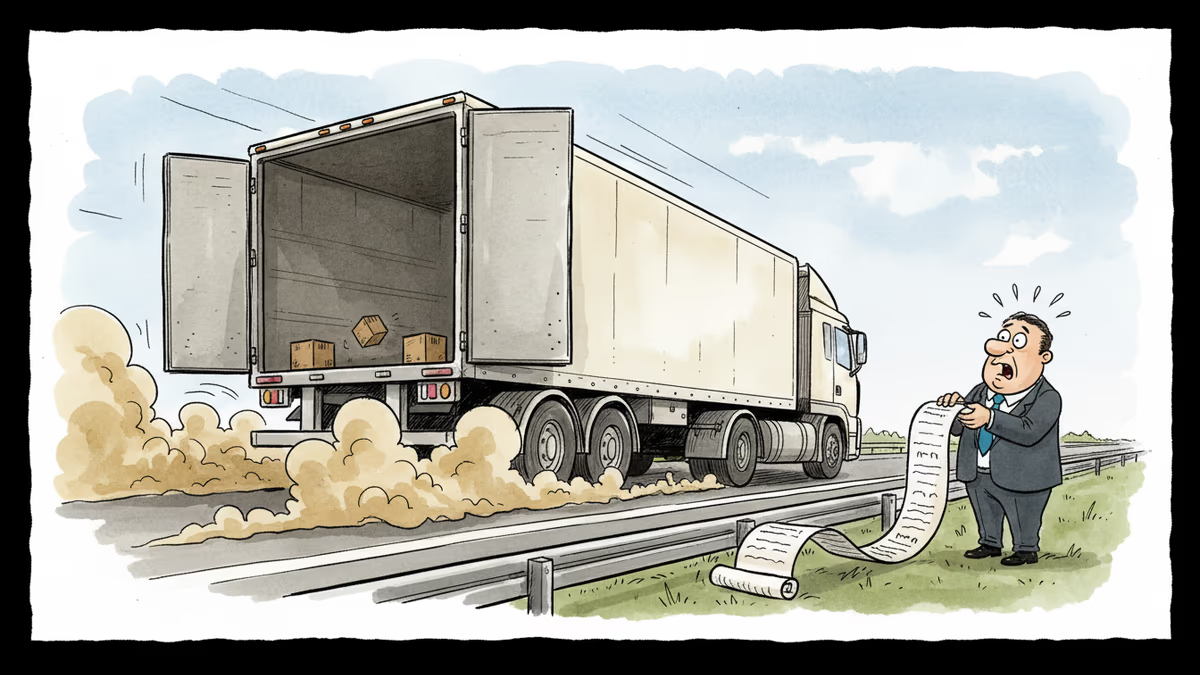
The truck leaves the warehouse on schedule. The driver is paid. The fuel is burned. But the cargo hold is half empty — because the other half became too expensive to ship.
This is the quiet arithmetic of modern trade friction. As tariffs and trade restrictions tighten around the world, businesses are absorbing thousands of dollars in extra costs per vehicle — not because freight has gotten harder, but because the economics of filling a truck have been quietly broken.
What's Actually Happening on the Road
The mechanics are straightforward, even if the consequences are not. Many shipments rely on consolidated loads — mixing multiple product types in a single truck or container to maximize efficiency. When trade restrictions or tariffs apply to some goods but not others, that logic collapses. A carrier might be cleared to move Product A but blocked — or priced out — on Product B. The truck rolls anyway. The empty space doesn't.
Industry estimates put the additional cost burden at several thousand dollars per vehicle in affected trade lanes. That's not an abstract figure. It translates directly into higher shipping quotes, which manufacturers pass to distributors, who pass to retailers, who pass to consumers. The tariff shows up at the border. The cost shows up at the checkout.
For businesses running on thin margins — mid-size manufacturers, regional importers, small-batch producers — this isn't a rounding error. It's a structural shift in what's viable to source, produce, and sell.
Who Wins, Who Loses

The clearest losers are smaller businesses without the scale to negotiate dedicated freight contracts or reroute supply chains on short notice. A large multinational can absorb a cost spike, redistribute across its logistics network, or pressure suppliers to share the burden. A mid-size manufacturer importing components from three countries doesn't have those levers.
Large logistics operators occupy an ambiguous middle ground. In the short term, rising per-unit rates benefit their top lines. But if trade volumes shrink — which they do when costs rise — the revenue base shrinks with it. Maersk, DHL, and FedEx have each flagged volume softness in recent quarters, a signal that the pricing gains may not last.
Consumers are the final stop. Inflation driven by supply chain disruption is particularly difficult to address through monetary policy alone, because it's not demand-driven — it's cost-push. Central banks can raise rates to cool spending, but they can't make a truck's cargo hold fuller.
The Gap Between Policy Intent and Economic Reality
Trade barriers are almost always justified as protecting domestic industries and workers. The logic is intuitive: make foreign goods more expensive, and domestic alternatives become more competitive. But the logistics cost story complicates that narrative.
When inefficiency spreads through the freight system, it raises costs for domestic producers too — the ones using imported components, raw materials, or machinery. The 2018–2019 US-China tariff escalation offers a documented case study: American farmers, manufacturers, and retailers absorbed significant costs even as the policy was framed as protecting them. The 1930sSmoot-Hawley tariffs are the more extreme historical parallel, now standard reading in economics curricula.
The pattern isn't new. What changes is the scale and speed. Today's supply chains are more globally integrated than at any point in history, which means disruption travels faster and farther than the policymakers who design tariffs typically model for.
This content is AI-generated based on source articles. While we strive for accuracy, errors may occur. We recommend verifying with the original source.
Related Articles
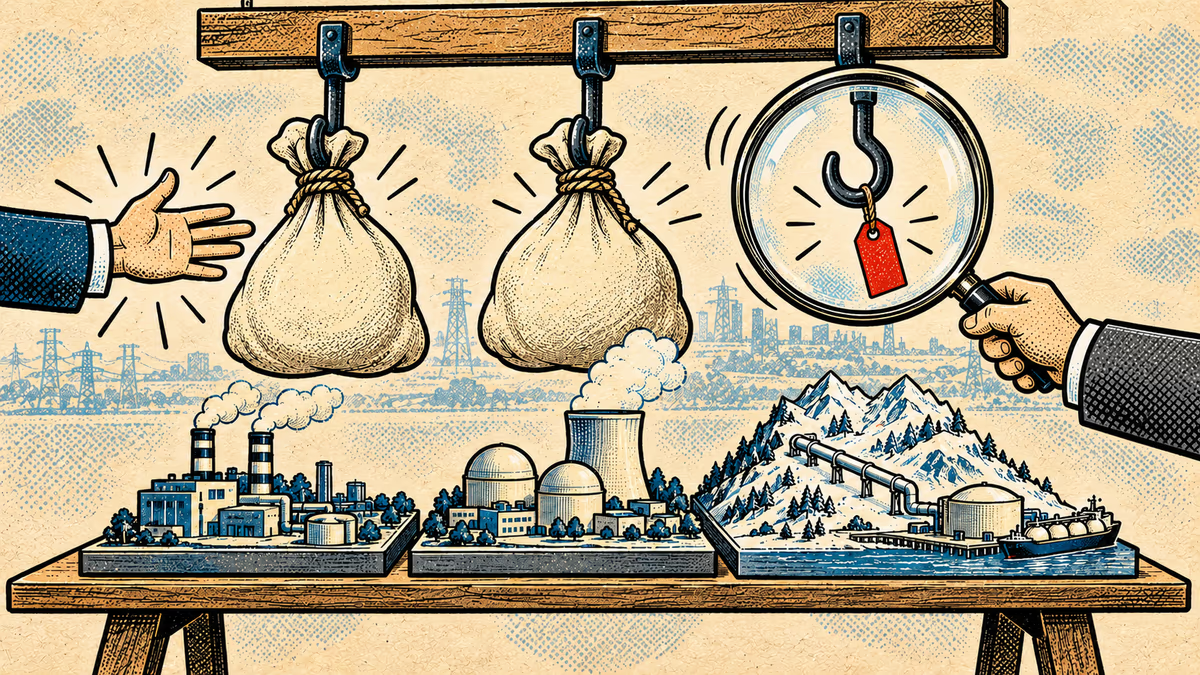
Trump said South Korea will invest up to $200 billion. The joint US-Korea fact sheet prices two projects, gas power and nuclear. Alaska LNG has no figure.
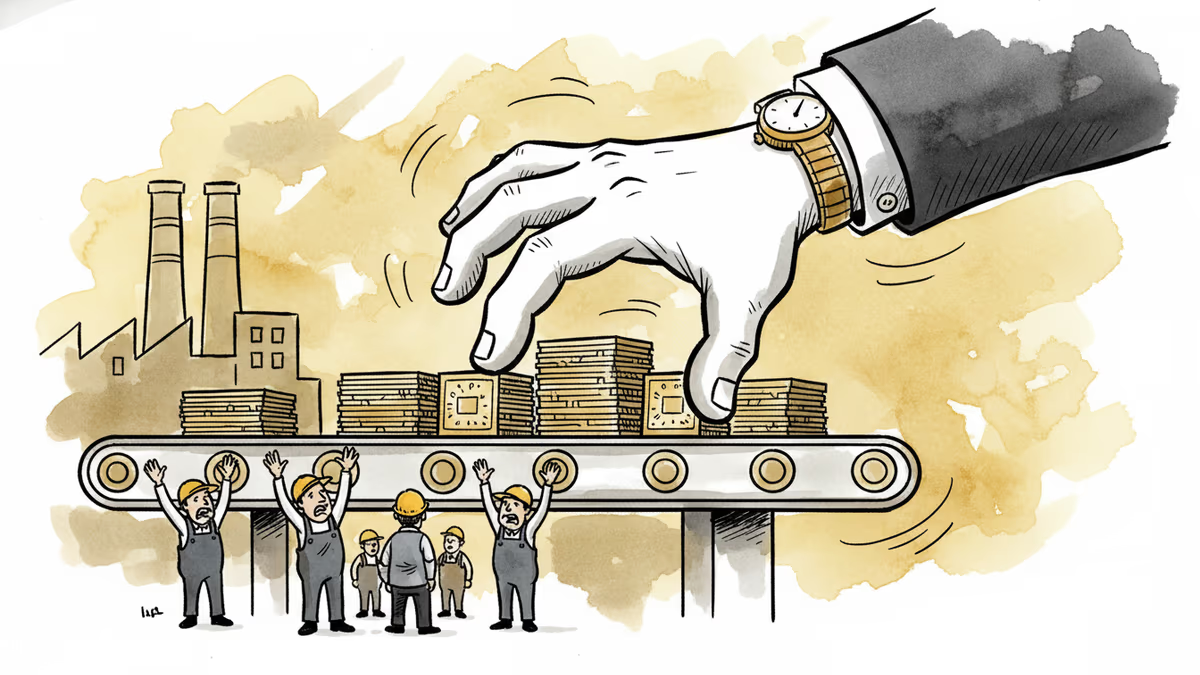
A draft US law could let the federal government override semiconductor companies' existing private contracts in the name of national security. Here's what's at stake for the industry.
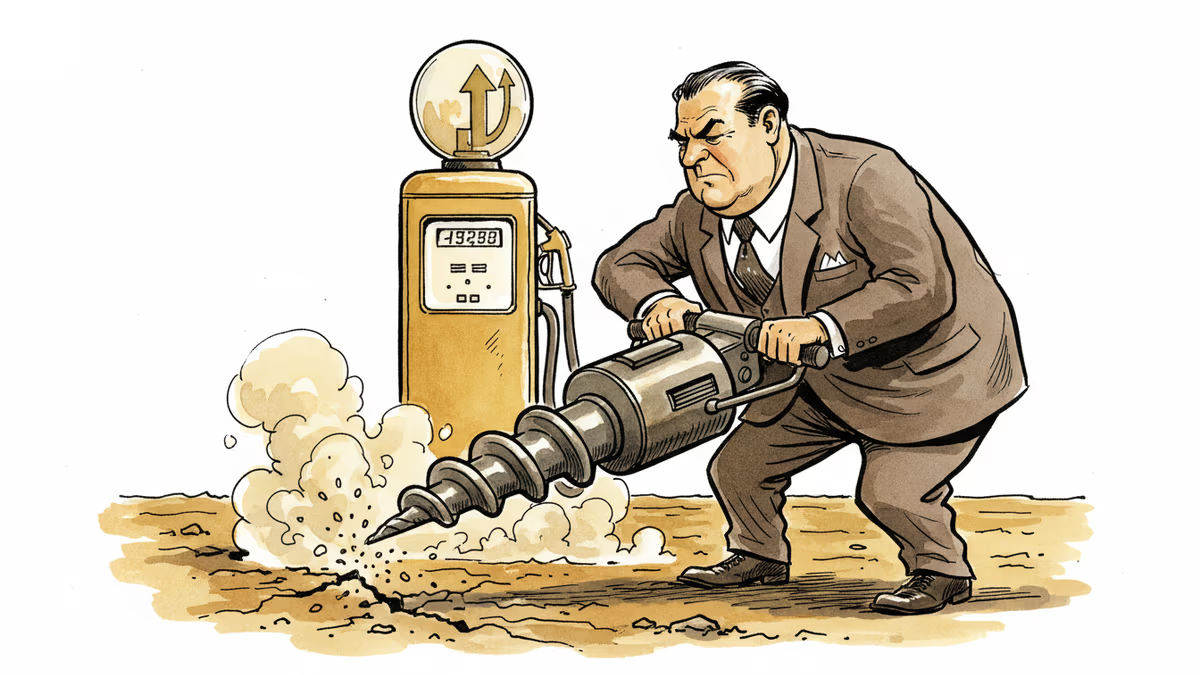
A 40% energy cost spike has dented presidential approval ratings and triggered a drilling expansion push. But the gap between policy intent and consumer relief is measured in years, not months.
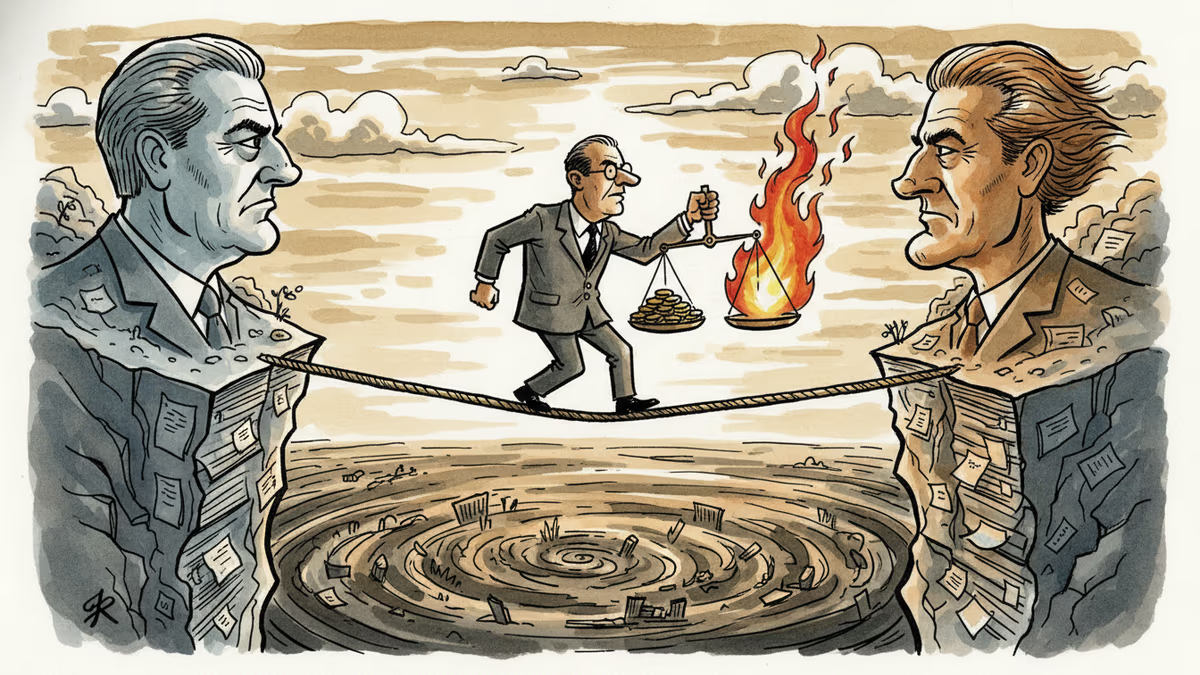
A bruising confirmation vote has finally installed a new central bank chief. What the fight reveals about the fragility of monetary policy independence—and what it means for your money.
Trump said South Korea will invest up to $200 billion. The joint US-Korea fact sheet prices two projects, gas power and nuclear. Alaska LNG has no figure.
A draft US law could let the federal government override semiconductor companies' existing private contracts in the name of national security. Here's what's at stake for the industry.
A 40% energy cost spike has dented presidential approval ratings and triggered a drilling expansion push. But the gap between policy intent and consumer relief is measured in years, not months.
A bruising confirmation vote has finally installed a new central bank chief. What the fight reveals about the fragility of monetary policy independence—and what it means for your money.
Thoughts
Share your thoughts on this article
Sign in to join the conversation