
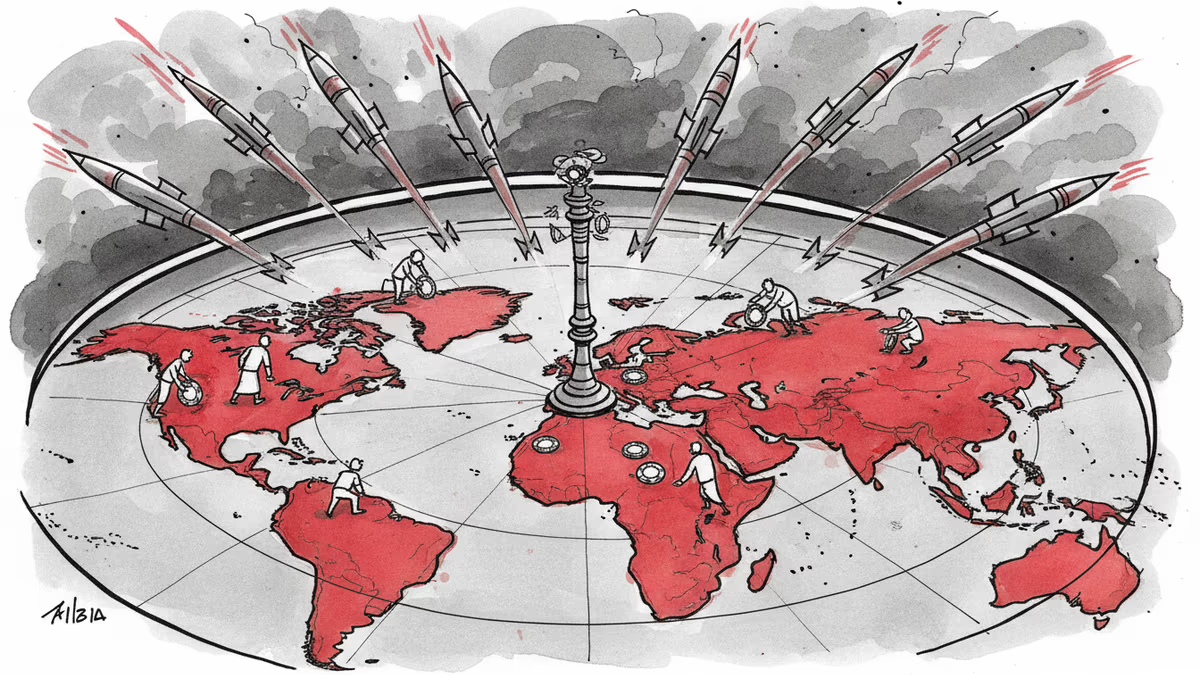
When War Becomes a Betting Market: $529M and Moral Questions
Iran bombing predictions drew $529M in bets, raising insider trading concerns. Exploring the ethical dilemmas of prediction markets in conflict zones.
$529 Million Bet on Bombs
Six newly-created accounts. One correct prediction. $1 million profit. The bombing of Iran wasn't just a geopolitical event—it became a jackpot for anonymous traders on Polymarket.
The numbers tell a stark story: $529 million traded on contracts tied to the timing of U.S. and Israeli strikes against Iran. But the real question isn't about the money. It's about what happens when war becomes a commodity.
The Prediction Market Promise vs. Reality
The Bull Case: "Wisdom of Crowds"
Prediction market advocates have a compelling argument. When thousands of people put their money where their mouth is, the collective judgment often beats expert forecasts. Polymarket famously outperformed traditional polls in the 2024 U.S. election.
The theory is elegant: financial incentives create better information aggregation than surveys or punditry. People research harder when their wallet's on the line.
The Bear Case: "Blood Money Markets"
But Bubblemaps' analysis reveals a darker reality. Six accounts, created specifically for this bet, displayed behavior "consistent with insider trading." CEO Nicolas Vaiman warns that anonymity plus conflict information creates "incentives for informed participants to act early."

Translation: Someone with advance knowledge of military operations might be cashing in.
The Platform Divide
Kalshi CEO Tarek Mansour draws ethical lines: "We don't list markets directly tied to death." His platform promised to reimburse fees from Iran-related bets.
Polymarket, operating in crypto's gray zones, offers no such guarantees. Its anonymous, decentralized structure makes oversight nearly impossible. Users can bet on anything—including, apparently, whether Iran's Supreme Leader would "no longer hold that role" by March.
That's not prediction. That's putting a price on assassination.
The Regulatory Blindspot
U.S. regulators face an impossible choice. Ban these markets, and you're accused of stifling "information freedom." Allow them, and you're enabling what critics call "war profiteering."
The Commodity Futures Trading Commission has struggled to define where legitimate prediction markets end and problematic gambling begins. When the stakes involve human lives, that distinction matters more than ever.
Global Implications
This isn't just an American problem. As prediction markets spread globally, every conflict zone becomes a potential betting opportunity. Ukraine-Russia developments, Taiwan tensions, Middle East escalations—all could become tradeable events.
The democratization of prediction markets means anyone, anywhere, can now profit from accurately predicting violence. The question is whether society should allow it.
Authors
Related Articles
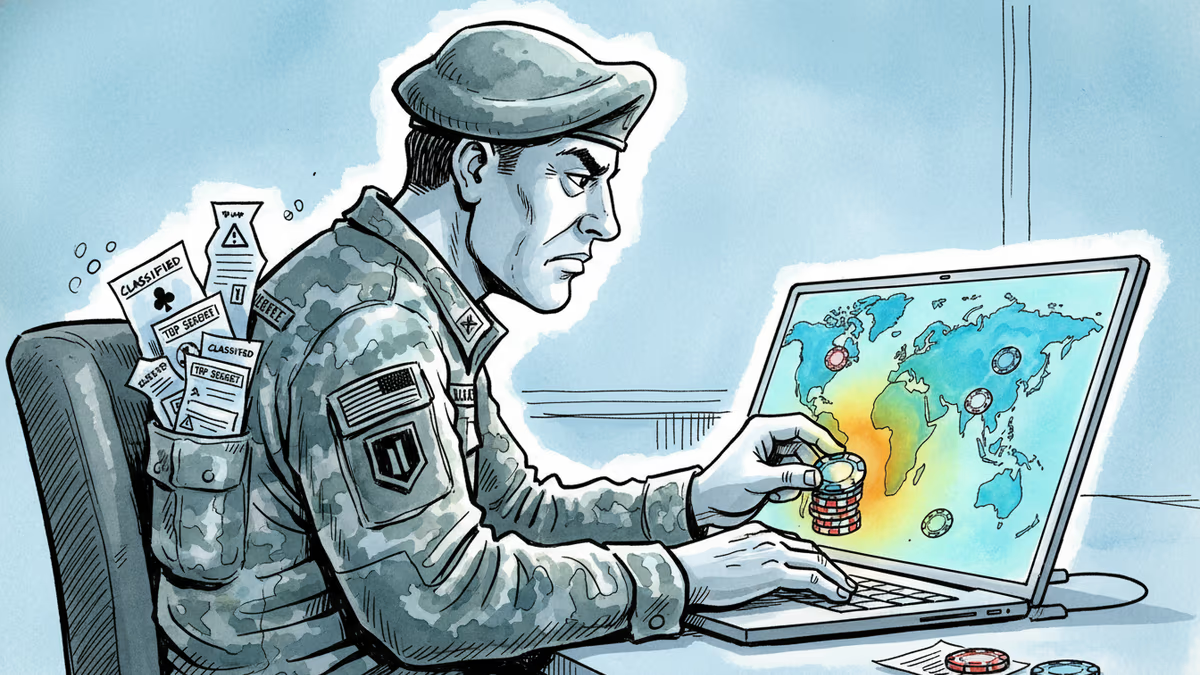
A US special forces soldier involved in the operation that captured Venezuela's Maduro allegedly used classified intel to bet on Polymarket, pocketing over $400,000. The case exposes a gaping hole in how prediction markets are regulated.
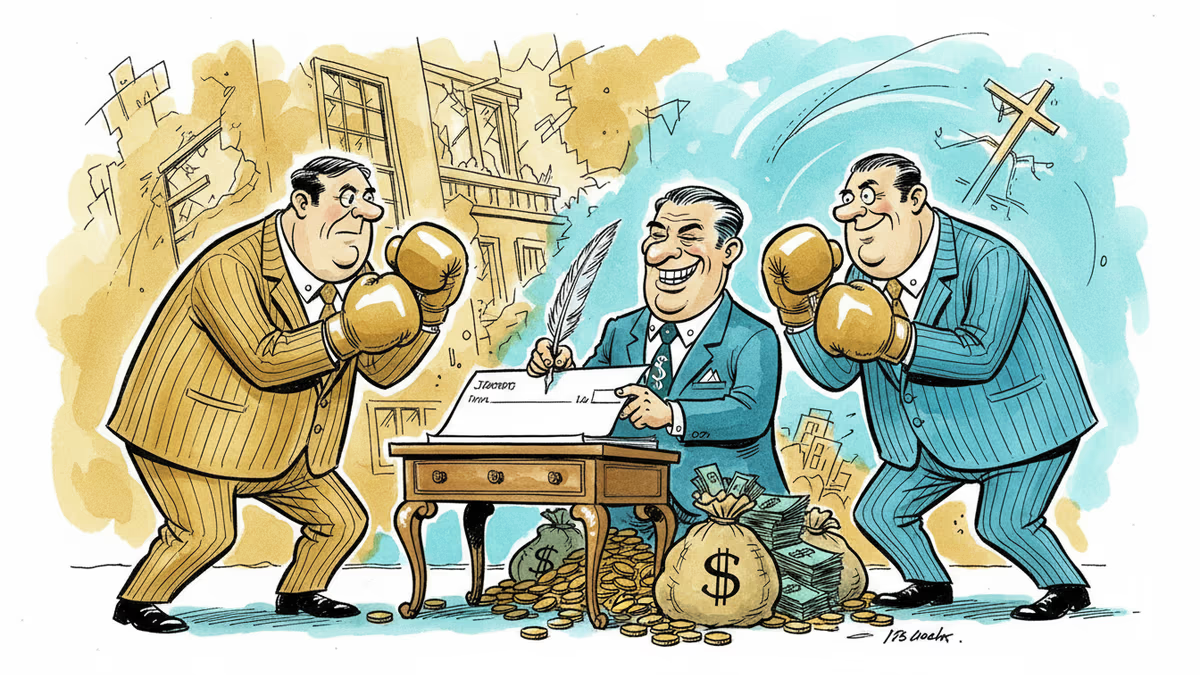
Despite fierce competition, the CEOs of Polymarket and Kalshi have co-invested in 5(c) Capital, a $35M VC fund targeting prediction market infrastructure. What this signals for the industry.
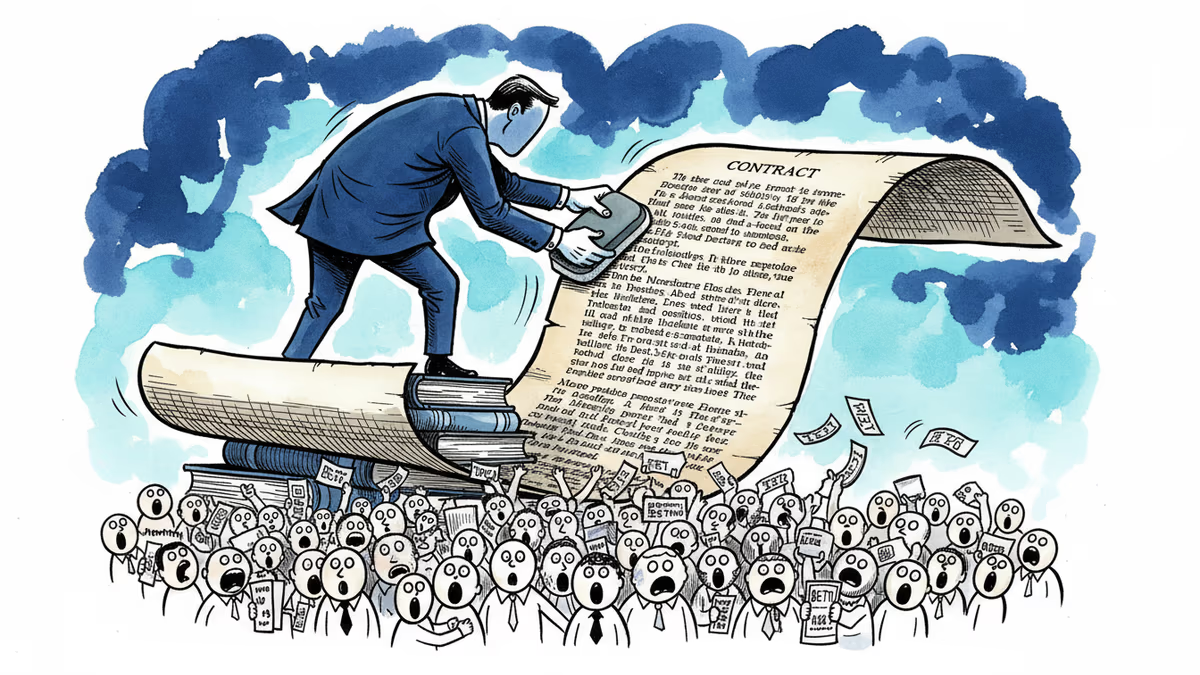
A class action lawsuit accuses Kalshi of changing payout rules after Iran's Supreme Leader Khamenei was killed. The case cuts to the heart of prediction market credibility.
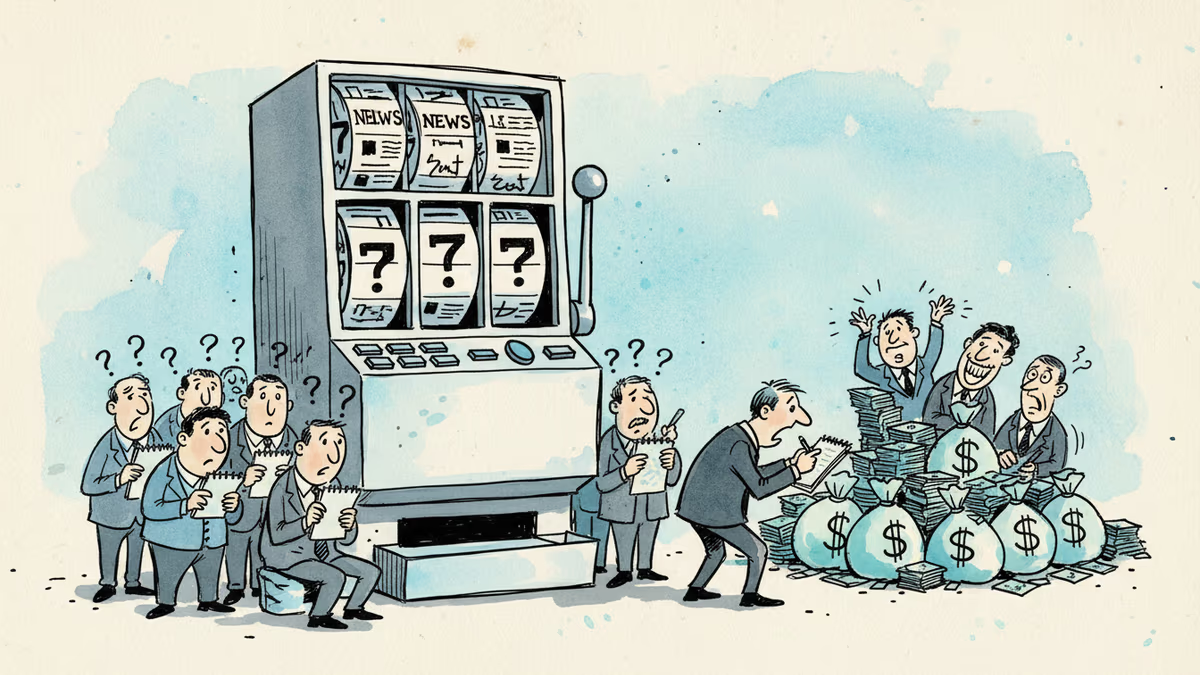
As Polymarket and Kalshi expand news partnerships, insider trading concerns mount. The line between gambling and information is blurring dangerously.
A US special forces soldier involved in the operation that captured Venezuela's Maduro allegedly used classified intel to bet on Polymarket, pocketing over $400,000. The case exposes a gaping hole in how prediction markets are regulated.
Despite fierce competition, the CEOs of Polymarket and Kalshi have co-invested in 5(c) Capital, a $35M VC fund targeting prediction market infrastructure. What this signals for the industry.
A class action lawsuit accuses Kalshi of changing payout rules after Iran's Supreme Leader Khamenei was killed. The case cuts to the heart of prediction market credibility.
As Polymarket and Kalshi expand news partnerships, insider trading concerns mount. The line between gambling and information is blurring dangerously.
Thoughts
Share your thoughts on this article
Sign in to join the conversation