
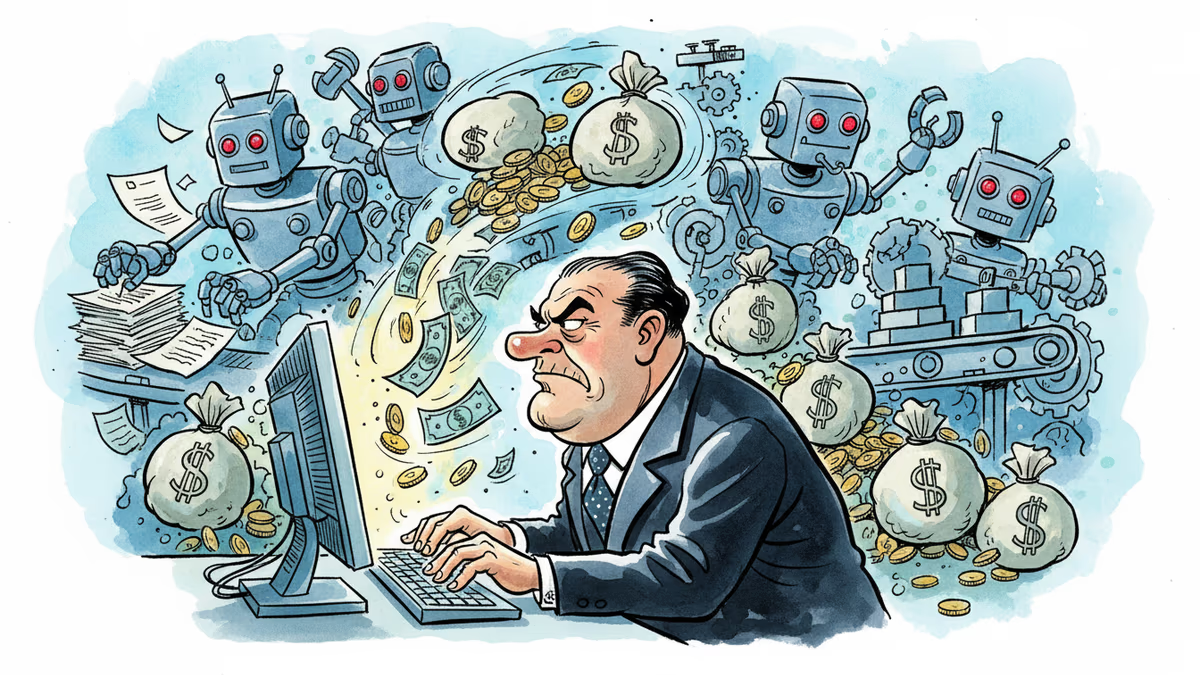
OpenAI Fires Employee Over $16K Prediction Market Profits
OpenAI terminated an employee for using confidential information in prediction markets. Analysis reveals 77 suspicious trades around AI events, exposing widespread insider trading concerns.
The $16,000 Bet That Exposed Everything
Two days after Sam Altman's dramatic ouster from OpenAI in November 2023, a brand-new wallet appeared on Polymarket. It placed a significant bet on Altman's return. When he was reinstated, the account pocketed over $16,000 in profits—then never traded again.
Coincidence? OpenAI didn't think so. The company has fired an employee for using confidential information in prediction markets, marking the first confirmed case of a major tech company taking action over such trades.
"Our policies prohibit employees from using confidential OpenAI information for personal gain, including in prediction markets," says spokesperson Kayla Wood. But this termination reveals a much larger problem lurking beneath the surface.
77 Suspicious Trades Paint a Troubling Picture
Financial data platform Unusual Whales analyzed blockchain records and flagged 77 positions across 60 wallet addresses as suspected insider trades around OpenAI-themed events since March 2023.
The patterns are telling. In the 40 hours before OpenAI launched its browser, 13 brand-new wallets with zero trading history collectively bet $309,486 on the correct outcome. The clustering isn't subtle—it's brazen.
"When you see that many fresh wallets making the same bet at the same time, it raises a real question about whether the secret is getting out," says Unusual Whales CEO Matt Saincome.
The Wild West of Tech Betting

Prediction markets have exploded in popularity, allowing traders to bet on everything from Super Bowl winners to whether the US will go to war with Iran. Tech-sector markets are particularly active: Nvidia earnings, Tesla launches, AI company IPOs.
But regulation hasn't kept pace. "This prediction market world makes the Wild West look tame in comparison," says Jeff Edelstein, a senior analyst at betting news site InGame. "If there's a market that exists where the answer is known, somebody's going to trade on it."
The notorious "Google whale" exemplifies this problem—a pseudonymous account that made over $1 million trading on Google-related events, including correctly predicting that singer D4vd would be 2025's most-searched person.
Big Tech's Deafening Silence
Kalshi has taken a proactive stance, reporting suspicious cases to the Commodity Futures Trading Commission and banning violators. A Mr. Beast employee received a two-year suspension and $20,000 fine for trading on the YouTuber's activities.
But other platforms and companies remain silent. Polymarket didn't respond to requests for comment. Neither did Google, Meta, or Nvidia when asked about their policies on employee prediction market trading.
This silence is particularly concerning given the scope of the problem. "The data tells me this is happening all over the place," Saincome says.
Beyond OpenAI: An Industry-Wide Problem
The implications extend far beyond one terminated employee. Tech workers have unprecedented access to market-moving information: product launches, earnings figures, strategic decisions, executive changes. Prediction markets offer a seemingly anonymous way to monetize this knowledge.
For investors, this raises serious questions about market integrity. For employees, it creates ethical minefields. For companies, it presents a new category of insider trading risk that traditional compliance programs weren't designed to handle.
The blockchain's transparency—meant to ensure fairness—has paradoxically made it easier to identify suspicious patterns while remaining difficult to definitively prove wrongdoing.
Authors
Related Articles

OpenAI has reorganized for the second time in a month, merging ChatGPT and Codex into a single agentic platform under president Greg Brockman's unified product leadership.
After two weeks of witnesses calling him a liar, OpenAI CEO Sam Altman testified in his own defense, claiming Elon Musk tried to kill the company twice.
Sam Nelson, 19, died after following ChatGPT's advice to mix Kratom and Xanax. His parents are suing OpenAI for wrongful death, raising urgent questions about AI trust, liability, and design.
OpenAI's new Daybreak initiative uses the Codex AI agent to find and patch security vulnerabilities before attackers do—putting it in direct competition with Anthropic's secretive Claude Mythos.
OpenAI has reorganized for the second time in a month, merging ChatGPT and Codex into a single agentic platform under president Greg Brockman's unified product leadership.
After two weeks of witnesses calling him a liar, OpenAI CEO Sam Altman testified in his own defense, claiming Elon Musk tried to kill the company twice.
Sam Nelson, 19, died after following ChatGPT's advice to mix Kratom and Xanax. His parents are suing OpenAI for wrongful death, raising urgent questions about AI trust, liability, and design.
OpenAI's new Daybreak initiative uses the Codex AI agent to find and patch security vulnerabilities before attackers do—putting it in direct competition with Anthropic's secretive Claude Mythos.
Thoughts
Share your thoughts on this article
Sign in to join the conversation