
When War Becomes a Betting Market
Polymarket faces backlash for allowing bets on US-Iran strikes. The prediction market blurs lines between news and gambling as real conflicts unfold.
$20 Profit While People Die
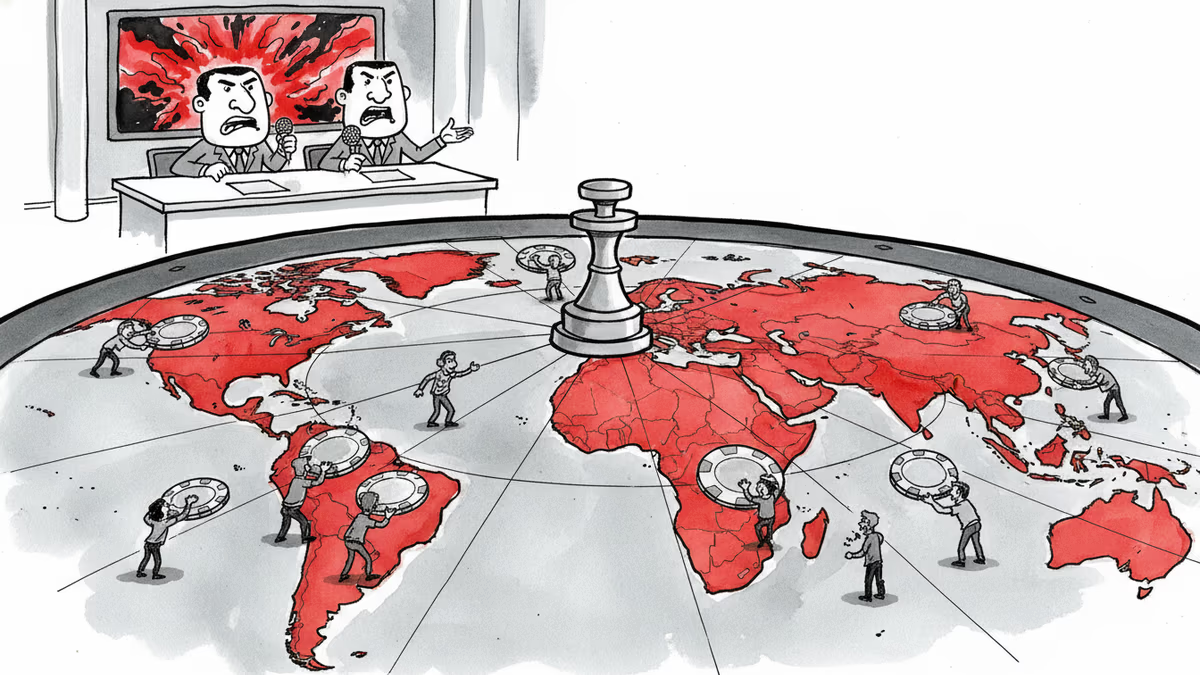
Someone made money the moment US forces struck Iran. On Polymarket, users had been betting on exactly when America would attack, and when it finally happened, winners were declared. Now the prediction betting platform faces intense scrutiny over turning human tragedy into a gambling opportunity.
This isn't Polymarket's first controversy. The platform has faced accusations of insider trading on Super Bowl halftime shows and suspicious activity around Venezuelan President Nicolás Maduro's potential capture. Each time, the same question emerges: where's the line between information and exploitation?
The Platform's Defense
In a defiant statement, Polymarket doubled down on its mission. The company called prediction markets an "invaluable" source of news and answers, while taking shots at traditional media and Elon Musk'sX. Their argument? Markets aggregate information better than journalists or social media algorithms.
There's some truth to this. Polymarket users correctly predicted the 2024 US election outcome more accurately than most polls. The platform's defenders argue that putting money behind predictions creates better incentives for truth-seeking than clickbait headlines or engagement-driven algorithms.

The Ethics Problem
But critics see something darker. When people bet on when wars will start, are they gathering information or profiting from misery? The platform's users celebrate wins while real people face real consequences. It's the ultimate commodification of human suffering.
Regulators are watching closely. The CFTC has already taken action against Polymarket for operating without proper registration. Other countries are grappling with how to classify these platforms—are they financial markets, gambling sites, or something entirely new?
The Bigger Picture
Prediction markets represent a fundamental shift in how we process information. Traditional news tells us what happened. Social media tells us what people think happened. Prediction markets tell us what people believe will happen—and they're willing to stake money on it.
This creates powerful incentives for accuracy, but also troubling moral hazards. When your portfolio depends on conflict, do you start rooting for chaos? When algorithms can predict human behavior better than humans themselves, what happens to the markets?
Authors
Related Articles
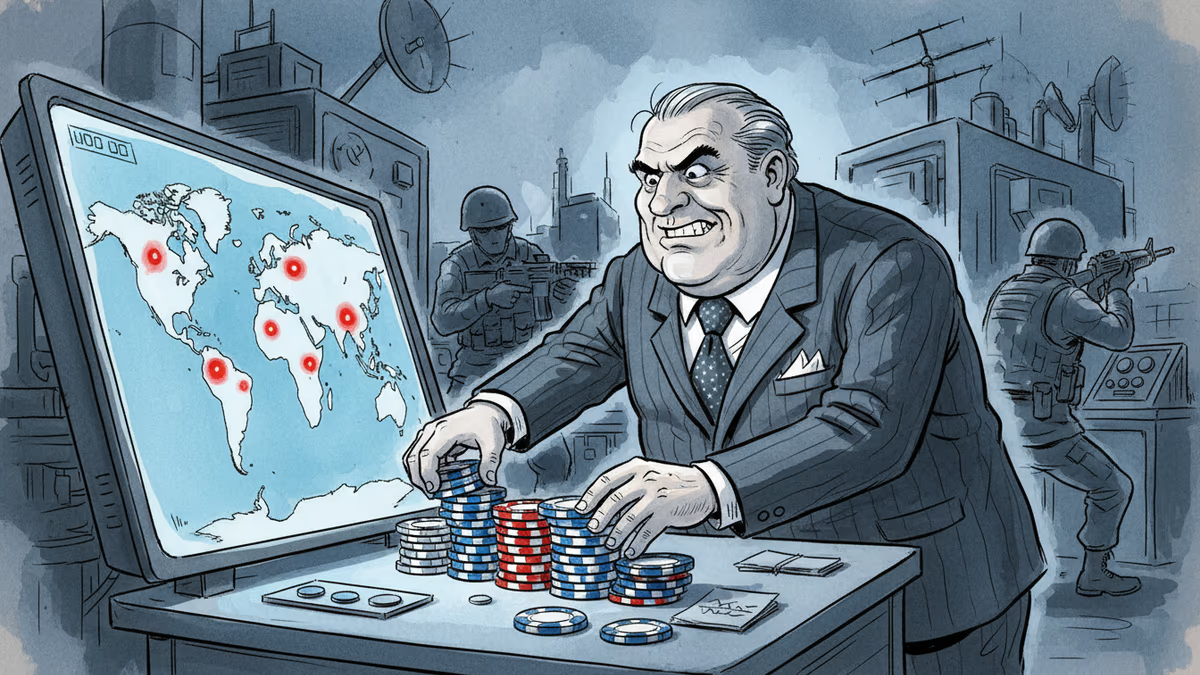
A US official involved in the operation to capture Venezuelan president Nicolás Maduro made over $400,000 on Polymarket bets days before it happened. Now he has a name.
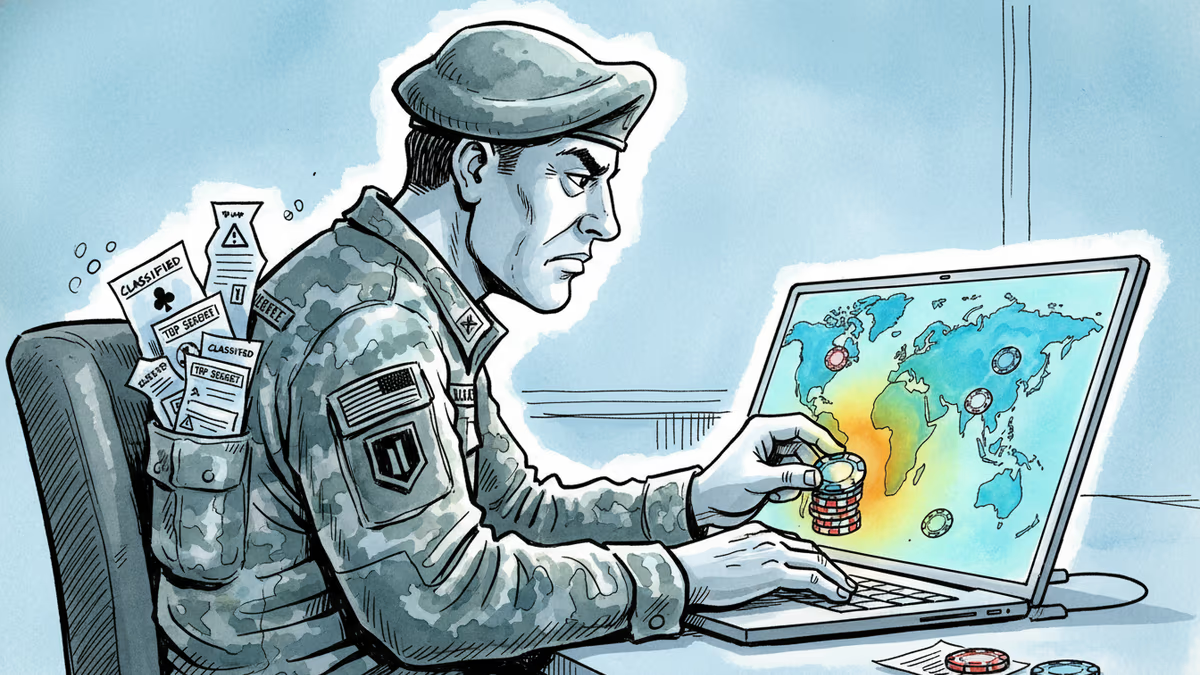
A US special forces soldier involved in the operation that captured Venezuela's Maduro allegedly used classified intel to bet on Polymarket, pocketing over $400,000. The case exposes a gaping hole in how prediction markets are regulated.
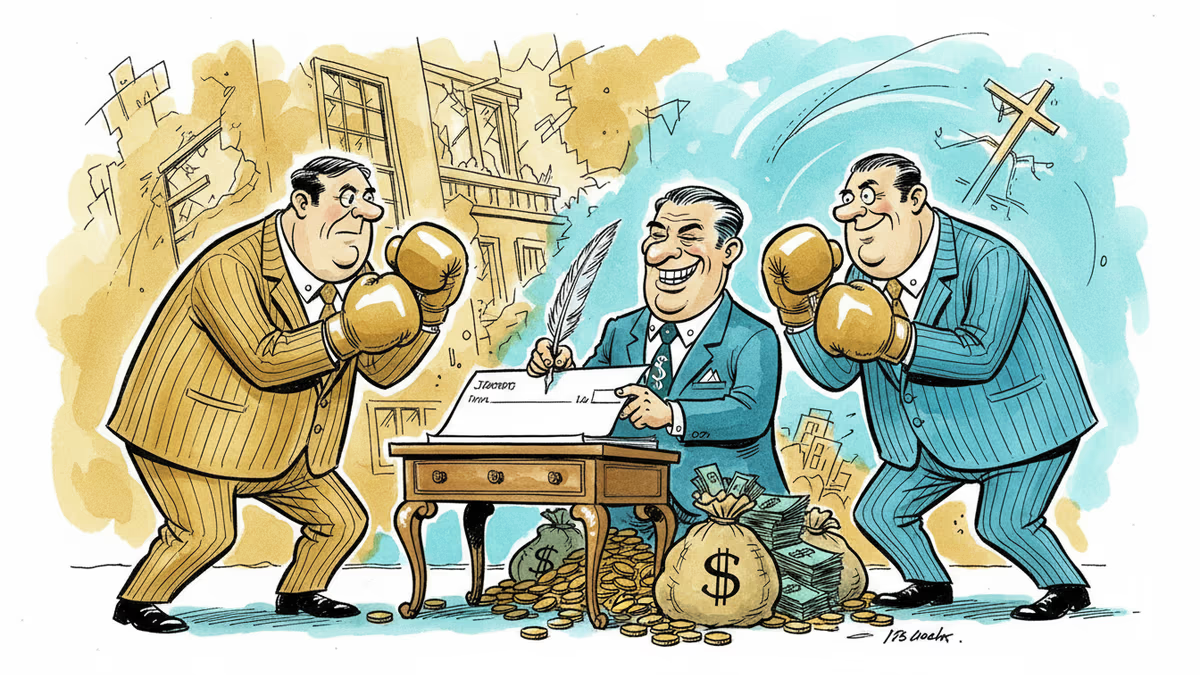
Despite fierce competition, the CEOs of Polymarket and Kalshi have co-invested in 5(c) Capital, a $35M VC fund targeting prediction market infrastructure. What this signals for the industry.
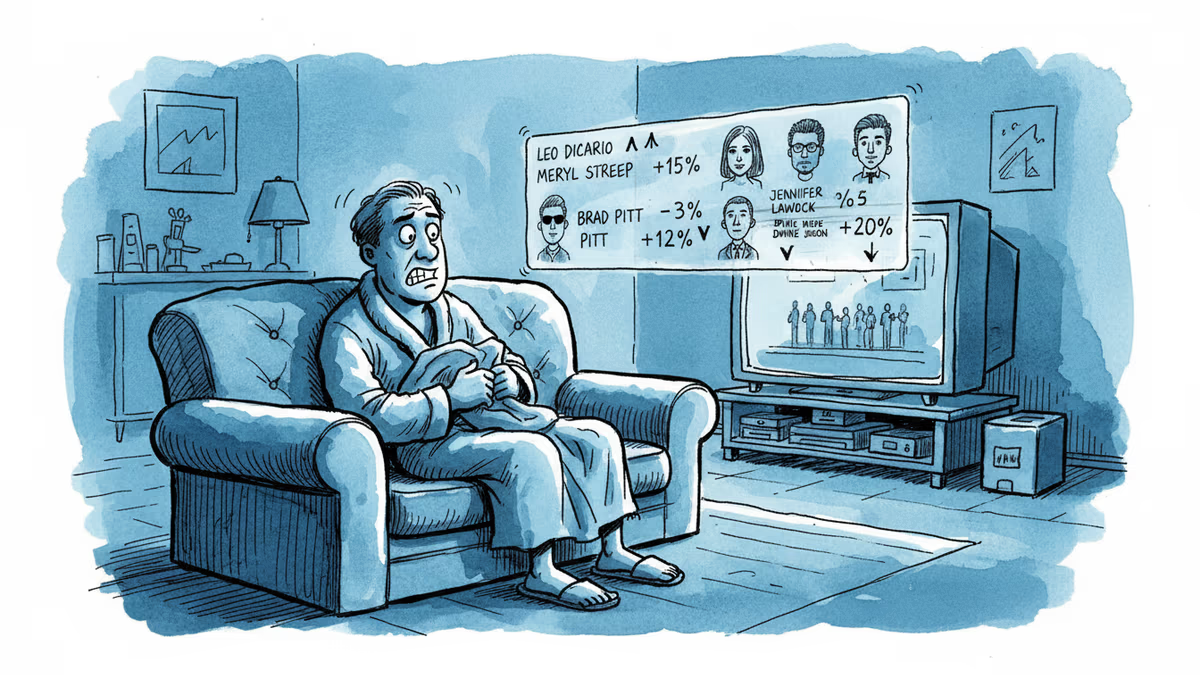
The Golden Globes partnered with Polymarket. From war timelines to Nobel Prizes, prediction markets now price every uncertainty. What does that do to the way we experience the world?
A US official involved in the operation to capture Venezuelan president Nicolás Maduro made over $400,000 on Polymarket bets days before it happened. Now he has a name.
A US special forces soldier involved in the operation that captured Venezuela's Maduro allegedly used classified intel to bet on Polymarket, pocketing over $400,000. The case exposes a gaping hole in how prediction markets are regulated.
Despite fierce competition, the CEOs of Polymarket and Kalshi have co-invested in 5(c) Capital, a $35M VC fund targeting prediction market infrastructure. What this signals for the industry.
The Golden Globes partnered with Polymarket. From war timelines to Nobel Prizes, prediction markets now price every uncertainty. What does that do to the way we experience the world?
Thoughts
Share your thoughts on this article
Sign in to join the conversation