

The Prediction Market Wars: When Mormons Side with Vegas
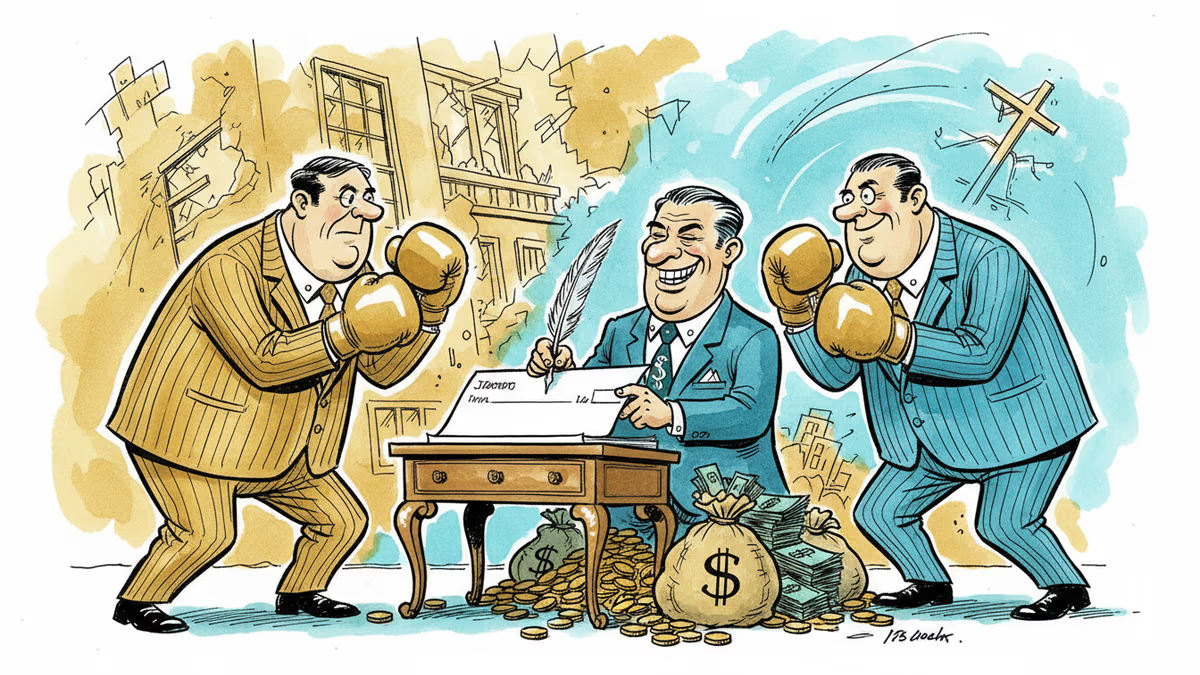
The battle over prediction markets like Kalshi and Polymarket has created strange political alliances, with conservative Mormons joining Vegas moguls while MAGA royalty teams up with Democratic lobbyists.
$800 Million Traded in a Single Day—And Nobody Agrees Who's in Charge
On Super Bowl Sunday, Kalshi recorded $800 million in trades on game-related contracts alone. Total event volume? Over $1.3 billion. What started as a niche financial experiment has exploded into a trillion-dollar battleground where casual speculators and die-hard sharps bet on everything from Oscar winners to Bitcoin prices.
But behind this meteoric growth lies a regulatory war unlike any other. The battle lines aren't drawn along traditional party lines—they're completely scrambled. Conservative Mormons are teaming up with Las Vegas bigwigs, while MAGA royalty finds itself aligned with Democratic lobbyists.
The Regulatory Maze: Federal Authority vs. State Power
Currently, prediction markets fall under federal oversight by the Commodity Futures Trading Commission (CFTC). Kalshi operates nationwide, while Polymarket was banned in 2022 for running an unregistered derivatives market before making a limited comeback last year.
The conflict centers on sports contracts. State attorneys general and gambling regulators argue these should follow state gambling laws—not federal derivatives rules. The stakes are enormous. Nevada's regulated gambling industry represents a massive chunk of the state's economy, and officials aren't keen on losing market share to unregulated competitors.
"The states have such a vested interest," explains Alex Grishman from law firm Haynes Boone. "They want to have as much of the tax revenue as they can."
The result? Kalshi faces 19 separate lawsuits across the country and narrowly avoided a temporary shutdown in Massachusetts.
Strange Bedfellows: When Politics Gets Weird
This fight has produced the most bizarre political alliances in recent memory.

Pro-Prediction Market Camp:
- CFTC Chairman Michael Selig (Trump appointee)
- Former Democratic Congressman Sean Patrick Maloney (now leads industry lobbying group)
- Donald Trump Jr. (adviser to both Kalshi and Polymarket)
- The Trump family (launching their own platform, Truth Predict)
Opposition Camp:
- Utah Governor Spencer Cox (Republican from a state that bans sports betting entirely)
- Arkansas Senator John Boozman (Republican Agriculture Chair who oversees CFTC)
- Former New Jersey Attorney General Matt Platkin (Democrat)
"This is illegal gambling," Platkin declares. "Unregulated, untaxed, unsupervised." Meanwhile, Kalshi argues there's a fundamental difference: "On Kalshi, there is no house, users trade against each other."
The Cannabis Parallel: Déjà Vu All Over Again
This regulatory chaos mirrors America's ongoing cannabis wars. Federally, marijuana remains illegal, yet states like Illinois, New York, and California collect hundreds of millions annually from regulated sales. Meanwhile, a parallel hemp-derived THC industry exploits legal loopholes.
The psychological effect? Identical. Getting high from "regular" cannabis versus hemp-derived products feels the same, just as winning money on the Super Bowl hits identically whether from a sportsbook or prediction market. Yet each faces entirely different regulations.
And like cannabis, this isn't a left-versus-right fight. In Illinois, Democratic Governor J.B. Pritzker wants tighter hemp regulation while Democratic Chicago Mayor Brandon Johnson just vetoed restrictions.
The Market Marches On
While regulators duke it out, prediction markets keep expanding. This week alone, Polymarket announced data integration with Substack, and the Federal Reserve released a positive report on Kalshi's forecasting effectiveness.
Both platforms have struck data deals with CNN, CBS, CNBC, and Dow Jones. Quantitative trading firms like Jump Trading are taking stakes in both companies, signaling Wall Street's growing confidence in the sector.
The industry's momentum seems unstoppable. But so does the regulatory resistance.
Authors
Related Articles

A US special forces soldier involved in the operation that captured Venezuela's Maduro allegedly used classified intel to bet on Polymarket, pocketing over $400,000. The case exposes a gaping hole in how prediction markets are regulated.
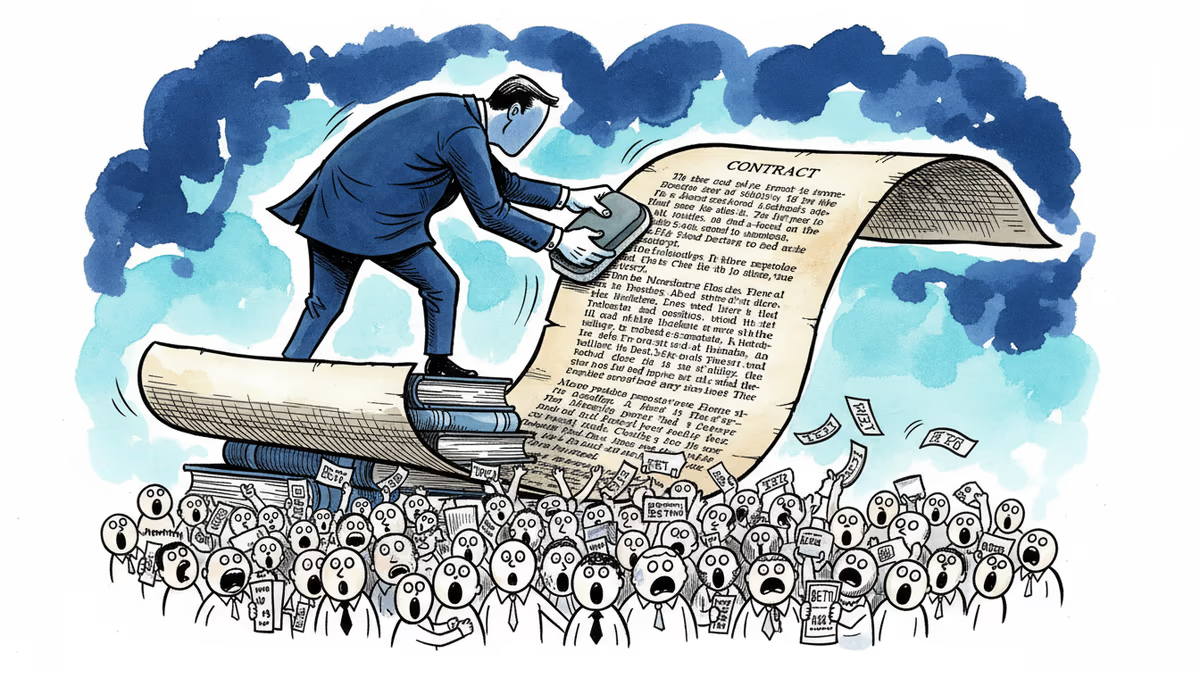
Despite fierce competition, the CEOs of Polymarket and Kalshi have co-invested in 5(c) Capital, a $35M VC fund targeting prediction market infrastructure. What this signals for the industry.
A class action lawsuit accuses Kalshi of changing payout rules after Iran's Supreme Leader Khamenei was killed. The case cuts to the heart of prediction market credibility.

Indonesia introduces age-tiered social media restrictions, allowing 13+ for low-risk platforms and 16+ for high-risk ones. How does this compare to Australia's blanket ban?
A US special forces soldier involved in the operation that captured Venezuela's Maduro allegedly used classified intel to bet on Polymarket, pocketing over $400,000. The case exposes a gaping hole in how prediction markets are regulated.
Despite fierce competition, the CEOs of Polymarket and Kalshi have co-invested in 5(c) Capital, a $35M VC fund targeting prediction market infrastructure. What this signals for the industry.
A class action lawsuit accuses Kalshi of changing payout rules after Iran's Supreme Leader Khamenei was killed. The case cuts to the heart of prediction market credibility.
Indonesia introduces age-tiered social media restrictions, allowing 13+ for low-risk platforms and 16+ for high-risk ones. How does this compare to Australia's blanket ban?
Thoughts
Share your thoughts on this article
Sign in to join the conversation