
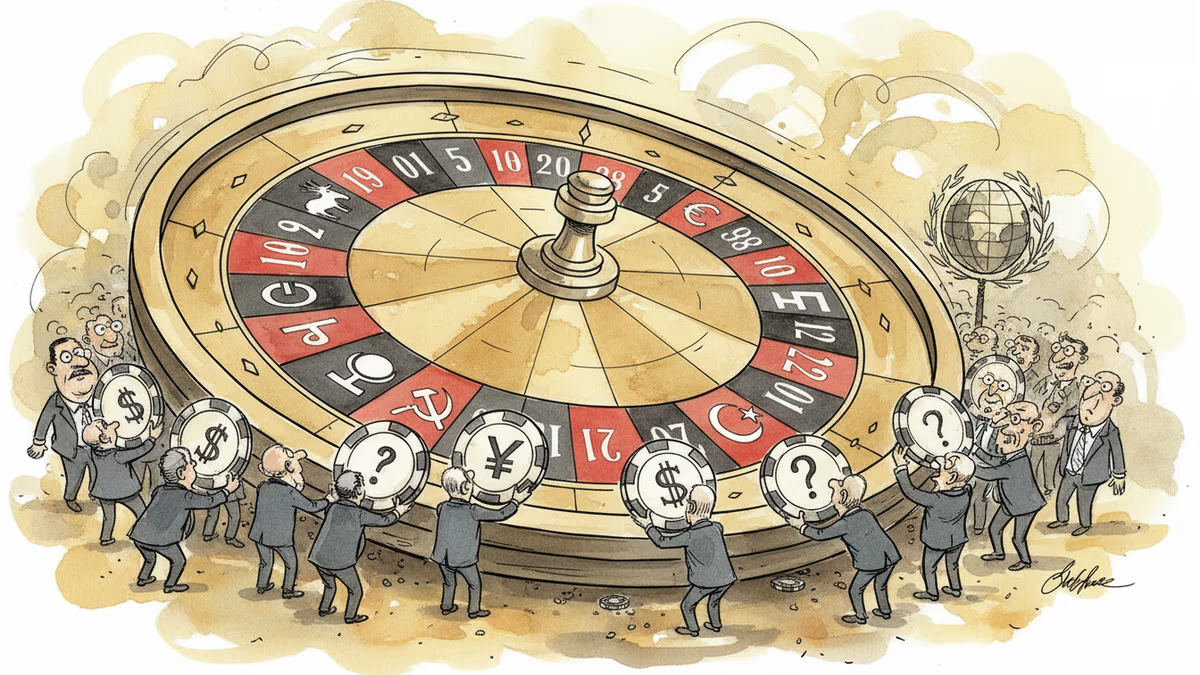
When Prediction Markets Become Political Weapons
As platforms like Polymarket transform from neutral betting sites into tools of political influence, the Silicon Valley-Washington alliance shows new cracks. Is tech neutrality just an illusion?
$1 Trillion in Bets Just Became a Political Battlefield
People are wagering money on whether Houthi militias will strike Israel. Investors are betting billions on US election outcomes. What started as Polymarket's "fun experiment" in crowd-sourced predictions has morphed into something far more consequential: a tool for political influence.
The honeymoon between Silicon Valley and the Trump administration lasted exactly one year. Now, prediction markets sit at the center of their growing rift.
The Myth of Platform Neutrality
Polymarket's founders have long insisted they run a "neutral platform." Reality tells a different story. During the 2024 election cycle, Trump's winning odds traded 10-15 percentage points higher on their platform than traditional polling suggested.
Coincidence? Hardly. When your user base skews heavily toward crypto-savvy males aged 20-30, their political biases inevitably shape market prices. What they packaged as "wisdom of crowds" was actually amplified groupthink.
This bias problem isn't uniquely American. Any prediction market reflects the demographics and preferences of its participants, not some objective truth about future events.
Regulators' Impossible Choice
Washington regulators face an impossible dilemma. Classify prediction markets as financial instruments, and you trigger heavy-handed securities regulations. Call them games, and you risk legitimizing political manipulation.

The CFTC already fined Polymarket $1.4 million for operating without proper registration. But that barely scratched the surface. The fundamental question remains unanswered: Are prediction markets tools for "information discovery" or vehicles for "opinion laundering"?
Traditional polling companies spend fortunes on representative sampling and statistical rigor. Prediction markets? They just let whoever has money place bets and call it "market wisdom."
Big Tech's Strategic Silence
Notably absent from the prediction market gold rush: established tech giants. Google, Meta, and Apple are staying far away from political betting platforms.
They're already fighting antitrust battles, content moderation controversies, and privacy regulations. Why invite more political heat by enabling gambling on election outcomes?
Meanwhile, figures like Elon Musk embrace prediction markets as another megaphone for their political messaging. When you have 150 million Twitter followers, you can move betting odds just by posting your "predictions."
The Venture Capital Angle
Behind every prediction market startup sits venture capital money. Polymarket raised over $70 million from prominent VCs who bet that political betting would go mainstream.
These investors aren't just funding technology—they're funding a particular vision of democratic participation where financial resources determine whose voices get amplified. The louder you can bet, the more "predictive power" you wield.
This creates perverse incentives. Wealthy individuals and institutions can essentially buy influence over public perception of political events. Is that the kind of "innovation" democracy needs?
Authors
Related Articles
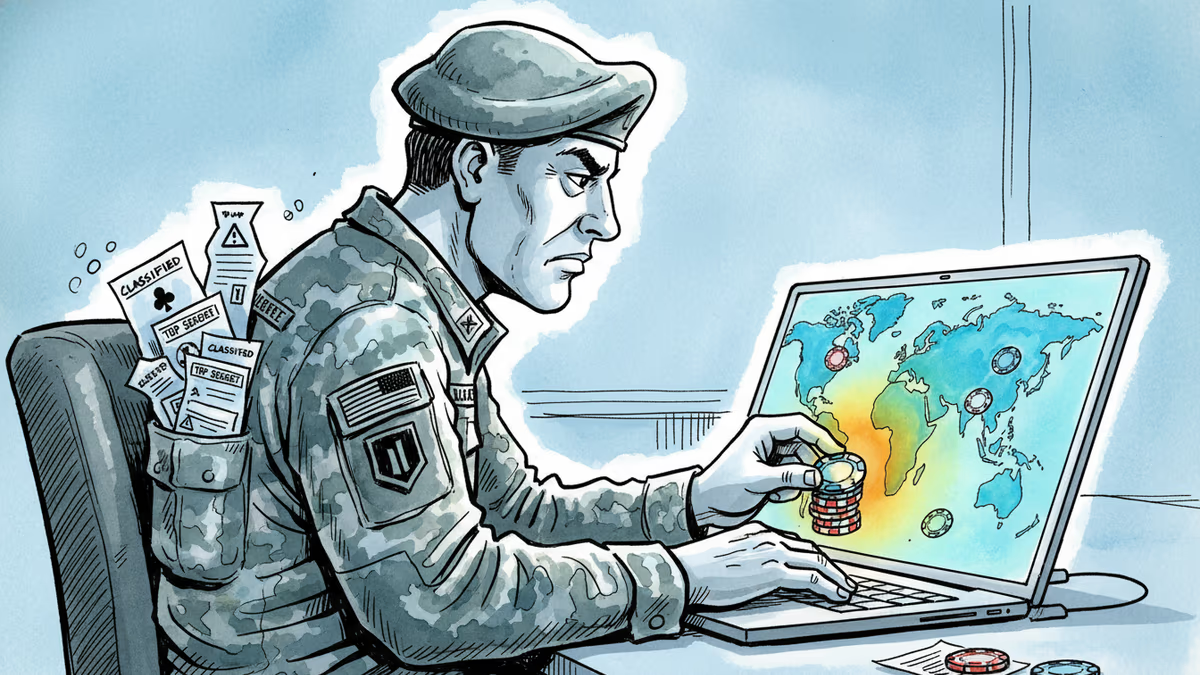
A US special forces soldier involved in the operation that captured Venezuela's Maduro allegedly used classified intel to bet on Polymarket, pocketing over $400,000. The case exposes a gaping hole in how prediction markets are regulated.
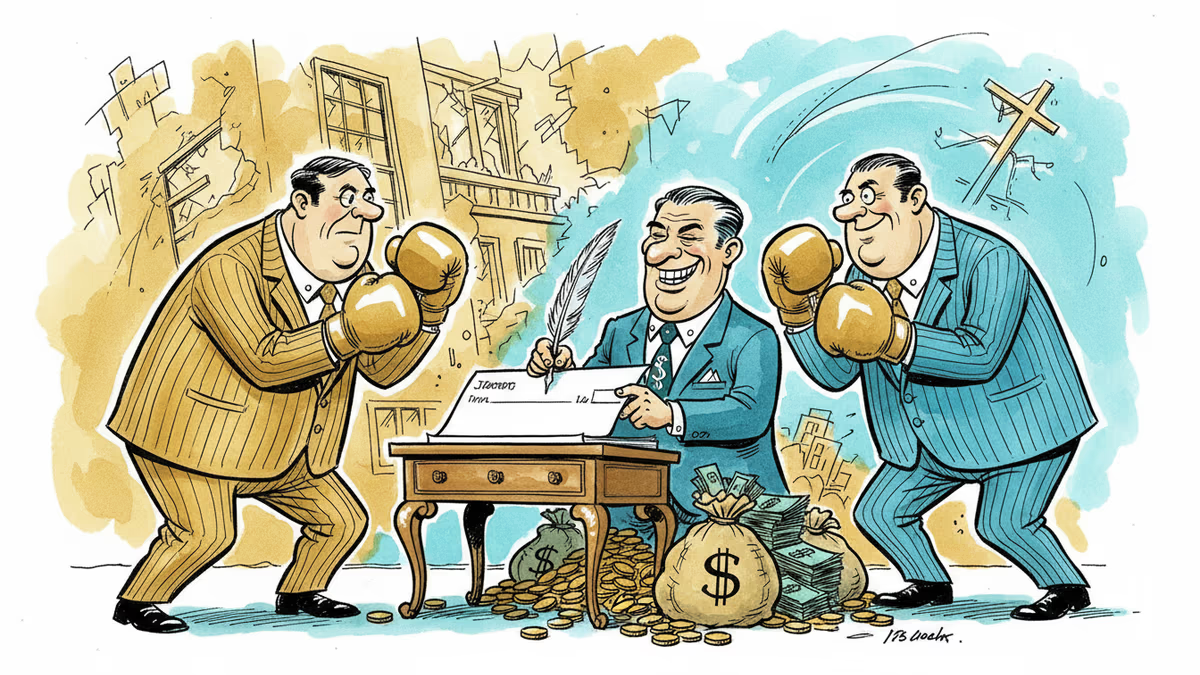
Despite fierce competition, the CEOs of Polymarket and Kalshi have co-invested in 5(c) Capital, a $35M VC fund targeting prediction market infrastructure. What this signals for the industry.
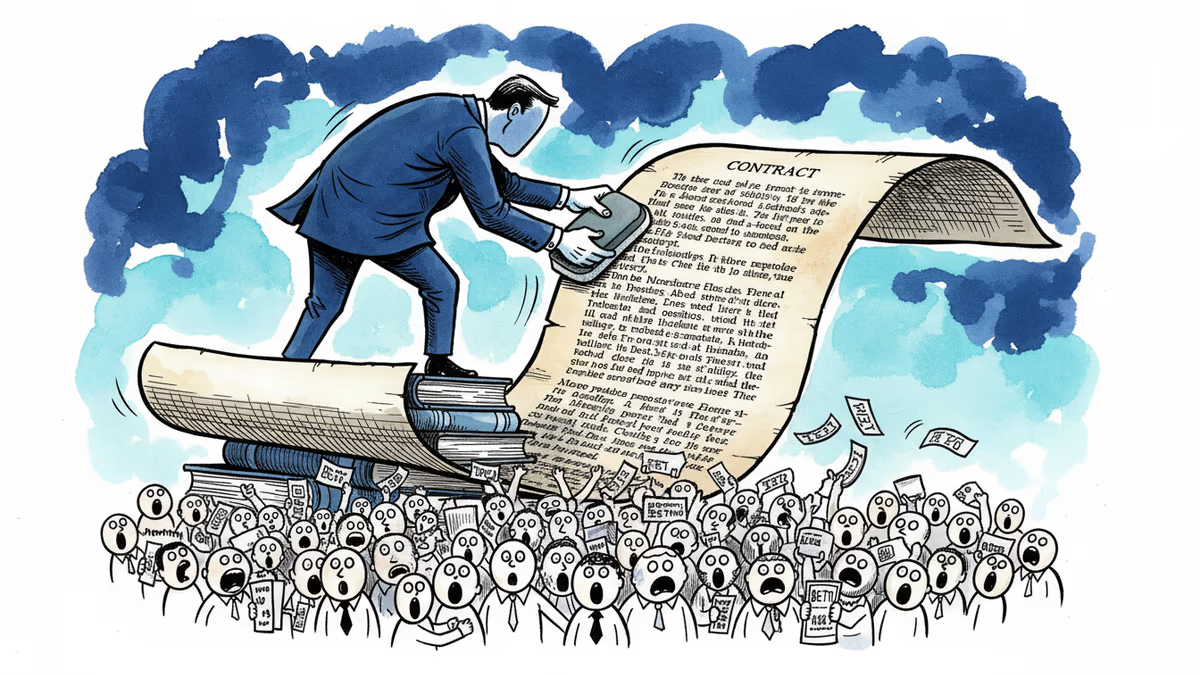
A class action lawsuit accuses Kalshi of changing payout rules after Iran's Supreme Leader Khamenei was killed. The case cuts to the heart of prediction market credibility.

Indonesia introduces age-tiered social media restrictions, allowing 13+ for low-risk platforms and 16+ for high-risk ones. How does this compare to Australia's blanket ban?
A US special forces soldier involved in the operation that captured Venezuela's Maduro allegedly used classified intel to bet on Polymarket, pocketing over $400,000. The case exposes a gaping hole in how prediction markets are regulated.
Despite fierce competition, the CEOs of Polymarket and Kalshi have co-invested in 5(c) Capital, a $35M VC fund targeting prediction market infrastructure. What this signals for the industry.
A class action lawsuit accuses Kalshi of changing payout rules after Iran's Supreme Leader Khamenei was killed. The case cuts to the heart of prediction market credibility.
Indonesia introduces age-tiered social media restrictions, allowing 13+ for low-risk platforms and 16+ for high-risk ones. How does this compare to Australia's blanket ban?
Thoughts
Share your thoughts on this article
Sign in to join the conversation