

Nevada Sues Kalshi: Where Prediction Markets Meet Gambling Laws
Nevada's lawsuit against prediction platform Kalshi raises fundamental questions about the boundary between prediction markets and gambling, with implications for the entire fintech industry.
A $13 Billion Industry Faces Its Biggest Legal Test
Within hours of a federal appeals court denying Kalshi's request to block Nevada's regulatory action, the Silver State filed a comprehensive lawsuit against the prediction market platform. The timing wasn't coincidental—it was strategic.
Nevada's case centers on two key allegations: Kalshi operates without proper gambling licenses and allows users under 21 to place bets on everything from election outcomes to sports results. But this lawsuit represents more than regulatory enforcement—it's a battle for the future of prediction markets in America.
The Blurring Lines of Financial Innovation
Kalshi and competitors like Polymarket have carefully positioned themselves as "information aggregation tools" rather than gambling platforms. Users stake money on future events, creating market-driven predictions that often outperform traditional polling. The 2024 election cycle proved their accuracy, with prediction markets calling results more precisely than most pollsters.
Yet Nevada sees it differently. When money changes hands based on uncertain outcomes, state regulators argue, you're looking at gambling—regardless of the sophisticated economic theory behind it.
This definitional dispute has massive implications. If prediction markets are classified as gambling, they face state-by-state licensing requirements, age restrictions, and operational limitations that could cripple their business models.
Stakeholders Choose Sides

Traditional casinos are quietly cheering Nevada's move. Las Vegas operators have spent decades navigating complex regulatory frameworks, paying substantial licensing fees, and adhering to strict operational standards. They view unlicensed prediction platforms as unfair competition operating in regulatory gray areas.
Fintech investors see existential risk. Prediction market valuations could collapse if courts consistently rule these platforms are gambling operations. The sector has already weathered the FTX collapse—another regulatory crackdown could be devastating.
Legal experts are divided. Some argue prediction markets represent genuine financial innovation that shouldn't be shoehorned into outdated gambling categories. Others contend that consumer protection laws exist for good reasons, especially regarding underage participation.
The Global Regulatory Patchwork
The contrast with international approaches is stark. The UK's Betfair operates betting exchanges legally, while the EU increasingly treats prediction markets as financial instruments. Meanwhile, American companies navigate a maze of conflicting state regulations.
This fragmented approach creates competitive disadvantages for US-based platforms and pushes innovation offshore. Polymarket, for instance, blocks US users entirely, forcing American participants to use VPNs or foreign platforms.
Beyond Nevada: The Precedent Effect
Nevada's lawsuit could trigger a domino effect across other gambling-heavy states. New Jersey, Pennsylvania, and Michigan—all with substantial gaming industries—are watching closely. A Nevada victory might embolden similar actions elsewhere.
The federal implications are equally significant. The CFTC has generally supported prediction markets for certain events, while state gambling regulators push back. This federal-state tension creates regulatory uncertainty that stifles innovation and investment.
Authors
Related Articles

A US special forces soldier involved in the operation that captured Venezuela's Maduro allegedly used classified intel to bet on Polymarket, pocketing over $400,000. The case exposes a gaping hole in how prediction markets are regulated.
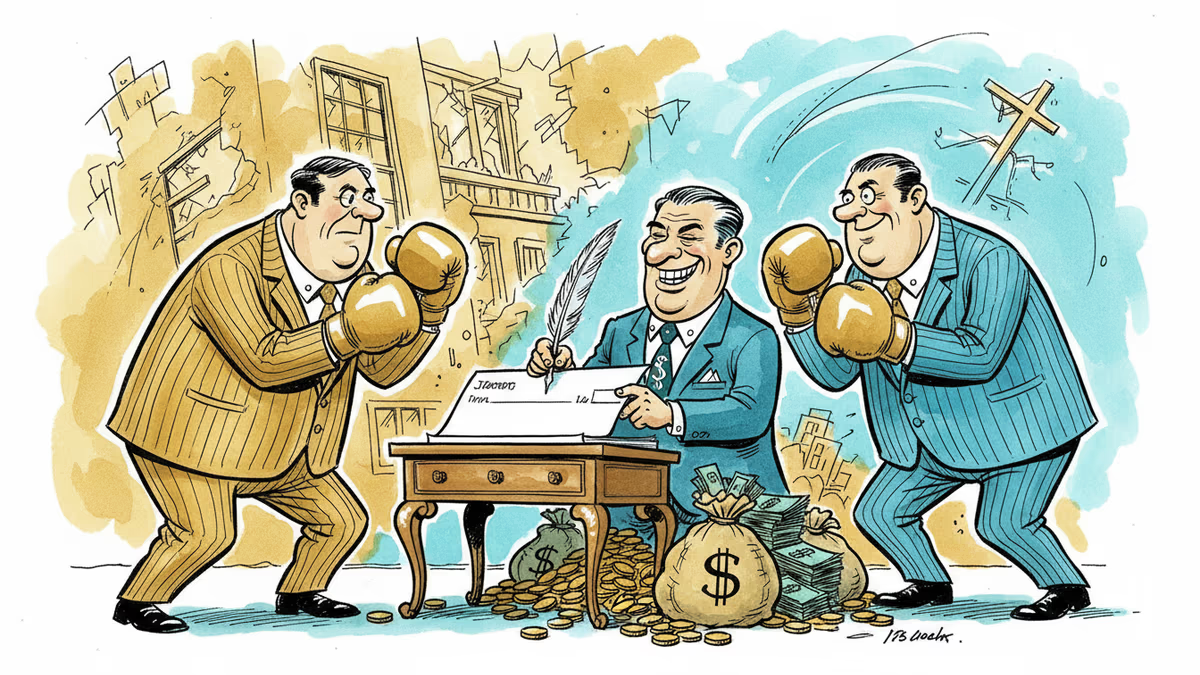
Despite fierce competition, the CEOs of Polymarket and Kalshi have co-invested in 5(c) Capital, a $35M VC fund targeting prediction market infrastructure. What this signals for the industry.
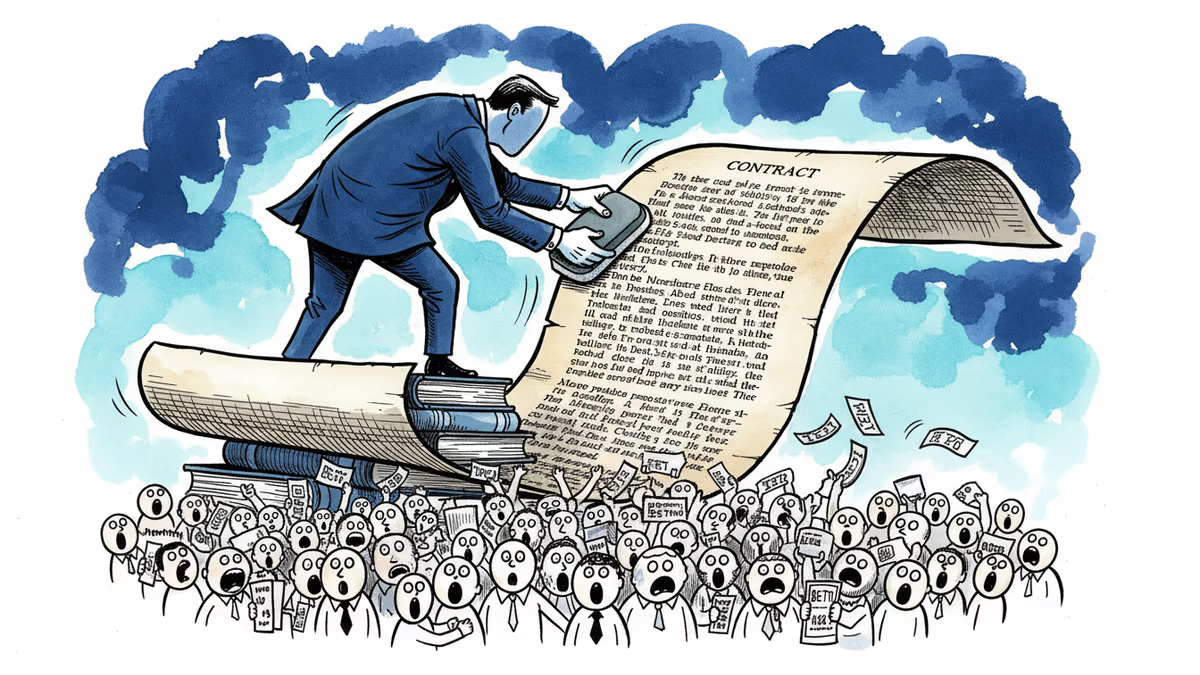
A class action lawsuit accuses Kalshi of changing payout rules after Iran's Supreme Leader Khamenei was killed. The case cuts to the heart of prediction market credibility.
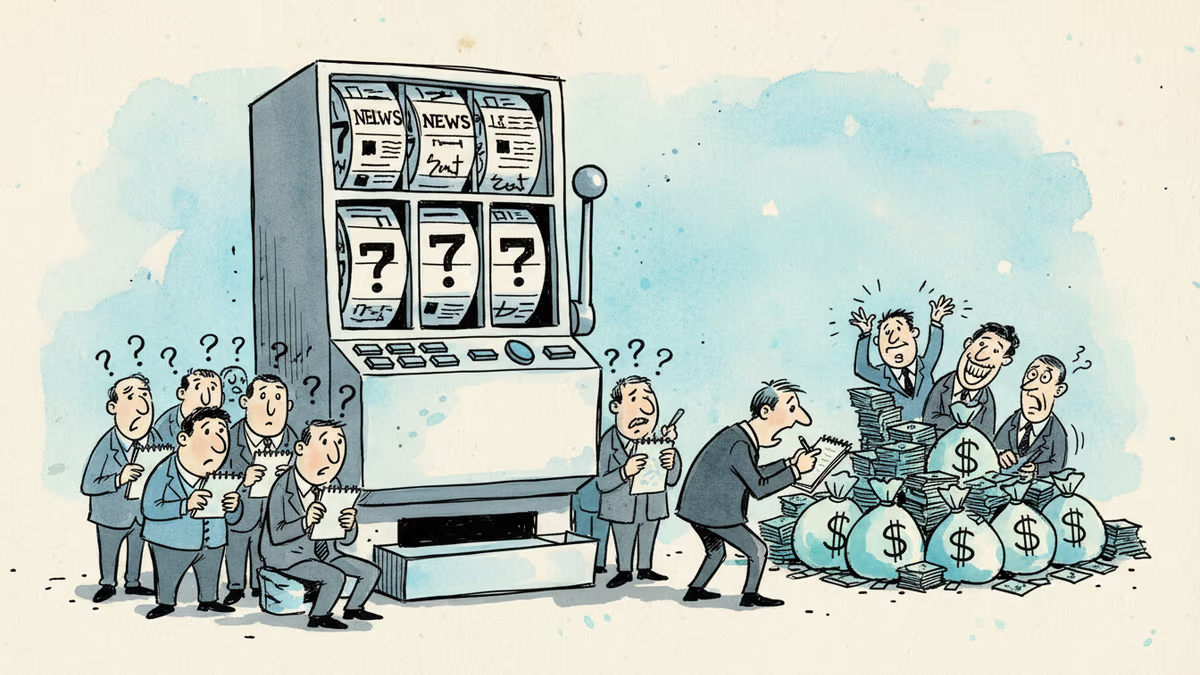
As Polymarket and Kalshi expand news partnerships, insider trading concerns mount. The line between gambling and information is blurring dangerously.
A US special forces soldier involved in the operation that captured Venezuela's Maduro allegedly used classified intel to bet on Polymarket, pocketing over $400,000. The case exposes a gaping hole in how prediction markets are regulated.
Despite fierce competition, the CEOs of Polymarket and Kalshi have co-invested in 5(c) Capital, a $35M VC fund targeting prediction market infrastructure. What this signals for the industry.
A class action lawsuit accuses Kalshi of changing payout rules after Iran's Supreme Leader Khamenei was killed. The case cuts to the heart of prediction market credibility.
As Polymarket and Kalshi expand news partnerships, insider trading concerns mount. The line between gambling and information is blurring dangerously.
Thoughts
Share your thoughts on this article
Sign in to join the conversation