
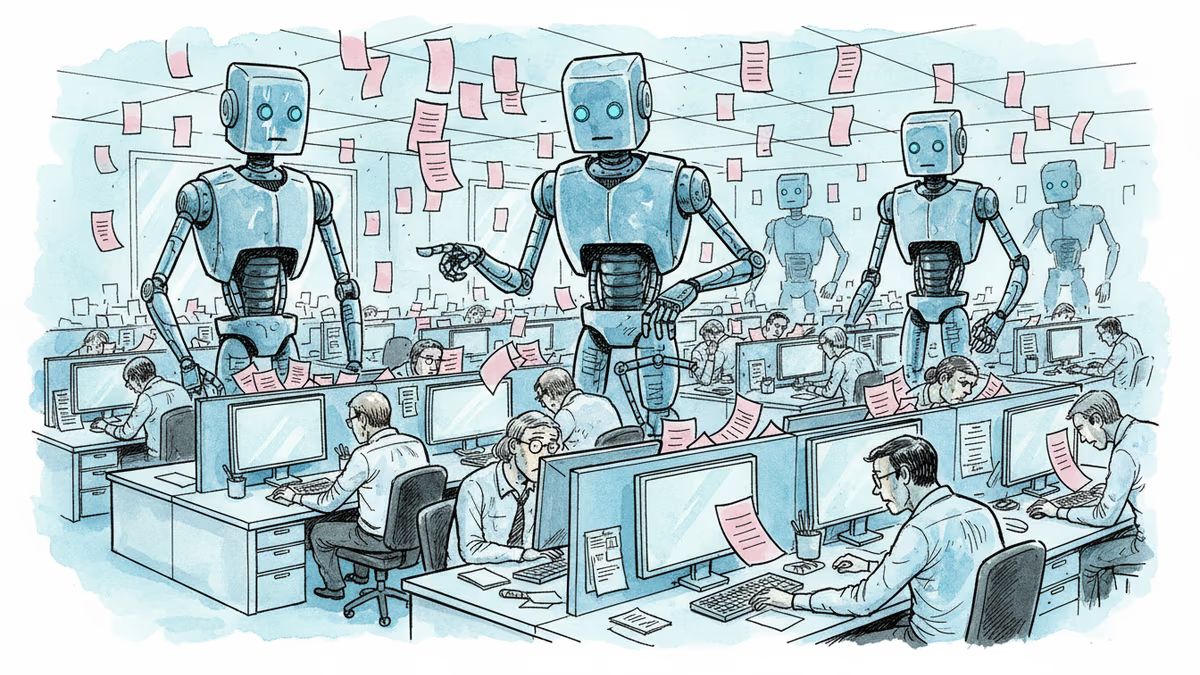
When AI Becomes Mandatory and Layoffs Feel Random
At Jack Dorsey's Block, 10% workforce cuts combined with mandatory AI usage have created a toxic work environment where performance anxiety runs rampant and morale hits rock bottom.
The Worst Morale in Four Years
"Morale is probably the worst I've felt in four years." That's what a Block employee told Jack Dorsey directly during a recent all-hands meeting. The complaint, submitted to Twitter's co-founder who now runs the fintech giant, captures something deeper than typical workplace grumbling. At Block—parent company of Square and Cash App—a perfect storm of layoffs and AI mandates has created what employees describe as a culture in freefall.
The numbers tell part of the story. Block started February by cutting staff, with layoffs potentially affecting up to 10% of its 11,000-person workforce. But it's not just the cuts—it's how they're happening.
Performance-Based or Cost-Cutting? Employees Aren't Buying It
Management insists these are performance-related departures. Arnaud Weber, Block's engineering lead, sent an email characterizing the layoffs as merit-based: "We have parted ways with teammates who weren't meeting the expectations of their role... based on clear performance gaps."
Employees aren't convinced. The layoffs have been rolling out over weeks, leaving workers in limbo. "We don't yet know if our livelihoods will be affected, and this makes it incredibly hard to make major life choices without knowing if we still have a job next week," another employee complained to Dorsey.
The disconnect is stark. While Weber talks about "calibrations" and "role expectations," employees see what looks like cost-cutting disguised as performance management. Dorsey himself acknowledged there was "a sizable portion of our population that have been phoning it in," but the timing feels suspect to many inside the company.

AI: Use It or Lose Out
Then there's the AI mandate. Every Block employee must now send weekly updates to Dorsey, who uses generative AI to summarize the thousands of messages. During the post-layoff all-hands, Dorsey's AI summary revealed telling themes: "widespread concerns about layoffs," "performance anxiety," and "tension between accelerating delivery through AI adoption versus maintaining code quality."
Dorsey's message was clear: embrace AI tools for productivity, or Block risks falling behind competitors. But employees are pushing back on the top-down approach. "If the tool were good, we'd all just use it," one current employee told WIRED.
The mandate reflects a broader Silicon Valley trend where AI adoption has become less about utility and more about competitive positioning. But forcing tools on anxious workers might backfire.
The Productivity Paradox
Block's approach raises uncomfortable questions about AI integration. Can you mandate innovation? The company's dual pressure—use AI while fearing for your job—creates exactly the wrong environment for creative adoption of new tools.
Other tech companies are watching. Some are taking gentler approaches, introducing AI tools gradually and letting teams experiment. Others are following Block's playbook of mandates and metrics. The results will likely vary dramatically.
Authors
Related Articles
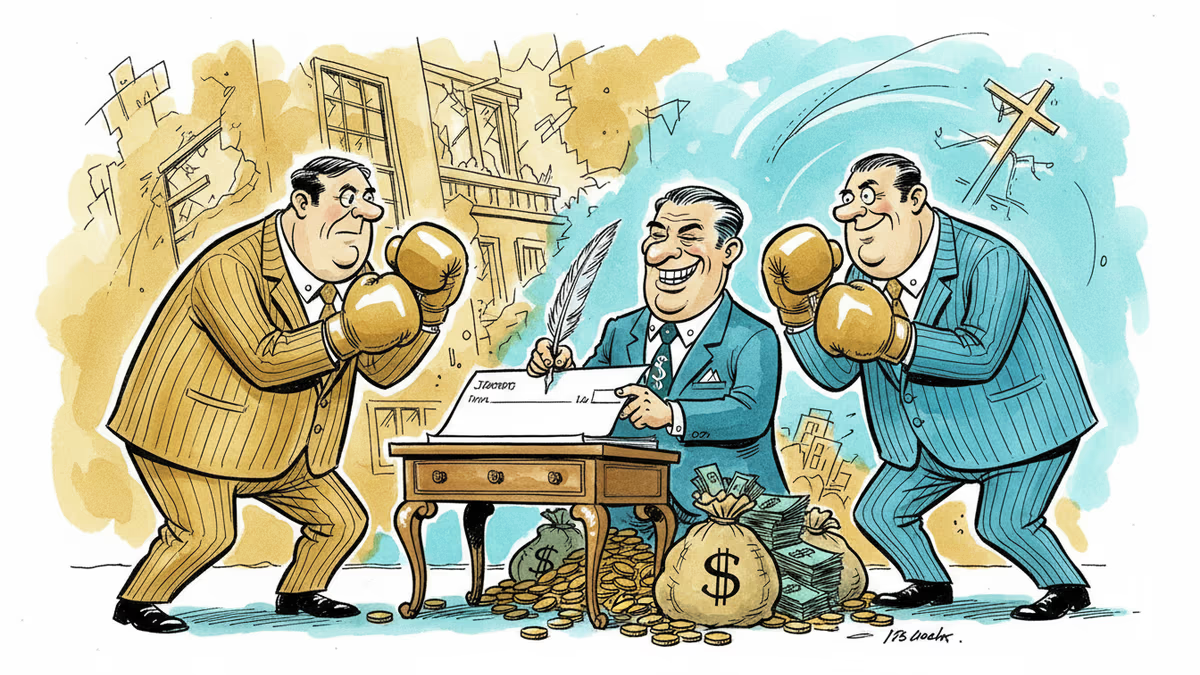
Despite fierce competition, the CEOs of Polymarket and Kalshi have co-invested in 5(c) Capital, a $35M VC fund targeting prediction market infrastructure. What this signals for the industry.
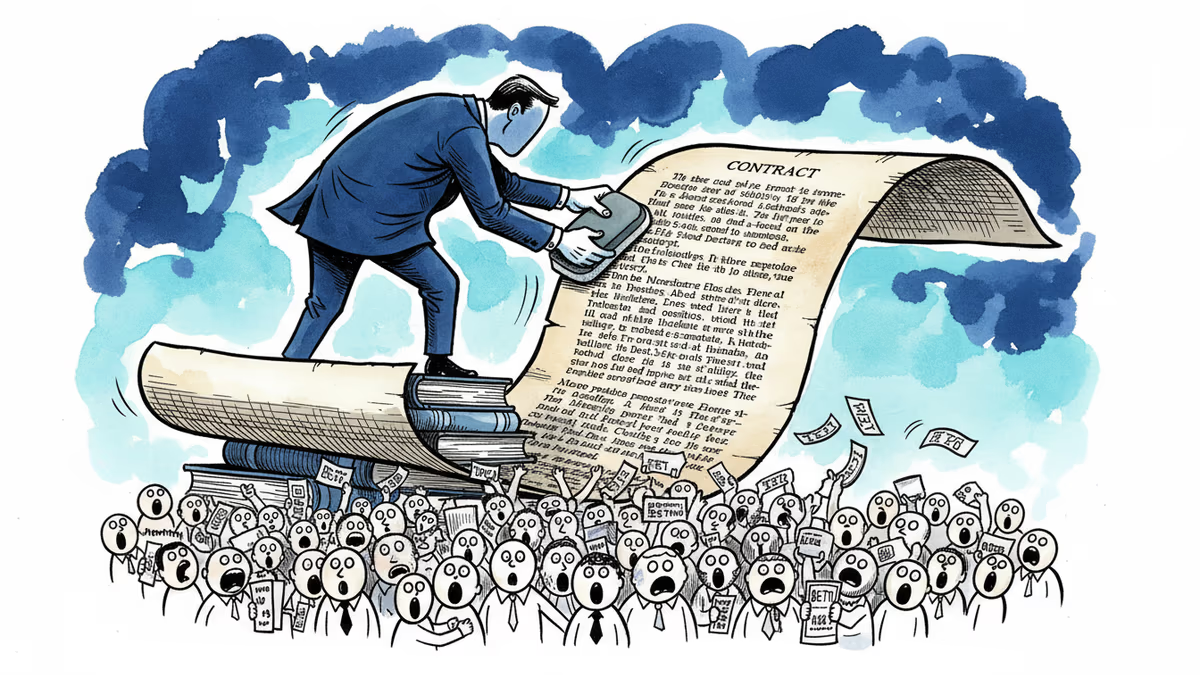
A class action lawsuit accuses Kalshi of changing payout rules after Iran's Supreme Leader Khamenei was killed. The case cuts to the heart of prediction market credibility.
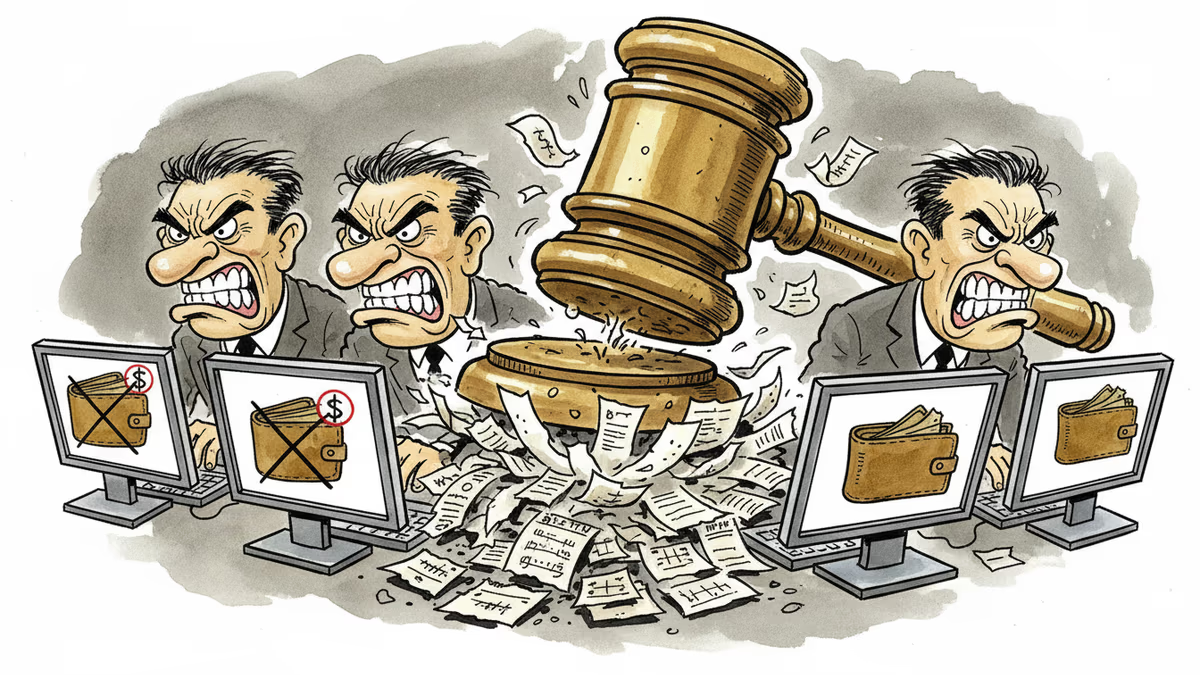
A massive dispute over Iran's supreme leader prediction market exposes the dark side of betting on world events. How Kalshi's rule interpretation sparked trader revolt.
Iran bombing predictions drew $529M in bets, raising insider trading concerns. Exploring the ethical dilemmas of prediction markets in conflict zones.
Despite fierce competition, the CEOs of Polymarket and Kalshi have co-invested in 5(c) Capital, a $35M VC fund targeting prediction market infrastructure. What this signals for the industry.
A class action lawsuit accuses Kalshi of changing payout rules after Iran's Supreme Leader Khamenei was killed. The case cuts to the heart of prediction market credibility.
A massive dispute over Iran's supreme leader prediction market exposes the dark side of betting on world events. How Kalshi's rule interpretation sparked trader revolt.
Iran bombing predictions drew $529M in bets, raising insider trading concerns. Exploring the ethical dilemmas of prediction markets in conflict zones.
Thoughts
Share your thoughts on this article
Sign in to join the conversation