
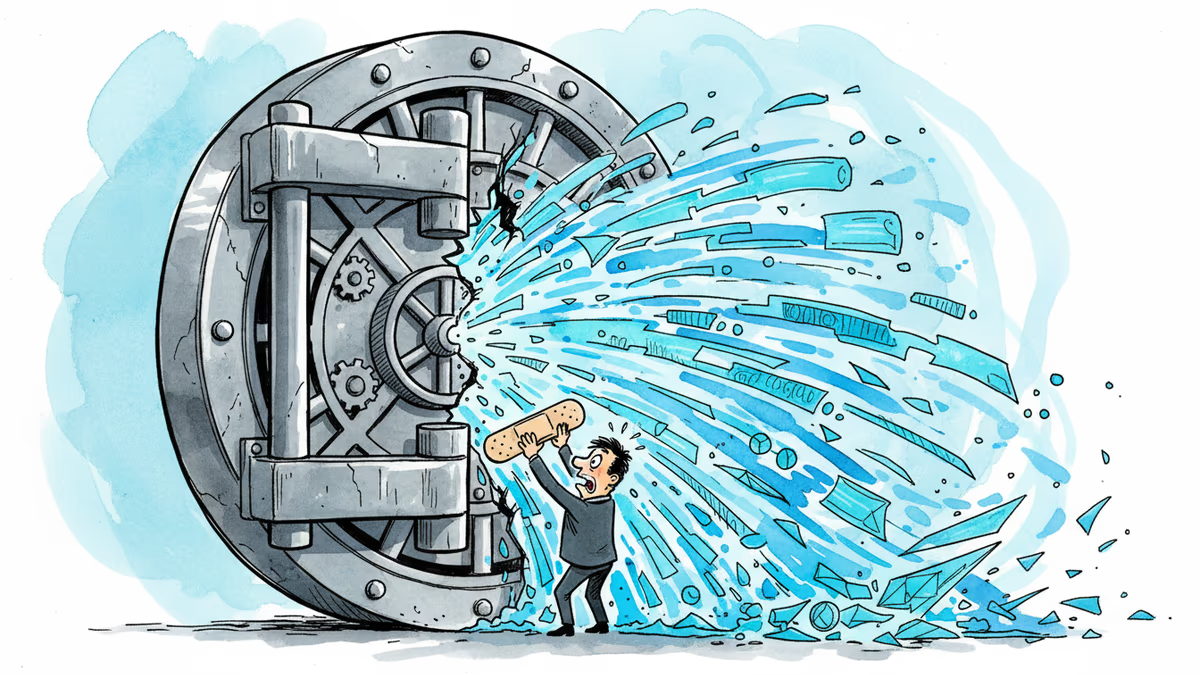
When Fintech Giants Stay Silent, Security Experts Speak Up
Figure's data breach affects nearly 1 million customers according to security researcher Troy Hunt, despite company's vague 'limited files' statement. ShinyHunters group behind the attack.
967,200 customers just learned their trust was misplaced
When blockchain lending giant Figure announced a data breach last week, they called it "a limited number of files." Security researcher Troy Hunt had a different story to tell. After analyzing the stolen data published by hackers, Hunt found 967,200 unique email addresses belonging to Figure customers.
The breach wasn't just about email addresses. The 2.5 gigabytes of stolen data included customer names, birth dates, physical addresses, and phone numbers—a complete identity toolkit for cybercriminals. The notorious hacking group ShinyHunters claimed responsibility and published the data on their leak site, where they shame victims who refuse to pay ransom demands.
Corporate Speak vs. Reality Check
Figure's carefully worded statement about "limited files" stands in stark contrast to Hunt's findings. The company hasn't disputed the researcher's analysis, nor have they responded to requests for comment about the actual scope of the breach.
This disconnect between corporate damage control and independent security analysis has become a familiar pattern in fintech breaches. Companies minimize, researchers quantify, and customers are left wondering who to believe.
Hunt, who runs the Have I Been Pwned breach notification service, has built a reputation for cutting through corporate euphemisms with hard data. His analysis carries weight because he actually examines the stolen files, not just the press releases.

The Fintech Security Paradox
Figure built its reputation on making lending faster and more accessible through blockchain technology. But this breach highlights a fundamental tension in fintech: the same digital-first approach that enables innovation also creates new attack surfaces.
Traditional banks may be slower to innovate, but they've had decades to build security infrastructure. Fintech companies, racing to capture market share, often treat security as a cost center rather than a competitive advantage—until breaches like this force a reckoning.
ShinyHunters didn't target Figure randomly. The group specializes in hitting companies with valuable personal data and weak security postures. Their success suggests Figure's defenses weren't match for determined attackers.
The Regulatory Response Gap
While Figure downplays the breach's scope, regulators are watching. The company operates in multiple states, each with different data protection requirements. Some mandate specific notification timelines and disclosure standards that Figure may now be navigating.
The contrast with traditional banking regulation is stark. Banks face regular security audits and must meet specific cybersecurity standards. Many fintech companies operate in regulatory gray areas, with oversight that varies by state and service type.
Authors
Related Articles
UK Visa Portal, a private immigration service mistaken for an official government site, has been exposing passport scans and selfies of over 100,000 applicants. The breach remains unpatched.
Okta CEO Todd McKinnon on why AI agents need identity management, the SaaSpocalypse threat, and why the kill switch might be the most important button in enterprise tech.

Despite fierce competition, the CEOs of Polymarket and Kalshi have co-invested in 5(c) Capital, a $35M VC fund targeting prediction market infrastructure. What this signals for the industry.
A class action lawsuit accuses Kalshi of changing payout rules after Iran's Supreme Leader Khamenei was killed. The case cuts to the heart of prediction market credibility.
UK Visa Portal, a private immigration service mistaken for an official government site, has been exposing passport scans and selfies of over 100,000 applicants. The breach remains unpatched.
Okta CEO Todd McKinnon on why AI agents need identity management, the SaaSpocalypse threat, and why the kill switch might be the most important button in enterprise tech.
Despite fierce competition, the CEOs of Polymarket and Kalshi have co-invested in 5(c) Capital, a $35M VC fund targeting prediction market infrastructure. What this signals for the industry.
A class action lawsuit accuses Kalshi of changing payout rules after Iran's Supreme Leader Khamenei was killed. The case cuts to the heart of prediction market credibility.
Thoughts
Share your thoughts on this article
Sign in to join the conversation