
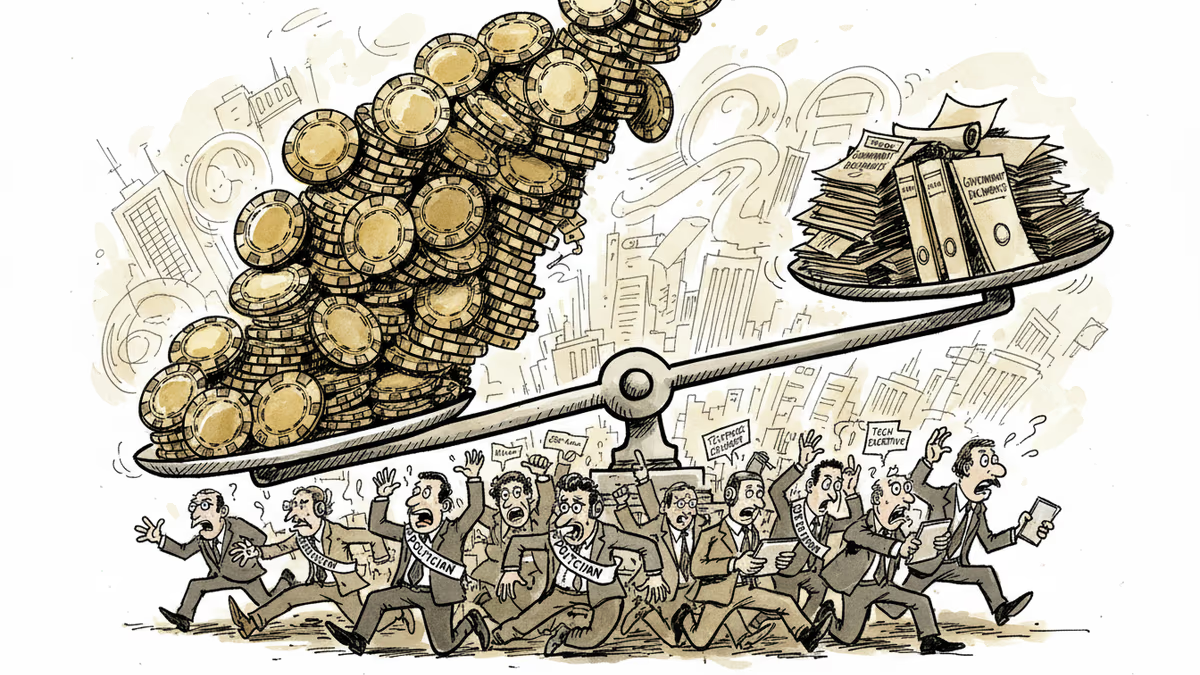
The $50 Billion Bet on Who Regulates Your Predictions
23 Democratic senators challenge federal oversight of prediction markets as platforms face 19 lawsuits and explosive growth in sports, politics, and war betting.
When Betting Markets Become Battlegrounds
23 Democratic senators versus one federal regulator. 19 active lawsuits. $50 billion in annual trading volume. The prediction markets industry isn't just growing—it's triggering a regulatory war that could reshape how Americans bet on everything from the Super Bowl to military conflicts.
Last Friday, senators led by Adam Schiff fired their latest salvo, demanding the Commodity Futures Trading Commission (CFTC) stay out of state court battles over platforms like Polymarket and Kalshi. Their message was blunt: these aren't sophisticated financial instruments—they're gambling operations masquerading as markets.
The timing couldn't be more charged. Just days earlier, Israeli authorities arrested two people for allegedly using classified military intel to place bets on Polymarket. Meanwhile, Truth Social—majority-owned by President Trump—is preparing to launch its own prediction platform, Truth Predict.
The Jurisdiction Jackpot
Here's where it gets messy. The federal government treats prediction markets as derivatives—complex financial products under CFTC oversight. State regulators see them differently: gambling operations that need local licenses and consumer protections.
Massachusetts already banned Kalshi from offering sports contracts, arguing the company was operating an illegal gambling business. Polymarket fired back with its own lawsuit, claiming states have no authority over its operations.
Enter Michael Selig, the new CFTC chairman who took office in December. Unlike his predecessor, Selig has embraced prediction markets with open arms. He quickly withdrew proposed bans on sports and political betting contracts, established an advisory board packed with industry CEOs, and publicly sparred with critics on social media.

"These are not wagers—you're not betting against the house," Selig argued on Bloomberg's Odd Lots podcast. "We have significant regulatory overlay over these markets."
The State Pushback
The senators aren't buying it. Their letter demands the CFTC ban contracts on "war, terrorism, assassination" and other controversial events. They argue these platforms "evade state and tribal consumer protections, generate no public revenue, and undermine sovereign regulatory regimes."
Cory Booker, Amy Klobuchar, and Ron Wyden joined the chorus, reflecting broader Democratic skepticism about unregulated financial innovation.
But industry advocates see state intervention as regulatory overreach. Sean Patrick Maloney, former congressman turned lobbyist for the Coalition for Prediction Markets, argues that "no state gaming commission is ever going to have the competence to provide oversight of derivatives markets."
The Trump Factor
The regulatory shift coincides with the new administration's pro-business stance. Under Biden, the CFTC proposed strict limits on prediction markets. Under Trump, those proposals vanished within weeks.
Now Truth Social is preparing its own platform, potentially creating an awkward situation where the president's company operates in a market his administration regulates. The platform promises betting opportunities across "all major sports leagues"—exactly the type of contracts that have sparked the current controversy.
Meanwhile, traditional gambling giants like DraftKings are launching their own prediction products, blurring the lines between sports betting and financial markets even further.
Authors
Related Articles
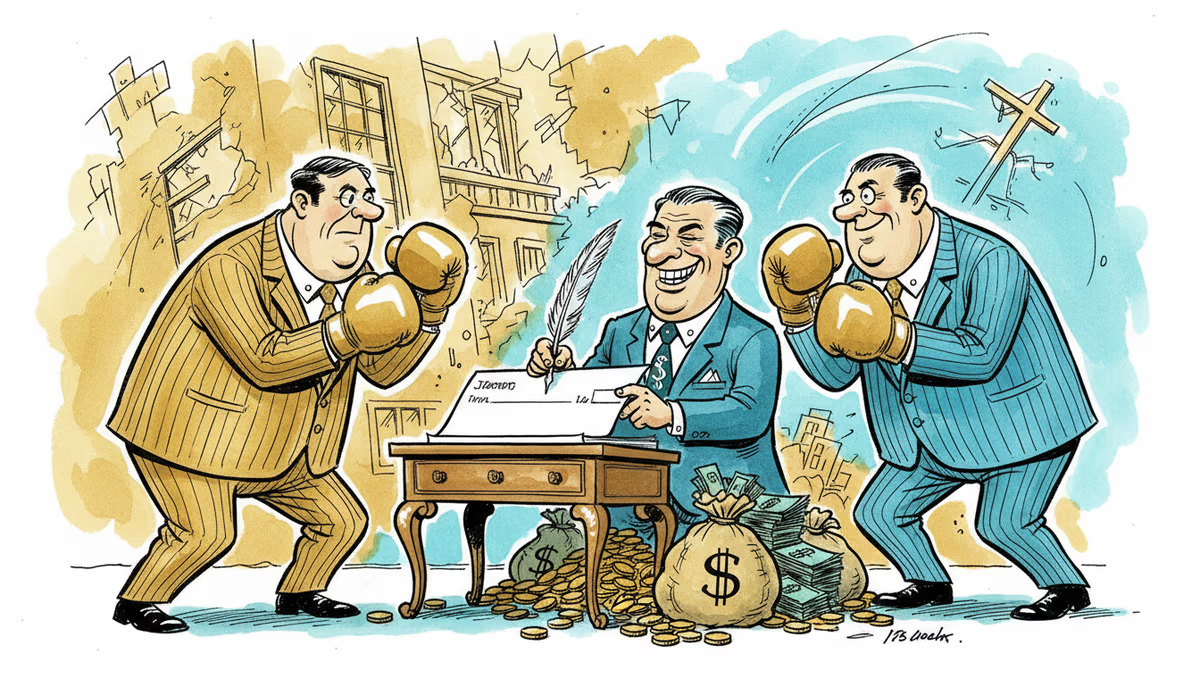
Despite fierce competition, the CEOs of Polymarket and Kalshi have co-invested in 5(c) Capital, a $35M VC fund targeting prediction market infrastructure. What this signals for the industry.
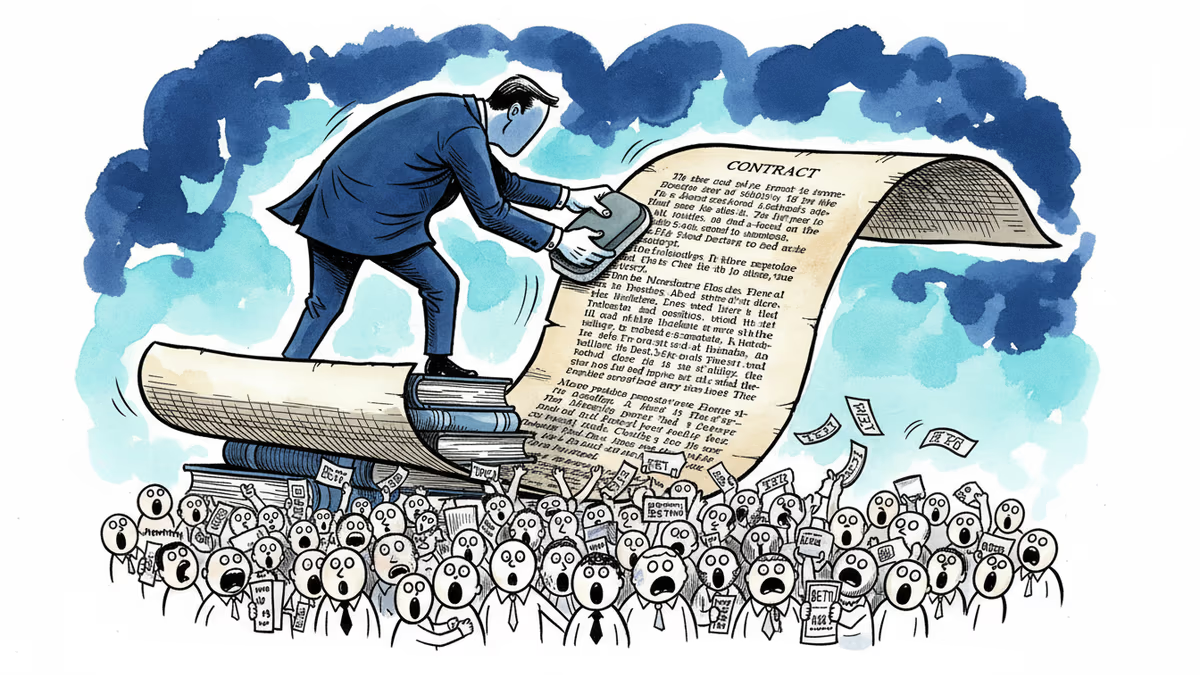
A class action lawsuit accuses Kalshi of changing payout rules after Iran's Supreme Leader Khamenei was killed. The case cuts to the heart of prediction market credibility.

Indonesia introduces age-tiered social media restrictions, allowing 13+ for low-risk platforms and 16+ for high-risk ones. How does this compare to Australia's blanket ban?
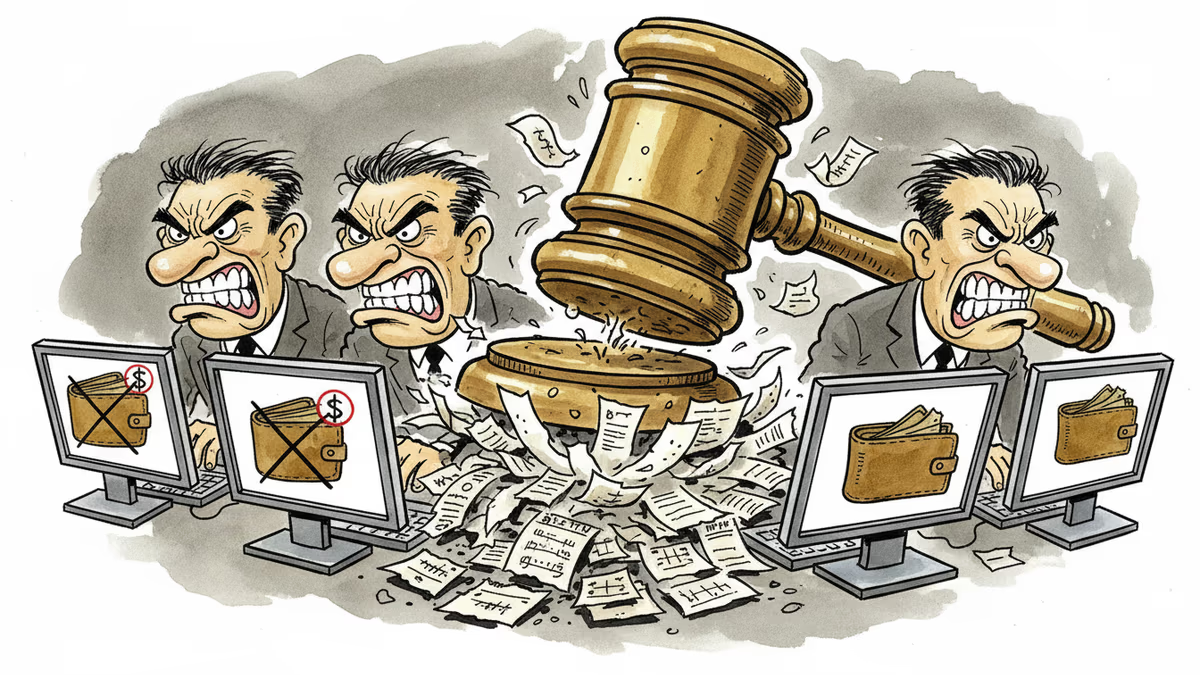
A massive dispute over Iran's supreme leader prediction market exposes the dark side of betting on world events. How Kalshi's rule interpretation sparked trader revolt.
Despite fierce competition, the CEOs of Polymarket and Kalshi have co-invested in 5(c) Capital, a $35M VC fund targeting prediction market infrastructure. What this signals for the industry.
A class action lawsuit accuses Kalshi of changing payout rules after Iran's Supreme Leader Khamenei was killed. The case cuts to the heart of prediction market credibility.
Indonesia introduces age-tiered social media restrictions, allowing 13+ for low-risk platforms and 16+ for high-risk ones. How does this compare to Australia's blanket ban?
A massive dispute over Iran's supreme leader prediction market exposes the dark side of betting on world events. How Kalshi's rule interpretation sparked trader revolt.
Thoughts
Share your thoughts on this article
Sign in to join the conversation