
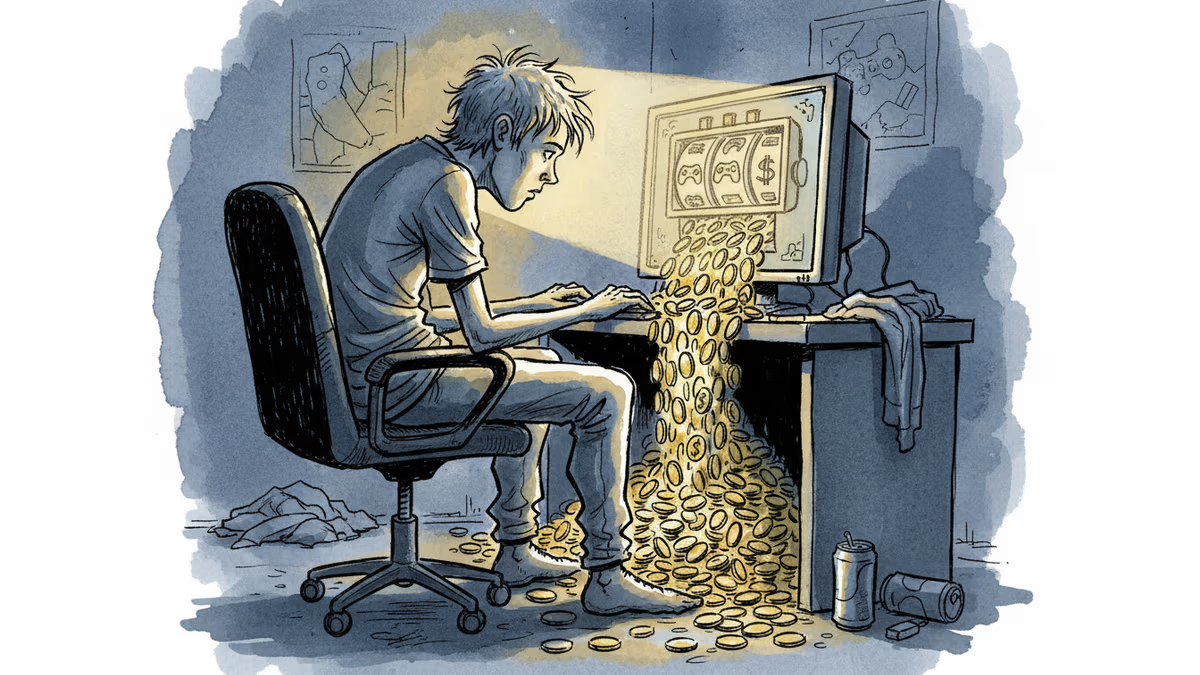
When Your Kid's Gaming Becomes Wall Street Gambling
New York's lawsuit against Valve over loot boxes reveals how gaming companies turn teenage players into gamblers. What this means for parents, regulators, and the $180 billion gaming industry.
A $180 Billion Industry Built on Digital Slot Machines
New York Attorney General Letitia James just fired the first major legal shot at gaming's most controversial revenue stream. Her lawsuit against Valve targets the loot box systems in Counter-Strike 2, Team Fortress 2, and Dota 2 – calling them "quintessential gambling" that violates state law.
The numbers tell the story. Valve's loot boxes generate hundreds of millions in annual revenue, with some rare items selling for $50,000+ on third-party markets. But here's the kicker: the average Counter-Strike player is under 25, and many are minors spending their allowances on what amounts to digital lottery tickets.
The Mechanics of Modern Addiction
Loot boxes work exactly like casino slot machines, just wrapped in gaming aesthetics. Players pay real money for a chance – and only a chance – to receive valuable virtual items. The psychological hooks are identical: variable reward schedules, near-miss experiences, and the illusion that the next purchase will be "the big one."
Valve argues this isn't gambling because every box contains something – there are no "blanks." But critics point out that receiving a $0.03 skin when you hoped for a $3,000 knife feels pretty blank to the player who just spent their lunch money.
Parents vs. Platforms: The New Battlefield

Gaming companies frame loot boxes as "surprise mechanics" – like buying trading cards or Kinder Eggs. They argue that regulating loot boxes could destroy free-to-play gaming, which has democratized access to high-quality games worldwide.
Parents tell a different story. Support groups are filled with stories of kids racking up thousands of dollars in charges, often using saved payment methods without permission. "My 14-year-old spent our vacation fund on CS:GO cases," reads one typical post.
Regulators are caught between protecting consumers and preserving innovation. Europe has already moved: Belgium and the Netherlands have banned certain loot box mechanics, while the UK is considering age restrictions.
The Domino Effect Begins
If New York succeeds, the implications cascade far beyond Valve. Electronic Arts, Activision Blizzard, and dozens of mobile game publishers use similar systems. The $50 billion mobile gaming market, built largely on loot box mechanics, could face fundamental restructuring.
Investors are already nervous. Gaming stocks dropped 2-4% following the lawsuit announcement, with analysts warning of "regulatory overhang" across the sector.
Beyond Gaming: The Attention Economy on Trial
This lawsuit isn't really about gaming – it's about whether digital platforms can use gambling psychology to extract money from users, especially minors. The same variable reward mechanisms power social media likes, NFT drops, and even some investment apps.
TikTok's algorithm, Instagram's Stories, Robinhood's confetti animations – they all tap into the same psychological vulnerabilities that make loot boxes so profitable. If courts decide these mechanics constitute gambling when money changes hands, the entire attention economy could face scrutiny.
Authors
Related Articles
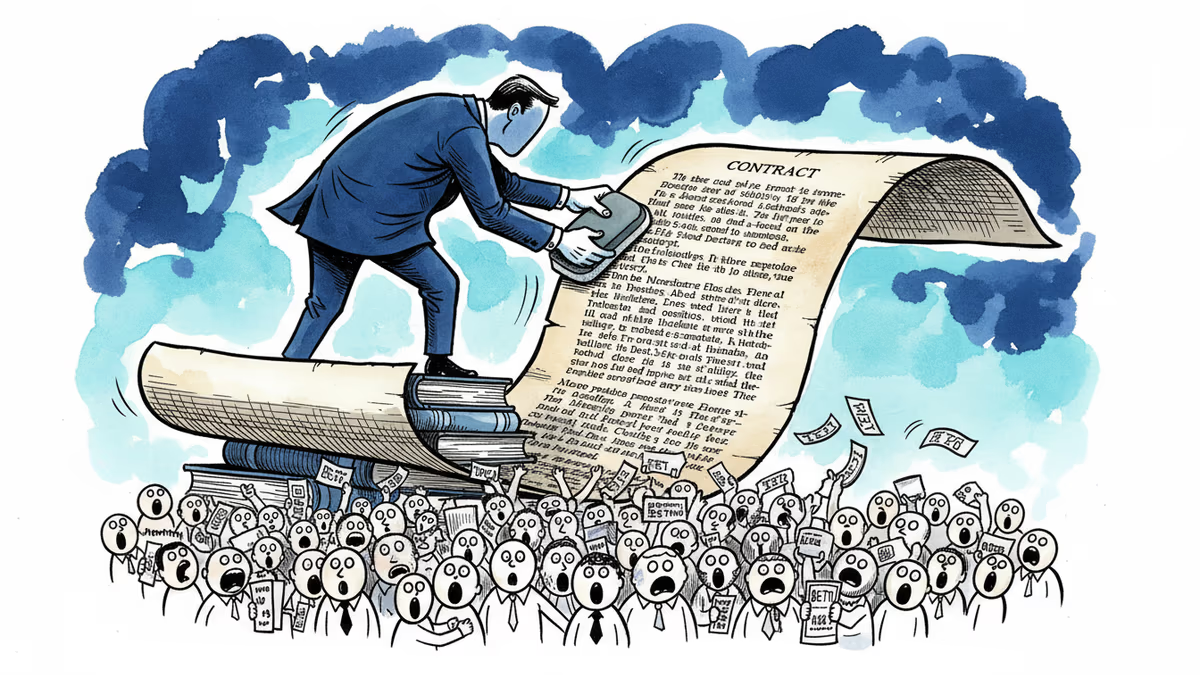
A class action lawsuit accuses Kalshi of changing payout rules after Iran's Supreme Leader Khamenei was killed. The case cuts to the heart of prediction market credibility.

Indonesia introduces age-tiered social media restrictions, allowing 13+ for low-risk platforms and 16+ for high-risk ones. How does this compare to Australia's blanket ban?
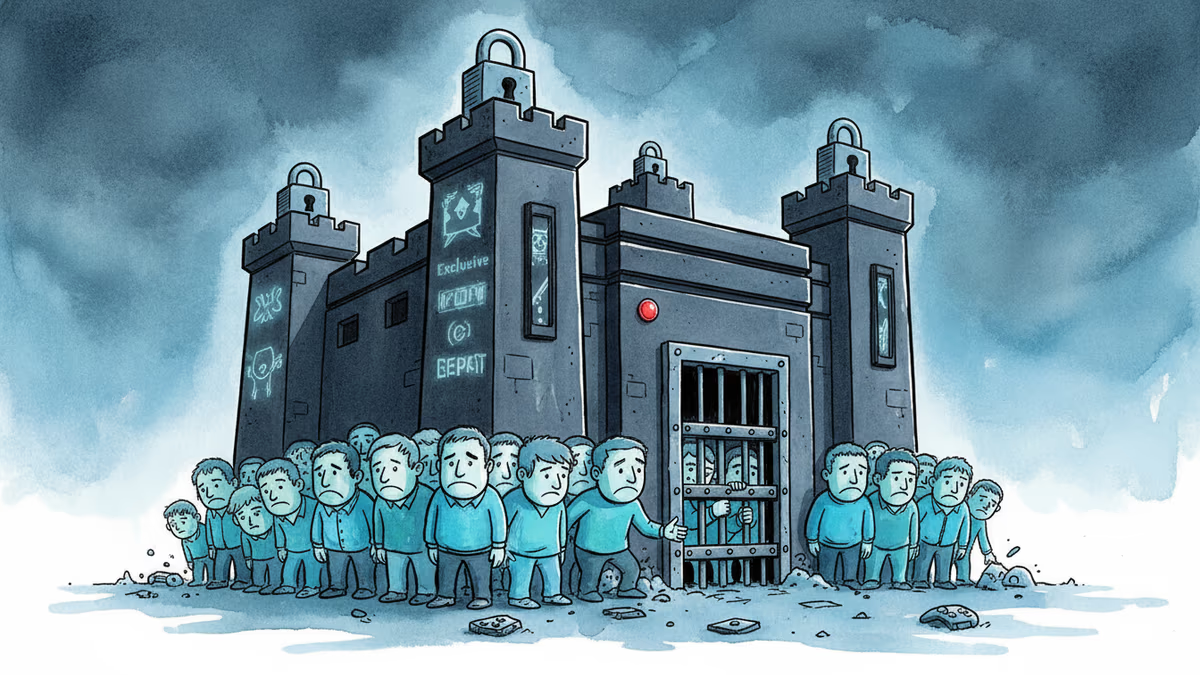
Sony and Microsoft are pulling back from multi-platform strategies, signaling a return to console exclusives. What this means for gamers and the industry.
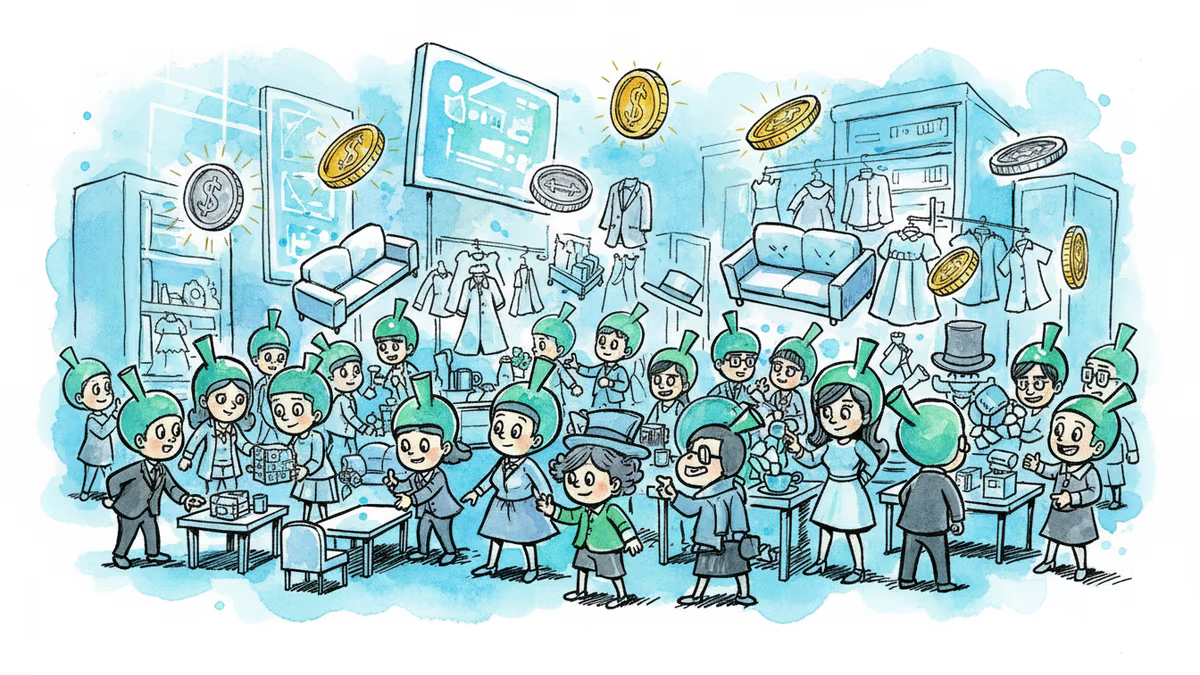
EA introduces creator marketplace in The Sims 4 with new in-game currency 'Moola.' A bold experiment in virtual economies that could reshape gaming monetization.
A class action lawsuit accuses Kalshi of changing payout rules after Iran's Supreme Leader Khamenei was killed. The case cuts to the heart of prediction market credibility.
Indonesia introduces age-tiered social media restrictions, allowing 13+ for low-risk platforms and 16+ for high-risk ones. How does this compare to Australia's blanket ban?
Sony and Microsoft are pulling back from multi-platform strategies, signaling a return to console exclusives. What this means for gamers and the industry.
EA introduces creator marketplace in The Sims 4 with new in-game currency 'Moola.' A bold experiment in virtual economies that could reshape gaming monetization.
Thoughts
Share your thoughts on this article
Sign in to join the conversation