

When Paper Becomes Your Gaming Console
Red Bull creates world's first playable gaming magazine with Tetris embedded in print. This paper-based gaming experience challenges traditional media boundaries and opens new possibilities.
A 180-Page Magazine That Fights Back
What if your magazine could play games with you? Red Bull's gaming edition of The Red Bulletin looks like any other 180-page lifestyle publication. But hidden within its pages lies something unprecedented: a fully playable version of Tetris that requires no screen, no battery, no Wi-Fi.
This isn't just a novelty. While Red Bull was creating this paper-based gaming experience, they simultaneously transformed Dubai's 150-meter-tall Frame landmark into the world's largest playable Tetris installation using over 2,000 drones as pixels. The timing was coincidental, but the message is clear: gaming is breaking free from traditional boundaries.
From Nuggets to Newsprint: Tetris's Wild Journey
Tetris has already conquered the most unlikely platforms. A playable McDonald's chicken nugget device. A fake 7-Eleven Slurpee cup that doubles as a console. Even a wristwatch that fits the iconic falling blocks on your wrist.
But paper? That's a different beast entirely. No pixels, no processors, no power source. Just ink, paper, and human ingenuity. It's a reminder that innovation often comes from working within constraints, not despite them.
Publishers: Take Notes (Literally)

Traditional media is hemorrhaging readers. Magazine circulation has dropped 70% over the past decade. Publishers are desperately seeking ways to engage audiences who've grown up swiping, not flipping pages.
Condé Nast, Hearst, and other publishing giants have experimented with AR features and QR codes. But these feel like digital band-aids on analog wounds. Red Bull's approach is different—it makes the physical medium itself interactive, not just a gateway to digital content.
Gaming's Physical Renaissance
For game developers, this represents a fascinating counter-trend. While the industry races toward cloud gaming and virtual reality, there's growing appetite for tangible gaming experiences. Pokémon cards generate $6 billion annually. Board game sales have surged 28% since 2020.
The playable magazine sits at this intersection—digital game mechanics in physical form. It's what happens when you stop asking "How do we digitize everything?" and start asking "What can only exist in the physical world?"
The Brand Experience Revolution
Red Bull isn't selling magazines—they're selling experiences. The company has mastered this art across extreme sports, music festivals, and now interactive media. They understand that in an attention economy, memorability trumps everything.
Other brands are watching. Nike experiments with interactive store displays. IKEA creates furniture that doubles as phone chargers. The question isn't whether your product works—it's whether your product creates a story worth sharing.
Authors
Related Articles
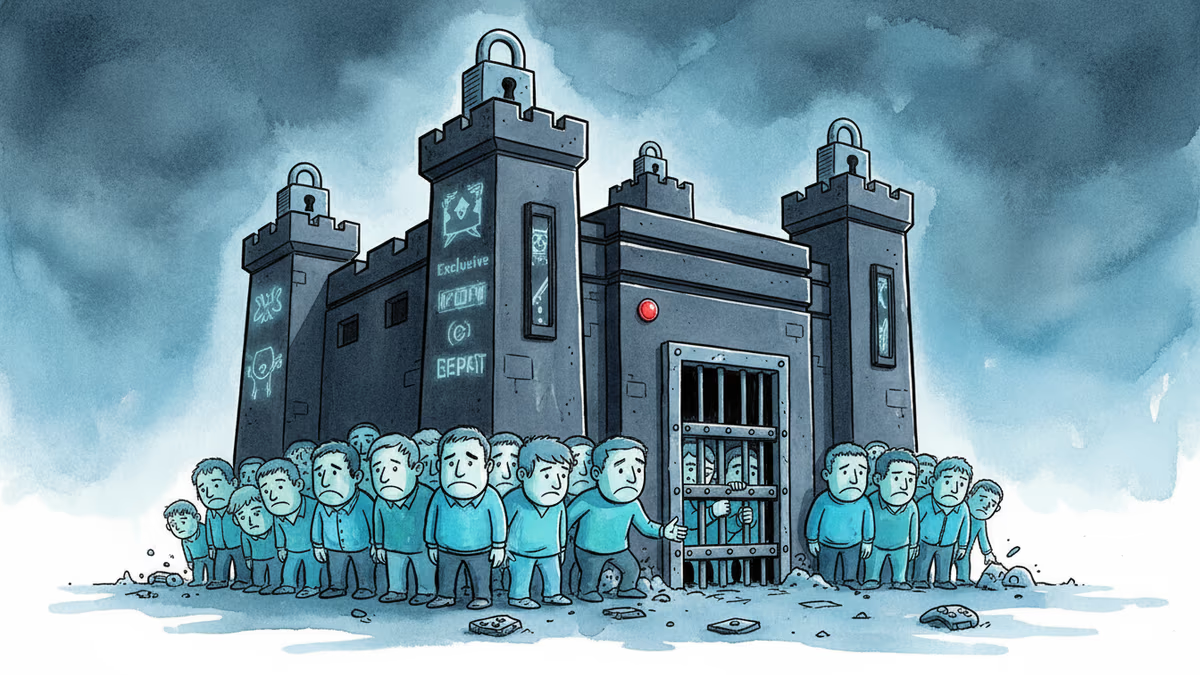
Sony and Microsoft are pulling back from multi-platform strategies, signaling a return to console exclusives. What this means for gamers and the industry.
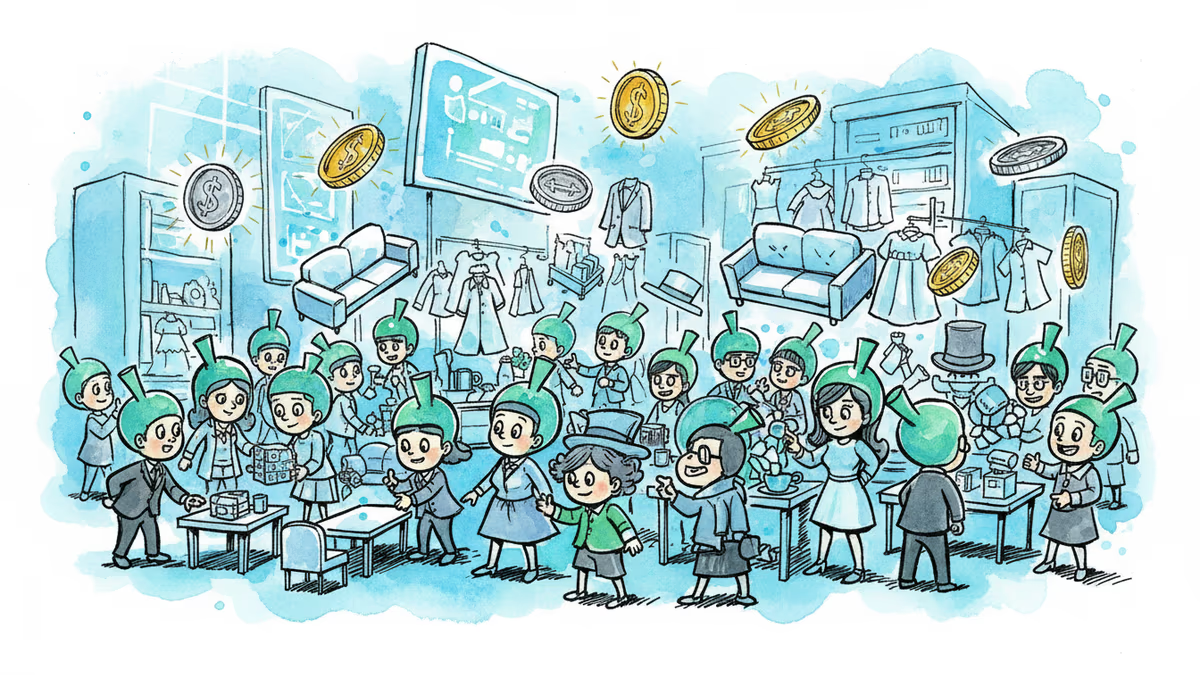
EA introduces creator marketplace in The Sims 4 with new in-game currency 'Moola.' A bold experiment in virtual economies that could reshape gaming monetization.
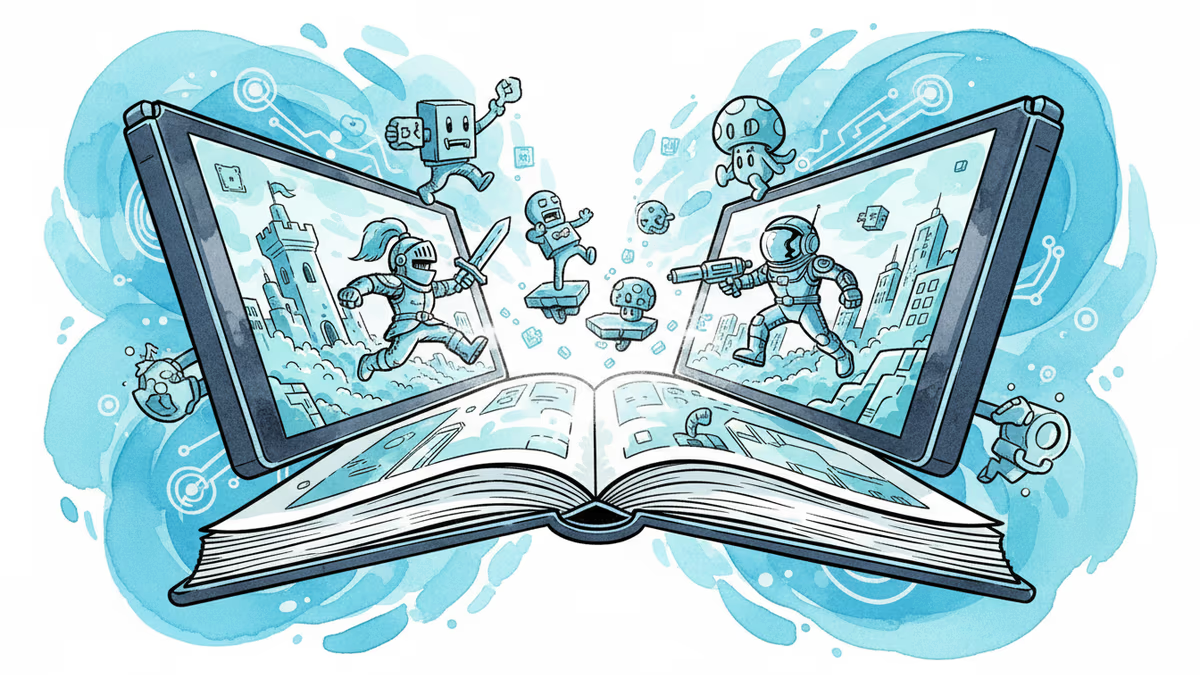
Lenovo's Legion Go Fold Concept isn't just a tech demo. It's rethinking what portable gaming could become when you don't have to choose between screen size and portability.
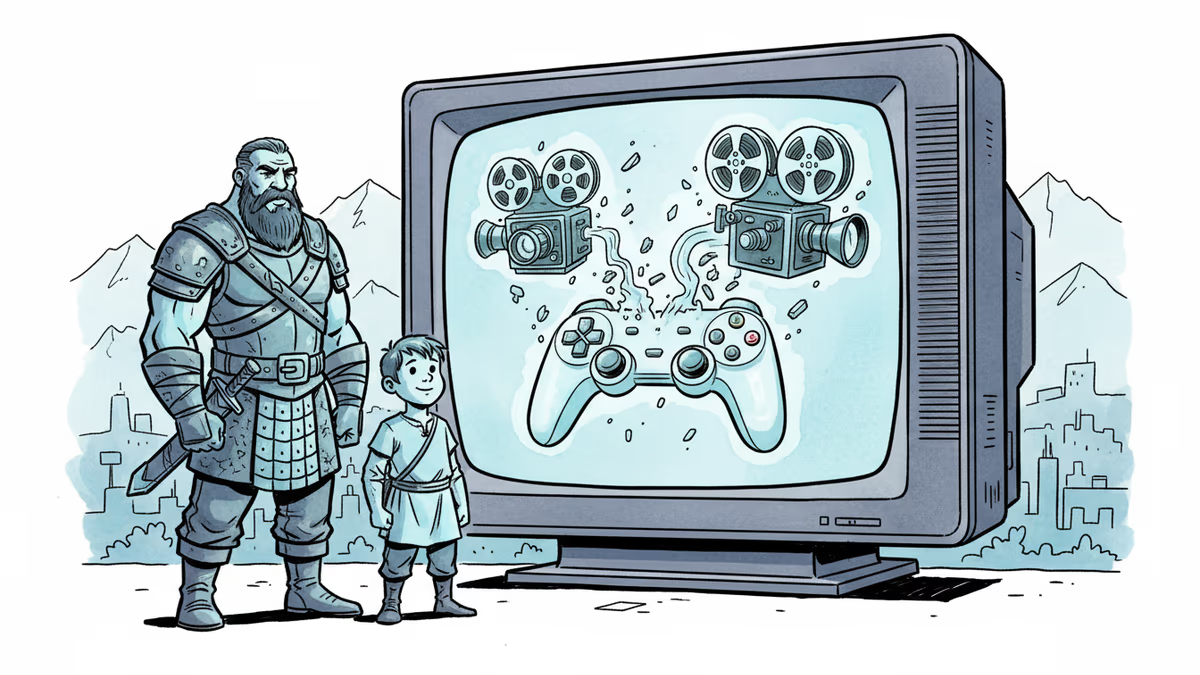
Amazon reveals first look at God of War series. Exploring whether game-to-screen adaptations can overcome their troubled history.
Sony and Microsoft are pulling back from multi-platform strategies, signaling a return to console exclusives. What this means for gamers and the industry.
EA introduces creator marketplace in The Sims 4 with new in-game currency 'Moola.' A bold experiment in virtual economies that could reshape gaming monetization.
Lenovo's Legion Go Fold Concept isn't just a tech demo. It's rethinking what portable gaming could become when you don't have to choose between screen size and portability.
Amazon reveals first look at God of War series. Exploring whether game-to-screen adaptations can overcome their troubled history.
Thoughts
Share your thoughts on this article
Sign in to join the conversation