
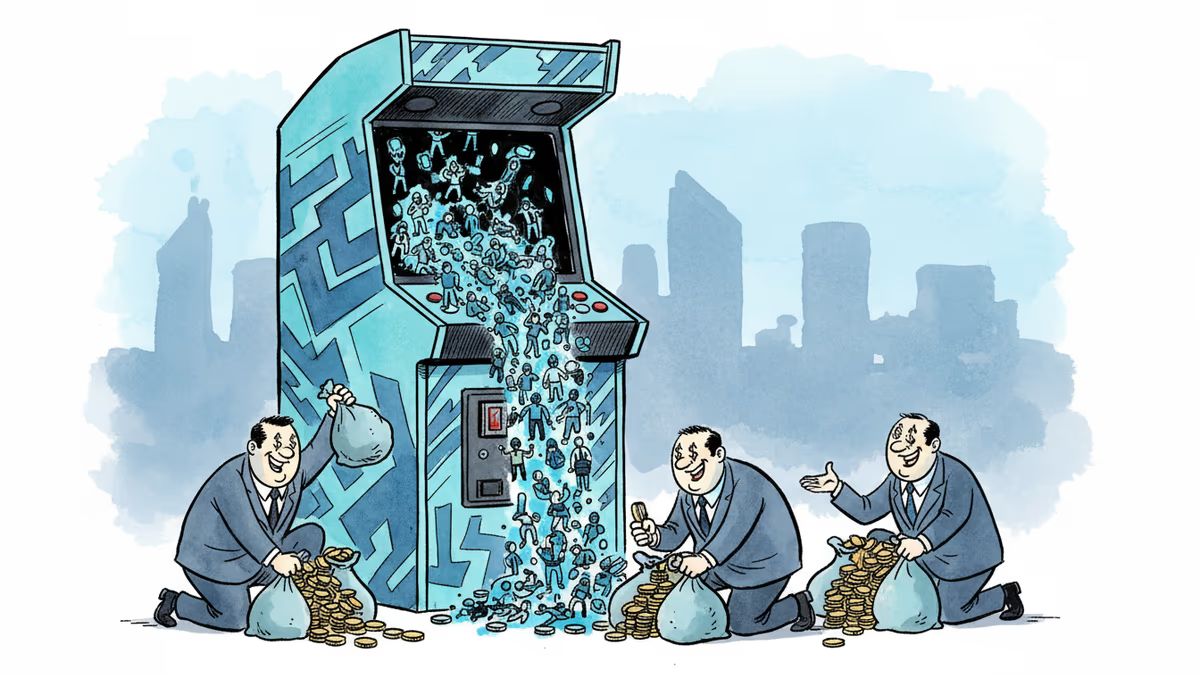
Two Weeks to Layoffs: The Brutal Reality of Game Development
Highguard's developer laid off most staff just two weeks after launch. What does this reveal about the gaming industry's structural problems?
Two weeks. That's how long a game's honeymoon lasted before reality hit
Highguard launched just over two weeks ago. A multiplayer shooter crafted by veterans from Apex Legends and Call of Duty—the kind of pedigree that should guarantee success. Instead, developer Wildlight Entertainment just laid off most of its team.
Former level designer Alex Graner broke the news on LinkedIn: "Most of the team at Wildlight" got the axe. Lead tech artist Josh Sobel confirmed it. The company's official statement? They're keeping "a core group of developers to continue innovating on and supporting the game." Translation: we're down to skeleton crew.
When Star Power Isn't Enough
Wildlight's roster read like a gaming hall of fame. Developers who'd shipped Apex Legends, Call of Duty, Fortnite—games that defined a generation. If experience mattered, Highguard should've been printing money by now.
But the multiplayer shooter space isn't what it was five years ago. Overwatch 2, Valorant, and Apex Legends have carved up the market like feudal lords. Breaking in requires more than talent—it demands perfect timing, massive marketing budgets, and a bit of luck.
Wildlight hasn't released player numbers, but laying off most of your team 14 days after launch sends a clear message: the game didn't find its audience fast enough.
The Two-Week Death Sentence

This isn't just about one failed game. It's about an industry structure that's fundamentally broken. Games take 2-5 years to develop but get judged in their first two weeks. Millions of dollars and thousands of hours can evaporate faster than a bad Twitch stream.
For indie studios, it's even more brutal. Unlike EA or Activision, they can't absorb a $50 million loss and move on to the next project. One flop often means game over—literally.
The numbers tell the story. 2023 saw over 10,000 game industry layoffs. 2024 isn't looking much better. Even successful companies like Epic Games and Unity have cut staff. When the hits keep coming, everyone's vulnerable.
Where Do the Survivors Go?
The good news? Experienced game developers are still in demand. The skills that make great games—problem-solving, creativity, technical expertise—translate well to other industries. Many laid-off developers land at tech companies, working on everything from AI to fintech.
But there's a cost. Every exodus of talent makes the industry a little less innovative, a little more risk-averse. When your best people keep getting burned by ambitious projects, who's left to take big swings?
Some developers are adapting by going freelance or founding smaller, more sustainable studios. Others are pivoting to mobile games or live-service titles—less glamorous, perhaps, but more stable.
The Venture Capital Trap
Here's what nobody talks about: Wildlight likely had investors breathing down their necks. Venture capital flows into gaming startups with grand promises of the next Fortnite. But VCs expect hockey-stick growth, not the slow burn that most successful games actually require.
When Highguard didn't immediately explode, the math became simple: cut costs, preserve runway, hope for a miracle. The developers pay the price for unrealistic expectations set by people who've never shipped a game.
Authors
Related Articles
Cluely CEO admits to fabricating $7M revenue figure, exposing how startup "fake it till you make it" culture has gone too far. What this means for the ecosystem.
Sony and Microsoft are pulling back from multi-platform strategies, signaling a return to console exclusives. What this means for gamers and the industry.
EA introduces creator marketplace in The Sims 4 with new in-game currency 'Moola.' A bold experiment in virtual economies that could reshape gaming monetization.

Lenovo's Legion Go Fold Concept isn't just a tech demo. It's rethinking what portable gaming could become when you don't have to choose between screen size and portability.
Cluely CEO admits to fabricating $7M revenue figure, exposing how startup "fake it till you make it" culture has gone too far. What this means for the ecosystem.
Sony and Microsoft are pulling back from multi-platform strategies, signaling a return to console exclusives. What this means for gamers and the industry.
EA introduces creator marketplace in The Sims 4 with new in-game currency 'Moola.' A bold experiment in virtual economies that could reshape gaming monetization.
Lenovo's Legion Go Fold Concept isn't just a tech demo. It's rethinking what portable gaming could become when you don't have to choose between screen size and portability.
Thoughts
Share your thoughts on this article
Sign in to join the conversation