
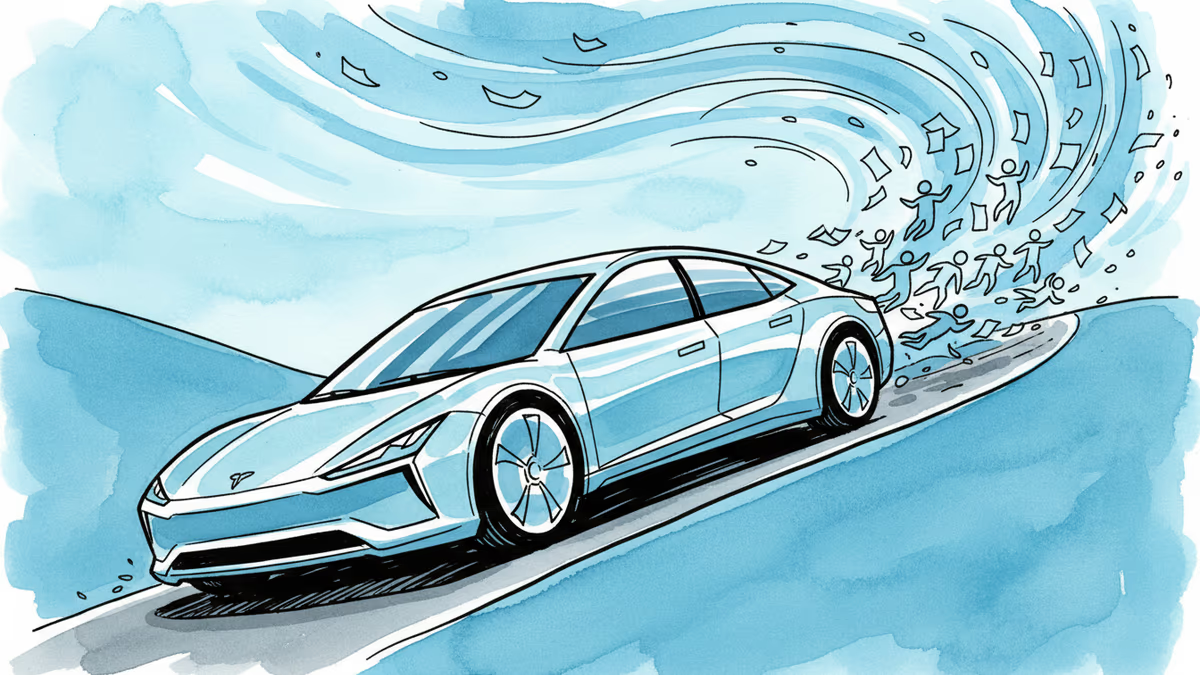
Lucid Motors Cuts 12% of Staff as EV Startup Reality Bites
Lucid Motors laid off 12% of workforce amid profitability push. The luxury EV maker's struggles reveal harsh realities facing Tesla challengers in 2026.
816 people lost their jobs at Lucid Motors yesterday. That's 12% of the company's workforce—gone in a single day. The startup that once promised to dethrone Tesla is now fighting just to survive.
A Year Without Leadership
Perhaps most telling is what Lucid isn't talking about: it's been operating without a permanent CEO for almost a full year. When founder Peter Rawlinson abruptly resigned last February, the company promised a quick replacement. Instead, interim CEO Marc Winterhoff is still running the show, sending layoff memos while the executive suite continues its exodus.
The latest departure? The chief engineer, who sued the company in December for wrongful termination and discrimination. Lucid called his claims "absurd," but the pattern is clear: key talent is fleeing just as the company needs stability most.
The Manufacturing Reality Check
Here's what's interesting about these cuts: Lucid spared all hourly manufacturing, logistics, and quality workers. Translation? They're keeping the people who actually build cars while cutting everyone else. It's a stark admission that despite doubling production in 2024, the company still can't make money.
This isn't unique to Lucid. The entire EV startup ecosystem is learning a harsh lesson: building cars isn't like building apps. You can't just "move fast and break things" when you're dealing with multi-ton vehicles, safety regulations, and billion-dollar factories.
Rivian has struggled with similar issues. Fisker went bankrupt. Even Tesla took years to achieve consistent profitability. The difference? Tesla had Elon Musk's relentless focus and deeper pockets.

The Premium Problem
Lucid's strategy—starting with luxury sedans like the Air and expanding to SUVs like the Gravity—made sense on paper. Target wealthy early adopters, then scale down to mass market. But luxury EV buyers have proven fickle, and the mass market $50,000 vehicle Lucid plans to launch this year faces fierce competition from established automakers.
Meanwhile, Chinese competitors like BYD are flooding global markets with affordable EVs that offer 80% of Lucid's performance at half the price. The premium positioning that once seemed like an advantage now feels like a liability.
The Robotaxi Hail Mary
Facing pressure, Lucid is betting on robotaxis. The company's partnership with Uber and Nuro for San Francisco service sounds promising, but it's essentially a pivot away from their core business. When a car company starts talking more about software and services than vehicles, it's usually a sign of desperation.
The robotaxi market itself remains unproven. Waymo burns through billions despite being the clear leader. Cruise faced safety issues that nearly shut them down. For Lucid, it's another expensive experiment when the company can barely afford its current operations.
What Investors Are Really Thinking
Next week's financial results will be crucial, but smart money has already spoken. Lucid's stock has dropped over 60% in the past year. The company's market cap now sits below the cost of building its Arizona factory.
Venture capitalists who once threw money at any EV startup are now asking harder questions about unit economics, manufacturing expertise, and realistic timelines to profitability. The easy money era is over.
The answer may determine not just Lucid's future, but the entire trajectory of automotive innovation.
Authors
Related Articles
Cluely CEO admits to fabricating $7M revenue figure, exposing how startup "fake it till you make it" culture has gone too far. What this means for the ecosystem.
Rivian targets 20,000 R2 SUV sales in six months, matching Tesla Model Y's pace. But can it succeed without federal tax credits in a challenging EV market?
Finnish startup Donut Lab's solid-state battery actually gains capacity at extreme heat, challenging everything we know about EV battery performance in hot climates.
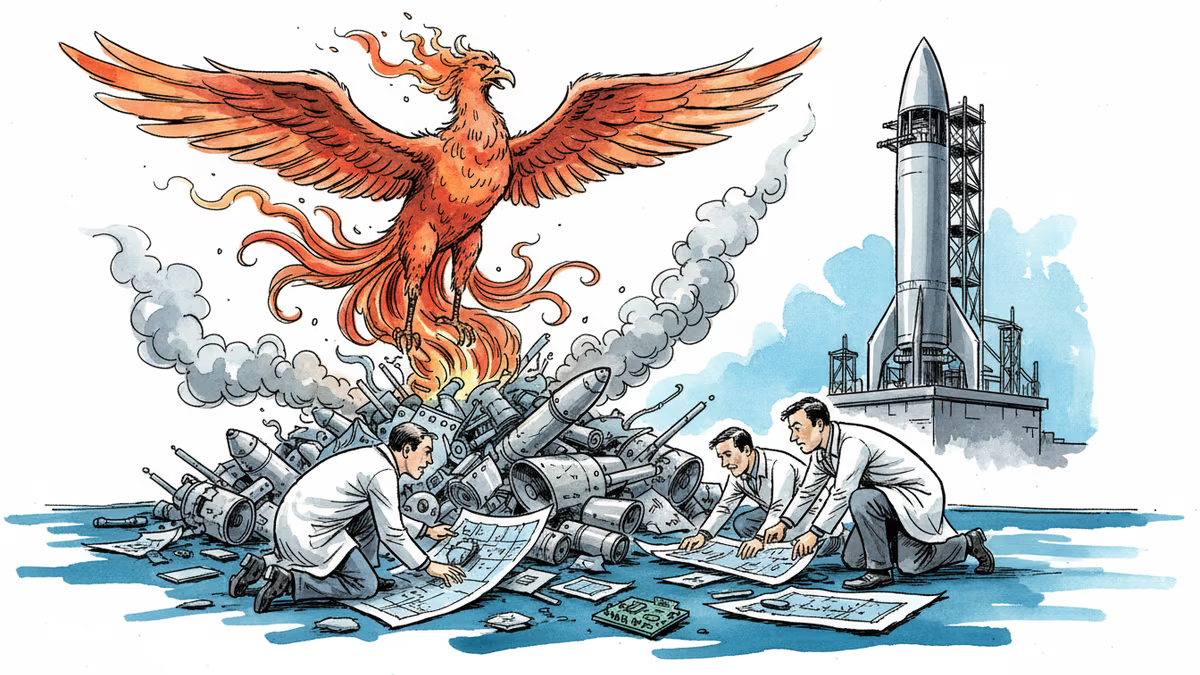
Phantom Space acquired assets from bankrupt Vector Launch, showing how failed space companies' technologies are finding new life. Is this becoming the new normal in aerospace?
Cluely CEO admits to fabricating $7M revenue figure, exposing how startup "fake it till you make it" culture has gone too far. What this means for the ecosystem.
Rivian targets 20,000 R2 SUV sales in six months, matching Tesla Model Y's pace. But can it succeed without federal tax credits in a challenging EV market?
Finnish startup Donut Lab's solid-state battery actually gains capacity at extreme heat, challenging everything we know about EV battery performance in hot climates.
Phantom Space acquired assets from bankrupt Vector Launch, showing how failed space companies' technologies are finding new life. Is this becoming the new normal in aerospace?
Thoughts
Share your thoughts on this article
Sign in to join the conversation