
Rivian's R2 Aims for Tesla-Level Launch Speed in Subsidy-Free Market
Rivian targets 20,000 R2 SUV sales in six months, matching Tesla Model Y's pace. But can it succeed without federal tax credits in a challenging EV market?
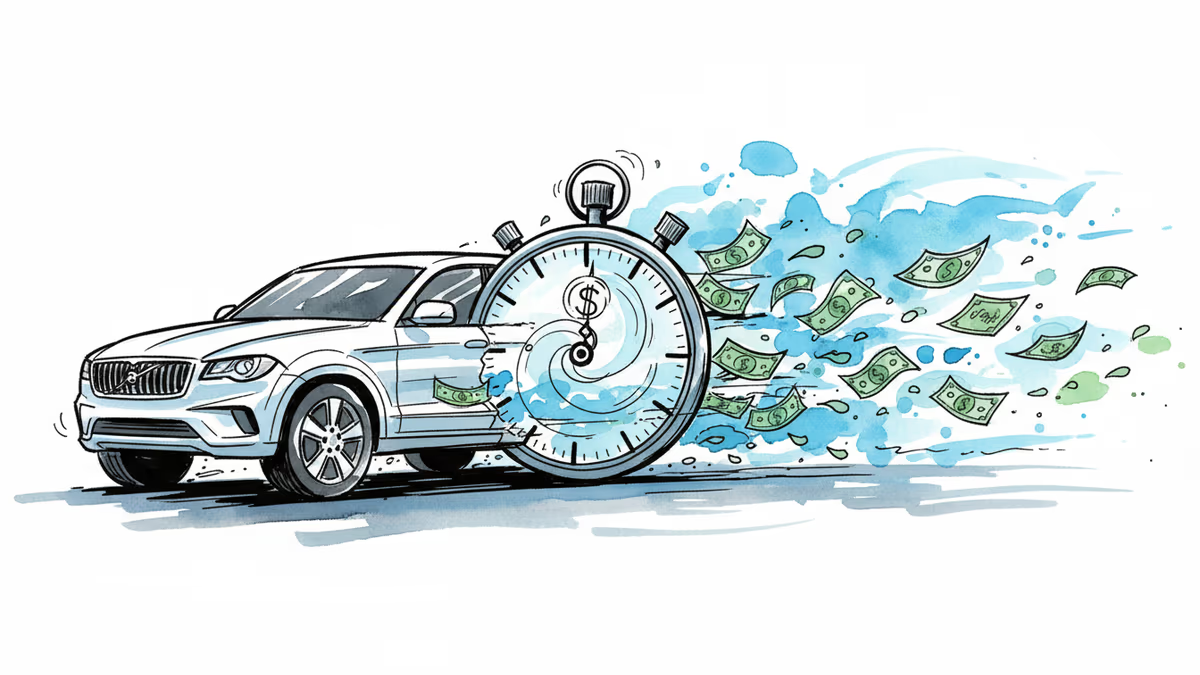
20,000 vehicles in six months. That's Rivian's ambitious target for its R2 SUV, launching this June. If successful, it would mark one of the fastest EV rollouts in U.S. history—second only to Tesla's Model Y. The stakes couldn't be higher. As CEO RJ Scaringe puts it, the R2 is "maybe the most important thing we've launched to date."
Racing Against EV History
The numbers tell a compelling story. Among EVs priced at or under $60,000, only Tesla's Model Y moved faster, hitting 20,000 sales in roughly four months after its March 2020 launch. Rivian's six-month timeline would match the Honda Prologue's 2024 debut pace.
Other competitors took longer: the Chevy Equinox EV needed eight months, Ford's Mustang Mach-E took similar time, while Korean entries like the Hyundai Ioniq 5 and Kia EV6 required 10-11 months respectively. Models with troubled launches—think Tesla's Model 3 "production hell" or the Chevy Blazer EV's recall nightmare—took even longer.
But Rivian faces a fundamentally different landscape. Every other fast-launching EV benefited from the $7,500 federal tax credit—eliminated by Congress and President Trump last September. Major automakers are scaling back EV plans amid looser emissions regulations, while Trump's tariffs have pushed vehicle prices higher.
The $45,000 Question
Scaringe frames these challenges as opportunities, arguing the EV market lacks affordable choices. The R2's $45,000 starting price is central to this strategy. Yet there's a catch: Rivian plans to launch with a dual-motor, higher-trim version first. When—or if—that base $45,000 model arrives remains unclear.

The company quietly removed "Starting at $45,000" from its website in early February, though it maintains "commitment" to that price point. More details are promised at a March 12 event, but analysts smell trouble.
Wall Street's Reality Check
Investors are skeptical. DA Davidson's Michael Shlisky downgraded Rivian, citing "aggressive" R2 expectations. Barclays' Dan Levy predicts the R2's average transaction price will hover around $60,000 or higher for "the next several years" while production remains limited to Illinois before the Georgia factory comes online.
Edmunds analyst Joseph Yoon offers cautious optimism, noting that Rivian has "worked hard to simplify the manufacturing process" compared to its current vehicles. He also points to a market gap: "That compact-ish, mid-size-ish segment is really kind of missing" for EVs.
Competing models like Volvo's EX60, BMW's iX3, and Mercedes-Benz GLC won't arrive stateside until later this year, potentially giving R2 a crucial head start.
The Profitability Paradox
Rivian's future hinges on this launch. The company has burned billions preparing for mass-market scale, betting everything on the R2's success. A stumbling start could trigger shareholder flight and raise serious questions about the strategy.
Yet the math is unforgiving. Without subsidies, in a market where consumers are increasingly price-sensitive, can Rivian deliver both speed and profitability? The company's existing lineup already faces tariff-driven price increases, making the R2's affordability promise even more critical.
Authors
Related Articles
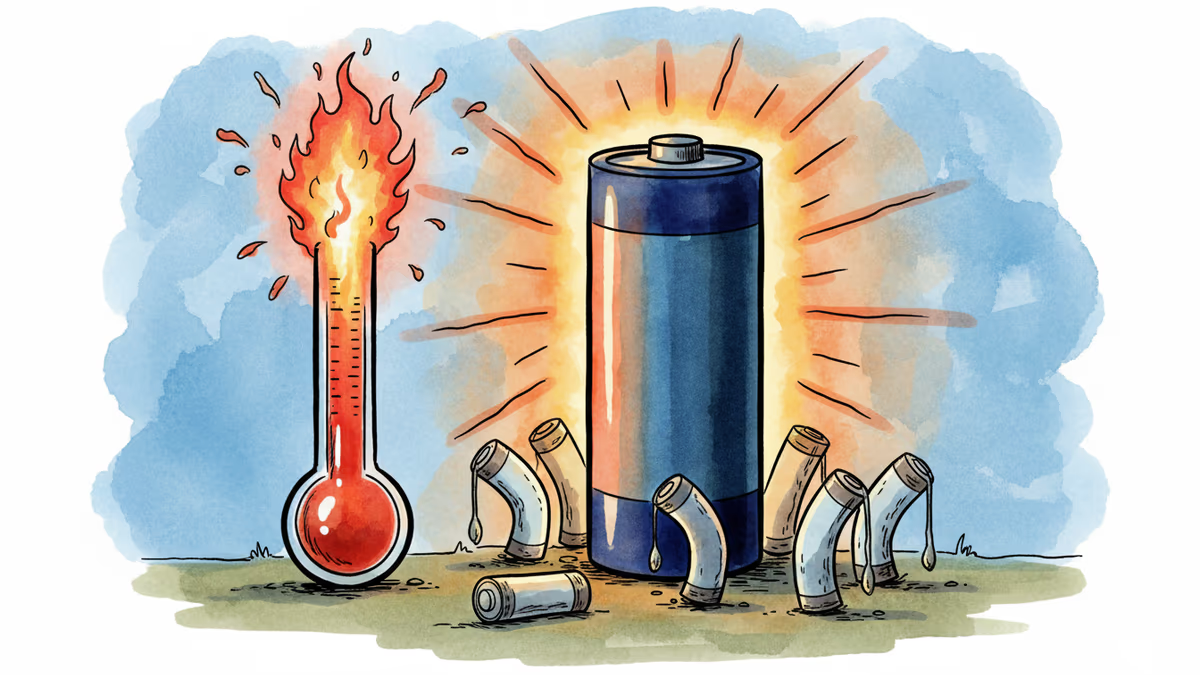
Finnish startup Donut Lab's solid-state battery actually gains capacity at extreme heat, challenging everything we know about EV battery performance in hot climates.
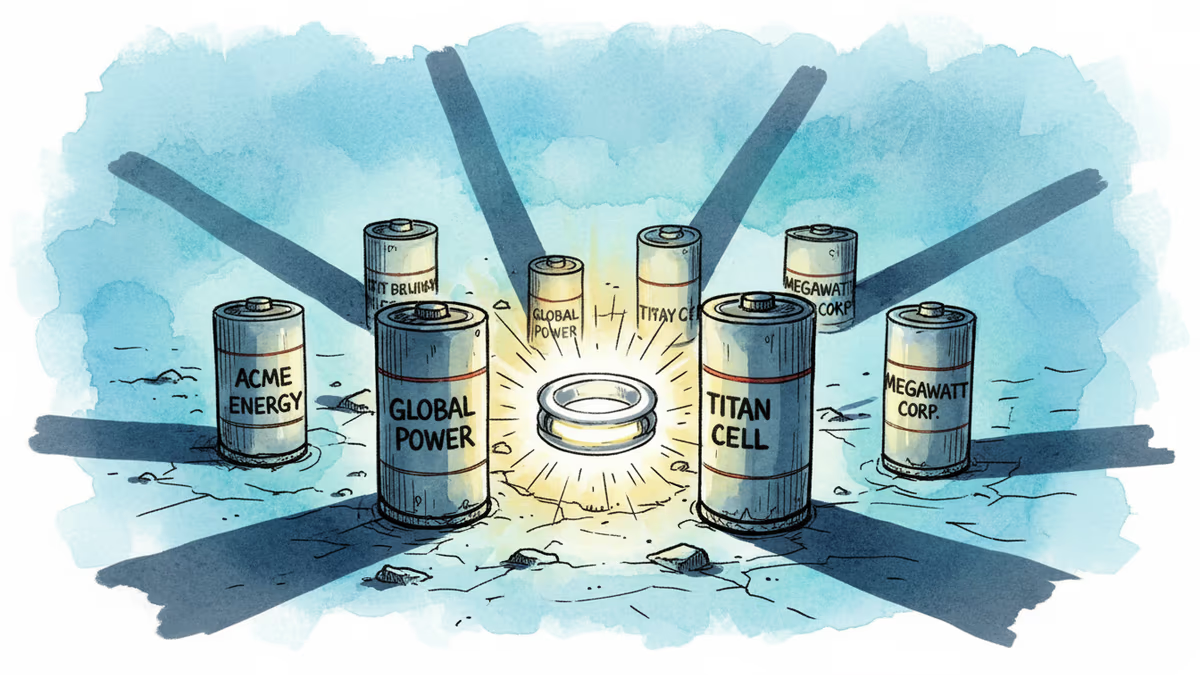
Donut Lab claims breakthrough solid-state battery tech with 5-minute charging and 400Wh/kg density. Experts are skeptical. Could this unknown startup really leapfrog industry giants?
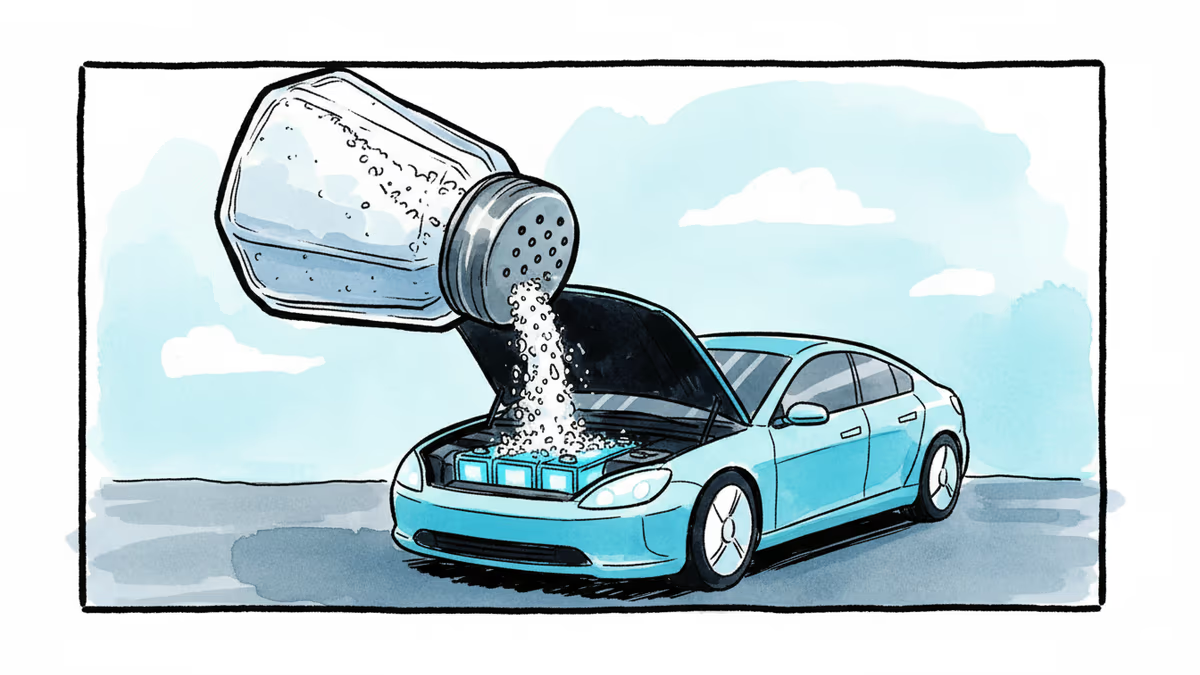
Sodium-ion batteries emerge as cheaper, safer alternatives to lithium, entering EVs and grid storage. MIT Technology Review names it a 2026 breakthrough technology.

Donut Lab's solid-state battery passed independent testing, but the real question isn't about performance—it's about production scale and industry disruption.
Finnish startup Donut Lab's solid-state battery actually gains capacity at extreme heat, challenging everything we know about EV battery performance in hot climates.
Donut Lab claims breakthrough solid-state battery tech with 5-minute charging and 400Wh/kg density. Experts are skeptical. Could this unknown startup really leapfrog industry giants?
Sodium-ion batteries emerge as cheaper, safer alternatives to lithium, entering EVs and grid storage. MIT Technology Review names it a 2026 breakthrough technology.
Donut Lab's solid-state battery passed independent testing, but the real question isn't about performance—it's about production scale and industry disruption.
Thoughts
Share your thoughts on this article
Sign in to join the conversation