
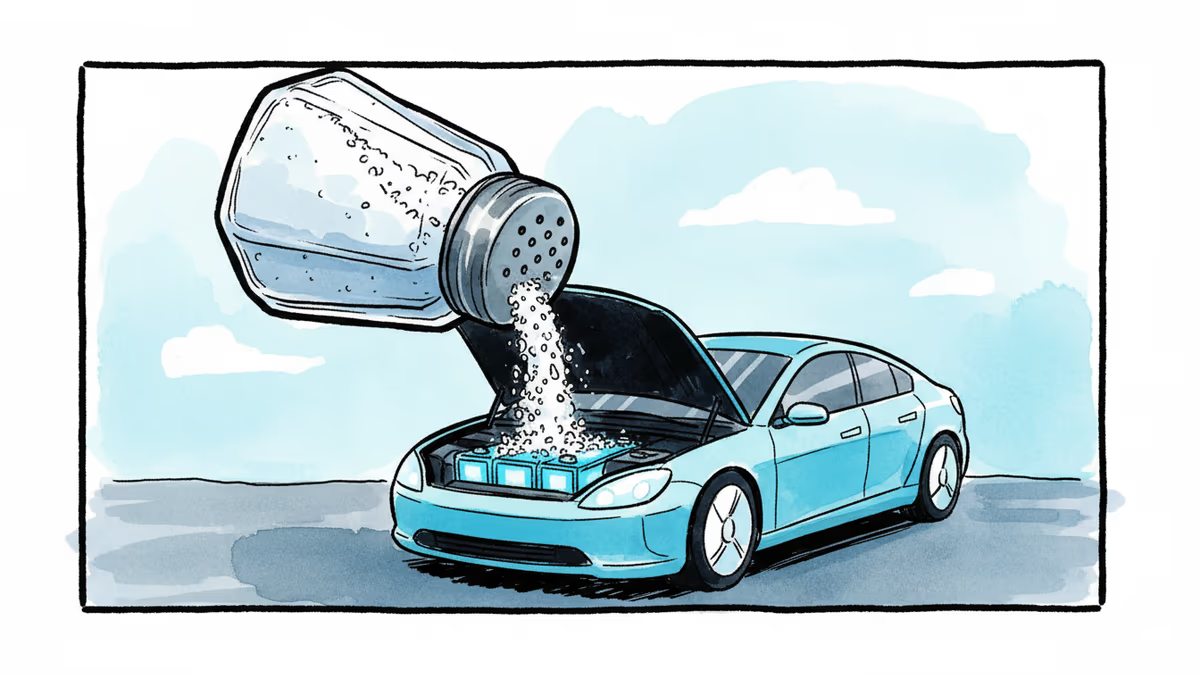
Salt-Powered Batteries Are Coming for Your Car
Sodium-ion batteries emerge as cheaper, safer alternatives to lithium, entering EVs and grid storage. MIT Technology Review names it a 2026 breakthrough technology.
The $50 Billion Question Nobody Saw Coming
What if the solution to expensive electric car batteries was sitting in your kitchen cabinet all along? MIT Technology Review just named sodium-ion batteries one of 2026's breakthrough technologies, and the implications stretch far beyond your next grocery run.
Sodium—yes, the same element in table salt—costs 95% less than lithium. It's abundant in seawater, doesn't require environmentally destructive mining, and isn't controlled by a handful of countries. The catch? It's been stuck in labs for decades while lithium-ion dominated.
That's changing. Fast.
China's Head Start Problem
Chinese battery giants CATL and BYD aren't waiting for Western competitors to catch up. They're already mass-producing sodium batteries for city cars and grid storage. The performance trade-off is real—sodium batteries pack 20-30% less energy density than lithium—but they're safer and won't explode in a crash.
Chinese EVs with sodium batteries are hitting showrooms now, mostly targeting urban commuters who need under 200 miles of range. The strategy is clear: dominate the budget EV segment while Western automakers chase premium markets with expensive lithium packs.

Meanwhile, Tesla and traditional automakers are still betting heavily on lithium. The question is whether they're missing the forest for the trees.
The Grid Storage Wild Card
Here's where sodium batteries could change everything: massive energy storage arrays that balance renewable power grids. When you're storing electricity from solar panels, weight doesn't matter—cost does. Sodium's 95% price advantage becomes transformative.
Utility companies are taking notice. Grid-scale sodium installations are popping up across China, with pilot projects spreading to Europe and the US. If sodium proves reliable at scale, it could accelerate the renewable energy transition by making storage affordable.
What Detroit (and Silicon Valley) Aren't Saying
American and European battery makers face an uncomfortable reality. While they've spent billions perfecting lithium technology, Chinese competitors have quietly built sodium supply chains and manufacturing expertise.
Ford and GM are exploring sodium partnerships, but they're years behind. The same pattern that gave China dominance in lithium batteries—early investment, government support, and scale manufacturing—is repeating with sodium.
The irony? Sodium could reduce dependence on Chinese lithium supply chains, but China leads sodium battery technology too.
Authors
Related Articles
Rivian targets 20,000 R2 SUV sales in six months, matching Tesla Model Y's pace. But can it succeed without federal tax credits in a challenging EV market?
Finnish startup Donut Lab's solid-state battery actually gains capacity at extreme heat, challenging everything we know about EV battery performance in hot climates.
Donut Lab claims breakthrough solid-state battery tech with 5-minute charging and 400Wh/kg density. Experts are skeptical. Could this unknown startup really leapfrog industry giants?
US energy storage installations surged 30% in 2025 despite Trump's renewable hostility. Why batteries succeeded where solar and wind struggled.
Rivian targets 20,000 R2 SUV sales in six months, matching Tesla Model Y's pace. But can it succeed without federal tax credits in a challenging EV market?
Finnish startup Donut Lab's solid-state battery actually gains capacity at extreme heat, challenging everything we know about EV battery performance in hot climates.
Donut Lab claims breakthrough solid-state battery tech with 5-minute charging and 400Wh/kg density. Experts are skeptical. Could this unknown startup really leapfrog industry giants?
US energy storage installations surged 30% in 2025 despite Trump's renewable hostility. Why batteries succeeded where solar and wind struggled.
Thoughts
Share your thoughts on this article
Sign in to join the conversation