
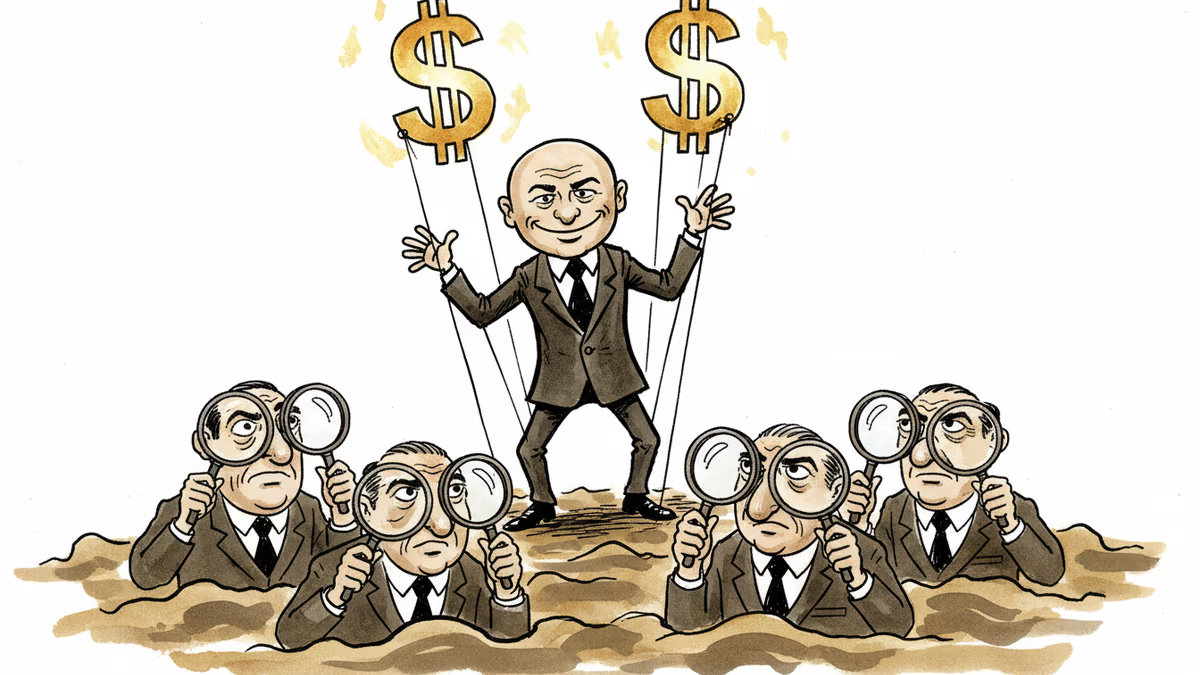
The $7M Lie That Reveals Silicon Valley's Dirty Secret
Cluely CEO admits to fabricating $7M revenue figure, exposing how startup "fake it till you make it" culture has gone too far. What this means for the ecosystem.
$7 million in annual recurring revenue. That's what Cluely CEO Roy Lee told TechCrunch last summer about his viral "cheating app" startup. On Thursday, he admitted it was a complete lie.
"This is the only blatantly dishonest thing I've said publicly online," Lee wrote on X, formally retracting the figure. But his explanation for how the lie happened? That turned out to be another lie.
The Planned Interview He Called a "Random Cold Call"
Lee claimed he "got a random cold call from some woman asking about numbers and told her some bs, did not expect an article about it." The reality, according to email records TechCrunch shared, tells a different story entirely.
On June 27, 2025, at 8:38 a.m., Cluely's PR representative emailed TechCrunch reporter Marina Temkin: "I'd love to arrange an interview with Roy. Whether for a deeper dive into Cluely's next phase or a fresh angle on his vision, we'd be happy to make it happen."
Temkin agreed. The PR rep shared Lee's number and confirmed he was expecting the call. After several attempts, Lee answered and gave the arranged interview—hardly a "random cold call."
From Cheating Scandal to $21M in Funding
Cluely's origin story was provocative by design. Lee and his co-founder developed a tool to cheat on software engineering interviews, got suspended from Columbia University, then turned that viral controversy into a business opportunity.
The "cheat-on-everything" phenomenon attracted $5.3 million in seed funding from Abstract Ventures and Susa Ventures. The product let users secretly look up answers during video calls without detection—positioning itself as the ultimate remote interview hack.

By June 2025, Andreessen Horowitz led a $15 million Series A round. Lee had mastered the art of rage-bait marketing, using provocative stunts to keep Cluely in headlines and attract users. The strategy became Silicon Valley's talk of the town.
"You Should Never Share Revenue Numbers"
The irony is thick. At TechCrunch's 2025 Disrupt event in October, Lee told the audience: "What I've learned is you should never share revenue numbers." He declined to share updated figures then, acknowledging that marketing alone isn't enough to build a sustainable business when your product is still evolving.
Yet on Thursday, while admitting his lie, Lee posted his actual Stripe numbers:
- Consumer ARR: $2.7M (run rate $3.8M)
- Enterprise ARR: $2.5M (run rate $2.5M)
Cluely has since pivoted to become an AI-powered meeting note-taker.
The Ecosystem's Trust Problem
Lee's confession raises uncomfortable questions about Silicon Valley's "fake it till you make it" culture. How many other startups are inflating their metrics? Andreessen Horowitz and other top-tier VCs pride themselves on rigorous due diligence, yet they backed a company whose CEO now admits to public deception.
The damage extends beyond Cluely. When high-profile startups fabricate numbers, it erodes trust across the entire ecosystem. Legitimate companies with real traction get caught in the credibility crossfire.
The Rage-Bait Reckoning
Lee's marketing playbook—controversial content designed to go viral—worked brilliantly for user acquisition. But it also created a culture where attention mattered more than authenticity. The same mindset that drove provocative marketing apparently extended to financial reporting.
Investors are now questioning whether viral marketing success correlates with business fundamentals. Lee's admission suggests the answer might be more complex than Silicon Valley wants to admit.
Authors
Related Articles
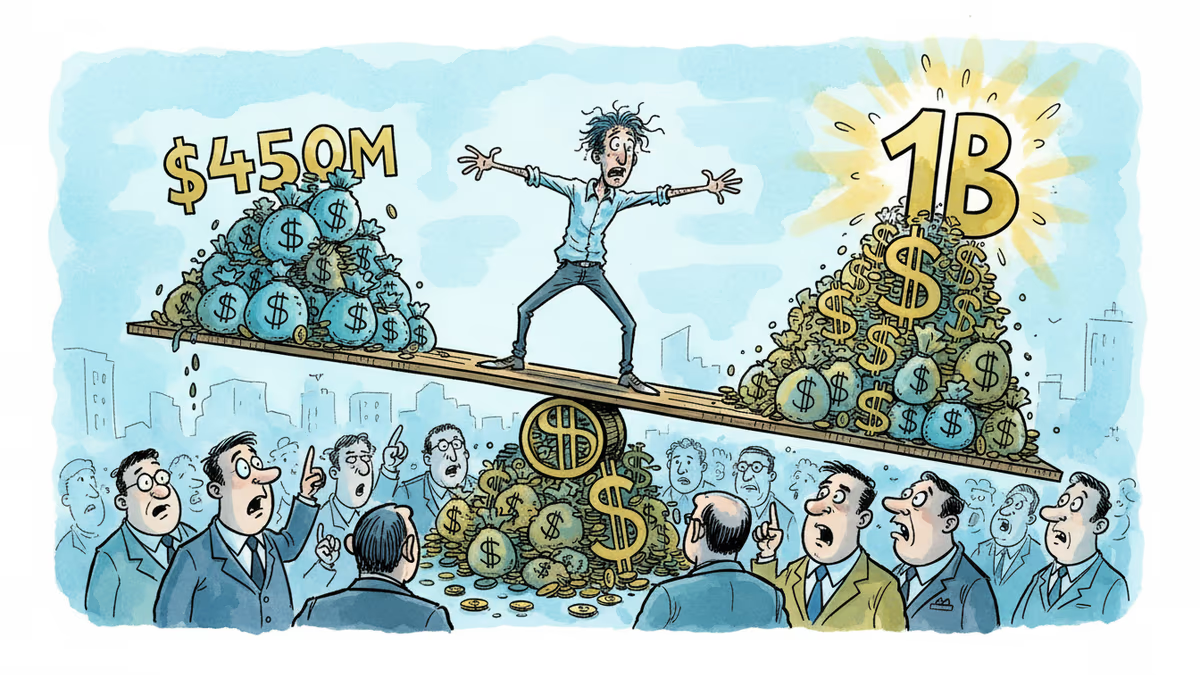
AI startups are using dual-tier valuations to manufacture unicorn status. Why are investors playing along with this new valuation game?

AI startups captured 90% of record $189B February VC funding, with OpenAI, Anthropic, and Waymo dominating 83% of all investments, reshaping venture landscape

Anduril's $60B valuation bid signals a seismic shift in defense tech. As VCs pour billions into weapons, what does this mean for warfare's future?
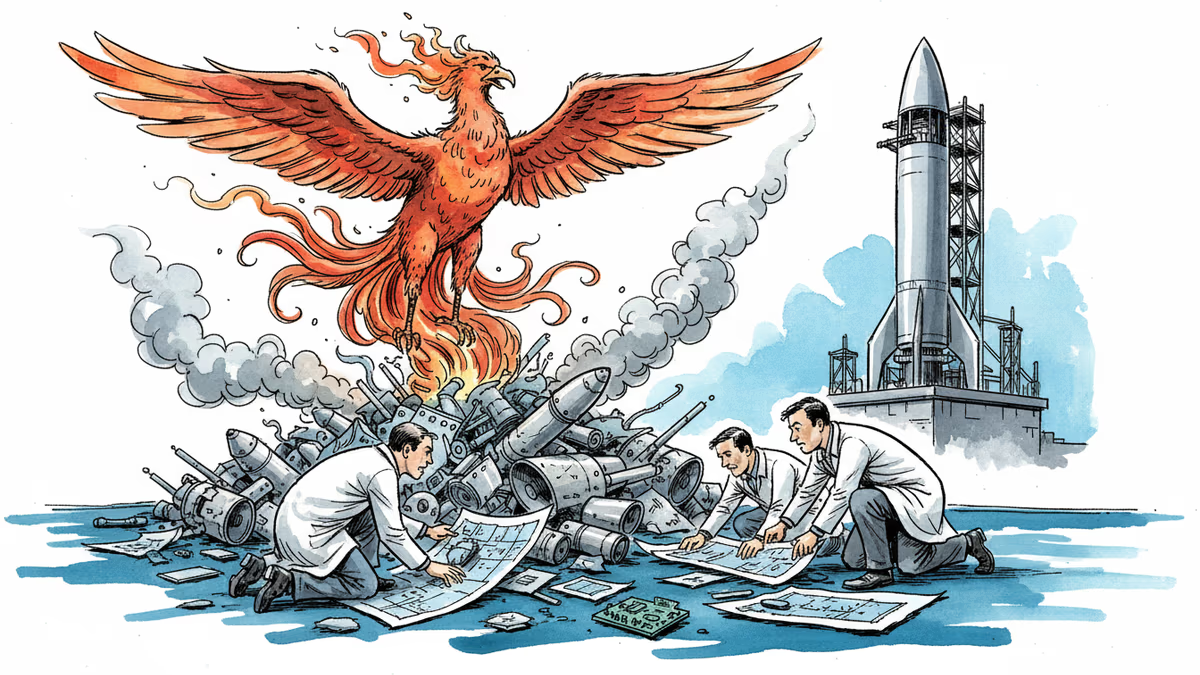
Phantom Space acquired assets from bankrupt Vector Launch, showing how failed space companies' technologies are finding new life. Is this becoming the new normal in aerospace?
AI startups are using dual-tier valuations to manufacture unicorn status. Why are investors playing along with this new valuation game?
AI startups captured 90% of record $189B February VC funding, with OpenAI, Anthropic, and Waymo dominating 83% of all investments, reshaping venture landscape
Anduril's $60B valuation bid signals a seismic shift in defense tech. As VCs pour billions into weapons, what does this mean for warfare's future?
Phantom Space acquired assets from bankrupt Vector Launch, showing how failed space companies' technologies are finding new life. Is this becoming the new normal in aerospace?
Thoughts
Share your thoughts on this article
Sign in to join the conversation