
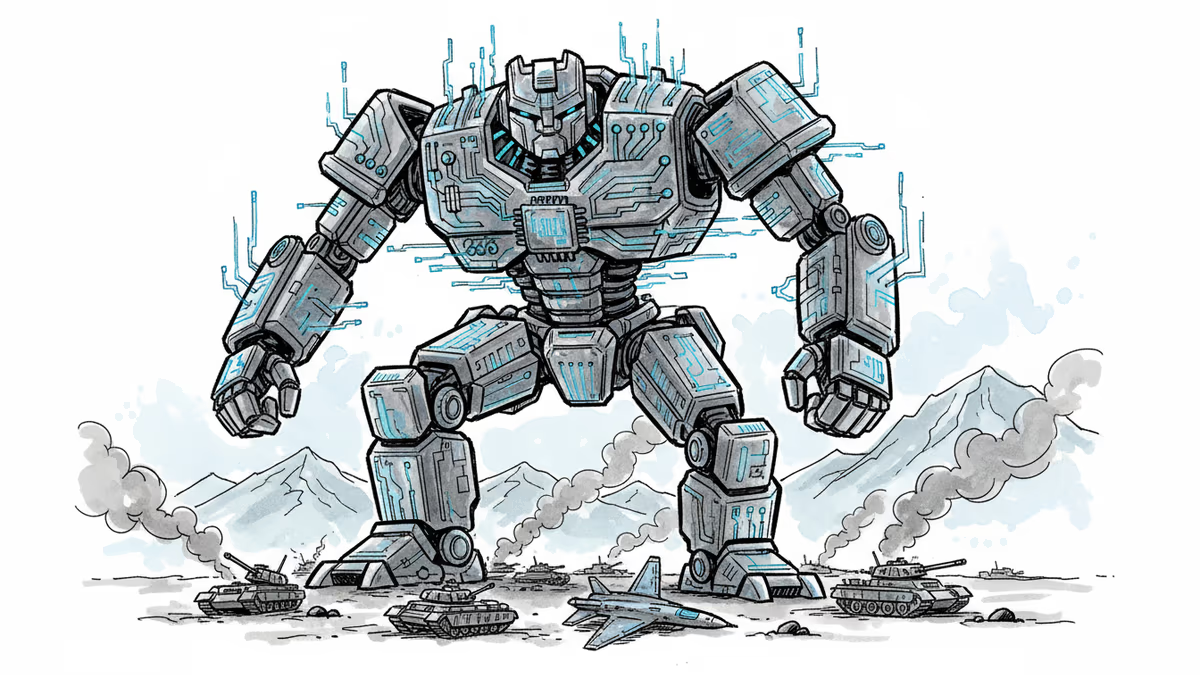
When Silicon Valley Meets the Pentagon: The $60B Defense Startup Revolution
Anduril's $60B valuation bid signals a seismic shift in defense tech. As VCs pour billions into weapons, what does this mean for warfare's future?
$60 billion for a six-year-old company that builds killing machines
That's what Palmer Luckey'sAnduril is asking for in its latest funding round, according to the Wall Street Journal. Just nine months after closing a $2.5 billion Series G at a $30 billion valuation, the defense startup is doubling down on a bet that Silicon Valley can revolutionize warfare faster than the Pentagon can adapt.
Thrive Capital and Andreessen Horowitz are leading what could become an $8 billion injection into a company that didn't exist when Trump first took office. But this isn't just another unicorn story. It's a fundamental shift in who controls the future of American military power.
The Anthropic moment: Perfect timing or calculated opportunism?
Luckey's timing couldn't be better orchestrated. Just as the Pentagon cancels all contracts with Anthropic over a contract dispute, Anduril positions itself as the "patriotic AI" alternative. Secretary of Defense Hegseth's threat to designate Anthropic as a supply-chain risk creates a perfect opening for companies willing to play by government rules.
Luckey's recent X post about not "outsourcing the real levers of power to billionaires and corpos" reads like calculated positioning rather than principled stance. He's betting that being the government-friendly option pays better than being the ethics-first alternative.
The VC dilemma: Returns vs. values

When Lux Capital and Founders Fund write checks to weapons manufacturers, it signals Silicon Valley's pragmatic evolution. The "make the world a better place" mantras have given way to "national security is good business" logic.
This creates an uncomfortable truth for the venture ecosystem. The same investors funding meditation apps and plant-based meat are now backing autonomous weapons systems. The cognitive dissonance is real, but so are the returns in a world where defense budgets keep growing.
Some investors are drawing lines. ESG-focused funds still avoid defense investments, creating a bifurcated market where values-driven capital competes with returns-driven capital. The question is which approach wins in the long run.
Beyond the Valley: Global implications
Anduril's rise isn't happening in a vacuum. China's military-industrial complex has been integrating AI and autonomous systems for years. European defense contractors are scrambling to keep pace. The $60 billion valuation isn't just about one company—it's about who controls the next generation of military technology.
For allies dependent on U.S. defense technology, this shift toward Silicon Valley solutions creates new dependencies. When your defense systems run on code written in Palo Alto, your sovereignty becomes tied to California's venture capital whims.
The automation question nobody's asking
Buried in all the funding news is a deeper question: How much human judgment should remain in life-and-death decisions? Anduril's autonomous systems can identify, track, and engage targets faster than human operators can blink. The efficiency gains are undeniable, but so are the ethical implications.
The company's rapid scaling suggests the market has already answered this question. Speed and precision trump human oversight when billions are at stake.
Authors
Related Articles
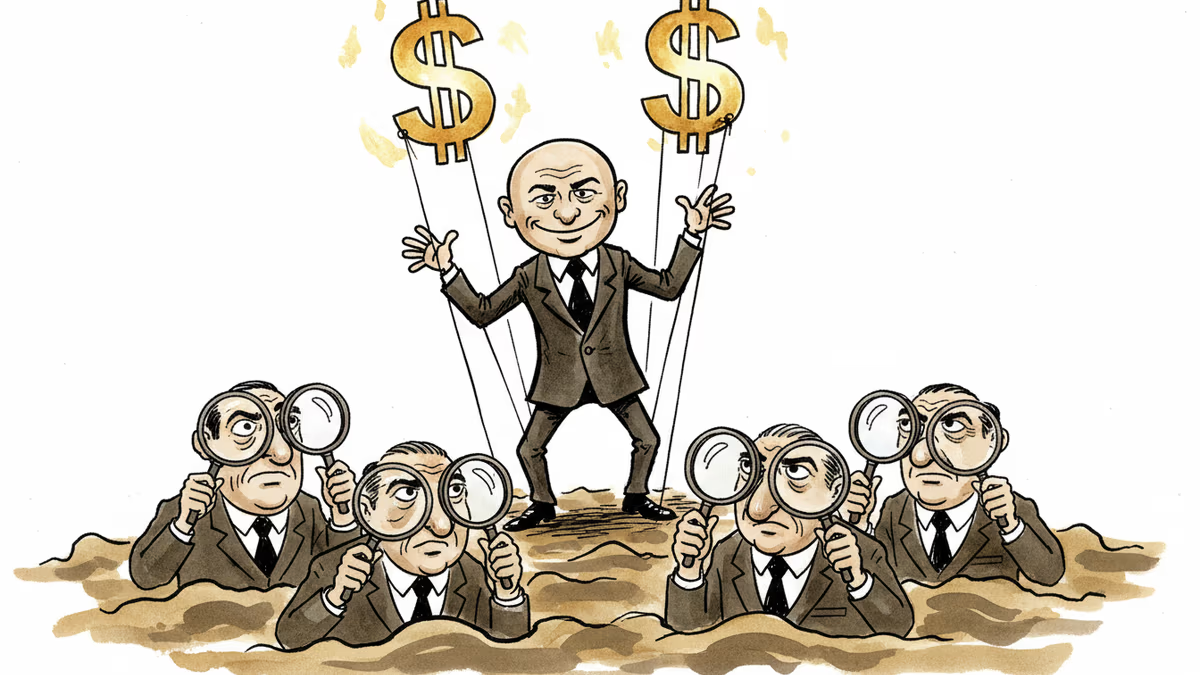
Cluely CEO admits to fabricating $7M revenue figure, exposing how startup "fake it till you make it" culture has gone too far. What this means for the ecosystem.
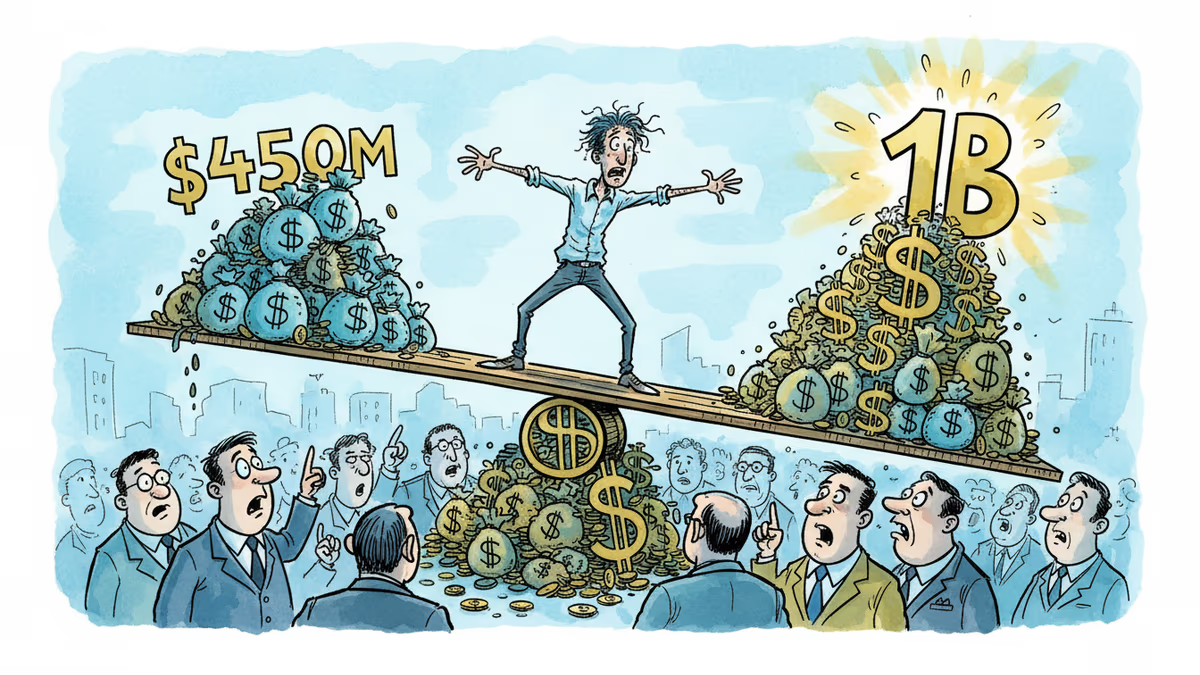
AI startups are using dual-tier valuations to manufacture unicorn status. Why are investors playing along with this new valuation game?

AI startups captured 90% of record $189B February VC funding, with OpenAI, Anthropic, and Waymo dominating 83% of all investments, reshaping venture landscape
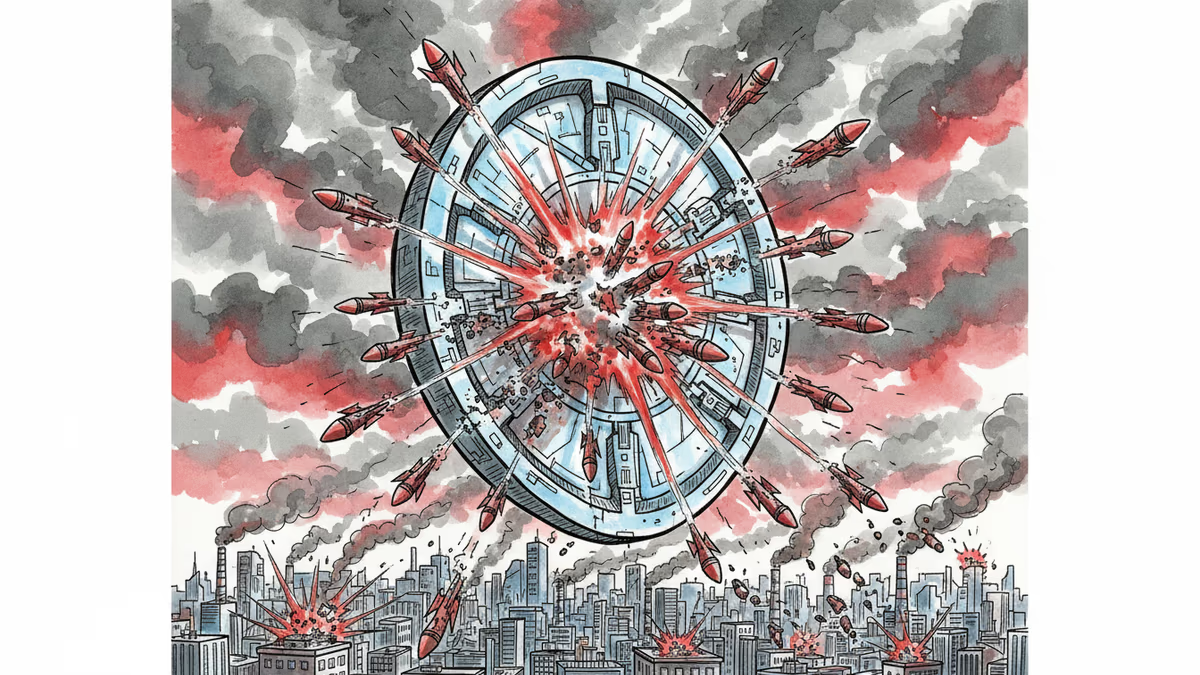
UAE's successful interception of Iranian missiles reveals both the power and limits of billion-dollar defense systems. Even perfect hits can't stop deadly debris.
Cluely CEO admits to fabricating $7M revenue figure, exposing how startup "fake it till you make it" culture has gone too far. What this means for the ecosystem.
AI startups are using dual-tier valuations to manufacture unicorn status. Why are investors playing along with this new valuation game?
AI startups captured 90% of record $189B February VC funding, with OpenAI, Anthropic, and Waymo dominating 83% of all investments, reshaping venture landscape
UAE's successful interception of Iranian missiles reveals both the power and limits of billion-dollar defense systems. Even perfect hits can't stop deadly debris.
Thoughts
Share your thoughts on this article
Sign in to join the conversation