
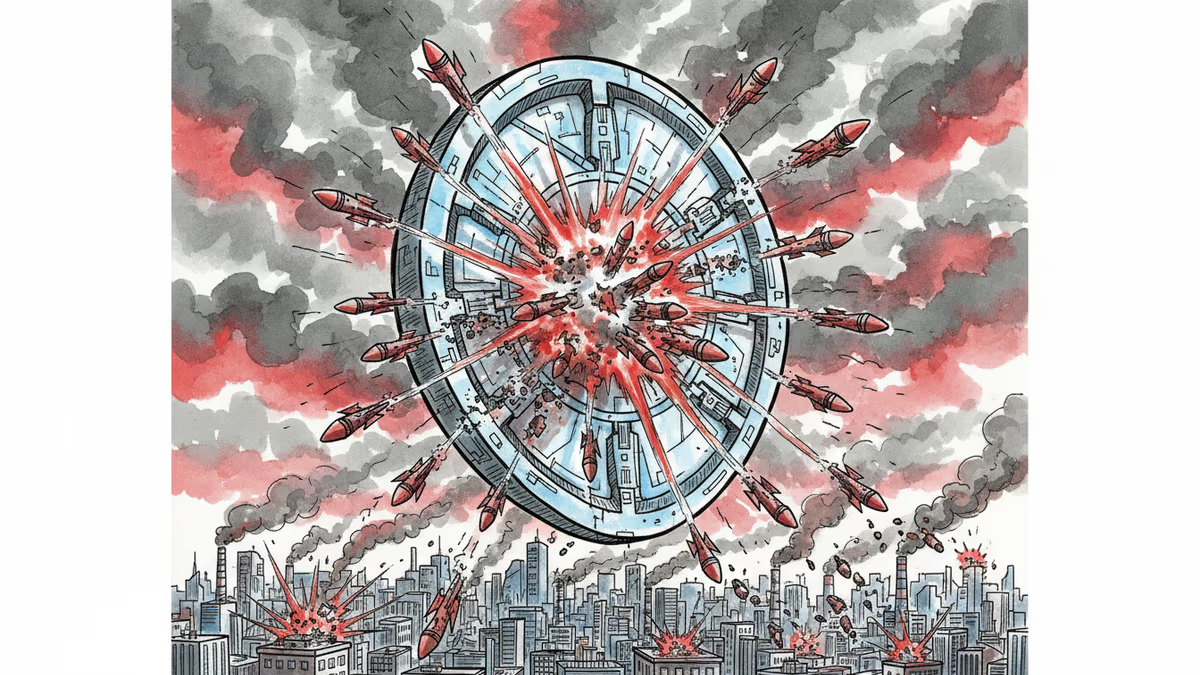
When Missiles Vanish Mid-Flight: The Tech Behind Modern Defense
UAE's successful interception of Iranian missiles reveals both the power and limits of billion-dollar defense systems. Even perfect hits can't stop deadly debris.
The 3-Minute War in the Sky
For most Abu Dhabi residents, it was just distant flashes and muffled booms. But in those three minutes on Saturday night, as Iranian ballistic missiles disappeared one by one above the UAE, a billion-dollar defense network was making thousands of calculations per second in a life-or-death game of precision.
The result? Mission accomplished. Every missile was destroyed before reaching its target. Yet even this near-perfect system couldn't prevent one tragic outcome: debris from an intercepted missile fell on Abu Dhabi, killing a civilian.
This incident reveals both the remarkable capabilities and fundamental limitations of modern missile defense—a reality that's reshaping military strategy worldwide.
Racing Against 12,000 MPH
Intercepting a ballistic missile means hitting an object traveling at over 12,000 miles per hour—fast enough to cross the entire UAE in minutes. The UAE's defense architecture relies on two primary layers: the high-altitude THAAD system and lower-altitude Patriot missiles.
The UAE became the first country outside the US to deploy THAAD in 2022, and Saturday's events proved its worth. The interception sequence happens in seconds:
Detection: AN/TPY-2 radar spots missile launches from hundreds of miles away Tracking: Real-time trajectory calculations determine interception points Engagement: THAAD interceptors launch, destroying targets through direct "hit-to-kill" collision
Unlike traditional air defense that explodes near threats, THAAD literally crashes into incoming missiles at hypersonic speeds, obliterating them through kinetic impact.

The Physics of Imperfect Protection
Saturday's tragedy illustrates missile defense's core paradox: successful interceptions create new dangers. When a missile disintegrates at high altitude, gravity pulls fragments earthward along unpredictable paths. The better the defense system works, the more debris it potentially creates.
This isn't a design flaw—it's physics. No current technology can simultaneously destroy incoming threats and control where every fragment lands. Defense planners accept this trade-off: better to deal with unpredictable debris than guaranteed target destruction.
The regional arms race continues driving these investments. Iran maintains one of the Middle East's largest ballistic missile arsenals, prompting Gulf states to spend over a decade building layered defense networks protecting critical infrastructure and population centers.
The Global Defense Tech Revolution
This real-world test provides invaluable data for defense contractors worldwide. Companies like Lockheed Martin, Raytheon, and emerging players are analyzing every aspect of Saturday's engagement to improve future systems.
The implications extend beyond the Middle East. Nations facing ballistic missile threats—from South Korea to Taiwan to NATO allies—are watching closely. Each successful interception validates the technology while highlighting its constraints.
For defense investors, these events demonstrate both market demand and technical challenges. The global missile defense market, valued at over $20 billion annually, continues expanding as threats evolve.
Beyond Technology: Strategic Questions
Saturday's events raise deeper questions about defense strategy in an era of proliferating missile technology. If even successful interceptions carry risks, how should nations protect dense urban areas? Should defense systems prioritize rural interceptions to minimize debris danger?
The UAE's experience also highlights the importance of integrated command systems. Success required seamless coordination between sensors, command centers, and interceptor batteries—a level of integration that many nations still lack.
Authors
Related Articles
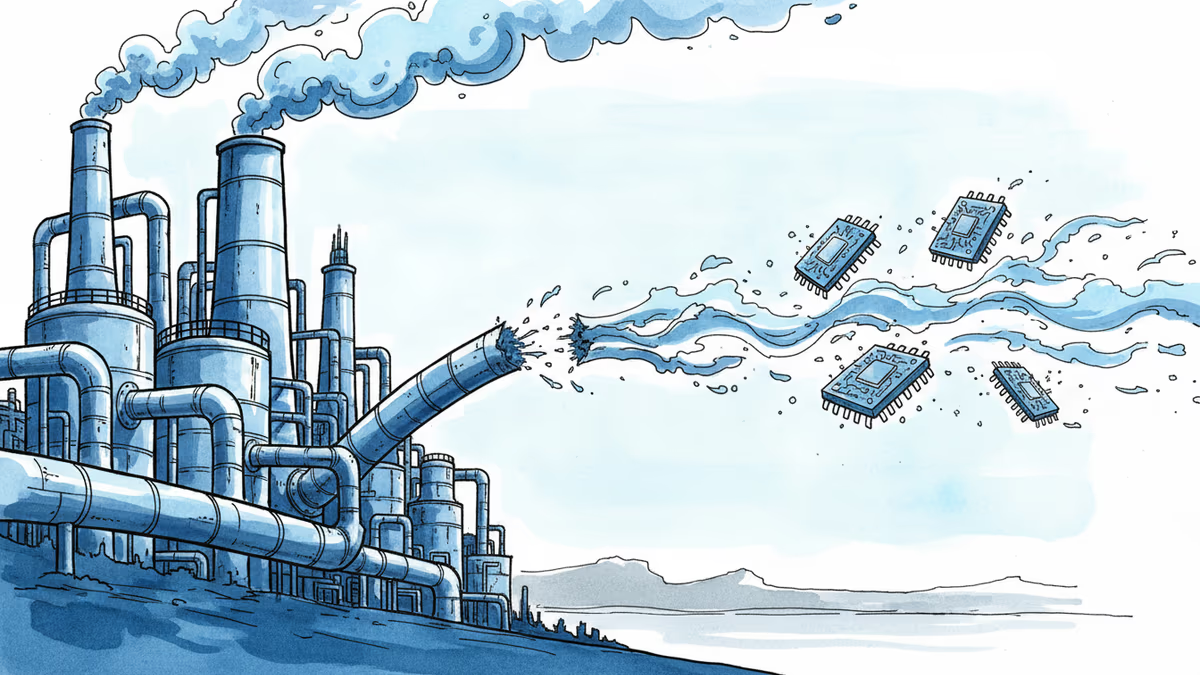
Qatar's gas production halt threatens global semiconductor supply chains as the Middle East conflict disrupts critical materials. Samsung and SK Hynix face potential production slowdowns in a market already stretched by AI demand.
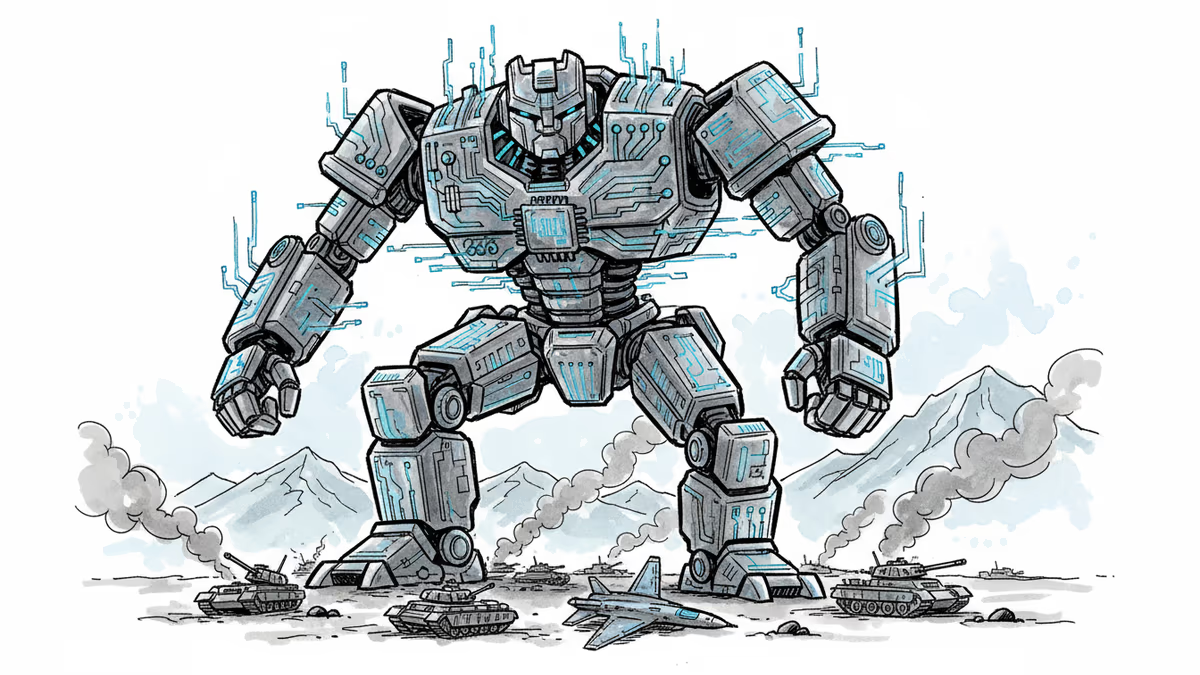
Anduril's $60B valuation bid signals a seismic shift in defense tech. As VCs pour billions into weapons, what does this mean for warfare's future?

Sanctions and financial crises block streaming access across MENA, making piracy the default for young consumers. 23% rely on illegal IPTV services in a region where legal access often doesn't exist.
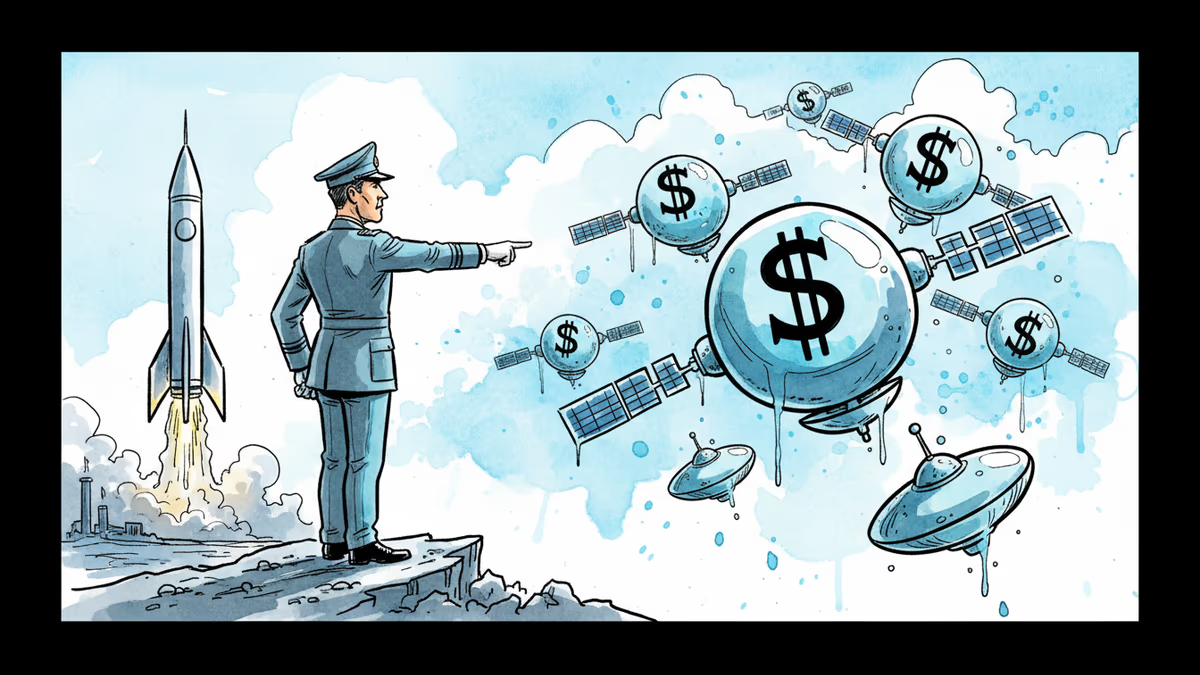
US Space Force shifts $24B R&D focus from rockets to space sensors and payloads, signaling major industry transformation and new opportunities for startups
Qatar's gas production halt threatens global semiconductor supply chains as the Middle East conflict disrupts critical materials. Samsung and SK Hynix face potential production slowdowns in a market already stretched by AI demand.
Anduril's $60B valuation bid signals a seismic shift in defense tech. As VCs pour billions into weapons, what does this mean for warfare's future?
Sanctions and financial crises block streaming access across MENA, making piracy the default for young consumers. 23% rely on illegal IPTV services in a region where legal access often doesn't exist.
US Space Force shifts $24B R&D focus from rockets to space sensors and payloads, signaling major industry transformation and new opportunities for startups
Thoughts
Share your thoughts on this article
Sign in to join the conversation