
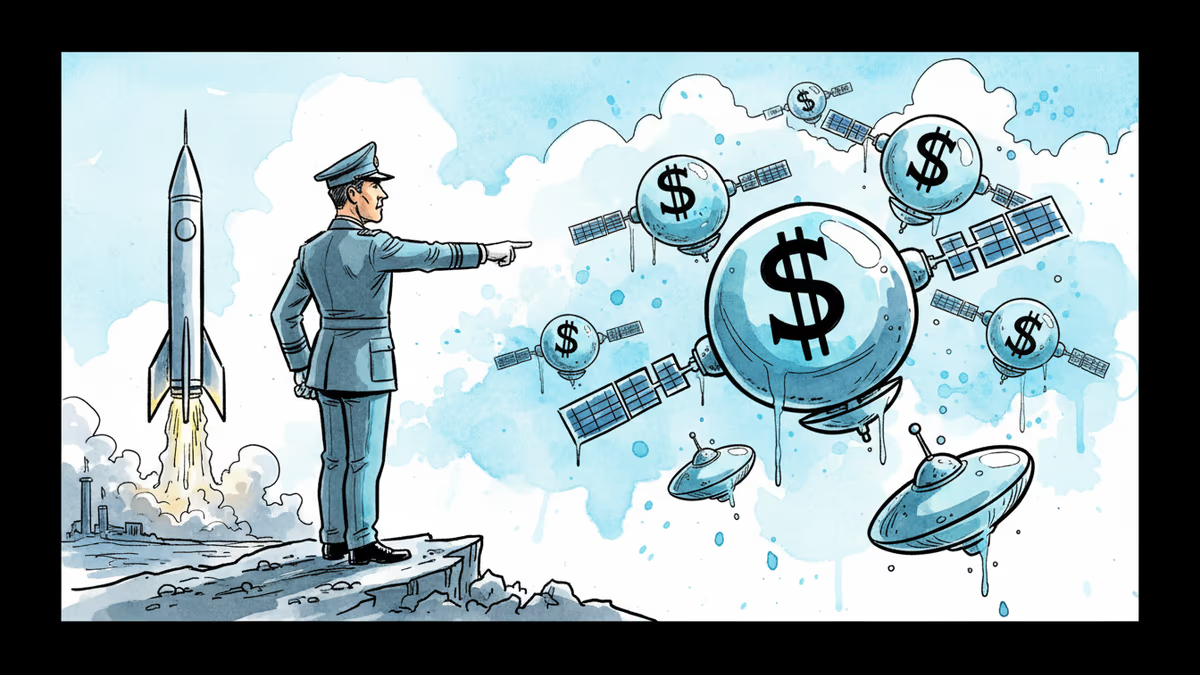
Why the Space Force Chooses Sensors Over Rockets
US Space Force shifts $24B R&D focus from rockets to space sensors and payloads, signaling major industry transformation and new opportunities for startups
$24 Billion Votes for Sensors
The U.S. Space Force just revealed where its $24 billion in research and development money is headed. The answer might surprise rocket companies: it's not going to them. Maj. Gen. Stephen Purdy told a room full of investors in Dallas last week that the Pentagon is "more interested in supporting startups building new space sensors and payloads than adding yet another rocket company to its portfolio."
This isn't just budget reshuffling. It's a signal that the space race has fundamentally changed direction.
The Launch Market Is Solved
Purdy's logic is straightforward: why fund another rocket company when SpaceX and others have already cracked the launch code? The Space Force wants high-volume production, not bleeding-edge development of launch vehicles. With launch costs plummeting and reliability soaring, the military sees the transportation problem as largely solved.
The real action is now in what happens once you're in space. Sensors that can detect threats, payloads that can process massive amounts of data, and systems that can operate autonomously for years—these are the technologies that will determine who controls the ultimate high ground.
What Defense Contractors Are Missing

Traditional defense giants have spent decades perfecting the art of building expensive, bespoke systems. But Purdy's emphasis on high-volume production suggests the Space Force wants to move away from that model. They're looking for companies that can manufacture thousands of sensors, not dozens.
This creates an opening for startups with commercial mindsets. Companies building sensors for autonomous vehicles, IoT networks, or consumer electronics might find their technologies more relevant to space defense than traditional aerospace firms realize.
The Tool They Lost
Purdy also dropped a concerning note: the military has "lost one of its most important tools for supporting and diversifying the space industrial base." While he didn't specify what tool, this suggests reduced funding mechanisms or regulatory changes that previously helped smaller companies compete.
For investors, this means the government safety net is shrinking. Startups will need to prove commercial viability faster, but those with the right sensor technologies might find new doors opening.
Follow the Money
The investment implications are clear. While launch companies continue to attract headlines and venture capital, the smart money might be flowing toward less glamorous but more strategic technologies. Think thermal imaging sensors, radio frequency analyzers, or AI chips designed for space's harsh environment.
This shift also reflects a broader military trend toward distributed, resilient systems rather than monolithic platforms. Instead of building one massive spy satellite, the future might involve thousands of small sensors working together.
Authors
Related Articles
Anduril's $60B valuation bid signals a seismic shift in defense tech. As VCs pour billions into weapons, what does this mean for warfare's future?

UAE's successful interception of Iranian missiles reveals both the power and limits of billion-dollar defense systems. Even perfect hits can't stop deadly debris.
Phantom Space acquired assets from bankrupt Vector Launch, showing how failed space companies' technologies are finding new life. Is this becoming the new normal in aerospace?

Chinese manufacturers are marketing military drone jammers on TikTok like lifestyle products, supplying equipment to the Ukraine war. A surreal blend of e-commerce and battlefield combat.
Anduril's $60B valuation bid signals a seismic shift in defense tech. As VCs pour billions into weapons, what does this mean for warfare's future?
UAE's successful interception of Iranian missiles reveals both the power and limits of billion-dollar defense systems. Even perfect hits can't stop deadly debris.
Phantom Space acquired assets from bankrupt Vector Launch, showing how failed space companies' technologies are finding new life. Is this becoming the new normal in aerospace?
Chinese manufacturers are marketing military drone jammers on TikTok like lifestyle products, supplying equipment to the Ukraine war. A surreal blend of e-commerce and battlefield combat.
Thoughts
Share your thoughts on this article
Sign in to join the conversation