
TikTok's Drone Jammers Are Going to War
Chinese manufacturers are marketing military drone jammers on TikTok like lifestyle products, supplying equipment to the Ukraine war. A surreal blend of e-commerce and battlefield combat.
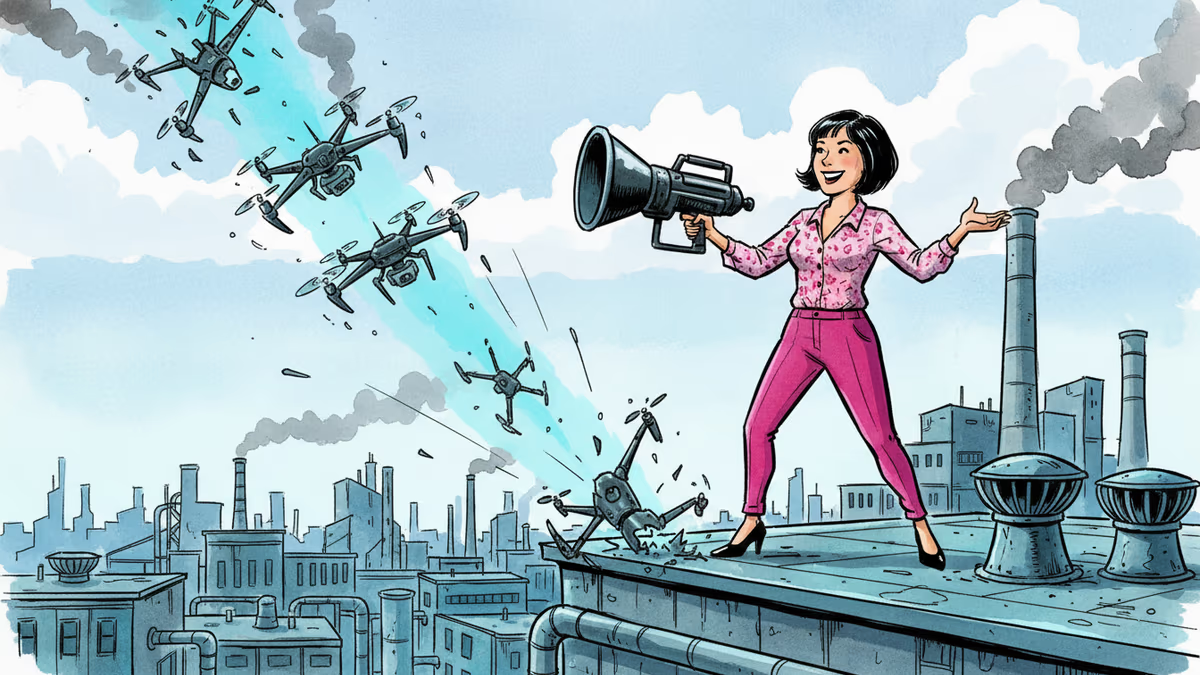
"Pew, pew, pew!" A woman in pink trousers grins cheerfully in a TikTok video, standing on what looks like an industrial rooftop. She's holding a black device that resembles an oversized laser tag gun. "Jamming gun, good!" she adds with a thumbs up. "Contact me!"
This isn't a toy commercial. It's an ad for military-grade drone jamming equipment, marketed with the breezy enthusiasm of a lifestyle influencer selling skincare.
The Battlefield Goes Social
TikTok has become an unlikely showroom for modern warfare. In recent months, small Chinese manufacturers have turned the platform into a marketplace for anti-drone hardware with clear military applications. They're selling jammers, sensors, and detection equipment—but presenting them like consumer electronics.
WIRED reviewed dozens of videos showcasing everything from gumdrop-shaped domes on tripods to backpacks bristling with 12 antennas. Captions appear in Chinese and English, often with Russian or Ukrainian translations. One video, set to bouncy electronic music, features what the seller calls a "9 band FPV anti drone jammer"—equipment designed to disrupt the radio signals that keep small drones airborne.
The result? A surreal collision between e-commerce and battlefield technology.
China's Component Dominance
Both Russia and Ukraine have raced to expand domestic drone production since the war began. But they're still heavily dependent on Chinese parts. Processors, sensors, cameras, and radio modules used by both sides largely come from the same factory clusters around Shenzhen, China's hardware manufacturing capital.
"Even though Kyiv has tried to diversify away from Chinese sources, Ukraine still relies heavily on major Chinese companies for cheap drones and drone parts," says Aosheng Pusztaszeri, a research associate at the Center for Strategic and International Studies.

Beijing officially restricts exports of dual-use technologies, including drones and components. In September 2024, China expanded controls to cover key battlefield drone parts like flight controllers and motors. Around the same time, the US sanctioned two Chinese companies for allegedly selling drone parts to Russia.
The Numbers Don't Add Up
Despite restrictions, the flow continues through intermediaries. In the first half of 2024, Chinese companies officially sold only about $200,000 worth of drones to Ukraine. But the Ukrainian government estimates the real figure at closer to $1.1 billion.
"That gap suggests fully assembled Chinese drones and drone components might enter Ukraine via third-party sellers," Pusztaszer explains.
University of Maryland professor Houbing Herbert Song, who researches anti-drone technology, tells WIRED that the TikTok products appear to be detection and jamming equipment. Jammers work by transmitting radio waves at the same frequencies drones use to communicate, potentially causing them to lose contact with operators or interfering with GPS navigation.
Marketing War Like Wellness
Most videos don't explicitly mention military uses. One caption claims a jamming product is "suitable for drone defence in mining areas, oil depots, farms, and vehicle-mounted applications." But Song notes it's uncommon to describe anti-drone technology in such specific terms without technical specifications.
"I am from the factory of anti-UAV equipment in China," the same woman says in another video, now wearing a black satin blazer. "The equipment can be placed indoors, outdoors, and in the car. Works 24 hours a day."
The casual tone masks the serious implications. These aren't consumer gadgets—they're tools of modern warfare being sold through social media algorithms.
The cheerful TikTok videos might seem absurd, but they represent something profound: warfare technology becoming as accessible as ordering takeout. The question isn't whether this will continue—it's what world we're building when anyone with a smartphone can shop for the tools of modern conflict.
Authors
Related Articles
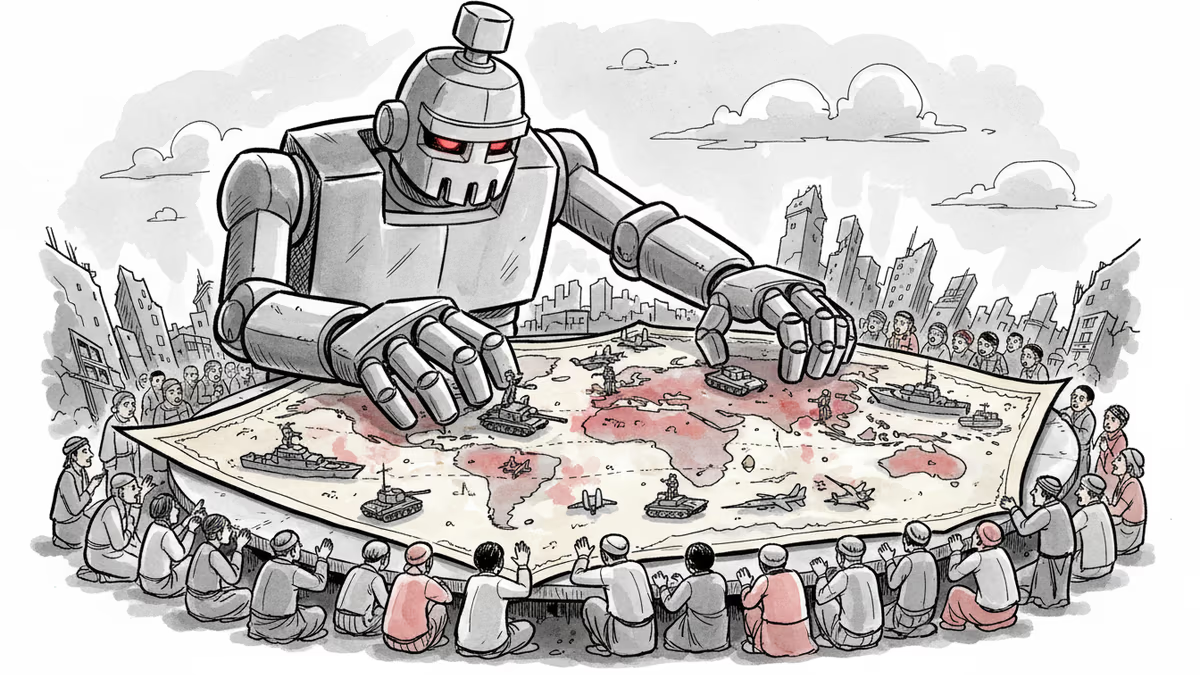
Middle East conflict reveals AI weapons reality. Claude AI selects targets, drones attack autonomously. 90% accuracy, zero regulation. The gap between deployment and governance widens.
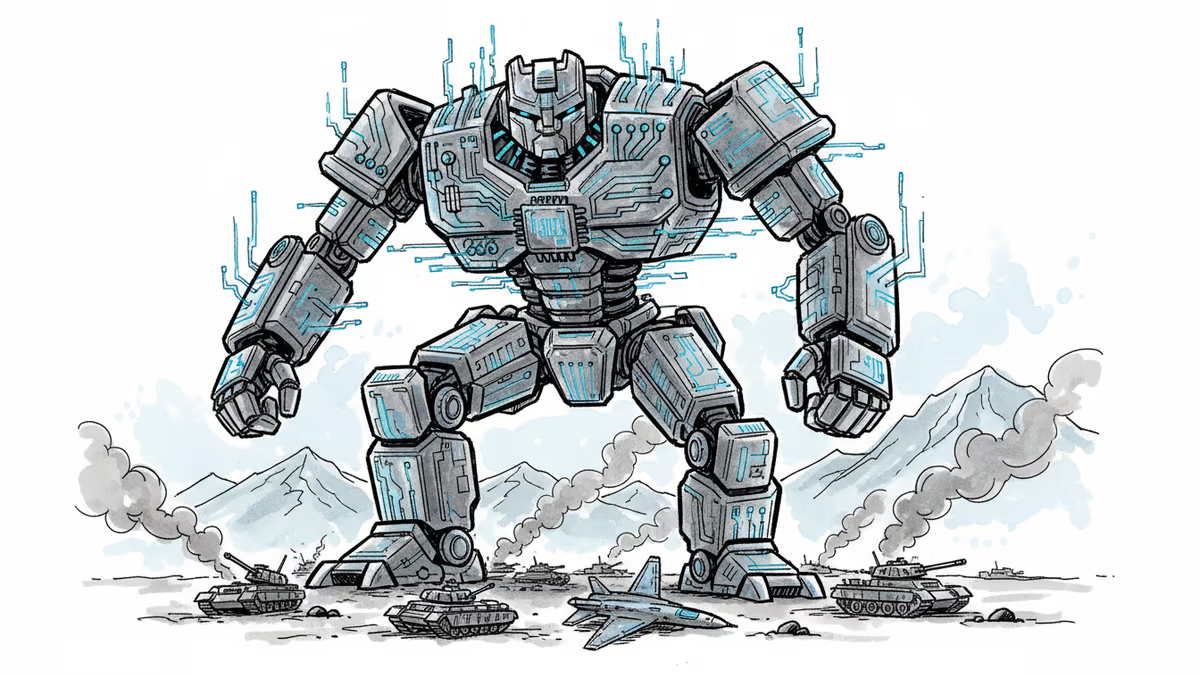
Anduril's $60B valuation bid signals a seismic shift in defense tech. As VCs pour billions into weapons, what does this mean for warfare's future?

UAE's successful interception of Iranian missiles reveals both the power and limits of billion-dollar defense systems. Even perfect hits can't stop deadly debris.
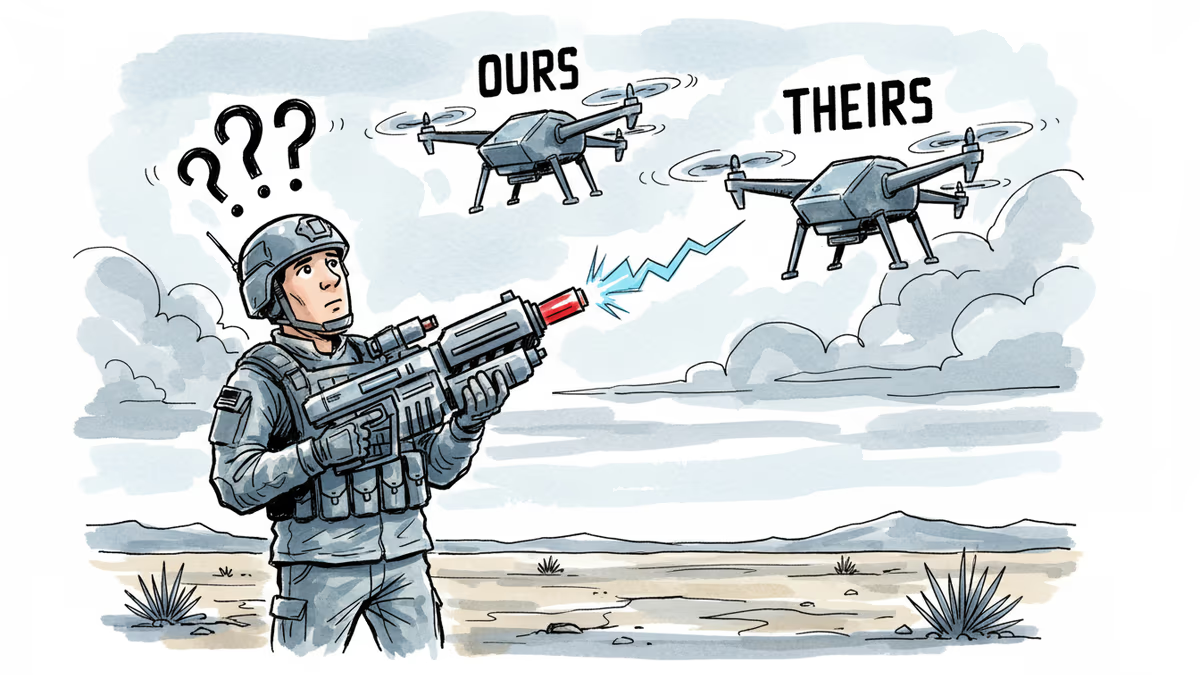
A US military laser system mistakenly destroyed a Border Patrol drone near Mexico, revealing the complex reality of modern border security technology
Middle East conflict reveals AI weapons reality. Claude AI selects targets, drones attack autonomously. 90% accuracy, zero regulation. The gap between deployment and governance widens.
Anduril's $60B valuation bid signals a seismic shift in defense tech. As VCs pour billions into weapons, what does this mean for warfare's future?
UAE's successful interception of Iranian missiles reveals both the power and limits of billion-dollar defense systems. Even perfect hits can't stop deadly debris.
A US military laser system mistakenly destroyed a Border Patrol drone near Mexico, revealing the complex reality of modern border security technology
Thoughts
Share your thoughts on this article
Sign in to join the conversation