
Chinese Hackers Breached Singapore's Big Four Telecoms Simultaneously
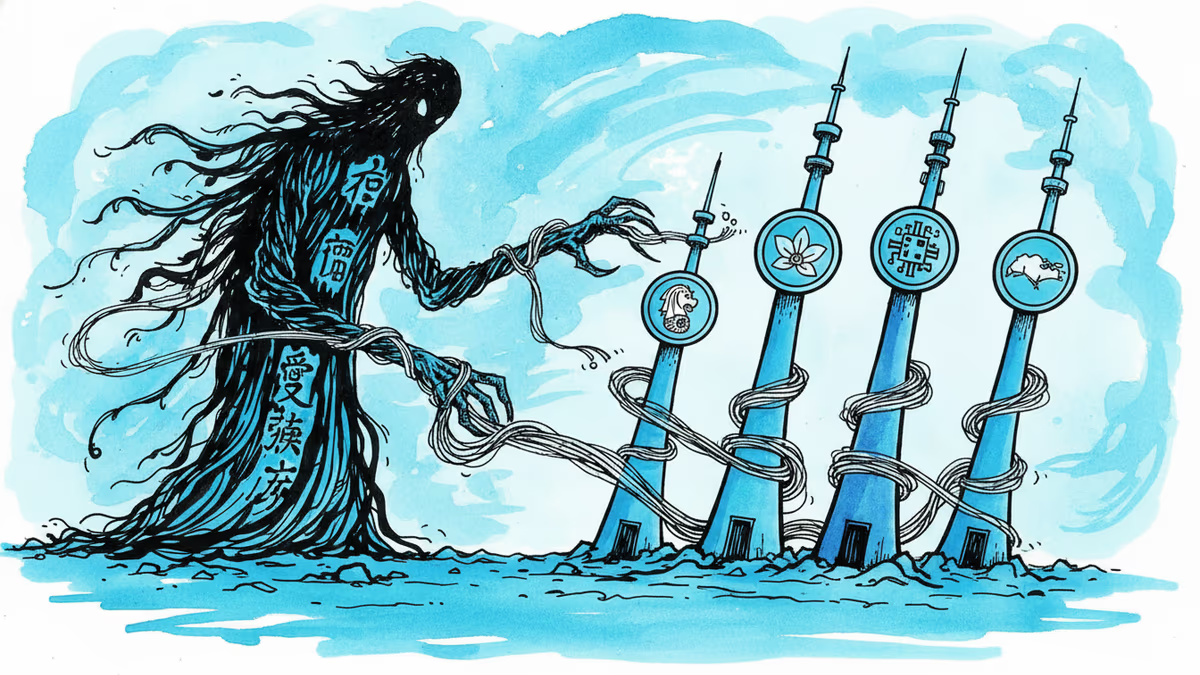
Chinese state-backed hacking group UNC3886 infiltrated Singapore's four major telecom companies in a months-long campaign, accessing critical systems without disrupting services or stealing personal data.
For four months, nobody knew. A Chinese government-backed hacking group was quietly infiltrating Singapore's biggest telecom companies, one by one.
Singapore's government confirmed Monday what cybersecurity experts had suspected: the notorious UNC3886 group successfully breached all four major telecoms—Singtel, StarHub, M1, and Simba Telecom. While hackers didn't disrupt services or steal personal data, they penetrated deep enough to access some critical systems, according to National Security Coordinating Minister K. Shanmugam.
The Stealth Campaign
This wasn't your typical smash-and-grab cyberattack. UNC3886 deployed rootkits and other sophisticated tools designed for long-term persistence. The group, known for exploiting zero-day vulnerabilities in routers and firewalls, targeted the invisible backbone of Singapore's digital infrastructure—virtualized environments where traditional security tools can't reach.
Google's Mandiant has previously linked UNC3886 to Chinese state espionage operations. The group has a track record of targeting defense, technology, and telecom sectors across the U.S. and Asia-Pacific region, often as part of broader intelligence-gathering campaigns.
When Cyberattacks Become 'Business as usual'
Perhaps most telling was the telecoms' response. In a joint statement, the four companies described facing "distributed denial-of-service and other malware attacks" as routine. They emphasized their "defense-in-depth mechanisms" and "prompt remediation" protocols.

This matter-of-fact tone reveals a sobering reality: cyberattacks on critical infrastructure have become so common that companies now measure success not by avoiding breaches, but by how quickly they detect and contain them.
The Bigger Picture: Digital Cold War
Singapore's disclosure comes amid a wave of telecom attacks worldwide. The Salt Typhoon group, also linked to China, has targeted hundreds of telecoms globally, including major U.S. carriers. These aren't isolated incidents—they're part of what experts call "pre-positioning" for potential future conflicts.
China routinely denies state-sponsored hacking, but the pattern is clear. As tensions rise over Taiwan and broader geopolitical competition intensifies, telecom infrastructure has become a primary battleground in an invisible war.
What This Means for Everyone Else
Singapore's experience offers a preview of what's coming. If one of the world's most digitally advanced city-states can be penetrated for months without detection, no telecom network is truly safe. The attackers didn't need to cause immediate damage—simply mapping network architectures and identifying vulnerabilities could prove valuable later.
For consumers, this highlights the hidden fragility of our hyperconnected world. For governments, it underscores the urgent need to treat telecom security as national security, not just a regulatory checkbox.
Authors
Related Articles
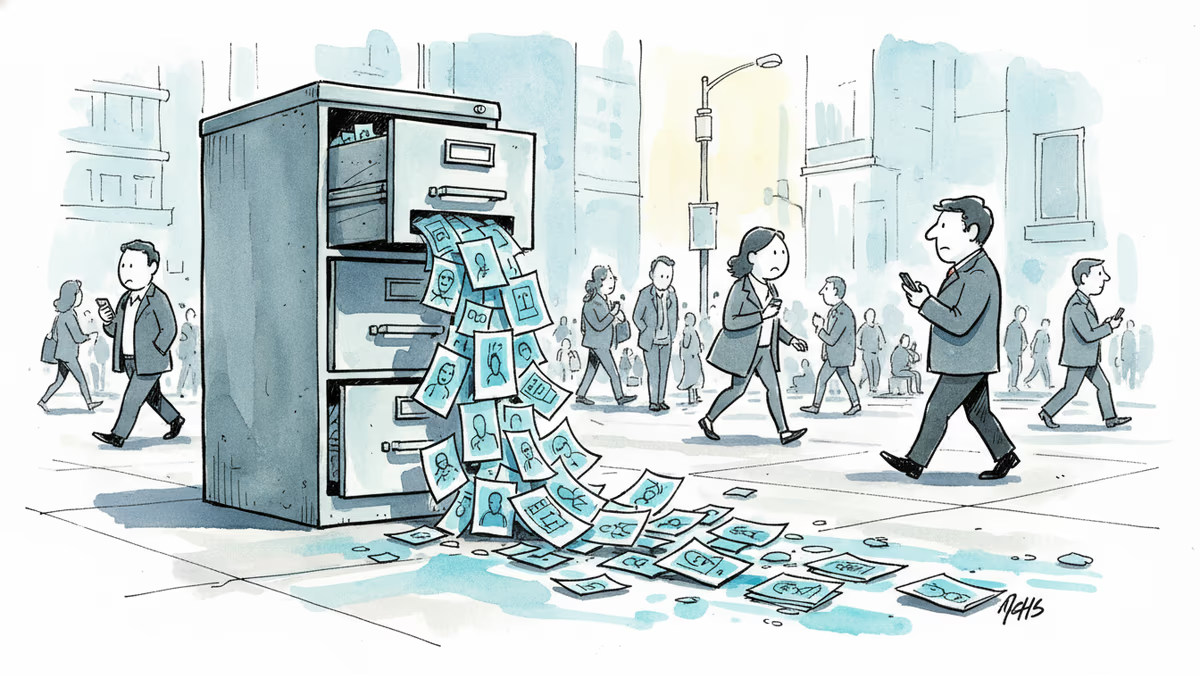
UK Visa Portal, a private immigration service mistaken for an official government site, has been exposing passport scans and selfies of over 100,000 applicants. The breach remains unpatched.
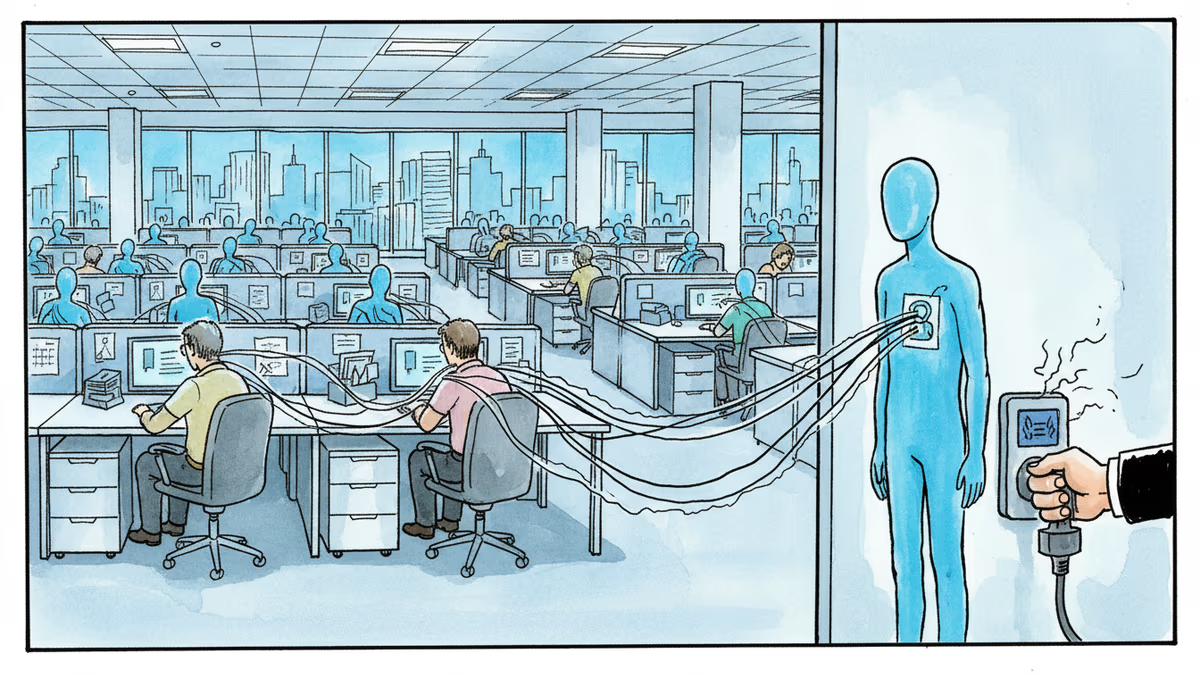
Okta CEO Todd McKinnon on why AI agents need identity management, the SaaSpocalypse threat, and why the kill switch might be the most important button in enterprise tech.
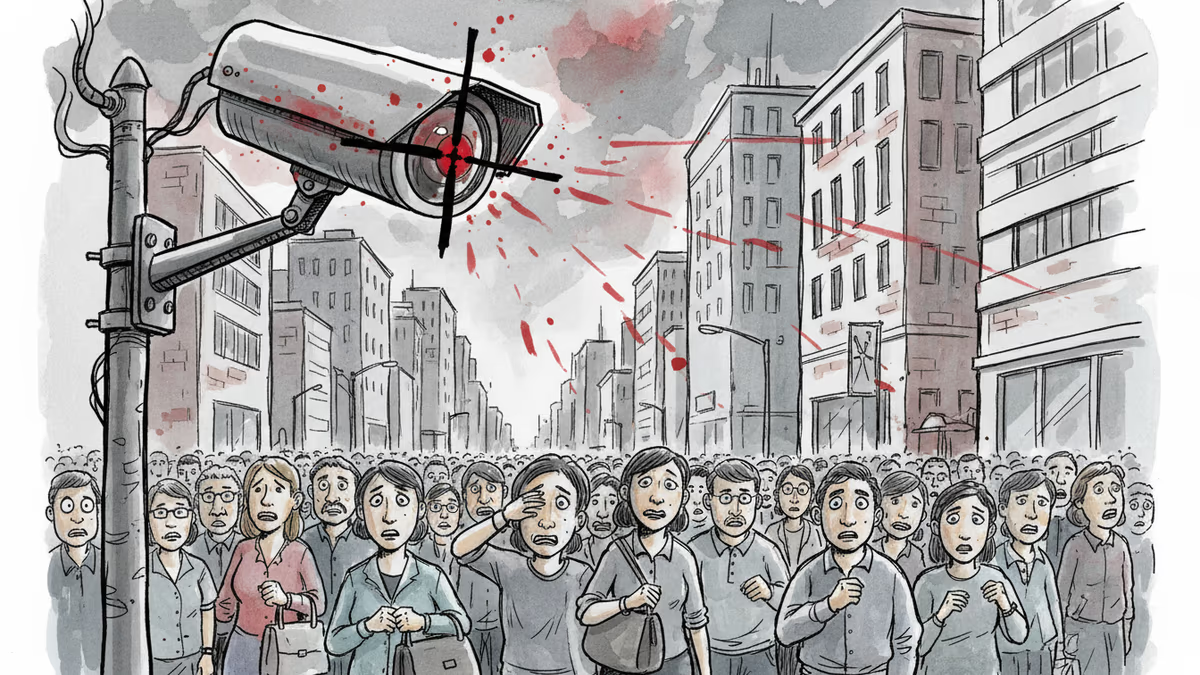
Iran and Israel are hacking civilian security cameras for military reconnaissance. How consumer surveillance devices became weapons of war.
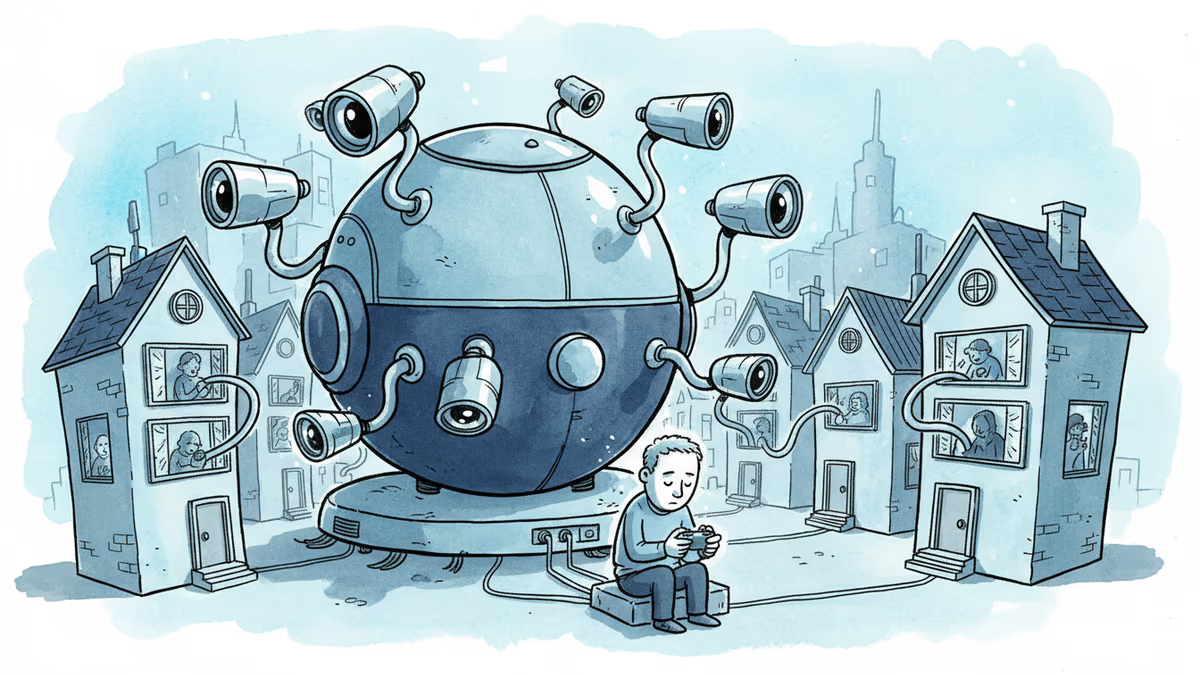
A security researcher discovered he could access 7,000 DJI robot vacuums and peek into strangers' homes. This Valentine's Day revelation exposes the hidden privacy risks of our smart home obsession.
UK Visa Portal, a private immigration service mistaken for an official government site, has been exposing passport scans and selfies of over 100,000 applicants. The breach remains unpatched.
Okta CEO Todd McKinnon on why AI agents need identity management, the SaaSpocalypse threat, and why the kill switch might be the most important button in enterprise tech.
Iran and Israel are hacking civilian security cameras for military reconnaissance. How consumer surveillance devices became weapons of war.
A security researcher discovered he could access 7,000 DJI robot vacuums and peek into strangers' homes. This Valentine's Day revelation exposes the hidden privacy risks of our smart home obsession.
Thoughts
Share your thoughts on this article
Sign in to join the conversation