
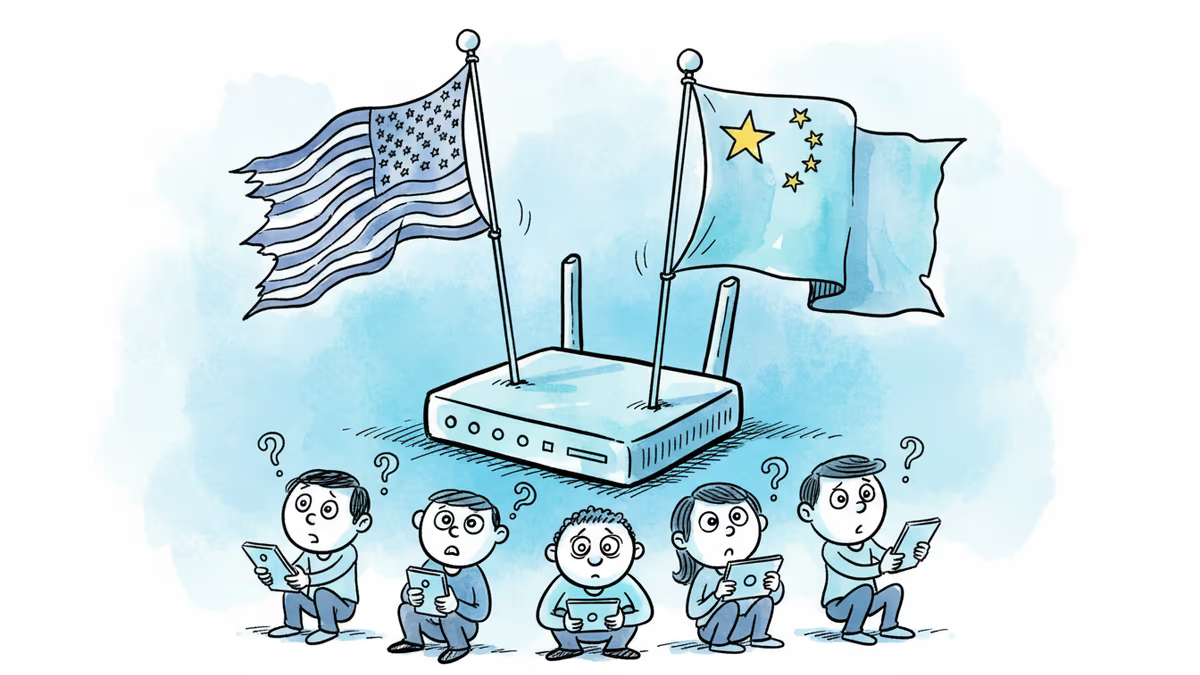
Texas vs TP-Link: When Your Router Becomes a Geopolitical Flashpoint
Texas lawsuit against TP-Link reveals deeper tensions in global networking equipment market. Analyzing corporate nationality, security concerns, and consumer impact.
60% Market Share vs National Security
Texas just sued the company that powers 60% of America's home internet. Attorney General Ken Paxton claims TP-Link is "masking its Chinese connections" while serving as "an open window for Chinese-sponsored threat actors and Chinese intelligence agencies."
But this isn't just about false advertising. It's about a fundamental question reshaping the tech industry: Can a company truly change its nationality?
The Great Corporate Migration
TP-Link's transformation playbook reads like a masterclass in corporate reinvention. Founded in China, the company spent years executing a careful pivot: Vietnamese manufacturing in 2018, US headquarters in 2024, and a new corporate entity called TP-Link Systems.
It's the same strategy we've seen from other Chinese tech giants. TikTok created separate entities, DJI established US operations, and countless manufacturers moved production out of China. The formula seems simple: change your address, change your identity.
Texas isn't buying it. The lawsuit argues that corporate geography means little when the core technology, leadership, and control structures remain rooted in China. It's a test case for how governments will treat corporate nationality in an era of strategic competition.

The Consumer Caught in the Middle
Here's the uncomfortable reality: millions of American homes depend on TP-Link routers. They're affordable, reliable, and widely available. If regulators decide to ban or restrict these products, consumers face a stark choice between security concerns and practical needs.
The precedent is concerning. When the US moved against Huawei, telecom companies spent billions replacing equipment. But consumer routers are different—they're in every home, small business, and coffee shop. The replacement cost and logistics would be staggering.
Meanwhile, American alternatives like Netgear and Linksys are typically more expensive. European options exist, but with limited market presence. The market concentration that made TP-Link successful now makes it nearly irreplaceable.
The Broader Battle Lines
This lawsuit signals a new phase in US-China tech competition. We've moved beyond obvious targets like social media platforms and telecommunications infrastructure. Now, everyday consumer electronics are becoming battlegrounds.
The implications extend far beyond routers. Chinese companies dominate multiple consumer tech categories—from smart home devices to computer peripherals. If corporate origin becomes the primary security criterion, entire product categories could face scrutiny.
European regulators are watching closely. The EU has its own concerns about Chinese tech companies, but also worries about US extraterritorial enforcement. How this case unfolds could influence global approaches to tech sovereignty.
Authors
Related Articles

UK Visa Portal, a private immigration service mistaken for an official government site, has been exposing passport scans and selfies of over 100,000 applicants. The breach remains unpatched.
Okta CEO Todd McKinnon on why AI agents need identity management, the SaaSpocalypse threat, and why the kill switch might be the most important button in enterprise tech.
Iran and Israel are hacking civilian security cameras for military reconnaissance. How consumer surveillance devices became weapons of war.
A security researcher discovered he could access 7,000 DJI robot vacuums and peek into strangers' homes. This Valentine's Day revelation exposes the hidden privacy risks of our smart home obsession.
UK Visa Portal, a private immigration service mistaken for an official government site, has been exposing passport scans and selfies of over 100,000 applicants. The breach remains unpatched.
Okta CEO Todd McKinnon on why AI agents need identity management, the SaaSpocalypse threat, and why the kill switch might be the most important button in enterprise tech.
Iran and Israel are hacking civilian security cameras for military reconnaissance. How consumer surveillance devices became weapons of war.
A security researcher discovered he could access 7,000 DJI robot vacuums and peek into strangers' homes. This Valentine's Day revelation exposes the hidden privacy risks of our smart home obsession.
Thoughts
Share your thoughts on this article
Sign in to join the conversation