
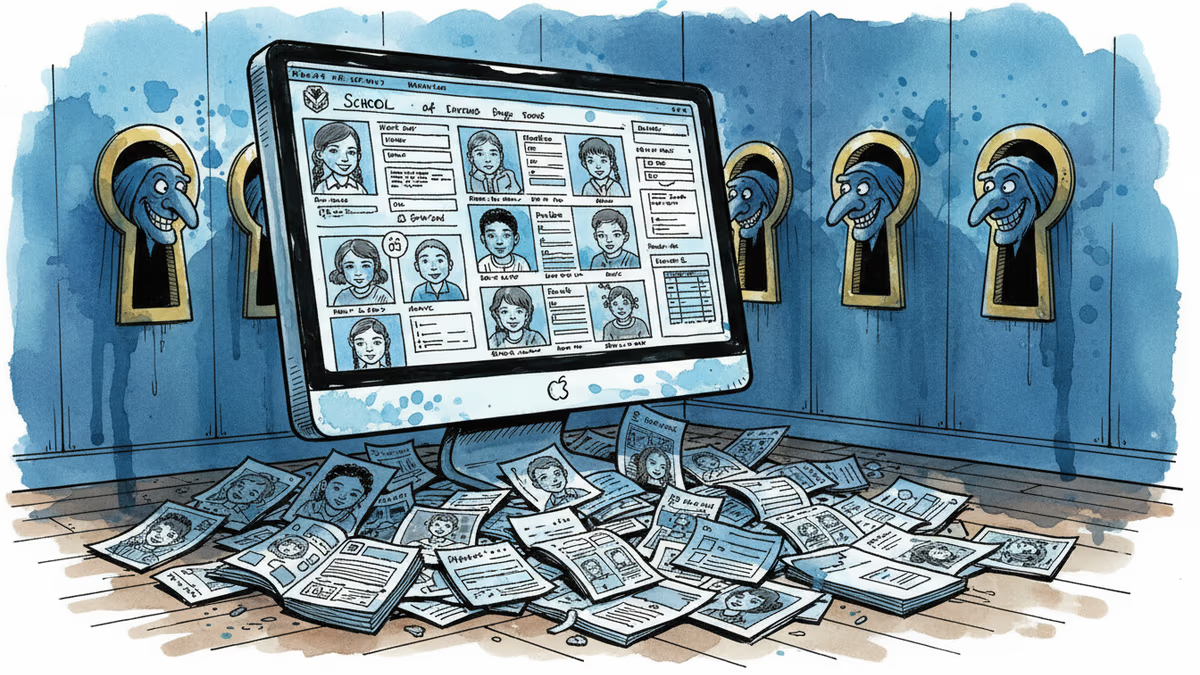
One Click Exposed a Million Students' Personal Data
A major US school admissions platform leaked children's names, photos, addresses to any logged-in user. What this security lapse reveals about protecting student privacy in the digital age.
A Parent's Nightmare: Your Child's Data for Sale
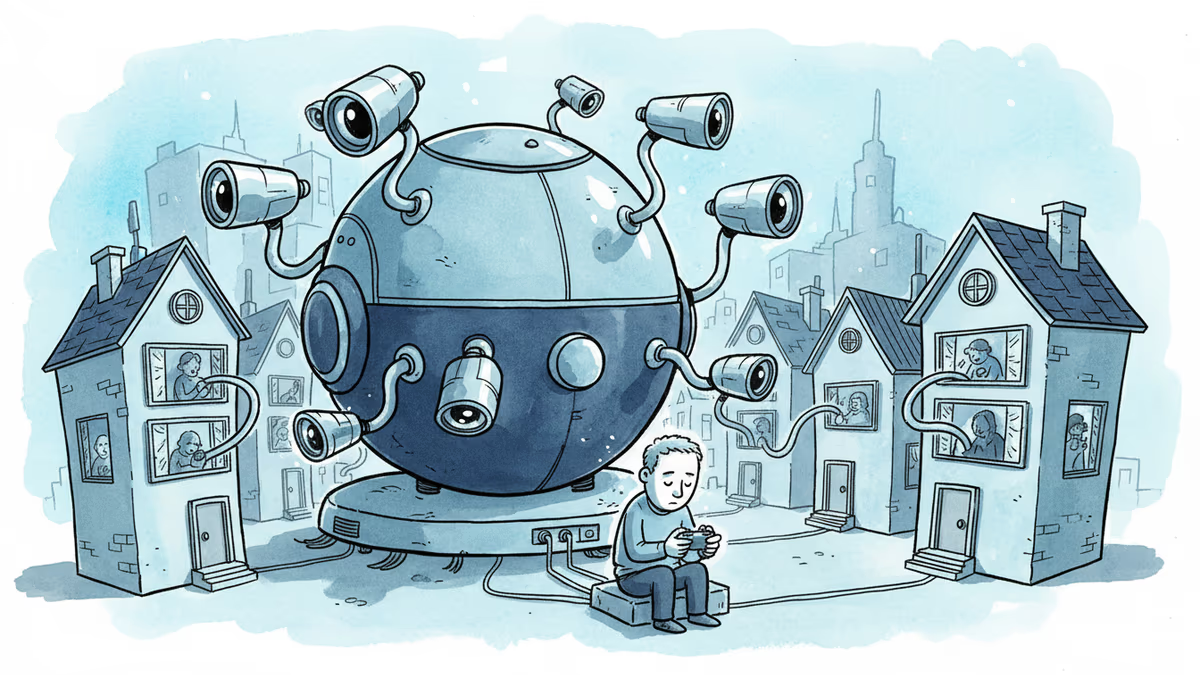
Imagine logging into a school application website and accidentally stumbling upon another family's most private information. Their child's full name, birth date, home address, and photo staring back at you. This wasn't a hypothetical scenario—it was reality for over one million students using Ravenna Hub.
The Florida-based platform, used by families to apply to thousands of schools nationwide, had a security flaw so basic it's almost insulting. Any logged-in user could access any other student's personal data by simply changing a number in their web browser's address bar.
We're not talking about just names here. The exposed data included children's photos, school details, parents' email addresses and phone numbers, even information about siblings. Everything a predator or identity thief could want, served up on a digital platter.
The Scary Simplicity of the Breach
The vulnerability was what cybersecurity experts call an "insecure direct object reference" or IDOR—essentially, the digital equivalent of a hotel giving you a master key instead of your room key.
VentureEd Solutions, which operates Ravenna Hub, assigned sequential numbers to student profiles. TechCrunch discovered that by creating a test account, they could access over 1.63 million records just by changing the profile number in the URL. It's like being able to flip through everyone's private diary just by turning pages.
The company's CEO, Nick Laird, fixed the bug the same day TechCrunch reported it. But when asked about notifying users or investigating potential unauthorized access, he went silent. No commitment to transparency. No third-party security audit details. Just radio silence.
The Trust Equation: Parents vs. Platforms
This breach highlights a fundamental disconnect in how different stakeholders view student data security.

Parents assume that if they're trusting a platform with their children's information, basic security is a given. "We're not cybersecurity experts," says one frustrated parent on social media. "We shouldn't have to audit every website before using it."
Schools often find themselves caught in the middle. They rely on third-party platforms for efficiency but lack the technical expertise to evaluate security measures. Many simply trust vendor assurances without independent verification.
Ed-tech companies face pressure to move fast and capture market share. Security audits cost money and slow development. The incentive structure often prioritizes features over protection.
Regulators are playing catch-up with technology that evolves faster than policy. FERPA, the main US law protecting student privacy, was written in 1974—decades before the internet existed.
The Broader Pattern: Children as Digital Guinea Pigs
This isn't an isolated incident. In January, mentoring site UStrive exposed student data. Before that, countless other educational platforms have suffered similar breaches. There's a troubling pattern: companies handling children's data often have the weakest security practices.
Why? Children can't sue. They don't have lawyers. They don't write angry letters to CEOs or organize boycotts. They're the perfect victims—vulnerable, voiceless, and valuable to data brokers.
Meanwhile, parents are caught between convenience and security. These platforms genuinely make school applications easier. But at what cost?
The Real Cost of "Moving Fast and Breaking Things"
Silicon Valley's motto of "move fast and break things" takes on a sinister meaning when applied to children's data. When Facebook breaks, adults might see ads for products they don't want. When school platforms break, children's safety is at risk.
The exposed information—names, photos, addresses, schools—creates a perfect storm for physical danger. Predators could use this data to approach children with detailed personal information, making them appear trustworthy.
Yet there's no requirement for ed-tech companies to undergo security audits. No mandatory breach notifications to parents. No standardized security requirements. It's essentially the Wild West, with children's privacy as collateral damage.
Authors
Related Articles
UK Visa Portal, a private immigration service mistaken for an official government site, has been exposing passport scans and selfies of over 100,000 applicants. The breach remains unpatched.
Okta CEO Todd McKinnon on why AI agents need identity management, the SaaSpocalypse threat, and why the kill switch might be the most important button in enterprise tech.
Iran and Israel are hacking civilian security cameras for military reconnaissance. How consumer surveillance devices became weapons of war.
A security researcher discovered he could access 7,000 DJI robot vacuums and peek into strangers' homes. This Valentine's Day revelation exposes the hidden privacy risks of our smart home obsession.
UK Visa Portal, a private immigration service mistaken for an official government site, has been exposing passport scans and selfies of over 100,000 applicants. The breach remains unpatched.
Okta CEO Todd McKinnon on why AI agents need identity management, the SaaSpocalypse threat, and why the kill switch might be the most important button in enterprise tech.
Iran and Israel are hacking civilian security cameras for military reconnaissance. How consumer surveillance devices became weapons of war.
A security researcher discovered he could access 7,000 DJI robot vacuums and peek into strangers' homes. This Valentine's Day revelation exposes the hidden privacy risks of our smart home obsession.
Thoughts
Share your thoughts on this article
Sign in to join the conversation