
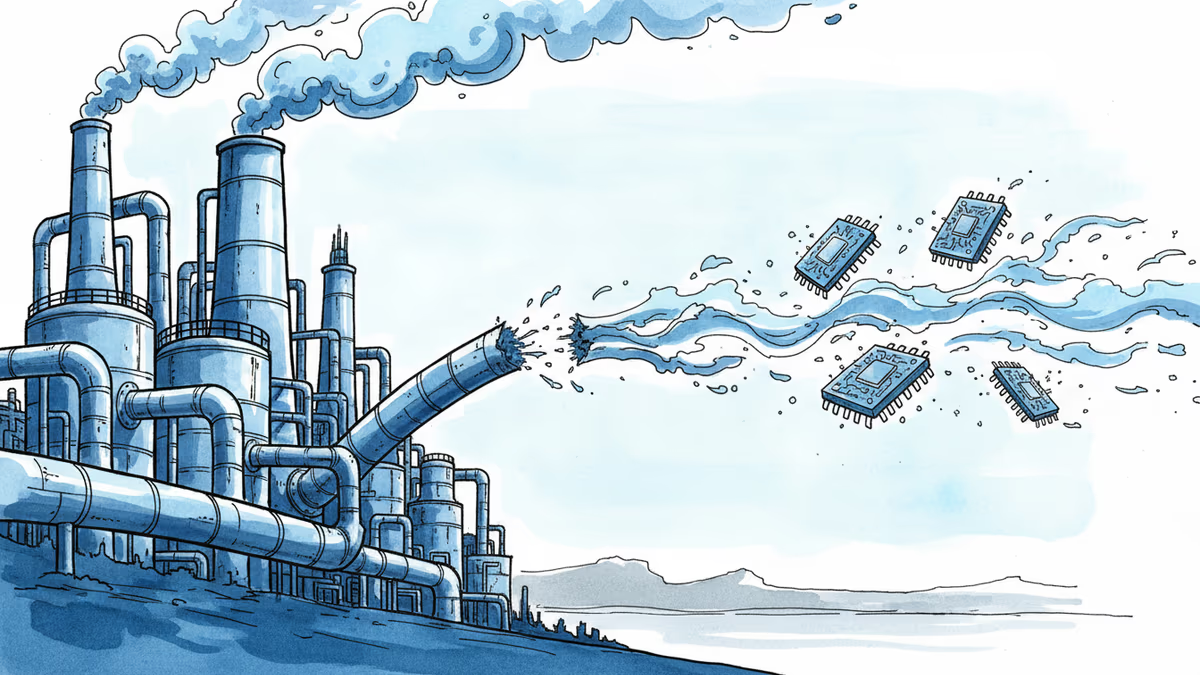
When Helium Runs Out, Chips Stop Running
Qatar's gas production halt threatens global semiconductor supply chains as the Middle East conflict disrupts critical materials. Samsung and SK Hynix face potential production slowdowns in a market already stretched by AI demand.
Two-Thirds of the World's Memory Just Got Vulnerable
Qatar declared force majeure on March 4, shutting down all natural gas production as Middle East attacks intensified. The problem? Qatar produces 38% of the world's helium—and there's no substitute for helium in semiconductor manufacturing.
This isn't just another supply chain hiccup. Helium manages heat, detects leaks, and maintains stable temperatures in chip fabrication equipment. When Samsung Electronics and SK Hynix produce two-thirds of global memory chips, Qatar's helium shutdown threatens the entire digital economy.
South Korea's Industry Ministry revealed the country depends on the Middle East for 14 other chipmaking materials, including bromine and inspection equipment. While alternative sources exist, semiconductor manufacturers can't simply switch suppliers overnight—new sources must undergo rigorous testing to meet strict purity standards.
The Corporate Confidence Game
SK Hynix maintains there's "almost no chance" of near-term operational impact, citing diverse supply chains and sufficient helium inventories. TSMC similarly downplays immediate concerns, while GlobalFoundries says it has mitigation plans ready.
But energy markets tell a different story. Brent crude hit $80 per barrel as Middle East tensions escalated. Semiconductor fabrication plants run massive clean rooms requiring constant electricity and cooling—making chipmakers extremely sensitive to energy price fluctuations. Higher energy costs inevitably translate to higher chip production costs.

The real vulnerability lies in the Strait of Hormuz, where much of the Persian Gulf's energy and petrochemical exports pass through. Extended shipping disruptions could slowly squeeze the global supply of industrial gases and chemicals that chipmakers depend on.
Perfect Storm Timing
This couldn't happen at a worse moment. AI computing demand has already stretched semiconductor supply chains thin, creating shortages across smartphones, laptops, and automobiles. Major tech companies like Amazon, Microsoft, and Nvidia had been positioning the UAE as an AI computing hub—plans now potentially derailed.
The semiconductor industry operates on just-in-time principles with limited inventory buffers. While major chipmakers maintain multiple suppliers and stockpile specialty materials, a prolonged Middle East conflict could gradually tighten the global supply of critical chipmaking materials.
The Concentration Risk Nobody Talked About
Here's what makes this crisis different: it exposes the hidden fragility of hyper-efficient global supply chains. Companies spent decades optimizing for cost and speed, concentrating production in specific regions for maximum efficiency.
Now that concentration creates systemic risk. One region's conflict can potentially slow global chip production, affecting everything from smartphones to data centers to electric vehicles.
Authors
Related Articles
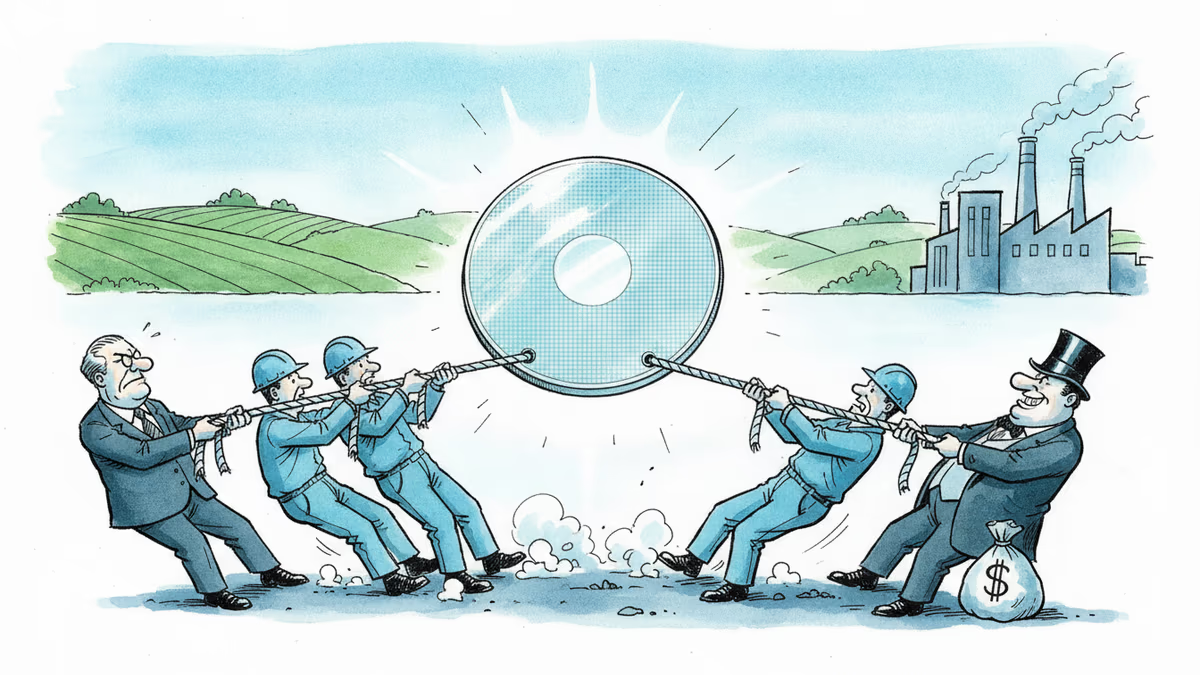
Samsung Electronics' union branch revealed that 84% of survey respondents oppose the government's roughly $290 billion (₩400 trillion) semiconductor megaproject in Gwangju. Government, management, the union and shareholders are all reading the same national project in sharply different ways.
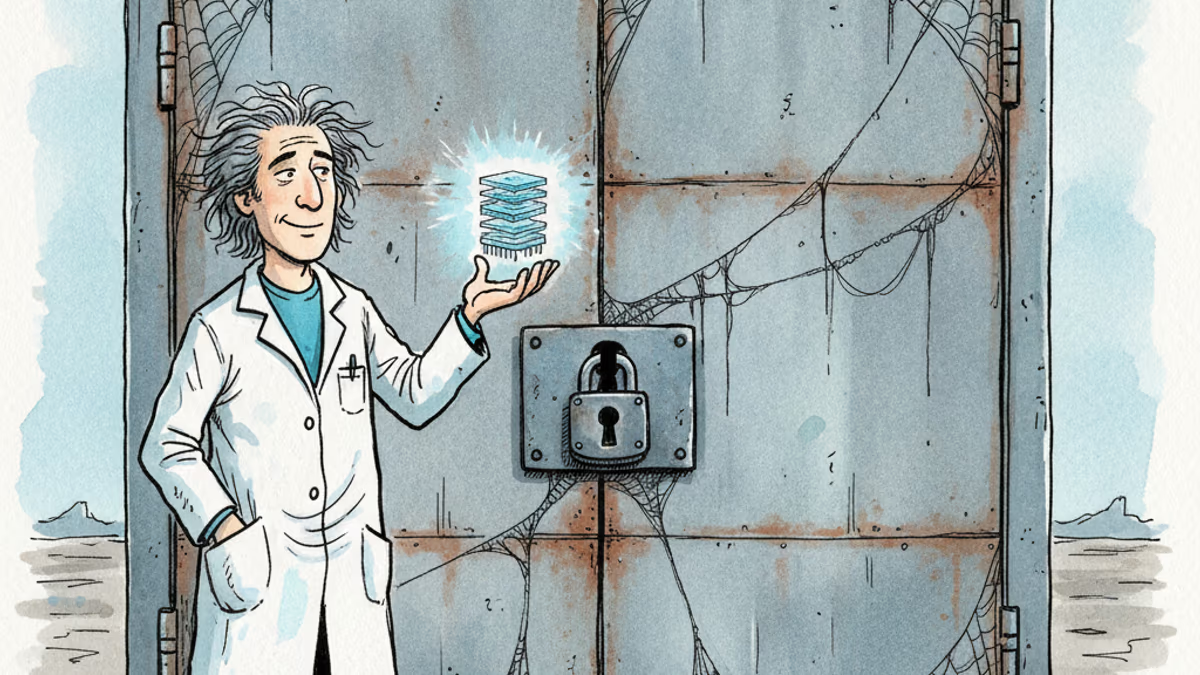
IBM has unveiled 'nanostack,' the world's first sub-1nm (0.7nm) chip research. Some say it adds a decade to Moore's Law; others say a lab demo is a long way from a fab. Either way, mass production isn't IBM's job.
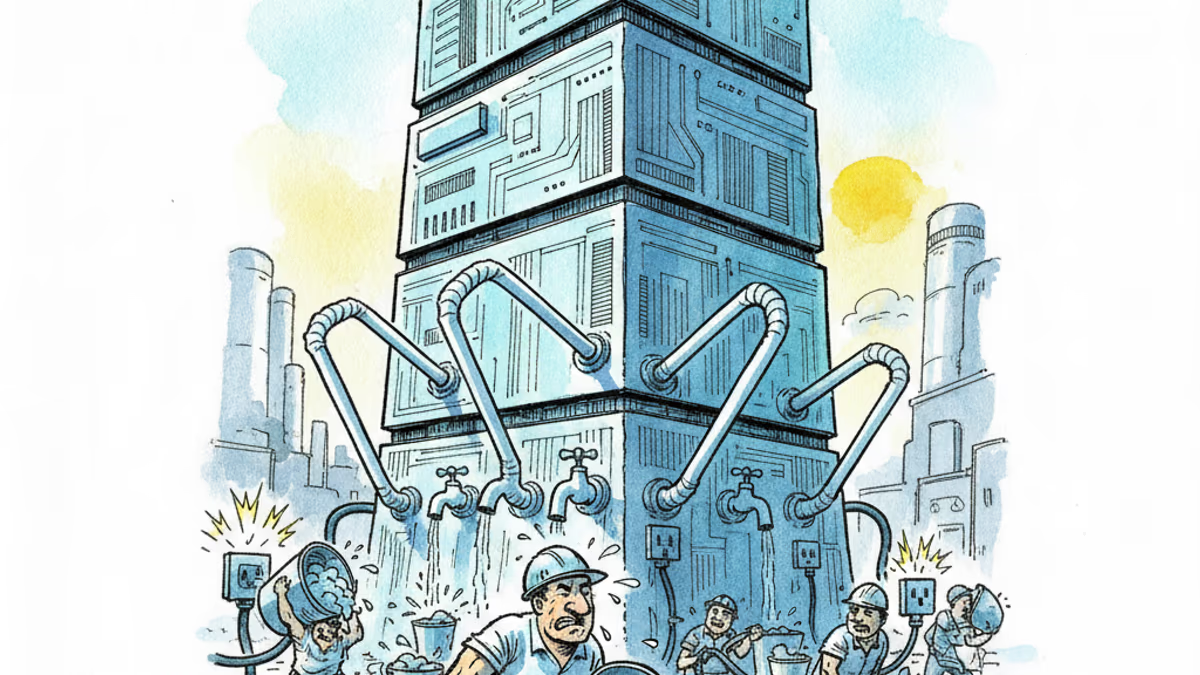
Samsung and SK unveiled a chip and AI investment package worth thousands of trillions of won on June 29. The headline number swings wildly by outlet, but the real contest isn't capital — it's water and power.
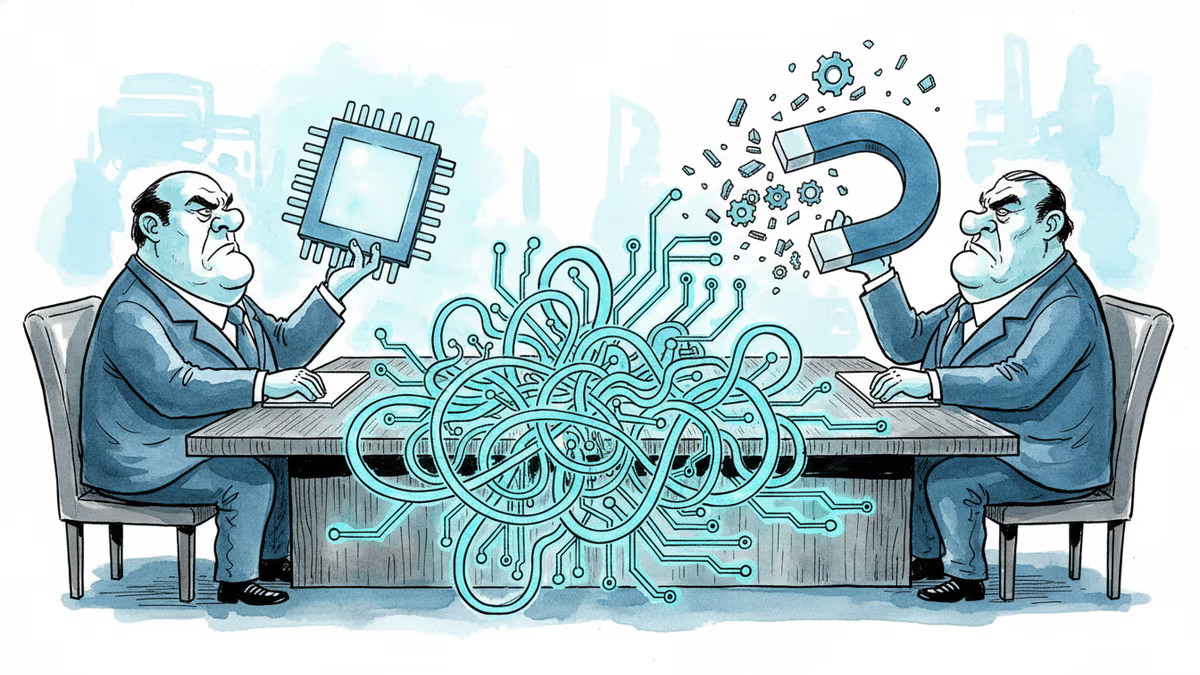
As Trump and Xi meet in Beijing, five tech flashpoints—chips, AI rivalry, supply chains, EVs, and rare earths—will quietly shape the global economy more than any diplomatic communiqué.
Samsung Electronics' union branch revealed that 84% of survey respondents oppose the government's roughly $290 billion (₩400 trillion) semiconductor megaproject in Gwangju. Government, management, the union and shareholders are all reading the same national project in sharply different ways.
IBM has unveiled 'nanostack,' the world's first sub-1nm (0.7nm) chip research. Some say it adds a decade to Moore's Law; others say a lab demo is a long way from a fab. Either way, mass production isn't IBM's job.
Samsung and SK unveiled a chip and AI investment package worth thousands of trillions of won on June 29. The headline number swings wildly by outlet, but the real contest isn't capital — it's water and power.
As Trump and Xi meet in Beijing, five tech flashpoints—chips, AI rivalry, supply chains, EVs, and rare earths—will quietly shape the global economy more than any diplomatic communiqué.
Thoughts
Share your thoughts on this article
Sign in to join the conversation