

Your SSD Now Costs 4x More. Here's Why.
Consumer SSD prices have surged up to 400% since late 2025. WD, Samsung, SanDisk all affected. We unpack the NAND supply crunch, tariff effects, and what comes next.
The WD Black SN850X 2TB SSD that cost $173 in 2024 will set you back $649 today. Same drive. Same specs. A completely different market.
According to The Verge, consumer SSD prices have surged across the board since November 2025. The Samsung 990 Pro 4TB jumped from $320 to nearly $1,000. External SanDisk SSDs at the Apple Store climbed 200% in a single month. Sony has suspended orders for its SD and CFexpress cards entirely. This isn't a supply blip. Something structural is happening.
The Squeeze: AI, Tariffs, and a Shrinking Supply
To understand the spike, you need to understand how NAND flash memory works as a market. A handful of companies — Samsung, SK Hynix, Micron, and Kioxia — control the overwhelming majority of global NAND supply. That concentration means price swings are sharp and synchronized.
2023 and 2024 were a golden era for buyers. An oversupply glut pushed prices to historic lows, and consumers snapped up cheap SSDs. But manufacturers responded by cutting production. Now those cuts have caught up with the market, inventories are lean, and demand hasn't softened — it's accelerated.
The culprit pulling supply away from consumers? AI infrastructure. Data centers building out storage for large language models and AI workloads are consuming enterprise-grade NAND at a pace that's crowding out the consumer tier. When hyperscalers and individual PC builders compete for the same upstream supply, the hyperscalers win.
Layered on top: the Trump administration's tariff regime. Components routed through Taiwan and China now carry additional import costs that flow directly into U.S. retail prices. RAM is experiencing the same upward pressure for the same reasons.

Who Wins, Who Loses
The price surge isn't uniformly bad news. Samsung and SK Hynix — the two dominant NAND producers — stand to benefit significantly. Higher NAND prices translate to improved margins in their semiconductor divisions, and analysts have flagged the price recovery as a positive catalyst for both stocks. If you hold positions in either company, this cycle is worth watching closely.
For consumers and small businesses, the math is painful. A content creator budgeting for a new editing workstation, a PC builder pricing out a gaming rig, a small studio expanding its NAS — all of them are looking at storage costs that have doubled or tripled in under six months. The era of "just throw a 4TB SSD at it" as a casual solution is, at least for now, over.
Sony's decision to suspend card orders signals something beyond price adjustment. When manufacturers pause sales rather than simply raise prices, it suggests the supply-demand imbalance is severe enough that they'd rather manage allocation than risk reputational damage from chronic stockouts.
Should You Buy Now or Wait?
Market analysts broadly expect some price stabilization by late 2025 into early 2026, as new NAND capacity comes online and the initial tariff shock gets absorbed into supply chains. But NAND cycles have a habit of running longer than forecasts suggest, and two wildcards remain: whether AI storage demand continues accelerating, and how trade policy evolves.
The honest answer is that nobody knows with confidence. What we do know is that the $0.03–0.05 per gigabyte pricing consumers enjoyed in 2024 was historically anomalous. A return to that floor isn't guaranteed.
There's a deeper consumer rights question embedded in all of this. Cloud storage prices have been creeping up. Local SSD prices have now spiked dramatically. The two main options for storing your data are both getting more expensive simultaneously — and the average consumer had no warning, no hedge, and no alternative.
Authors
Related Articles
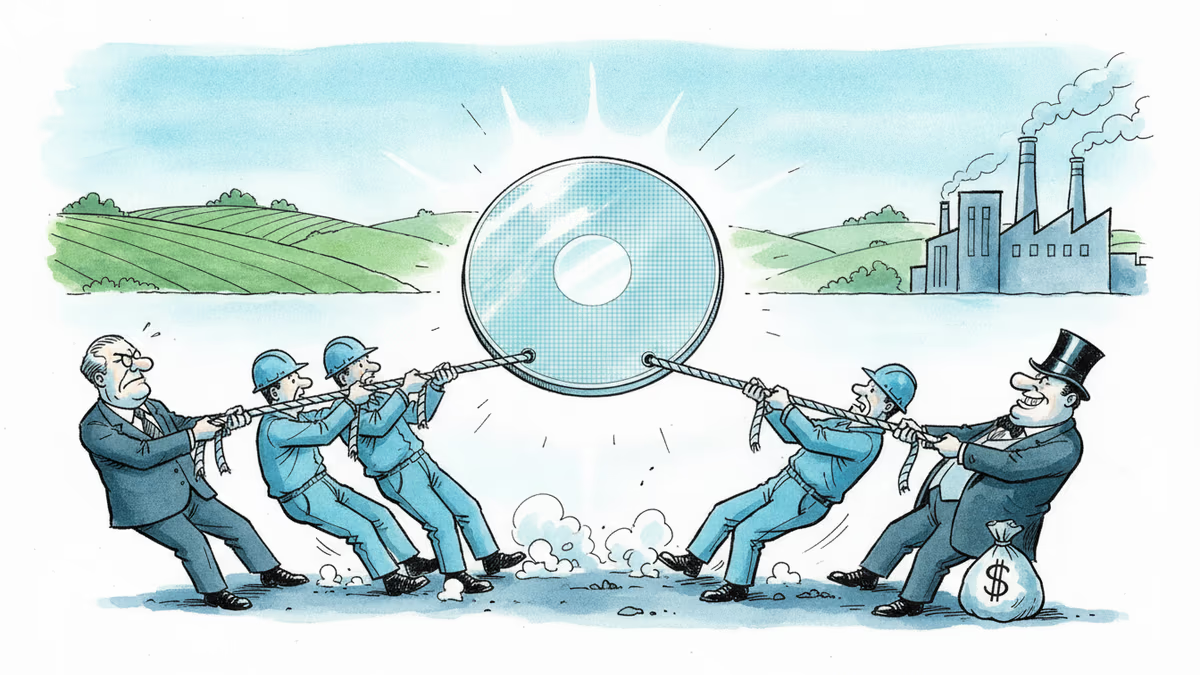
Samsung Electronics' union branch revealed that 84% of survey respondents oppose the government's roughly $290 billion (₩400 trillion) semiconductor megaproject in Gwangju. Government, management, the union and shareholders are all reading the same national project in sharply different ways.
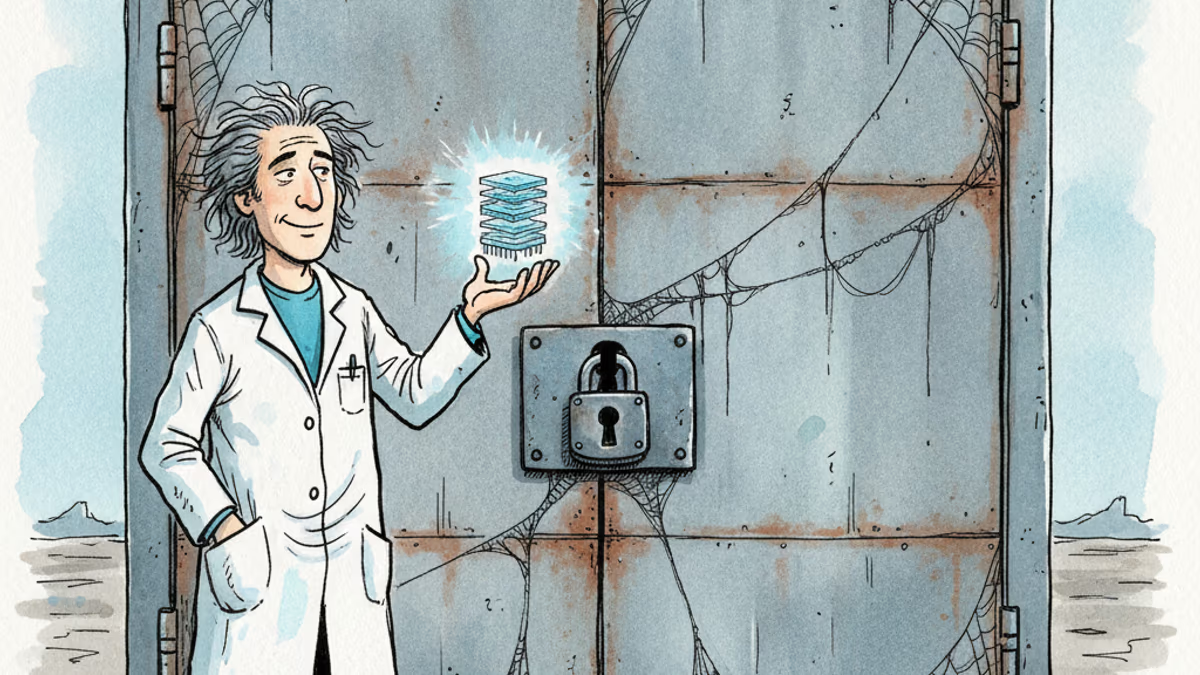
IBM has unveiled 'nanostack,' the world's first sub-1nm (0.7nm) chip research. Some say it adds a decade to Moore's Law; others say a lab demo is a long way from a fab. Either way, mass production isn't IBM's job.
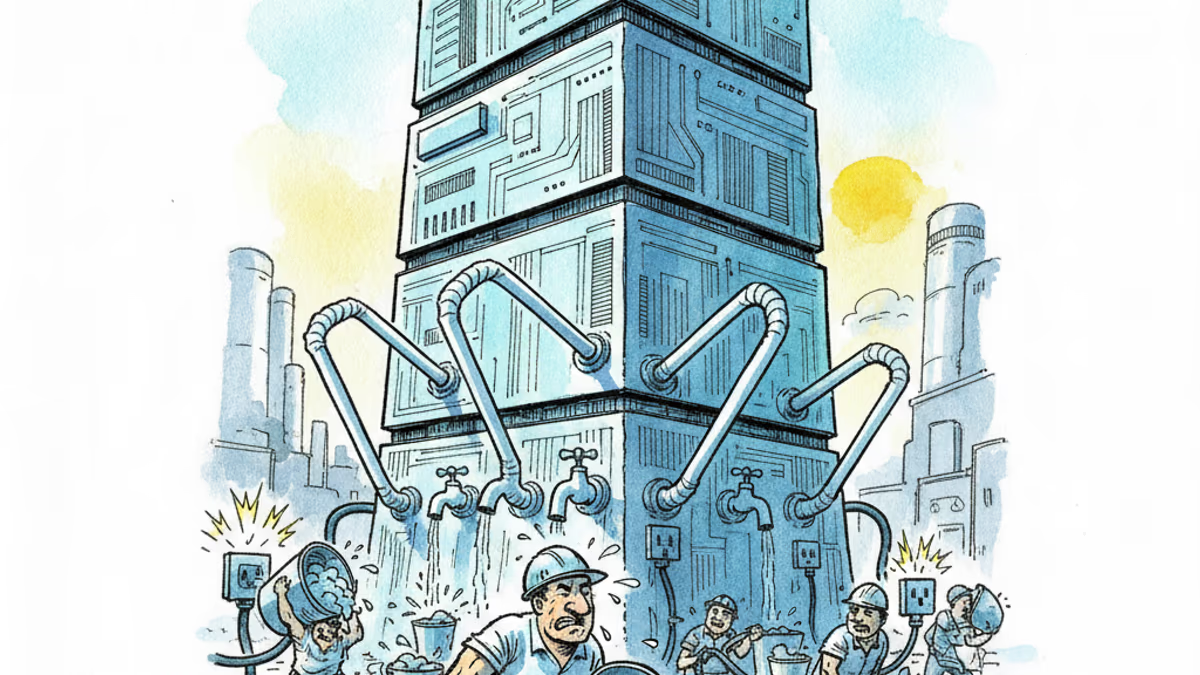
Samsung and SK unveiled a chip and AI investment package worth thousands of trillions of won on June 29. The headline number swings wildly by outlet, but the real contest isn't capital — it's water and power.

As Trump and Xi meet in Beijing, five tech flashpoints—chips, AI rivalry, supply chains, EVs, and rare earths—will quietly shape the global economy more than any diplomatic communiqué.
Samsung Electronics' union branch revealed that 84% of survey respondents oppose the government's roughly $290 billion (₩400 trillion) semiconductor megaproject in Gwangju. Government, management, the union and shareholders are all reading the same national project in sharply different ways.
IBM has unveiled 'nanostack,' the world's first sub-1nm (0.7nm) chip research. Some say it adds a decade to Moore's Law; others say a lab demo is a long way from a fab. Either way, mass production isn't IBM's job.
Samsung and SK unveiled a chip and AI investment package worth thousands of trillions of won on June 29. The headline number swings wildly by outlet, but the real contest isn't capital — it's water and power.
As Trump and Xi meet in Beijing, five tech flashpoints—chips, AI rivalry, supply chains, EVs, and rare earths—will quietly shape the global economy more than any diplomatic communiqué.
Thoughts
Share your thoughts on this article
Sign in to join the conversation