
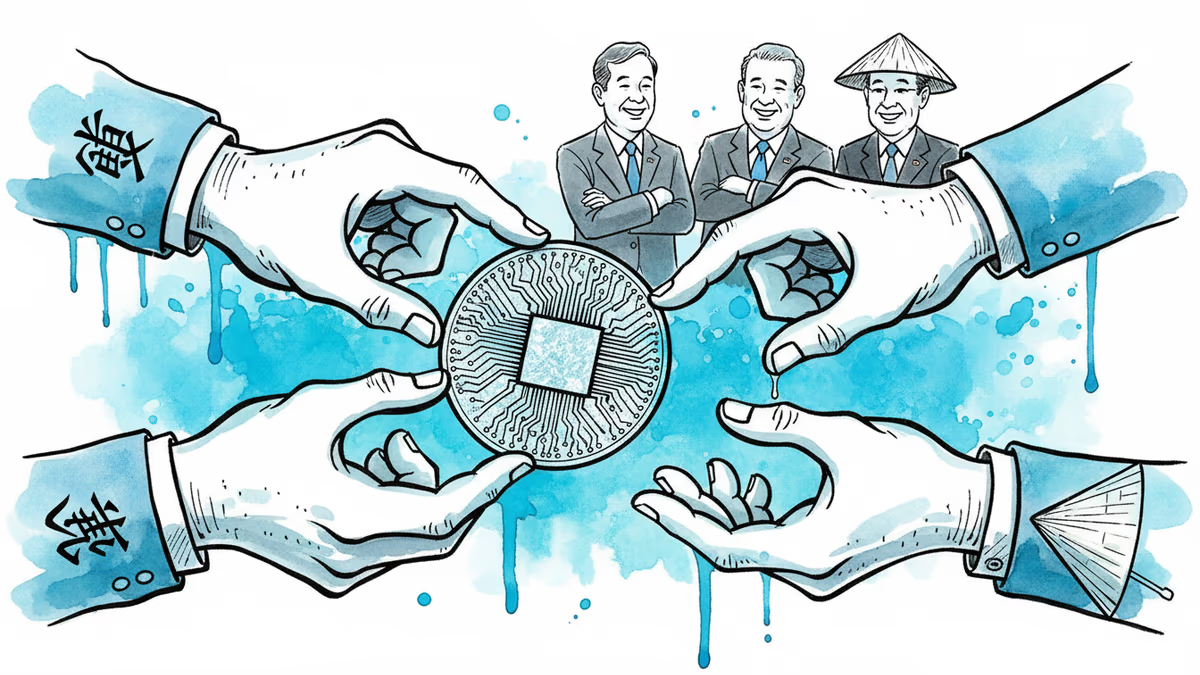
Can Vietnam Replace China as America's Chip Manufacturing Hub?
Trump promised to remove Vietnam from export control lists just weeks after the country broke ground on its first chip factory. A strategic pivot 70 years in the making could reshape global semiconductor supply chains.
Five weeks. That's how long it took between Vietnam breaking ground on its first domestically-owned chip factory and Donald Trump promising to remove the country from a Cold War-era export control list that has restricted its access to advanced American technology for 70 years.
The timing wasn't coincidental. It was choreographed.
The Perfect Diplomatic Blitz
Vietnam's top leader To Lam didn't just show up in Washington with empty hands. In the five weeks leading up to his February 20 White House meeting, Vietnamese officials orchestrated a semiconductor charm offensive that would make any lobbyist jealous.
January 15: Prime Minister Pham Minh Chinh meets with ASML executives—the Dutch company whose machines are essential for advanced chipmaking and whose most powerful equipment the U.S. has banned from reaching China.
January 17: Finance Minister Nguyen Van Thang holds separate talks with the same ASML delegation about establishing a training center in Vietnam.
February 20: Trump promises Vietnam's removal from export control lists, clearing the path for Hanoi to access "high-end American tools and software essential for advanced chipmaking."
"For the semiconductor supply chain, this decision signals a transition for Vietnam from a back-end assembly hub to an upstream manufacturing and design partner," Sujai Shivakumar, director of the Renewing American Innovation project at the Center for Strategic and International Studies, told Rest of World.
Building From Scratch, Not Chasing Perfection

While Taiwan Semiconductor and Samsung battle over 2-nanometer and 3-nanometer chips—the bleeding edge of semiconductor technology—Vietnam is taking a different approach. The state-owned Viettel facility aims to produce 32-nanometer chips by late 2027, the kind that power cars, telecom networks, and industrial equipment.
It's not about catching up; it's about building an industry from zero. Vietnam has 7,000 chip engineers today and wants 50,000 by 2030. Qualcomm has opened its third-largest global research center there. Amkor has invested $1.6 billion in a packaging plant—its largest anywhere.
Analysts expect Vietnam's share of global chip packaging to jump from 1% in 2022 to almost 9% by 2032.
The Geopolitical Chess Game
For Washington, Vietnam represents something more valuable than just another manufacturing hub—it's a strategic counterweight to China in the Indo-Pacific. For Hanoi, it's about winning "a seat at the table of the world's most valuable industry," as one analyst put it.
The Biden administration elevated Vietnam to a comprehensive strategic partnership in 2023. Trump has doubled down, continuing where his predecessor left off. The message is clear: countries willing to align with U.S. strategic interests can access American technology that remains off-limits to China.
John Neuffer, president of the Semiconductor Industry Association, told Vietnamese officials during a January visit: "Each time I come back, I am genuinely impressed by the progress you have made." He name-dropped Intel, Samsung, Qualcomm, Amkor, and Marvell as association members already operating in Vietnam.
The Ripple Effect
Every country caught between Washington and Beijing is now studying Vietnam's playbook. The formula appears straightforward: make a clear strategic choice, time your moves perfectly, and build domestic capabilities simultaneously.
But there's a deeper question lurking beneath the surface. Building a chip industry requires decades of investment, training, and infrastructure. Vietnam is betting that the U.S.-China rivalry will last long enough to justify that timeline.
Authors
Related Articles
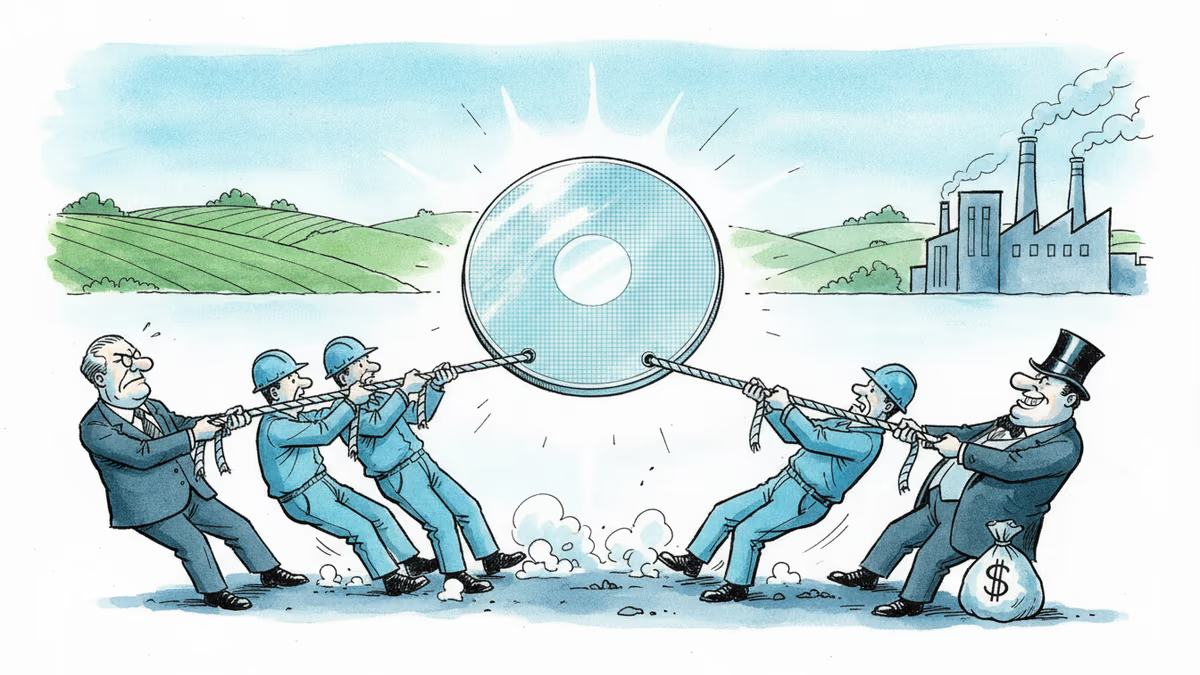
Samsung Electronics' union branch revealed that 84% of survey respondents oppose the government's roughly $290 billion (₩400 trillion) semiconductor megaproject in Gwangju. Government, management, the union and shareholders are all reading the same national project in sharply different ways.
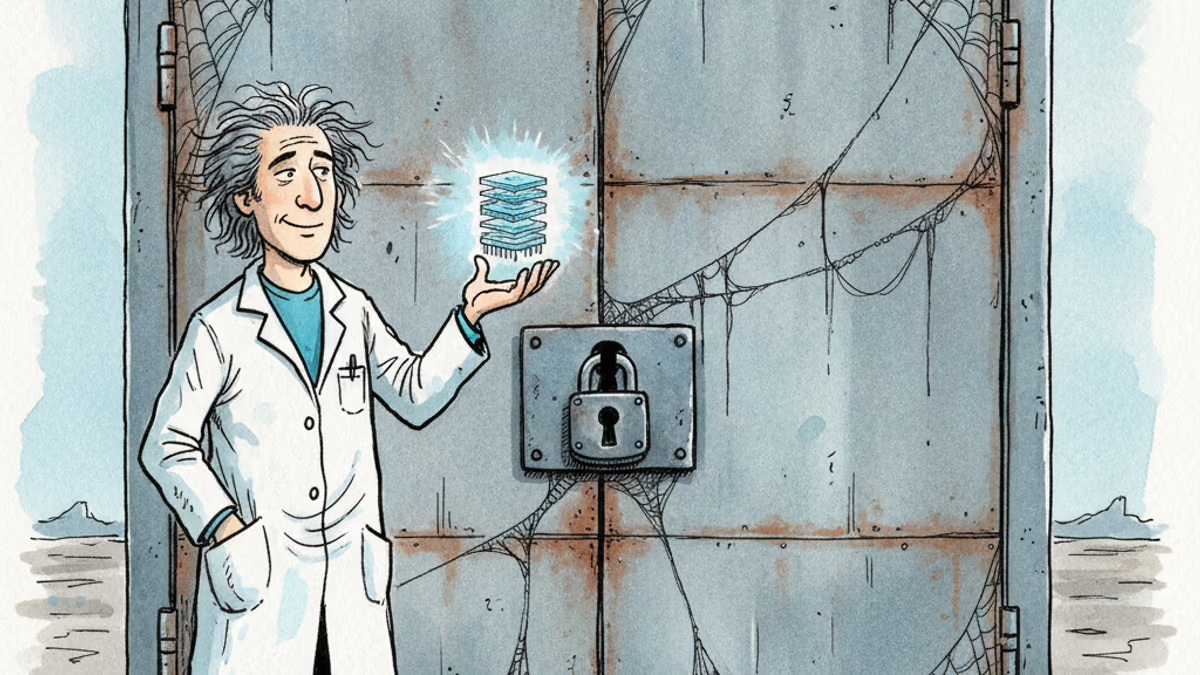
IBM has unveiled 'nanostack,' the world's first sub-1nm (0.7nm) chip research. Some say it adds a decade to Moore's Law; others say a lab demo is a long way from a fab. Either way, mass production isn't IBM's job.
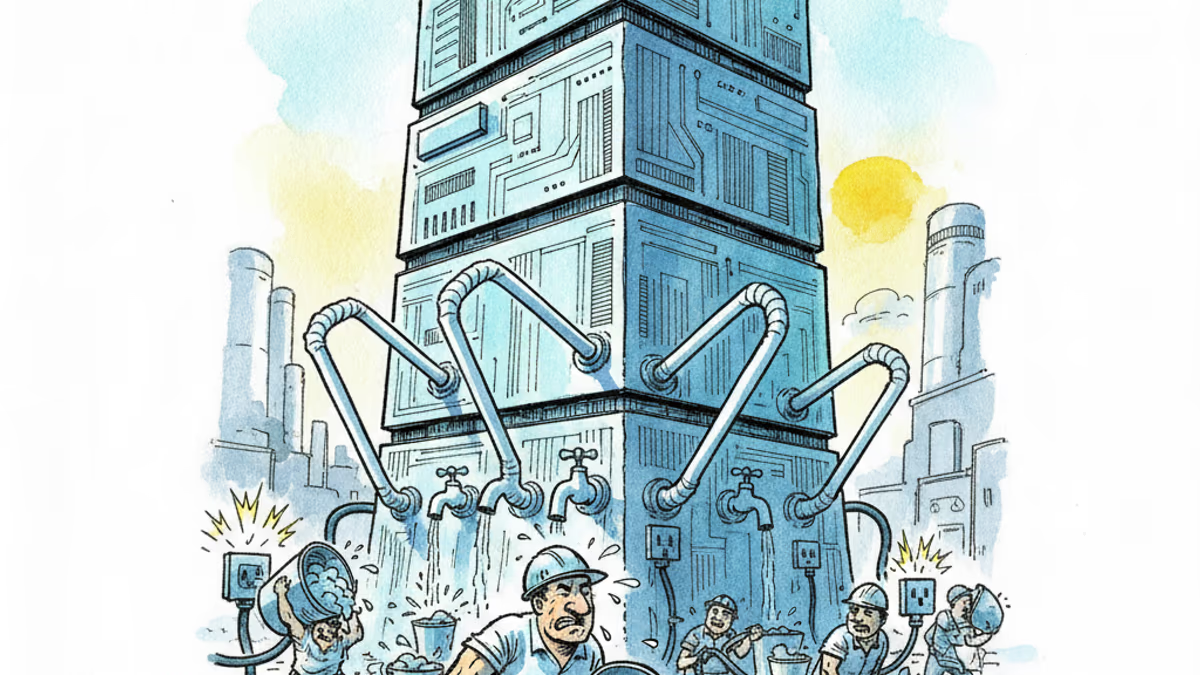
Samsung and SK unveiled a chip and AI investment package worth thousands of trillions of won on June 29. The headline number swings wildly by outlet, but the real contest isn't capital — it's water and power.

As Trump and Xi meet in Beijing, five tech flashpoints—chips, AI rivalry, supply chains, EVs, and rare earths—will quietly shape the global economy more than any diplomatic communiqué.
Samsung Electronics' union branch revealed that 84% of survey respondents oppose the government's roughly $290 billion (₩400 trillion) semiconductor megaproject in Gwangju. Government, management, the union and shareholders are all reading the same national project in sharply different ways.
IBM has unveiled 'nanostack,' the world's first sub-1nm (0.7nm) chip research. Some say it adds a decade to Moore's Law; others say a lab demo is a long way from a fab. Either way, mass production isn't IBM's job.
Samsung and SK unveiled a chip and AI investment package worth thousands of trillions of won on June 29. The headline number swings wildly by outlet, but the real contest isn't capital — it's water and power.
As Trump and Xi meet in Beijing, five tech flashpoints—chips, AI rivalry, supply chains, EVs, and rare earths—will quietly shape the global economy more than any diplomatic communiqué.
Thoughts
Share your thoughts on this article
Sign in to join the conversation