
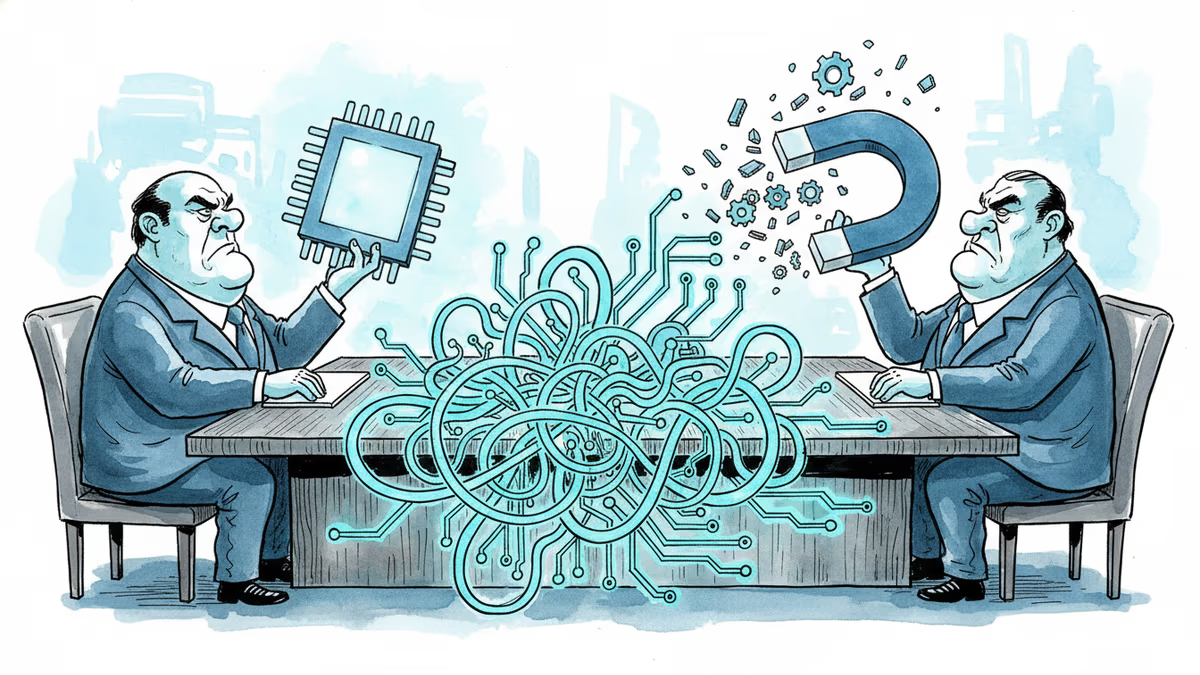
Five Tech Deals That Could Come Out of Beijing
As Trump and Xi meet in Beijing, five tech flashpoints—chips, AI rivalry, supply chains, EVs, and rare earths—will quietly shape the global economy more than any diplomatic communiqué.
Jensen Huang has been saying the same thing to Washington for months: every chip you block from China is a chip Huawei learns to build without you. This week in Beijing, that argument gets its most consequential test yet.
Donald Trump and Xi Jinping are meeting in the Chinese capital against a backdrop of war in Iran and rising tension over Taiwan. But beneath the geopolitical theater, five technology disputes will quietly determine more about the shape of the global economy than any diplomatic communiqué. Here's what's actually on the table.
The Chip Standoff Nobody Has Solved
The Nvidia problem sits at the top of the agenda—and it's thornier than it looks. U.S. export controls on advanced AI chips have steadily eroded Nvidia's dominance in China, the world's second-largest AI market. In January, the Trump administration offered a workaround: Nvidia could sell its H200 chips to China, provided Washington takes a 25% cut of the revenue.
China said no. Commerce Secretary Howard Lutnick confirmed in April that the deal has stalled over Chinese government objections. Beijing has publicly condemned U.S. chip restrictions as an "abuse" of export controls, while simultaneously pushing its own tech firms to wean themselves off American silicon. DeepSeek has engineered its AI models to run on domestic chips. Huawei's AI processors are gaining ground.
The paradox is almost elegant: the tighter Washington squeezes, the faster Beijing builds the alternative infrastructure that makes the squeeze irrelevant. Nvidia's CEO has lobbied hard for greater export access, arguing that losing China doesn't protect American AI leadership—it just accelerates Chinese self-sufficiency. Whether Beijing and Washington can find a chip arrangement that satisfies both domestic political audiences is the first test of this summit.
Competing on AI, Cooperating on Its Risks
Here's the unusual part: even as the two countries race to dominate AI, they're reportedly exploring a framework to manage its dangers together. According to The Wall Street Journal, both governments are considering a recurring dialogue on AI risks—model misbehaviors, autonomous weapons, AI-enabled attacks by non-state actors.

The logic isn't goodwill. It's mutual vulnerability. A rogue AI system, or an AI-powered cyberattack by a third party, doesn't distinguish between American and Chinese infrastructure. Some risks are genuinely shared.
The rivalry, however, isn't cooling. OpenAI, Anthropic, and Trump administration officials have recently accused Chinese AI labs of using "distillation"—training models on the outputs of more capable systems—to replicate American AI capabilities without building them from scratch. The technique is standard practice across the industry, and the Chinese government denies any illicit use. But the accusation signals something important: the U.S. is struggling to define what counts as fair competition in AI, and that definitional vacuum is itself a source of instability.
The Compliance Trap Closing Around Global Companies
For multinationals operating in both markets, the supply chain chapter of this summit may be the most immediately consequential. The U.S. has been pressuring companies to reduce reliance on Chinese supply chains. China responded in April with new regulations that allow authorities to penalize foreign companies that "discriminatorily" stop trading with Chinese firms—and to freeze assets or impose exit bans on foreign individuals who help enforce what Beijing calls "improper extraterritorial jurisdiction" against Chinese companies.
The enforcement mechanisms remain unclear. But the intent is not: China is building legal leverage to make compliance with American supply chain rules costly. Scott Bessent, the U.S. Treasury Secretary, raised concerns about these regulations directly with Chinese Vice Premier He Lifeng ahead of the summit.
For companies with significant exposure on both sides—think semiconductor equipment makers, contract manufacturers, cloud providers—this creates a genuine compliance trap. Following Washington's rules could trigger Beijing's penalties, and vice versa. The summit won't resolve this tension, but it may signal how aggressively each side intends to enforce it.
EVs, Rare Earths, and the Art of the Trade-Off
The electric vehicle standoff illustrates how economic and political logic can diverge sharply. The U.S. has effectively shut out Chinese EVs through tariffs and regulations—a policy that has contributed to slower EV adoption domestically. In January, Trump floated the idea of allowing Chinese automakers into the U.S. market if they build factories there and hire American workers. Lawmakers from both parties pushed back, citing protection of the American auto industry.
The irony: American carmakers are simultaneously exploring licenses for Chinese software and battery technology to stay competitive in EV manufacturing. The competitor whose cars you ban may be the partner whose technology you need.
Rare earths are China's bluntest instrument. Beijing controls the processing of elements critical to electronics, aircraft, and EVs—effectively a chokepoint in global manufacturing. In April 2025, China restricted rare earth exports in retaliation for U.S. tariffs. Shipments resumed after agreements were reached, but the episode demonstrated how quickly the lever can be pulled. The U.S. has responded with a $12 billion initiative to stockpile critical materials and fund domestic mining and processing capacity. Building that alternative supply chain, however, takes years. In the interim, China holds the card.
This content is AI-generated based on source articles. While we strive for accuracy, errors may occur. We recommend verifying with the original source.
Related Articles
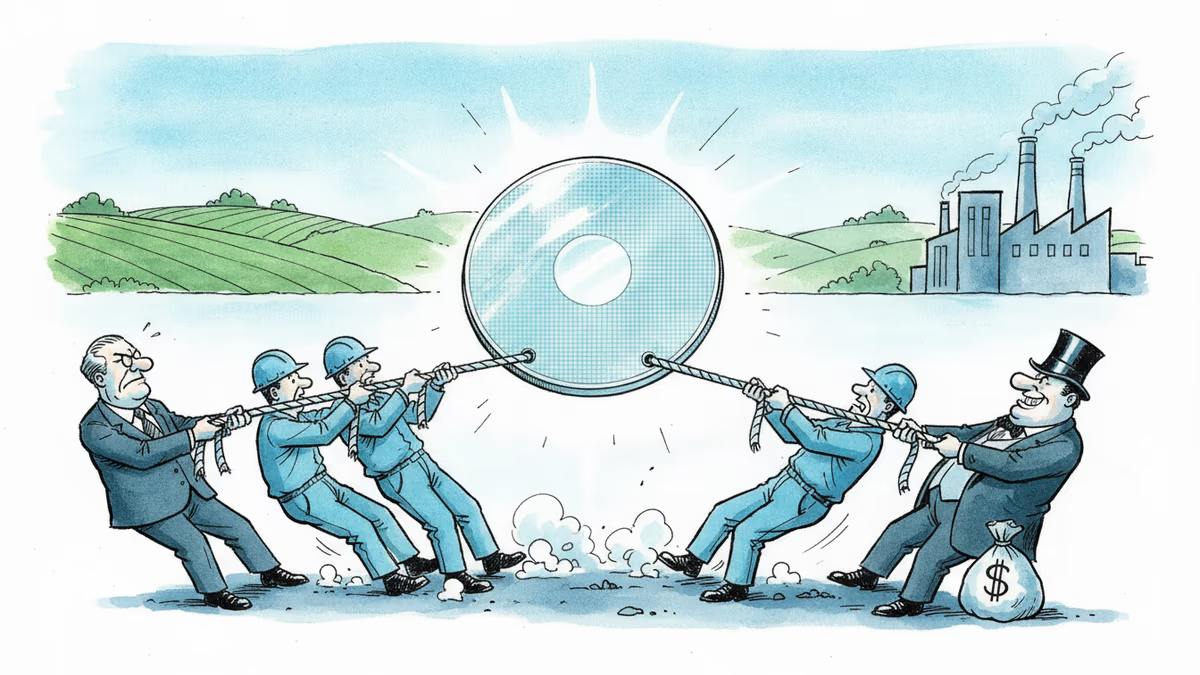
Samsung Electronics' union branch revealed that 84% of survey respondents oppose the government's roughly $290 billion (₩400 trillion) semiconductor megaproject in Gwangju. Government, management, the union and shareholders are all reading the same national project in sharply different ways.
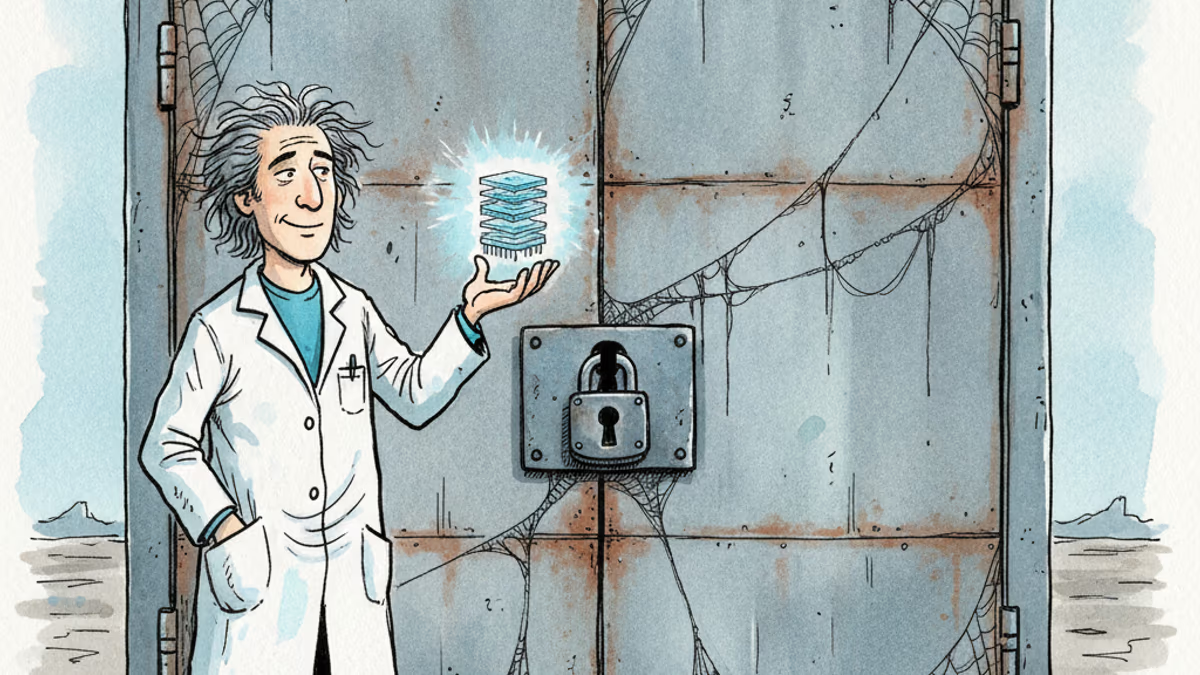
IBM has unveiled 'nanostack,' the world's first sub-1nm (0.7nm) chip research. Some say it adds a decade to Moore's Law; others say a lab demo is a long way from a fab. Either way, mass production isn't IBM's job.
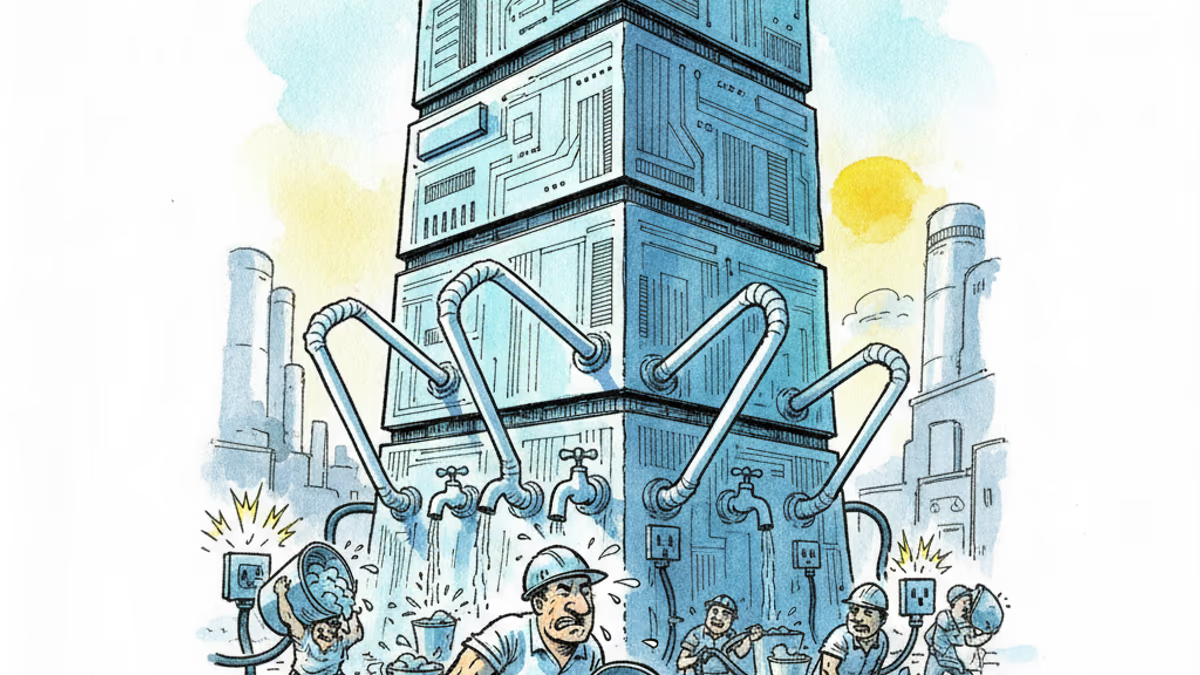
Samsung and SK unveiled a chip and AI investment package worth thousands of trillions of won on June 29. The headline number swings wildly by outlet, but the real contest isn't capital — it's water and power.
Consumer SSD prices have surged up to 400% since late 2025. WD, Samsung, SanDisk all affected. We unpack the NAND supply crunch, tariff effects, and what comes next.
Samsung Electronics' union branch revealed that 84% of survey respondents oppose the government's roughly $290 billion (₩400 trillion) semiconductor megaproject in Gwangju. Government, management, the union and shareholders are all reading the same national project in sharply different ways.
IBM has unveiled 'nanostack,' the world's first sub-1nm (0.7nm) chip research. Some say it adds a decade to Moore's Law; others say a lab demo is a long way from a fab. Either way, mass production isn't IBM's job.
Samsung and SK unveiled a chip and AI investment package worth thousands of trillions of won on June 29. The headline number swings wildly by outlet, but the real contest isn't capital — it's water and power.
Consumer SSD prices have surged up to 400% since late 2025. WD, Samsung, SanDisk all affected. We unpack the NAND supply crunch, tariff effects, and what comes next.
Thoughts
Share your thoughts on this article
Sign in to join the conversation