
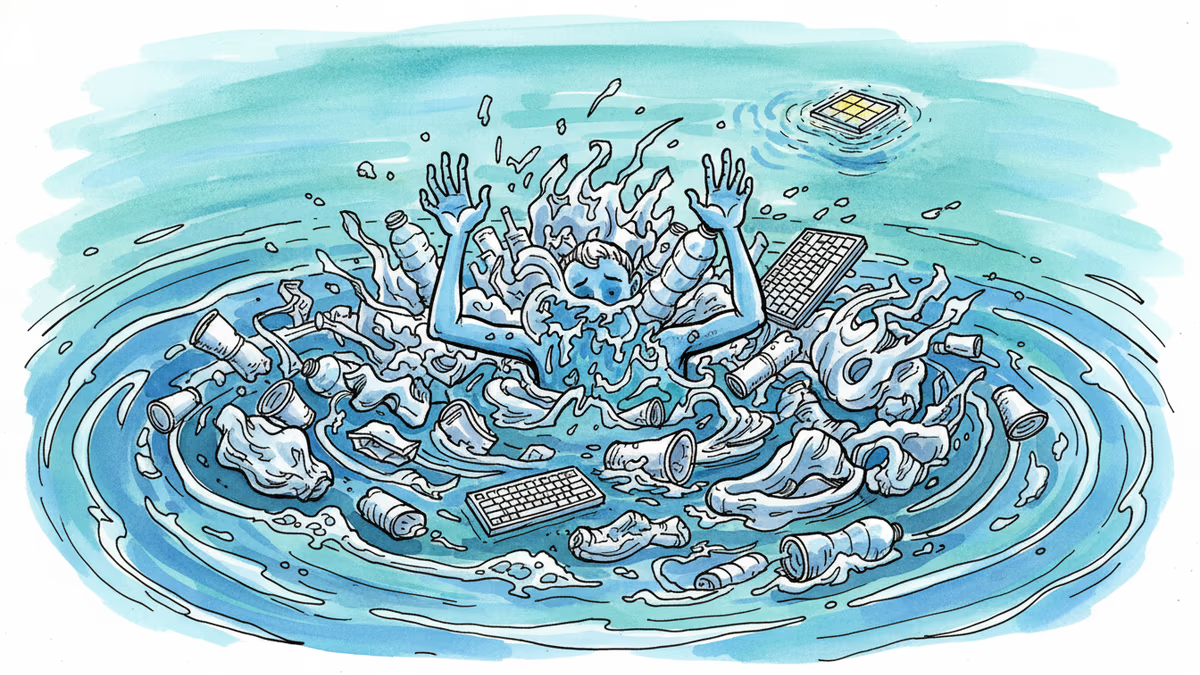
The $4 Gas Is Just the Warning Shot
Oil prices topping $100 a barrel is making headlines. But the quieter crisis—plastic feedstocks—could hit consumers harder and last far longer. Here's why replacing plastic is harder than replacing fossil fuels.
Look around you right now. The chair you're sitting on. The cup next to your keyboard. The frame of your glasses. The keys you're typing on. All plastic. All made from oil.
The Crisis Behind the Crisis
Since the war in Iran closed the Strait of Hormuz, the story everyone's been watching is gasoline — now averaging over $4 a gallon in the US, its highest since 2022, with crude oil crossing $100 a barrel. That's a real and immediate pain point for millions of households.
But there's a second wave building, and it's quieter, slower, and in some ways harder to solve. The same oil disruption that's spiking your gas bill is starting to strangle the supply of petrochemical feedstocks — the raw materials that make plastic.
Here's the mechanism: crude oil isn't just burned for energy. When it's refined, it separates into dozens of chemical fractions. One of them, naphtha, is the key building block for most plastics. The Middle East produces roughly 20% of global naphtha and supplies about 40% of Asia's market. That supply is now constrained.
In Asia, naphtha prices have surged 50% in a single month. Polypropylene — the plastic in your food containers, bottle caps, and car dashboards — is already climbing in price. India's largest water bottle manufacturer just announced an 11% price hike after its packaging costs jumped over 70%, according to Reuters. Manufacturers are burning through their stockpiles. Industry observers expect those buffers to run out within weeks.
Why This Hits Americans Especially Hard
The US is the world's most plastic-intensive economy, and that's not a metaphor. According to a 2022 OECD report, the average American consumed over 250 kilograms of new plastics in 2019. The global average? 60 kilograms. That's a 4x gap — meaning supply shocks ripple through American daily life with unusual force.
Toys could be more expensive by the holiday season. Medical supply chains — already strained from pandemic-era disruptions — face new pressure. Packaging costs for food and consumer goods are rising. These aren't abstract market signals; they're the stuff of grocery bills and Amazon carts.

For businesses, the math is getting uncomfortable fast. Companies that relied on cheap plastic inputs — from automotive manufacturers to consumer goods brands — are facing a cost structure that hasn't changed this quickly since the 2022 energy spike.
The Alternatives Aren't Ready
Here's where the plastic problem diverges sharply from the energy problem.
When oil prices spike, there's at least a narrative: solar panels get more attractive, EV adoption accelerates, battery investment flows in. The alternatives exist, they're scaling, and the policy infrastructure is in place to support them.
With plastics, the story is different. Bio-based plastics — made from plant sugars and agricultural materials — do exist. But as of 2025, global plastics production totals over 431 million metric tons per year, and bio-based or biodegradable plastics account for just 0.5% of that. The optimistic projection is 1% by 2030. That's not a transition. That's a rounding error.
Scaling bio-plastics comes with its own complications: they're significantly more expensive than fossil-derived alternatives, and expanding agricultural feedstocks too aggressively could compete with food production and drive its own environmental costs.
Recycling isn't the cavalry either. Mechanical recycling — the standard method for bottles and coffee cups — degrades material quality over repeated cycles. Chemical recycling facilities can be highly polluting, and the share of plastics that actually re-enter the supply chain as new plastic remains vanishingly small. The gap between recycling rhetoric and recycling reality has rarely been more visible.
And critically, not all plastic is discretionary. Medical devices, surgical tools, pharmaceutical packaging, semiconductor manufacturing — these applications can't be substituted quickly or cheaply. Plastic isn't just in your to-go cup. It's in the IV bag keeping someone alive.
Three Ways to Read This
For consumers: The price signals are coming. Expect cost increases across packaged goods, electronics, automotive parts, and anything that ships in plastic packaging. The timeline is weeks to months, not years.
For investors and businesses: Companies with diversified or domestic supply chains for petrochemical inputs are better positioned. The bio-plastics sector — long underfunded relative to its potential — may finally attract serious capital. But the technology isn't there yet to justify near-term bets on substitution.
For policymakers: The energy transition conversation has largely focused on decarbonizing electricity and transport. This crisis exposes a blind spot: the plastics economy has no equivalent policy roadmap. The Global Plastics Treaty negotiations, already fraught, now face a more urgent backdrop.
Authors
Related Articles
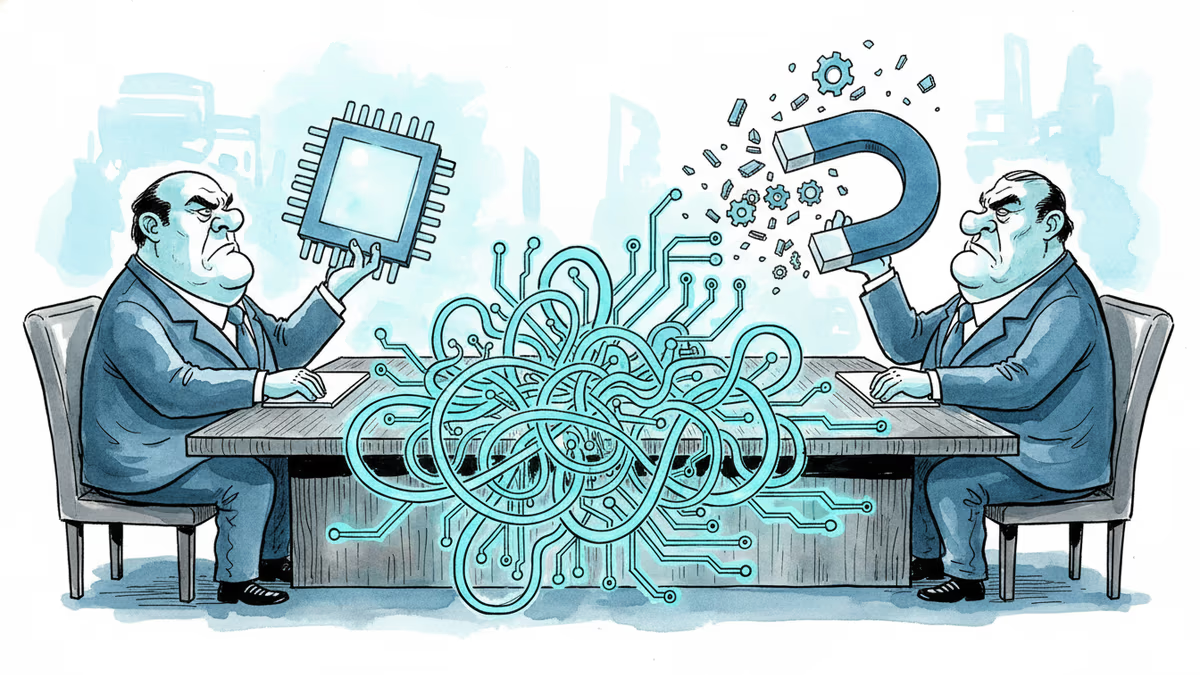
As Trump and Xi meet in Beijing, five tech flashpoints—chips, AI rivalry, supply chains, EVs, and rare earths—will quietly shape the global economy more than any diplomatic communiqué.
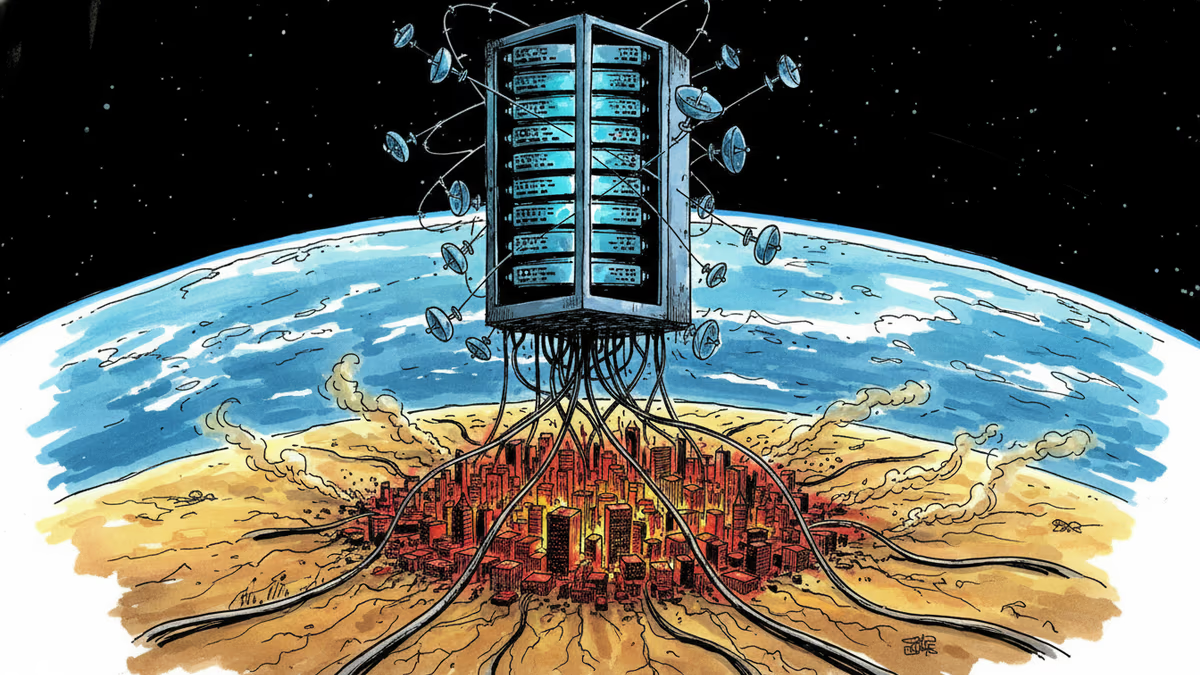
SpaceX wants to launch a million orbital data centers to power AI without draining Earth. The vision is compelling. The physics, economics, and debris math are not.

Analyzing the US winter storm supply chain impact in January 2026. Discover how the logistics industry is responding to a freeze spanning from Texas to New York.
China has launched an anti-dumping investigation into Japanese dichlorosilane as of Jan 7, 2026. Explore the impact of this China Japan semiconductor chemical anti-dumping investigation.
As Trump and Xi meet in Beijing, five tech flashpoints—chips, AI rivalry, supply chains, EVs, and rare earths—will quietly shape the global economy more than any diplomatic communiqué.
SpaceX wants to launch a million orbital data centers to power AI without draining Earth. The vision is compelling. The physics, economics, and debris math are not.
Analyzing the US winter storm supply chain impact in January 2026. Discover how the logistics industry is responding to a freeze spanning from Texas to New York.
China has launched an anti-dumping investigation into Japanese dichlorosilane as of Jan 7, 2026. Explore the impact of this China Japan semiconductor chemical anti-dumping investigation.
Thoughts
Share your thoughts on this article
Sign in to join the conversation