
The $750K Accelerator Deal That Changes Everything
Neo's new accelerator program challenges Y Combinator's fixed 7% model with founder-friendly terms. But what's the real game being played here?
$750,000 for Maybe Just 0.75% Equity
Every ambitious founder faces the same brutal math: Want into a top accelerator? Hand over 7% to 10% of your company before you've even proven product-market fit. Ali Partovi, the veteran investor behind early bets on Facebook and Cursor, just flipped that equation on its head.
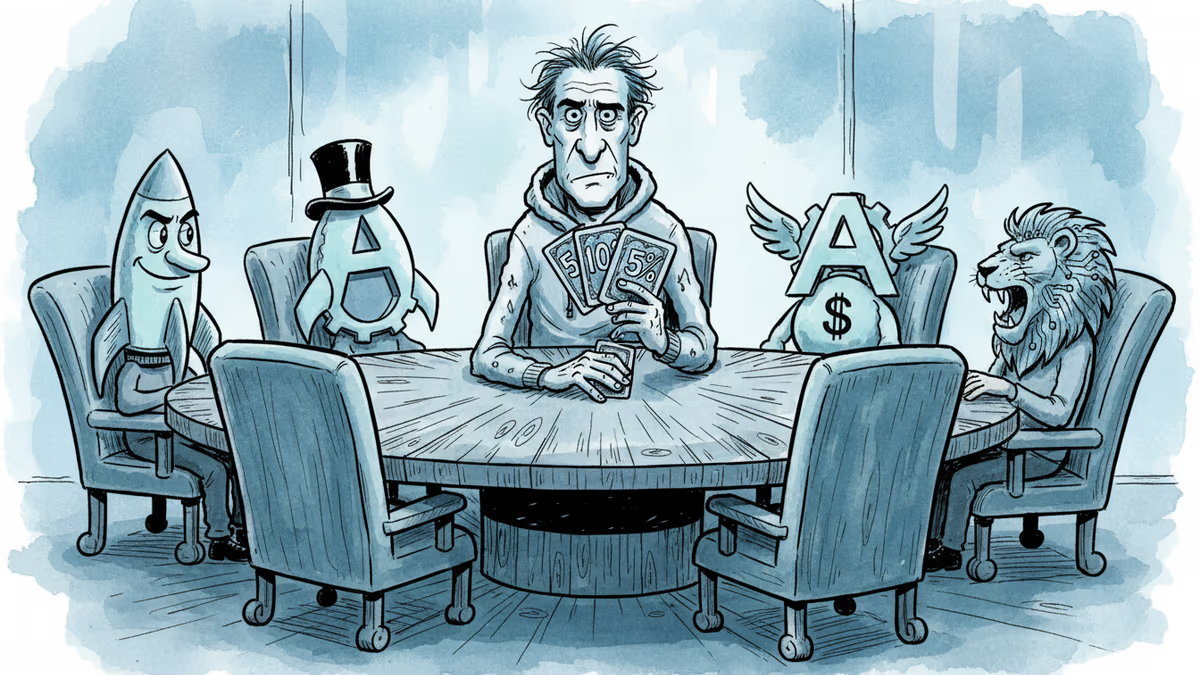
His new Neo Residency program offers $750,000 via an uncapped SAFE, but here's the kicker: if your startup hits a $100 million valuation in the next round, Neo's stake drops to just 0.75%. Compare that to Y Combinator's fixed 7% for $125,000, and suddenly the accelerator landscape looks very different.
The Risk Reversal Strategy
"We take the risk up front," Partovi told TechCrunch. It's a fundamental shift in how accelerators operate. Traditional programs like YC lock in their equity percentage regardless of how well startups perform. Andreessen Horowitz'sSpeedrun takes 10% for $500,000. Neo bets bigger upfront but gets rewarded less if founders succeed wildly.
This isn't just founder-friendly—it's founder-obsessed. The better your company does, the smaller Neo's slice becomes. It's venture capital's version of a progressive tax system, except in reverse.
But money isn't everything. Neo's real value proposition lies in its signal strength. As Wesley Chan from FPV Ventures put it at TechCrunch Disrupt: "Every founder I met there is just wicked smart." That's not casual praise—that's market validation.
The Prestige Premium

Success stories like Moment (fintech, $56 million raised) and Anterior (healthcare AI backed by Sequoia) prove that Neo's stamp of approval opens doors. When seed and Series A investors see Neo on a founder's resume, they pay attention.
The program keeps cohorts small—just 12 to 15 startups twice yearly. It's the opposite of spray-and-pray. Neo would rather have fewer, higher-quality companies than dilute its brand with volume.
The three-month residency in San Francisco's Jackson Square, mentorship from operators like Cognition's president Russell Kaplan, and a two-week bootcamp in Oregon's mountains complete the package. But the real draw remains Partovi's Rolodex and reputation.
The College Gambit
Perhaps most intriguing is Neo's student track. Five to eight college students receive $40,000 grants with zero strings attached. No equity. No dropout requirement. No company formation mandate.
It's a long-term play that mirrors how Partovi discovered Cursor'sMichael Truell while Truell was still at MIT. Plant seeds early, nurture relationships, and hope future unicorn founders remember who believed in them first.
The Confidence Question
"We have more confidence in our ability to attract and pick out future superstars than ever before," Partovi said. Given his track record—early investments in companies now worth tens of billions—that confidence might be justified.
But it raises bigger questions about the accelerator model itself. If the best founders can now get better deals, what happens to traditional programs? Will YC need to adjust its terms? Are we seeing the beginning of an accelerator arms race?
Authors
Related Articles
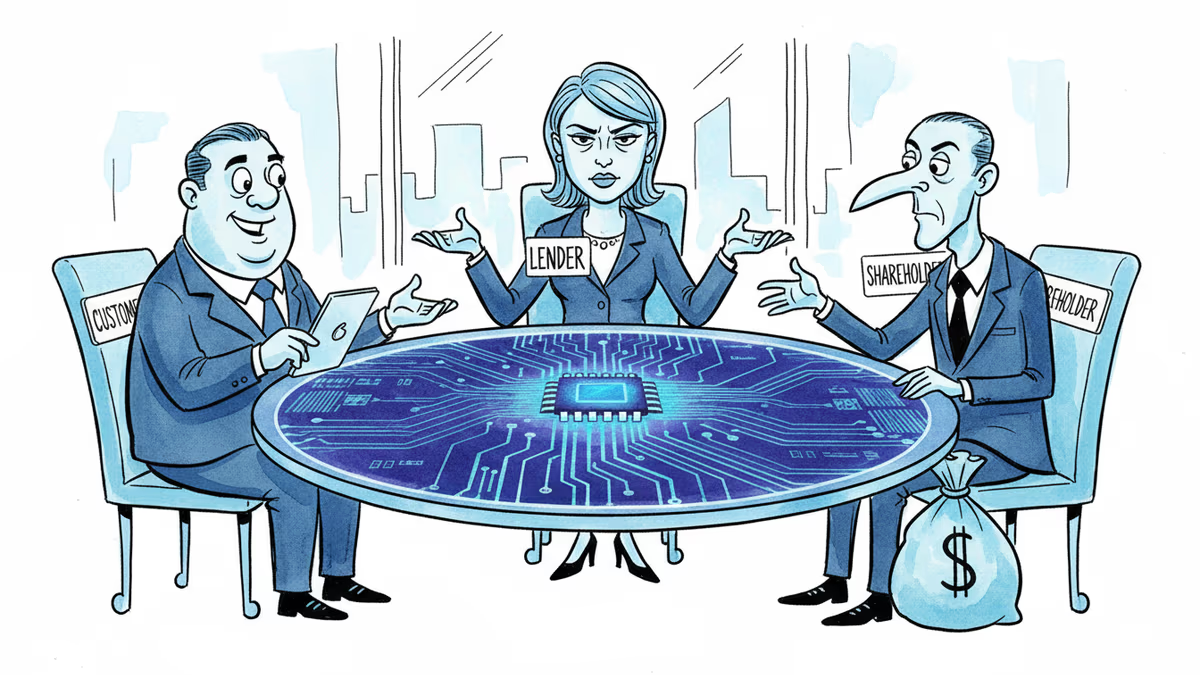
Cerebras Systems is targeting a $26.6B valuation in what could be 2026's largest tech IPO. But the real story is how deeply OpenAI is embedded in its capital structure—as customer, lender, and potential shareholder.

Despite fierce competition, the CEOs of Polymarket and Kalshi have co-invested in 5(c) Capital, a $35M VC fund targeting prediction market infrastructure. What this signals for the industry.
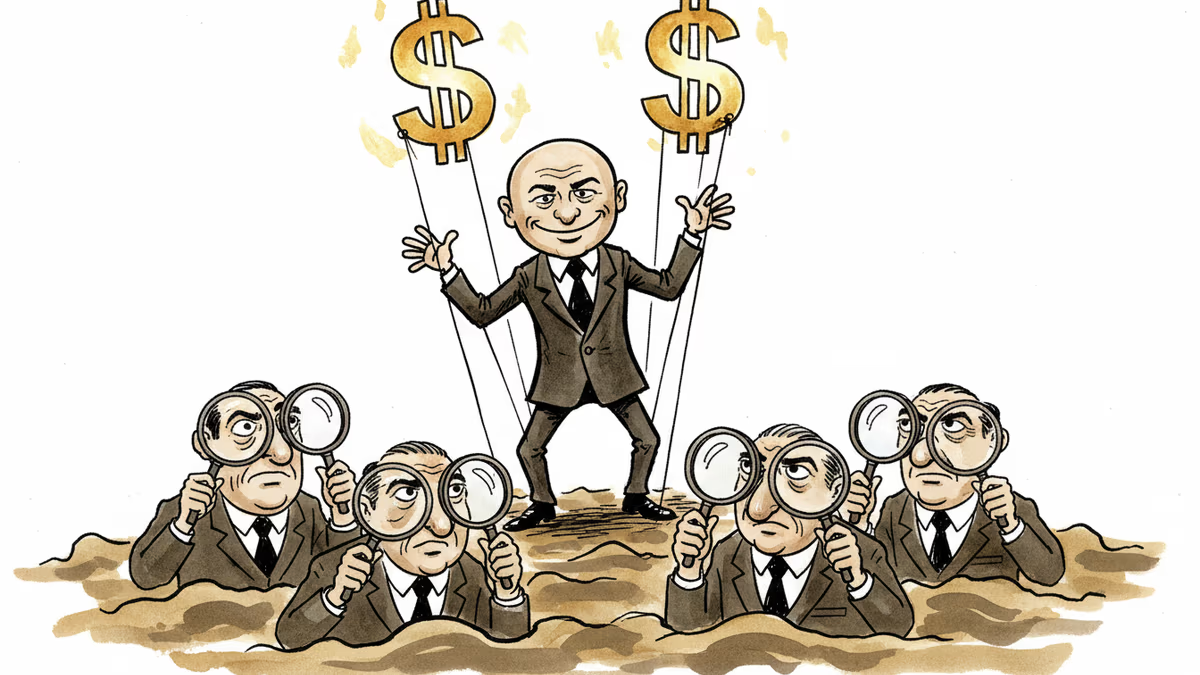
Cluely CEO admits to fabricating $7M revenue figure, exposing how startup "fake it till you make it" culture has gone too far. What this means for the ecosystem.
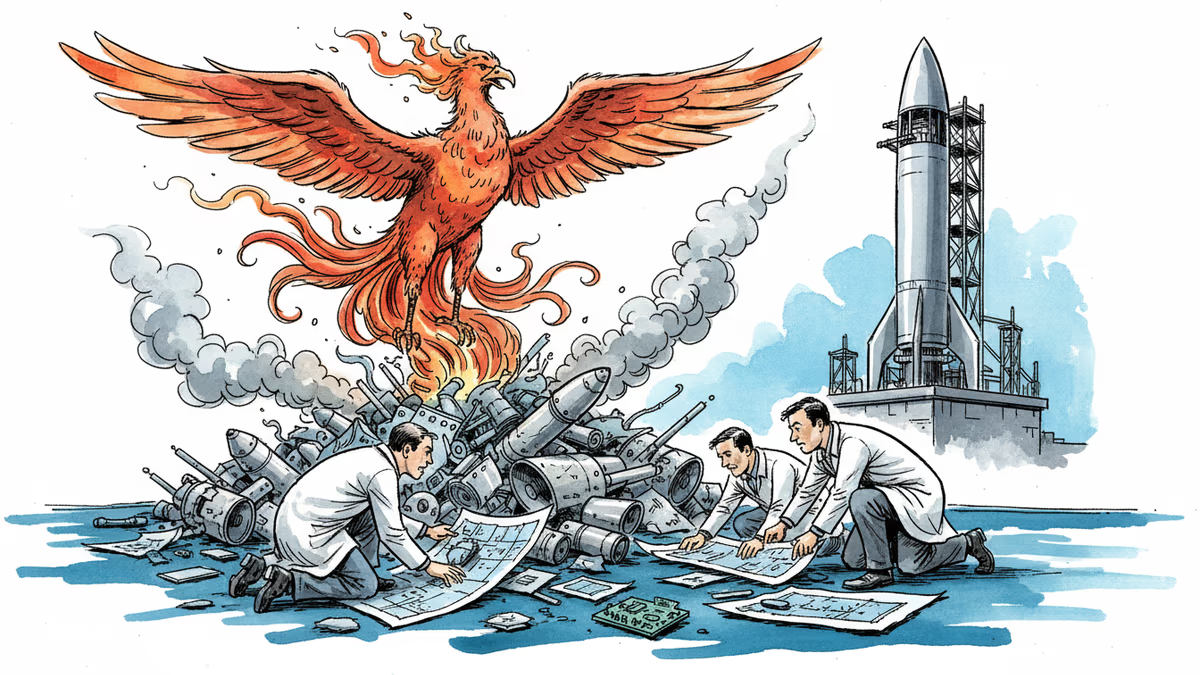
Phantom Space acquired assets from bankrupt Vector Launch, showing how failed space companies' technologies are finding new life. Is this becoming the new normal in aerospace?
Cerebras Systems is targeting a $26.6B valuation in what could be 2026's largest tech IPO. But the real story is how deeply OpenAI is embedded in its capital structure—as customer, lender, and potential shareholder.
Despite fierce competition, the CEOs of Polymarket and Kalshi have co-invested in 5(c) Capital, a $35M VC fund targeting prediction market infrastructure. What this signals for the industry.
Cluely CEO admits to fabricating $7M revenue figure, exposing how startup "fake it till you make it" culture has gone too far. What this means for the ecosystem.
Phantom Space acquired assets from bankrupt Vector Launch, showing how failed space companies' technologies are finding new life. Is this becoming the new normal in aerospace?
Thoughts
Share your thoughts on this article
Sign in to join the conversation