
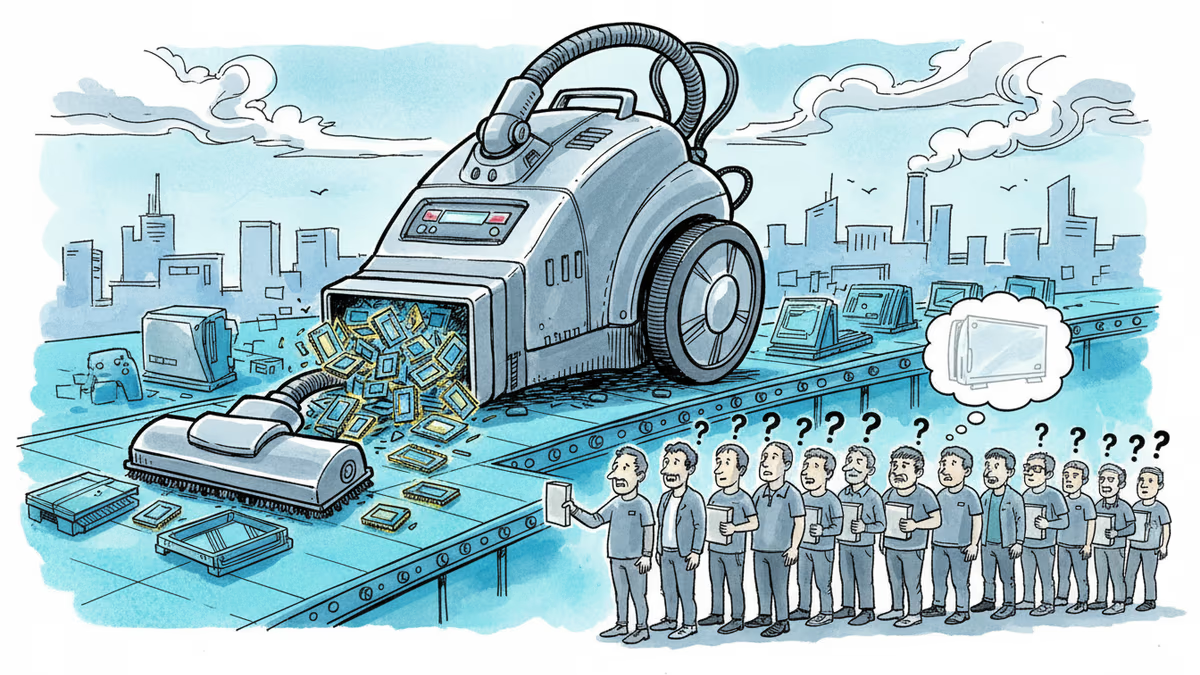
When AI Steals Your Gaming Console's Brain
Sony delays PS6 to 2028-2029 as AI data centers hoard memory chips. Nintendo raises Switch 2 price to $450. Is this the end of predictable console cycles?
$450 for a Console That Should Cost Less
Sony is reportedly considering pushing its next PlayStation release to 2028 or even 2029, breaking a 30-year pattern of launching new consoles every six to seven years. Meanwhile, Nintendo is raising the Switch 2 price to $450 – a significant jump from previous generations.
The culprit isn't manufacturing delays or design challenges. It's something far more unexpected: artificial intelligence is literally eating the gaming industry's lunch.
The Great Memory Heist
AI data centers are hoarding RAM like digital dragons. Every ChatGPT query, every Midjourney image, every AI model training session demands massive amounts of memory. The result? Gaming console makers are getting pushed to the back of the line at memory chip factories.
This isn't just about higher prices – it's about availability. Memory manufacturers have discovered that AI companies are far more attractive customers than console makers. They buy larger quantities, pay premium prices, and don't haggle over long-term contracts.
Samsung and SK Hynix, which control over 70% of global memory production, are riding the AI boom to record profits. But their success is reshaping the entire gaming ecosystem.
Console Makers vs. Cloud Giants

The power dynamic has flipped dramatically. Five years ago, Sony and Nintendo were premium customers that memory makers courted. Today, they're competing with Microsoft, Google, and Amazon – companies with seemingly unlimited budgets for AI infrastructure.
Consider the scale: A single AI training cluster might need thousands of high-end memory modules. A PlayStation 6 production run? Maybe 20 million units over several years. From a supplier's perspective, the math is simple.
Microsoft finds itself in a peculiar position – both victim and perpetrator. Their Xbox division faces the same memory shortages, while their Azure cloud business is one of the biggest consumers driving those shortages.
Gamers Caught in the Crossfire
For consumers, this creates an uncomfortable choice: wait longer for potentially better hardware, or pay significantly more for current-generation performance. The $450 Switch 2 price point signals that the era of affordable gaming hardware might be ending.
PC gaming enthusiasts aren't immune either. Graphics cards with sufficient VRAM are becoming increasingly expensive as AI researchers and crypto miners compete for the same chips.
The delay also raises questions about game development cycles. Studios have been planning titles around expected 2026-2027 console launches. Now they're facing the prospect of extending current-gen development or pivoting to PC and mobile platforms.
The Streaming Wild Card
Cloud gaming services like GeForce Now and Xbox Cloud Gaming suddenly look more strategic. If hardware becomes prohibitively expensive or scarce, streaming could accelerate from alternative to necessity.
But here's the irony: those same cloud gaming services need massive server farms filled with... the exact same memory chips that consoles can't get.
Authors
Related Articles
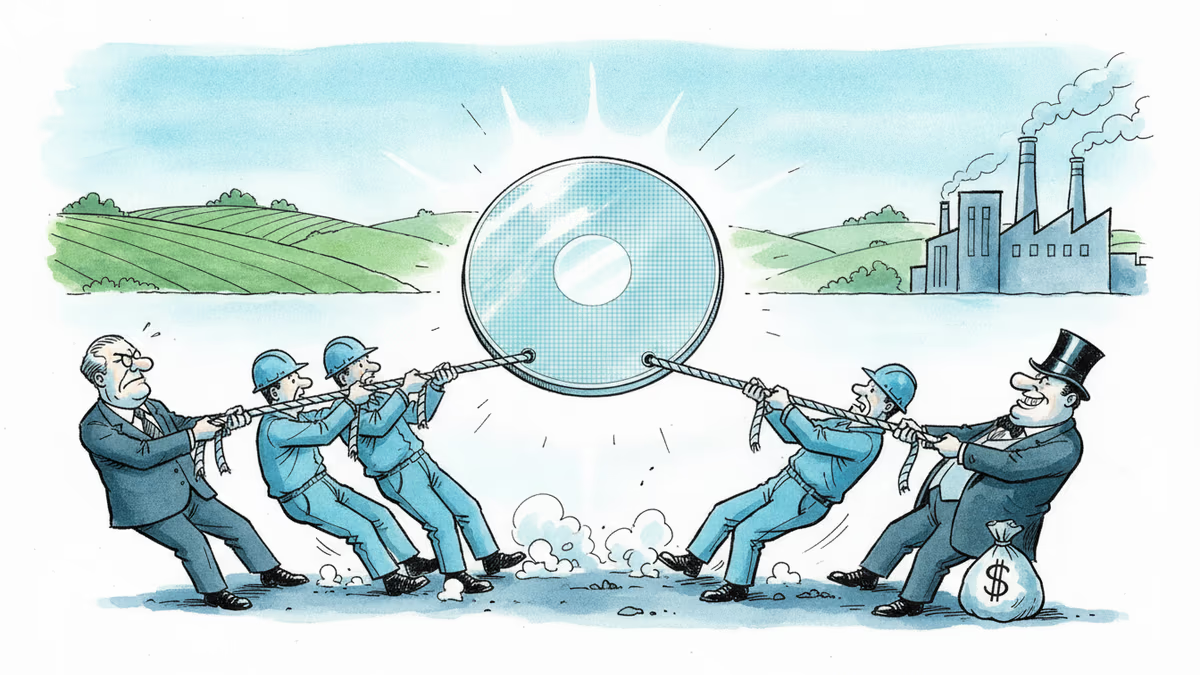
Samsung Electronics' union branch revealed that 84% of survey respondents oppose the government's roughly $290 billion (₩400 trillion) semiconductor megaproject in Gwangju. Government, management, the union and shareholders are all reading the same national project in sharply different ways.

IBM has unveiled 'nanostack,' the world's first sub-1nm (0.7nm) chip research. Some say it adds a decade to Moore's Law; others say a lab demo is a long way from a fab. Either way, mass production isn't IBM's job.
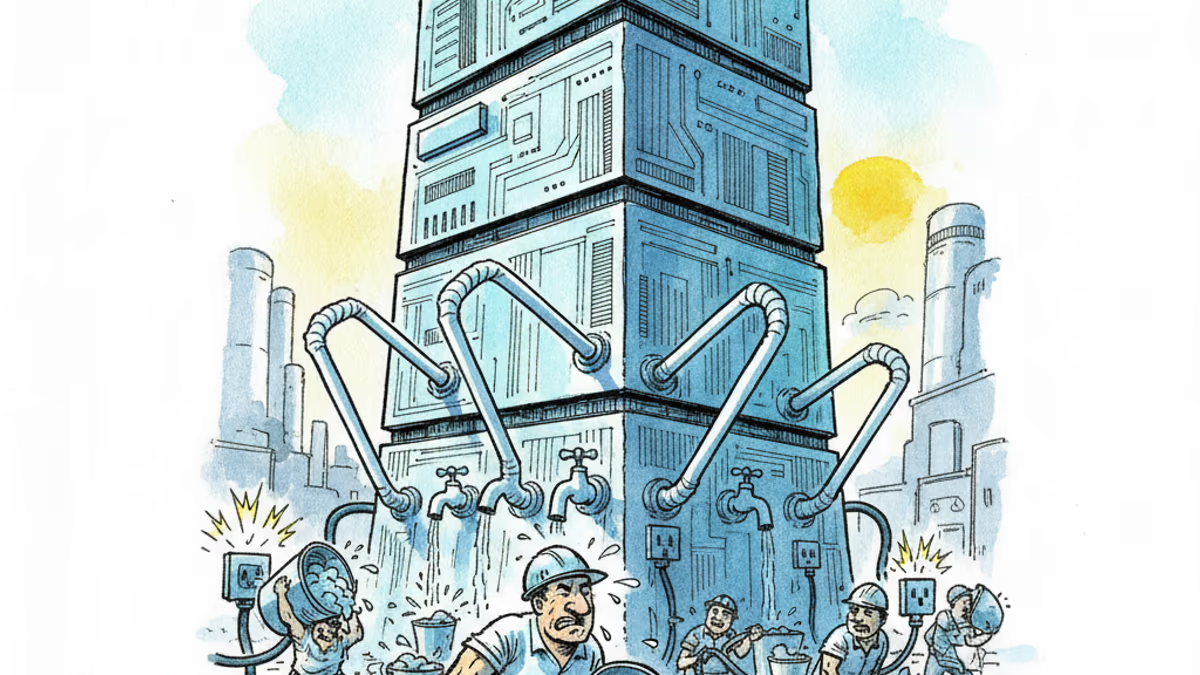
Samsung and SK unveiled a chip and AI investment package worth thousands of trillions of won on June 29. The headline number swings wildly by outlet, but the real contest isn't capital — it's water and power.

As Trump and Xi meet in Beijing, five tech flashpoints—chips, AI rivalry, supply chains, EVs, and rare earths—will quietly shape the global economy more than any diplomatic communiqué.
Samsung Electronics' union branch revealed that 84% of survey respondents oppose the government's roughly $290 billion (₩400 trillion) semiconductor megaproject in Gwangju. Government, management, the union and shareholders are all reading the same national project in sharply different ways.
IBM has unveiled 'nanostack,' the world's first sub-1nm (0.7nm) chip research. Some say it adds a decade to Moore's Law; others say a lab demo is a long way from a fab. Either way, mass production isn't IBM's job.
Samsung and SK unveiled a chip and AI investment package worth thousands of trillions of won on June 29. The headline number swings wildly by outlet, but the real contest isn't capital — it's water and power.
As Trump and Xi meet in Beijing, five tech flashpoints—chips, AI rivalry, supply chains, EVs, and rare earths—will quietly shape the global economy more than any diplomatic communiqué.
Thoughts
Share your thoughts on this article
Sign in to join the conversation