

When Video Games Beat Museums to Cultural Justice
Assassin's Creed returns Ethiopian artifacts in-game while they remain stolen in real British museums. Digital spaces lead where institutions lag.
The Day Gaming Beat Diplomacy
Ubisoft just announced it will return Ethiopian artifacts to their rightful place in Assassin's Creed. The twist? These same artifacts remain proudly displayed in London's Victoria & Albert Museum, 159 years after British forces looted them during the 1868 invasion of Maqdala. A video game is delivering justice faster than decades of diplomatic requests.
This isn't just a content update. It's a digital reparation that highlights the glacial pace of real-world cultural restitution. While Ethiopian officials have spent years politely asking for their treasures back, a French gaming company just clicked "undo" on colonial theft.
The New Battleground of Representation
The gaming industry's relationship with colonialism has been complicated. For years, Assassin's Creed romanticized historical periods without examining the violence underneath. Players could parkour through colonial-era cities, treating looted artifacts as collectible trinkets.
But something shifted. Gaming audiences—particularly younger, more globally conscious players—began questioning these narratives. Why should stolen artifacts be normalized in digital spaces just because they're normalized in physical ones?

Ubisoft's partnership with Ethiopian Orthodox Church scholars signals a broader industry reckoning. It's no longer enough to slap a "historical fiction" disclaimer on culturally sensitive content.
Beyond Virtue Signaling?
Skeptics raise valid concerns. Is this genuine cultural sensitivity, or performative activism designed to deflect criticism? After all, Ubisoft still profits from games that often simplify complex historical traumas into entertainment.
The company's track record is mixed. Previous Assassin's Creed titles have been praised for historical detail but criticized for sanitizing colonial violence. This Ethiopian initiative could represent genuine evolution—or sophisticated PR.
The Bigger Digital Question
This move exposes a fascinating paradox: digital spaces can be more ethically responsive than physical institutions. Museums hide behind "preservation" arguments and bureaucratic inertia. Game developers can patch moral problems with software updates.
But this raises uncomfortable questions about cultural authority. Should entertainment companies make repatriation decisions that governments won't? Who has the right to "return" culture, even digitally?
Authors
Related Articles
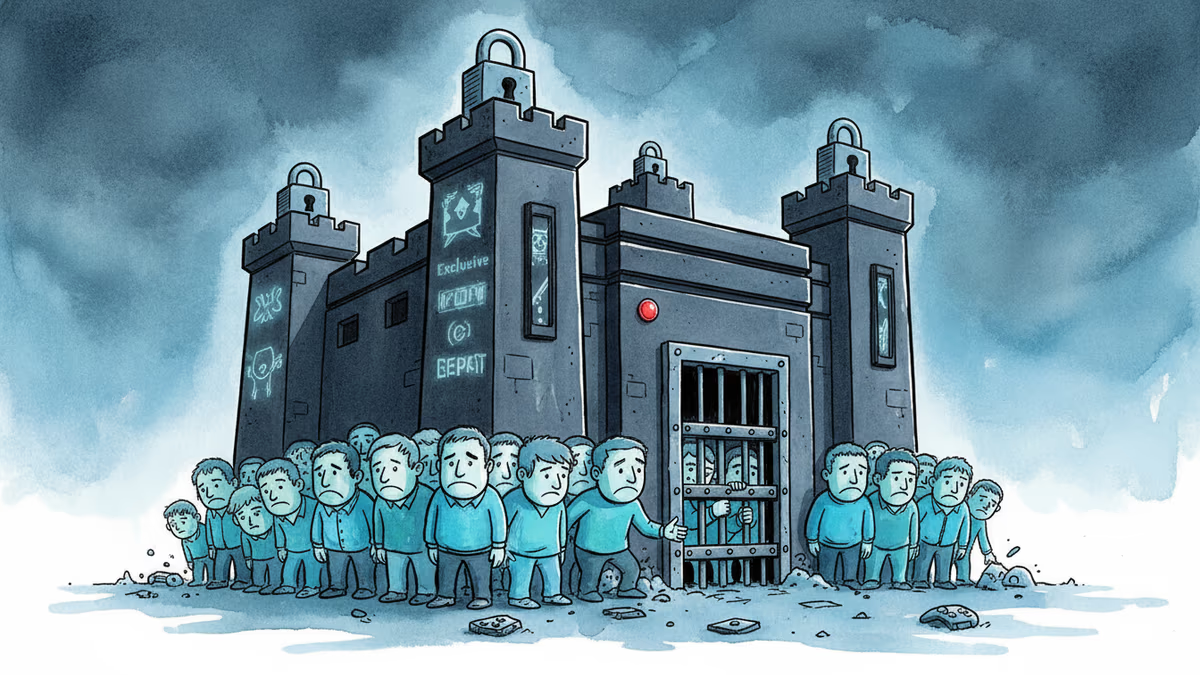
Sony and Microsoft are pulling back from multi-platform strategies, signaling a return to console exclusives. What this means for gamers and the industry.

EA introduces creator marketplace in The Sims 4 with new in-game currency 'Moola.' A bold experiment in virtual economies that could reshape gaming monetization.

Lenovo's Legion Go Fold Concept isn't just a tech demo. It's rethinking what portable gaming could become when you don't have to choose between screen size and portability.
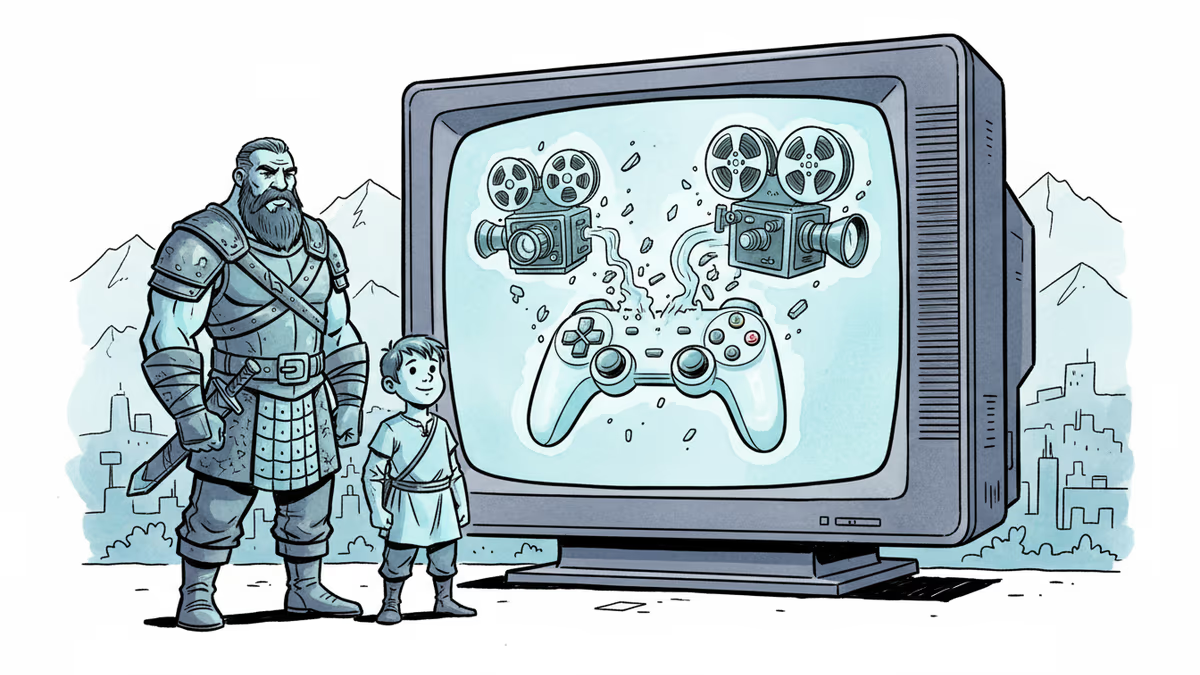
Amazon reveals first look at God of War series. Exploring whether game-to-screen adaptations can overcome their troubled history.
Sony and Microsoft are pulling back from multi-platform strategies, signaling a return to console exclusives. What this means for gamers and the industry.
EA introduces creator marketplace in The Sims 4 with new in-game currency 'Moola.' A bold experiment in virtual economies that could reshape gaming monetization.
Lenovo's Legion Go Fold Concept isn't just a tech demo. It's rethinking what portable gaming could become when you don't have to choose between screen size and portability.
Amazon reveals first look at God of War series. Exploring whether game-to-screen adaptations can overcome their troubled history.
Thoughts
Share your thoughts on this article
Sign in to join the conversation