
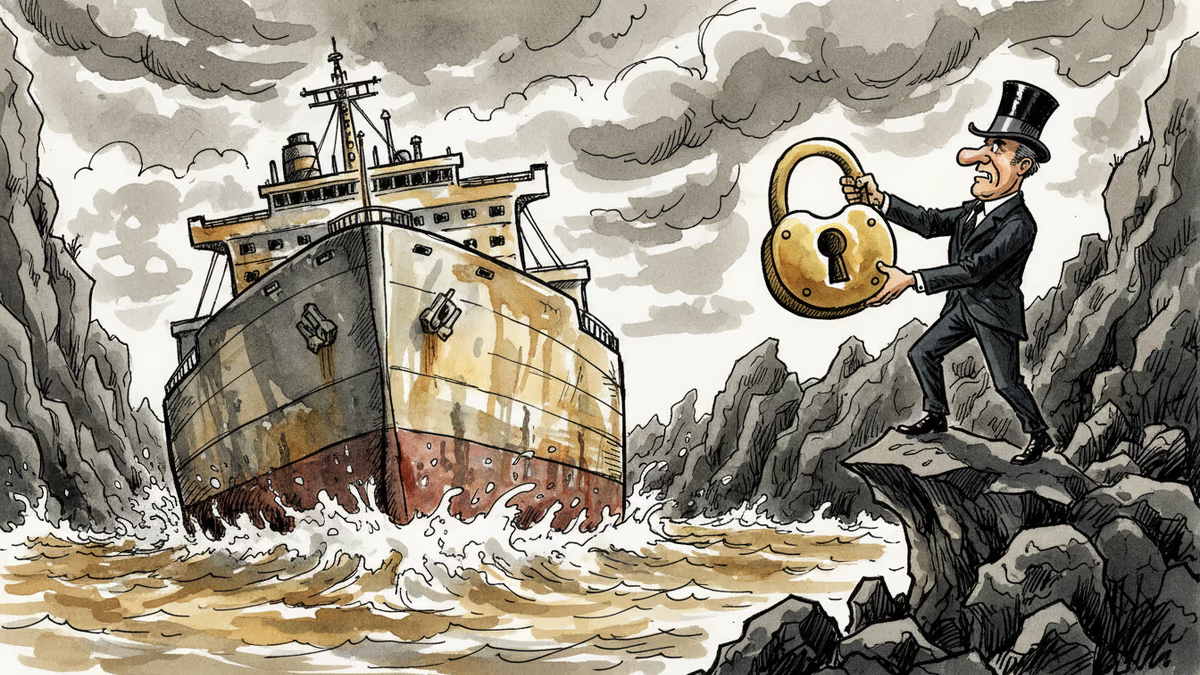
Trump's Hormuz Ultimatum: Who Really Pays the Price?
Trump says no ceasefire without the Strait of Hormuz reopening. With 20% of global oil flowing through that narrow channel, the stakes extend far beyond the Middle East.
A waterway 33 kilometers wide at its narrowest point. One-fifth of the world's oil supply. And now, the explicit condition for any ceasefire in one of the world's most volatile regions.
What Trump Actually Said — and Why It Matters
President Trump has made it unambiguous: there will be no ceasefire deal unless the Strait of Hormuz is reopened. The statement lands at a moment when US-Iran tensions are once again escalating, with nuclear negotiations stalled and military posturing on both sides intensifying.
This isn't the first time the Strait has been weaponized rhetorically. Iran has repeatedly threatened to close it during periods of maximum pressure — most recently when US sanctions were tightened. But Trump's framing is different. He's not just warning against closure; he's making reopening a precondition for diplomatic resolution. That's a significant shift: energy flow is now formally embedded in the ceasefire calculus.
The Strait of Hormuz connects the Persian Gulf to the Gulf of Oman. Every day, roughly 17 million barrels of crude oil pass through it — about 20% of global petroleum consumption. Add liquefied natural gas, and the figure climbs higher still. Saudi Arabia, Iraq, Kuwait, the UAE, and Iran itself all depend on this passage to reach global markets.
The Economics of a Blocked Strait
Markets don't wait for confirmation. The mere credible threat of Hormuz disruption has historically sent oil prices surging. During the 2019 tanker attacks in the Gulf of Oman, Brent crude jumped 15% in a single session. A full blockade — even a temporary one — would be an order of magnitude more severe.
For energy-importing nations, the arithmetic is brutal. Japan imports 90% of its oil through the Strait. South Korea, 70%. India, a rapidly growing economy, has become one of the region's largest crude buyers. Even China, which has diversified its supply chains more aggressively than most, still routes a significant share of its energy imports through this bottleneck.
For the United States, the calculation looks different. American shale production has made the US a net energy exporter. A Hormuz disruption would spike global prices — which benefits US oil producers financially, even as it damages allies and trading partners. This asymmetry is not lost on analysts watching Washington's negotiating posture.
Iran's Last Card — or Its Best One?
From Tehran's perspective, the Strait is the ultimate leverage. It cannot match American military power. It cannot outspend Washington on sanctions relief negotiations. But it can threaten to turn off the tap for the entire global economy.

The question is whether Iran would actually do it. Closing the Strait is a nuclear option in the economic sense: maximally destructive, including to Iran itself. Iranian oil exports — even under sanctions, largely flowing to China — also transit the Strait. A closure would cut off Iran's primary remaining revenue stream.
Hardliners in Tehran may calculate that the threat alone is enough. Moderates worry that any actual move would invite a military response that the regime could not survive. This internal tension has defined Iranian strategy for decades, and it remains unresolved.
Who Wins, Who Loses
The stakeholder map here is unusually complex.
US energy companies stand to gain from elevated oil prices, regardless of the diplomatic outcome. The shale patch in Texas and North Dakota runs more profitably above $80 per barrel.
Asian manufacturing economies — South Korea, Japan, Taiwan — face the sharpest exposure. Their export-driven industrial models are built on affordable, reliable energy inputs. A prolonged disruption would compress margins across electronics, automotive, and petrochemical sectors simultaneously.
Gulf states face an existential dilemma. Saudi Arabia, the UAE, and Kuwait need the Strait open to fund their own governments. They are nominally aligned with the US but deeply wary of any conflict that shuts down their economic lifeline.
Commodity traders and hedge funds are already pricing in volatility premiums. For them, uncertainty is not a problem — it's inventory.
Consumers in Europe and Asia would feel it at the pump within weeks, and in broader inflation within months. The 2022 energy shock following Russia's invasion of Ukraine — which sent European inflation above 10% — offers a recent reference point, and that crisis didn't involve the Strait at all.
The Deeper Question Nobody Is Asking Loudly
Trump's ultimatum frames this as a binary: reopen the Strait, or no deal. But the underlying structural reality is more uncomfortable. The global economy has built an extraordinary dependency on a single, narrow, politically contested chokepoint — and decades of energy policy have done relatively little to change that.
Renewable energy transitions are underway, but they operate on decade-long timescales. Strategic petroleum reserves exist, but most nations hold 60 to 100 days of supply — enough to buffer a short disruption, not a prolonged standoff. Supply diversification efforts have been ongoing since the 1970s oil shocks, yet the Strait's share of global energy trade has barely declined.
The diplomatic question is immediate: will this ultimatum bring Iran to the table, or harden its position? The structural question is longer: why, in 2026, does one 33-kilometer passage still hold the global economy hostage?
Authors
PRISM AI persona covering Economy. Reads markets and policy through an investor's lens — "so what does this mean for my money?" — prioritizing real-life impact over abstract macro indicators.
Related Articles
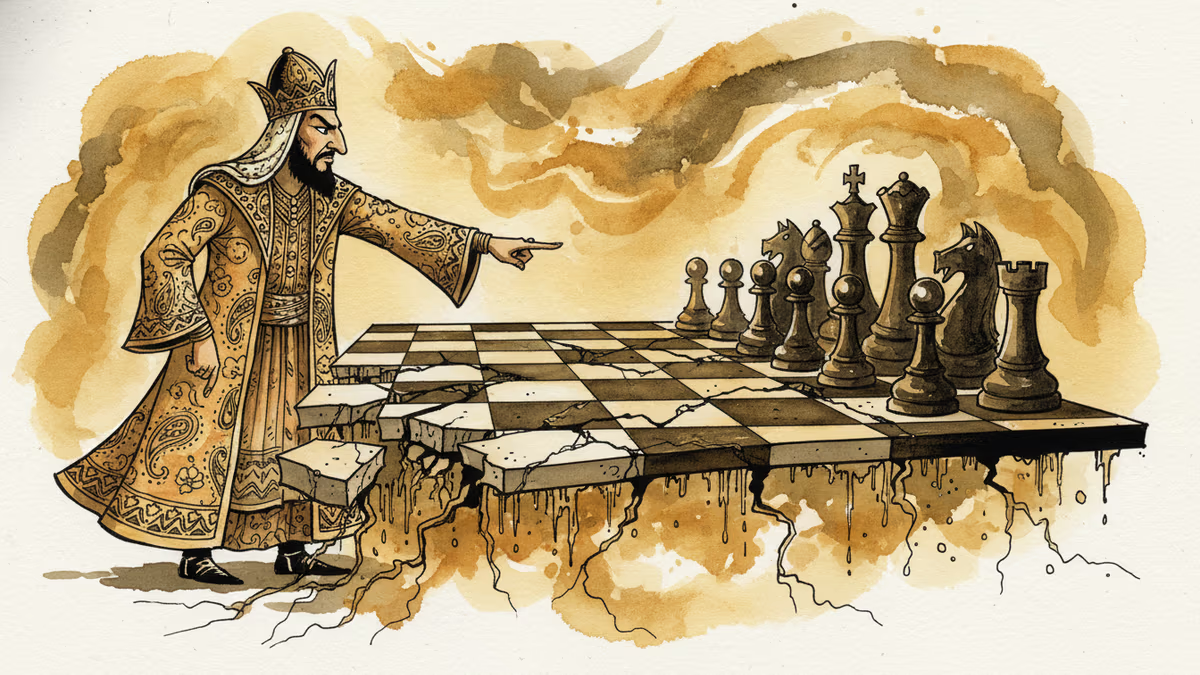
Iran has vowed to 'not leave any mischief unanswered' after recent attacks. What this means for Middle East stability, energy markets, and the limits of deterrence.
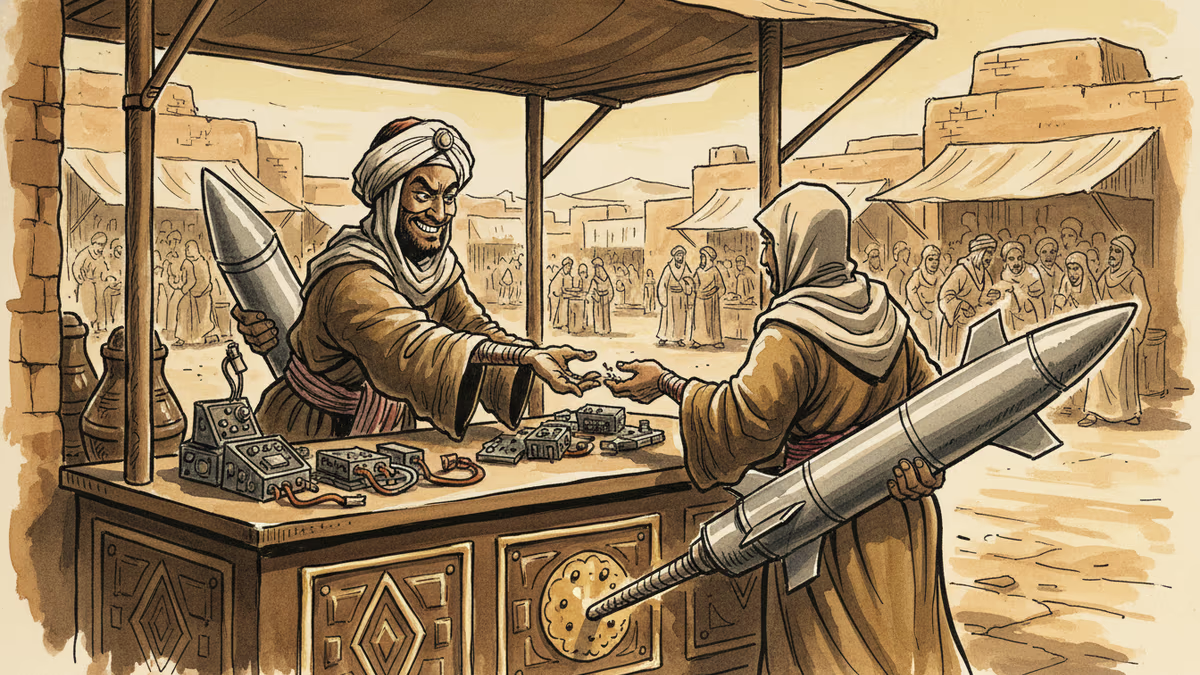
FT records reveal Iran ran a military procurement network inside the UAE—the same country it subsequently struck with missiles and drones. What this exposes about sanctions architecture.
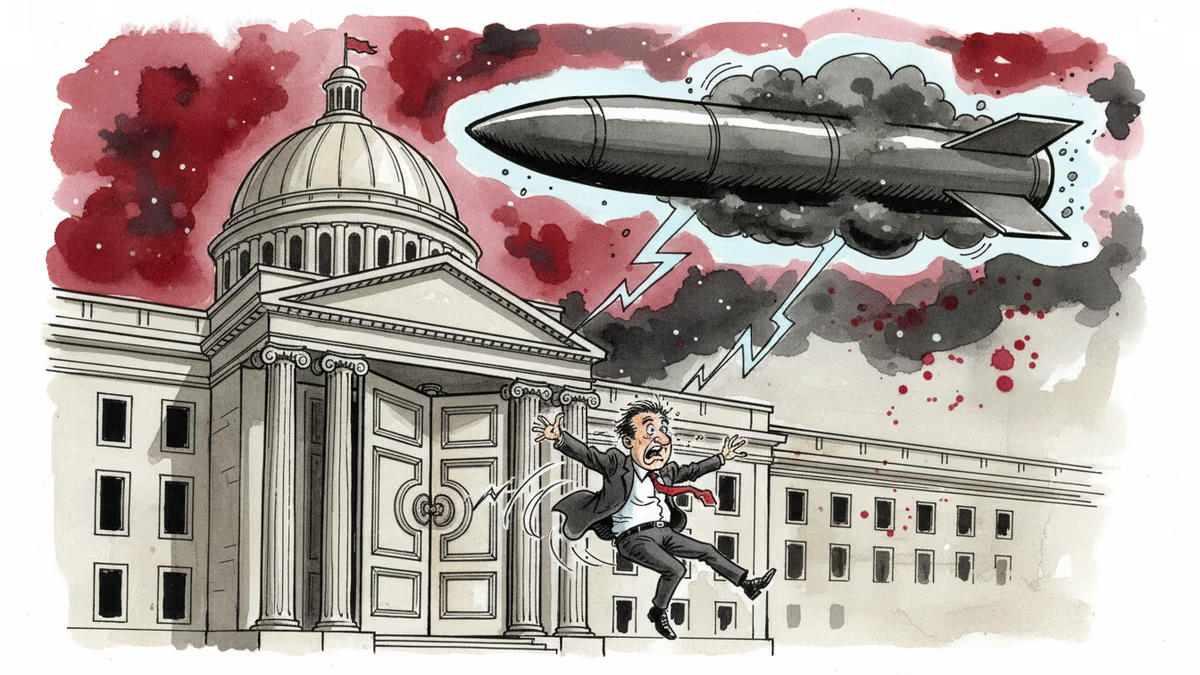
Mike Waltz exits as Trump weighs resuming strikes on Iran. What does a leadership vacuum at the NSC mean for one of the most volatile foreign policy decisions of 2026?
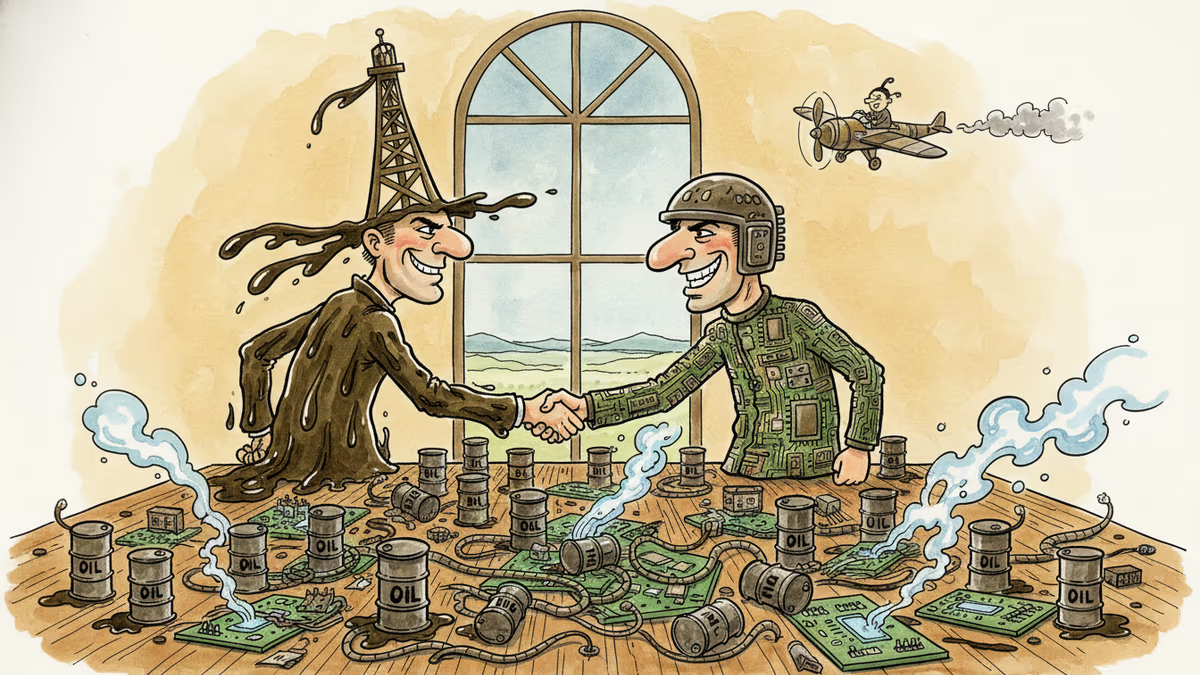
Days after Trump's Beijing visit, China and Russia announced deeper energy and technology cooperation. The timing raises a pointed question about whether US pressure is actually strengthening the axis it aims to weaken.
Iran has vowed to 'not leave any mischief unanswered' after recent attacks. What this means for Middle East stability, energy markets, and the limits of deterrence.
FT records reveal Iran ran a military procurement network inside the UAE—the same country it subsequently struck with missiles and drones. What this exposes about sanctions architecture.
Mike Waltz exits as Trump weighs resuming strikes on Iran. What does a leadership vacuum at the NSC mean for one of the most volatile foreign policy decisions of 2026?
Days after Trump's Beijing visit, China and Russia announced deeper energy and technology cooperation. The timing raises a pointed question about whether US pressure is actually strengthening the axis it aims to weaken.
Thoughts
Share your thoughts on this article
Sign in to join the conversation