
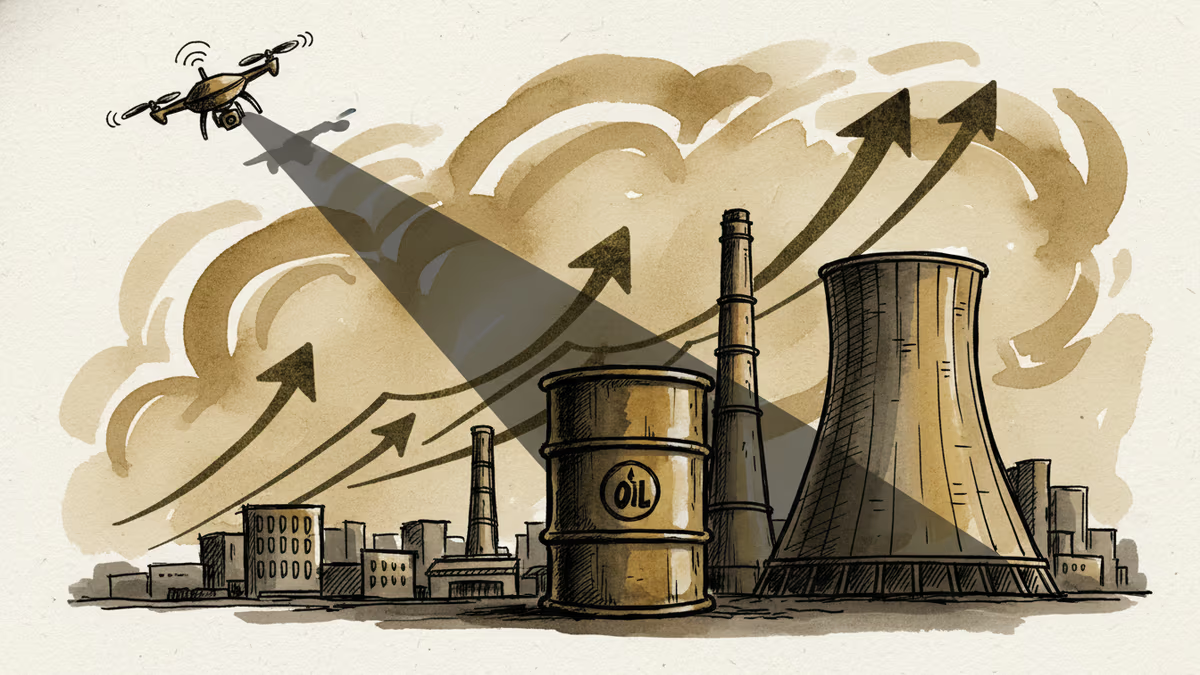
One Drone Just Moved Oil Markets 1%
A drone strike on a UAE nuclear power plant sent oil prices up more than 1%. Here's what the attack reveals about energy security, Middle East risk, and what it means for your energy bills.
It didn't take a war. A single drone aimed at a nuclear power plant in the UAE was enough to push oil prices up more than 1% in a single session. Small cause, outsized reaction — and that gap tells you everything about where energy markets stand right now.
What Happened
A drone struck the UAE's nuclear power plant, triggering an immediate spike in crude prices. Details on the extent of physical damage remain limited, but the market didn't wait for a damage report. The mere fact that a nuclear facility had been targeted was enough.
The UAE produces roughly 3 million barrels of oil per day, making it one of the world's top ten producers. Its proximity to the Strait of Hormuz — through which about 20% of global oil supply flows — means any instability there carries disproportionate weight for energy markets worldwide. A 1% move on a single day of geopolitical noise is, by historical standards, a restrained reaction.
Why a Nuclear Plant, Why Now
The Barakah Nuclear Power Plant is a point of national pride for the UAE — the Arab world's first operational nuclear facility, with 4 reactors that began commercial operations in 2021. The strategic logic was straightforward: generate domestic electricity, free up more crude oil for export, and reduce long-term dependence on fossil fuels for power generation.
Targeting a nuclear facility escalates the stakes well beyond a conventional infrastructure attack. The specter of radioactive contamination, IAEA involvement, and Western diplomatic pressure all enter the picture simultaneously. No group has formally claimed responsibility, but the attack's profile bears resemblance to the drone campaign waged by Yemen's Houthi rebels, who have repeatedly struck Saudi and Emirati energy infrastructure over the past several years. The Houthis have demonstrated both the capability and the willingness to reach deep into Gulf territory with low-cost drone technology.

The Real Story: Cheap Drones, Expensive Consequences
Here's the uncomfortable arithmetic. A commercial or military-grade drone costs anywhere from a few hundred to a few thousand dollars. A successful strike on critical energy infrastructure can wipe billions off market valuations and send fuel costs higher for hundreds of millions of consumers across the globe.
This asymmetry is not new — but it's accelerating. The 2019 attack on Saudi Aramco's Abqaiq processing facility briefly knocked out 5% of global oil supply and sent prices surging 15% in a single day. That attack, also attributed to drone and cruise missile strikes, was a wake-up call that the industry and policymakers largely absorbed without fundamentally rethinking infrastructure protection.
Since then, the drone threat has only grown more sophisticated and more accessible. The war in Ukraine demonstrated that off-the-shelf drones modified for strikes can reshape military and industrial vulnerability in ways that expensive air defense systems struggle to counter comprehensively.
Winners, Losers, and Your Energy Bill
In the short term, oil producers outside the Middle East — U.S. shale operators, Norwegian producers, Canadian oil sands companies — benefit from any sustained price premium that geopolitical risk adds to the barrel. Higher prices improve their margins without any change in their own operations.
Consumers bear the cost. Every $10 increase in the price of a barrel of oil translates to roughly $0.25 more per gallon at the pump in the United States, according to the U.S. Energy Information Administration. European households, already battered by the energy price shock of 2022, are particularly exposed given their heavier reliance on imported energy.
For energy transition advocates, there's a complicated argument here. Persistent geopolitical risk in fossil fuel supply chains strengthens the long-term case for domestic renewable energy — energy that can't be disrupted by a drone strike in the Gulf. But in the near term, the transition is still incomplete, and the world remains hostage to Middle Eastern stability in ways that renewables cannot yet fully offset.
This content is AI-generated based on source articles. While we strive for accuracy, errors may occur. We recommend verifying with the original source.
Related Articles

Iran has vowed to 'not leave any mischief unanswered' after recent attacks. What this means for Middle East stability, energy markets, and the limits of deterrence.
Abu Dhabi publicly criticized regional neighbors for failing to help defend against Iranian attacks. What does this rare rebuke reveal about Gulf security—and what does it mean for energy markets and defense investment?

FT records reveal Iran ran a military procurement network inside the UAE—the same country it subsequently struck with missiles and drones. What this exposes about sanctions architecture.
Mike Waltz exits as Trump weighs resuming strikes on Iran. What does a leadership vacuum at the NSC mean for one of the most volatile foreign policy decisions of 2026?
Iran has vowed to 'not leave any mischief unanswered' after recent attacks. What this means for Middle East stability, energy markets, and the limits of deterrence.
Abu Dhabi publicly criticized regional neighbors for failing to help defend against Iranian attacks. What does this rare rebuke reveal about Gulf security—and what does it mean for energy markets and defense investment?
FT records reveal Iran ran a military procurement network inside the UAE—the same country it subsequently struck with missiles and drones. What this exposes about sanctions architecture.
Mike Waltz exits as Trump weighs resuming strikes on Iran. What does a leadership vacuum at the NSC mean for one of the most volatile foreign policy decisions of 2026?
Thoughts
Share your thoughts on this article
Sign in to join the conversation