
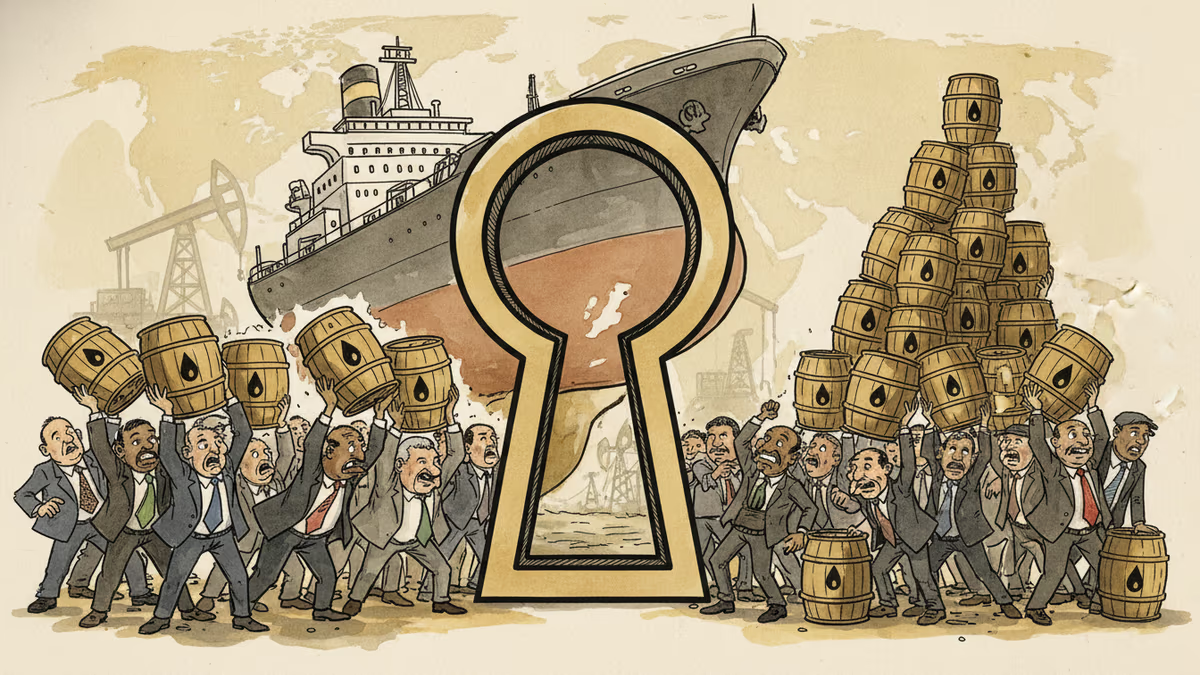
If Hormuz Closes, Who Pays the Price?
Tensions over Iran's threat to close the Strait of Hormuz are triggering a surge in precautionary oil buying across Asia and Europe. Here's what's really at stake—and who wins and loses.
17 million barrels pass through a 33-kilometer-wide chokepoint every single day. That's roughly one-fifth of all seaborne oil on the planet—flowing through the Strait of Hormuz. When Iran signals it might close that door, traders don't wait to find out if it's a bluff. They buy.
That's exactly what's happening right now.
The Threat That Moves Markets Before It Moves Ships
Escalating tensions between Iran and Israel have pushed Hormuz back into the headlines. Iranian officials have publicly floated the idea of restricting passage through the strait in recent weeks—a threat they've used before, but one that markets never fully discount. In response, refiners and state oil buyers across Asia and Europe have moved to build inventory, pushing up near-term crude premiums and widening supply-risk spreads in futures markets.
The buyers most exposed are the most dependent: China, Japan, South Korea, India, and several European nations collectively source the majority of their crude through this single passage. For context, South Korea imports roughly 70% of its oil from the Middle East. Japan's figure is similar. China, despite its deepening ties with Iran, is paradoxically among the most vulnerable—it has been quietly importing sanctioned Iranian crude at scale, and a Hormuz disruption would hit that supply line too.
The United States, by contrast, is largely insulated. Domestic shale production and access to Atlantic Basin suppliers mean Washington watches Hormuz with strategic concern rather than immediate economic pain.
What a Closure Would Actually Cost
A full blockade remains an extreme scenario—Hormuz stayed open even during the Iran-Iraq War in the 1980s. But partial disruptions, insurance premium spikes, and rerouting costs can inflict serious damage without a single mine being laid.
In 2019, when Iran seized tankers in the Gulf, Brent crude surged nearly $15 per barrel in two days. A sustained closure, some analysts estimate, could push prices past $150 per barrel—a level not seen since the post-COVID supply crunch of 2022.

The ripple effects go well beyond the pump. Aviation fuel, shipping freight rates, and petrochemical feedstocks all move with crude. Airlines, manufacturers, and logistics companies would face cost pressure simultaneously. Consumers would feel it in airline tickets, grocery prices, and energy bills—often within weeks.
The alternative routing—around Africa's Cape of Good Hope—adds two to three weeks of transit time and significantly higher fuel costs per voyage. It's a pressure valve, not a solution.
Winners, Losers, and the Awkward Middle
Not everyone loses when Hormuz tightens. U.S. shale producers benefit directly from higher prices. Non-Middle Eastern exporters—Norway, Canada, Brazil, Guyana—gain market share and pricing power. Tanker owners have historically seen freight rates spike during Gulf crises, sometimes doubling or tripling within days.
For energy-importing economies in Asia, the calculus is grimmer. They've spent years trying to diversify supply away from Middle Eastern dependence, but geography and cost economics keep pulling them back. LNG has helped at the margin, but oil—for transport and petrochemicals—is harder to replace quickly.
The geopolitical irony worth noting: Iran's closest major partner, China, stands to suffer significant economic pain from any Hormuz disruption. Beijing has invested heavily in Iranian oil infrastructure and has been absorbing heavily discounted Iranian barrels. A blockade would cut off that supply while simultaneously spiking the price of replacement crude from elsewhere. It's a dynamic that complicates any simple narrative about Iran's strategic calculus.
The Precautionary Buying Loop
What's particularly notable about the current moment is that the surge in buying is happening before any actual disruption. This is how commodity markets work under geopolitical stress: the anticipation of shortage creates real demand, which tightens real supply, which validates the original fear.
Energy security analysts call this the precautionary demand spiral—and it's one reason why even a credible threat to close Hormuz carries economic weight. Governments and companies aren't waiting for confirmation. They're acting on probability.
For policymakers, this creates a difficult dilemma. Strategic petroleum reserves exist precisely for moments like this, but deploying them too early signals panic and can paradoxically accelerate price rises. The IEA has coordinated reserve releases twice in recent memory—after Russia's invasion of Ukraine in 2022, and during the 2011 Libya crisis. Whether a third coordinated release is warranted depends on how far this escalation goes.
This content is AI-generated based on source articles. While we strive for accuracy, errors may occur. We recommend verifying with the original source.
Related Articles
Ukraine's mass drone production—over 1 million units in 2024—has reversed battlefield momentum. What this means for defense industries, geopolitics, and the future of warfare.
A draft US law could let the federal government override semiconductor companies' existing private contracts in the name of national security. Here's what's at stake for the industry.
Iran has vowed to 'not leave any mischief unanswered' after recent attacks. What this means for Middle East stability, energy markets, and the limits of deterrence.
Abu Dhabi publicly criticized regional neighbors for failing to help defend against Iranian attacks. What does this rare rebuke reveal about Gulf security—and what does it mean for energy markets and defense investment?
Ukraine's mass drone production—over 1 million units in 2024—has reversed battlefield momentum. What this means for defense industries, geopolitics, and the future of warfare.
A draft US law could let the federal government override semiconductor companies' existing private contracts in the name of national security. Here's what's at stake for the industry.
Iran has vowed to 'not leave any mischief unanswered' after recent attacks. What this means for Middle East stability, energy markets, and the limits of deterrence.
Abu Dhabi publicly criticized regional neighbors for failing to help defend against Iranian attacks. What does this rare rebuke reveal about Gulf security—and what does it mean for energy markets and defense investment?
Thoughts
Share your thoughts on this article
Sign in to join the conversation